The USD/JPY pair has retreated from its highs; has a medium-term correction begun?
2026-04-08 14:31:54
The USD/JPY pair came under significant pressure during Wednesday's Asian session, falling to around 158.20 , a daily decline of nearly 0.90% . The core drivers of this correction were the temporary easing of tensions in the Middle East and a sharp drop in energy prices, which propelled the yen to a significant strength.
One foreign exchange analyst said, "The current strength of the yen is not only due to the decline of the dollar, but also benefits from the improvement of Japan's terms of trade due to the drop in oil prices."

From a market perspective, the US announced a two-week suspension of military operations against Iran and reached a preliminary consensus on restoring key energy routes. This news significantly boosted market risk sentiment, leading to a rise in global stock markets, with S&P 500 futures rising by approximately 2.5% , while the US dollar index fell back to around 99.00 , indicating a marked decrease in safe-haven demand.
The Strait of Hormuz handles approximately 20% of global maritime energy transport . The anticipated resumption of its passage directly alleviated market concerns about supply disruptions, leading to a sharp decline in crude oil prices. WTI crude oil prices have fallen to around $95 , a single-day drop of over 15% .
This change directly benefits the yen. As an economy highly dependent on energy imports, lower oil prices mean lower import costs for Japan, thus improving trade balance expectations and enhancing the attractiveness of its currency. Therefore, in the current environment, oil prices and the yen exhibit a relatively clear negative correlation.
Some institutions have pointed out that "the decline in oil prices has become an important fundamental factor driving the yen's strength at this stage."
Meanwhile, the overall pressure on the US dollar also provided additional support for the Japanese yen. As market risk appetite recovered, funds flowed out of safe-haven assets such as the US dollar and into other asset classes, further suppressing the USD/JPY exchange rate.
Looking ahead, market focus shifts to the upcoming release of the Federal Reserve meeting minutes. These minutes will provide crucial clues about the policy path, especially given the backdrop of volatile energy prices, as investors seek to understand policymakers' assessment of inflation and the economic outlook. A hawkish tone in the minutes could support the dollar in the short term, thus limiting the yen's gains; conversely, a hawkish tone could further push the exchange rate down.
From a technical perspective, the daily chart shows that USD/JPY has shown signs of pullback from its highs, with the overall trend shifting from strong to slightly weak. The current price has broken below the short-term support zone, indicating increased bearish momentum. The key support level is 158.00 ; a further break below this level could open up downside potential to the 156.50 area . Resistance is concentrated at the psychological level of 160.00 , which continues to exert significant downward pressure. From a momentum perspective, bears are in control in the short term, but a clear trend has not yet formed. Observing the 4-hour chart, the price is showing a downward trend within a range; if any rebound fails to break through the 160 level, the short-term outlook remains weak.
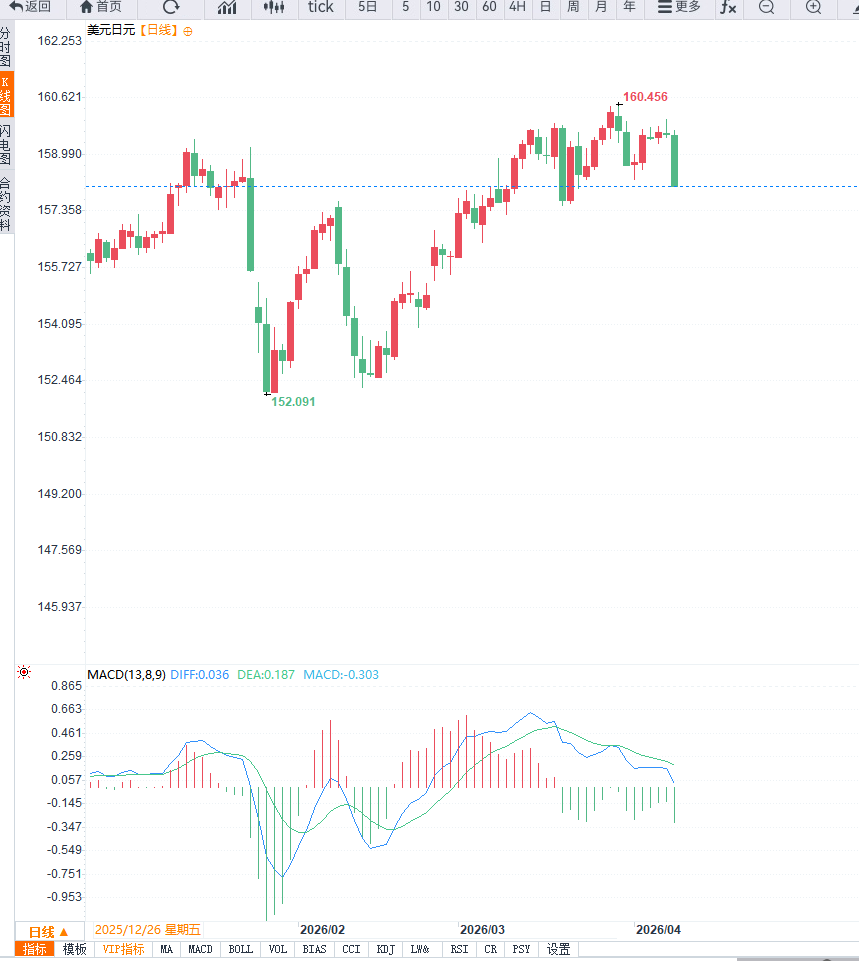
Overall, the current trend of USD/JPY is driven by both a weakening dollar and falling oil prices, which are beneficial to the yen, and the short-term trend is relatively weak.
Editor's Summary : The core reason for the recent decline in the USD/JPY exchange rate is the reduced demand for the dollar as a safe haven due to the easing of tensions in the Middle East. Simultaneously, the sharp drop in oil prices improved expectations for the Japanese economy, driving the yen stronger. Structurally, the exchange rate has shifted from a one-sided upward trend to a phase of fluctuating weakness. Future movements will depend on two key variables: whether oil prices continue to remain low and whether the Federal Reserve's policy signals change. If oil prices continue to fall and policy remains dovish, the yen is likely to strengthen further; conversely, the exchange rate may re-enter a trading range.
One foreign exchange analyst said, "The current strength of the yen is not only due to the decline of the dollar, but also benefits from the improvement of Japan's terms of trade due to the drop in oil prices."
From a market perspective, the US announced a two-week suspension of military operations against Iran and reached a preliminary consensus on restoring key energy routes. This news significantly boosted market risk sentiment, leading to a rise in global stock markets, with S&P 500 futures rising by approximately 2.5% , while the US dollar index fell back to around 99.00 , indicating a marked decrease in safe-haven demand.
The Strait of Hormuz handles approximately 20% of global maritime energy transport . The anticipated resumption of its passage directly alleviated market concerns about supply disruptions, leading to a sharp decline in crude oil prices. WTI crude oil prices have fallen to around $95 , a single-day drop of over 15% .
This change directly benefits the yen. As an economy highly dependent on energy imports, lower oil prices mean lower import costs for Japan, thus improving trade balance expectations and enhancing the attractiveness of its currency. Therefore, in the current environment, oil prices and the yen exhibit a relatively clear negative correlation.
Some institutions have pointed out that "the decline in oil prices has become an important fundamental factor driving the yen's strength at this stage."
Meanwhile, the overall pressure on the US dollar also provided additional support for the Japanese yen. As market risk appetite recovered, funds flowed out of safe-haven assets such as the US dollar and into other asset classes, further suppressing the USD/JPY exchange rate.
Looking ahead, market focus shifts to the upcoming release of the Federal Reserve meeting minutes. These minutes will provide crucial clues about the policy path, especially given the backdrop of volatile energy prices, as investors seek to understand policymakers' assessment of inflation and the economic outlook. A hawkish tone in the minutes could support the dollar in the short term, thus limiting the yen's gains; conversely, a hawkish tone could further push the exchange rate down.
From a technical perspective, the daily chart shows that USD/JPY has shown signs of pullback from its highs, with the overall trend shifting from strong to slightly weak. The current price has broken below the short-term support zone, indicating increased bearish momentum. The key support level is 158.00 ; a further break below this level could open up downside potential to the 156.50 area . Resistance is concentrated at the psychological level of 160.00 , which continues to exert significant downward pressure. From a momentum perspective, bears are in control in the short term, but a clear trend has not yet formed. Observing the 4-hour chart, the price is showing a downward trend within a range; if any rebound fails to break through the 160 level, the short-term outlook remains weak.
Overall, the current trend of USD/JPY is driven by both a weakening dollar and falling oil prices, which are beneficial to the yen, and the short-term trend is relatively weak.
Editor's Summary : The core reason for the recent decline in the USD/JPY exchange rate is the reduced demand for the dollar as a safe haven due to the easing of tensions in the Middle East. Simultaneously, the sharp drop in oil prices improved expectations for the Japanese economy, driving the yen stronger. Structurally, the exchange rate has shifted from a one-sided upward trend to a phase of fluctuating weakness. Future movements will depend on two key variables: whether oil prices continue to remain low and whether the Federal Reserve's policy signals change. If oil prices continue to fall and policy remains dovish, the yen is likely to strengthen further; conversely, the exchange rate may re-enter a trading range.
- Risk Warning and Disclaimer
- The market involves risk, and trading may not be suitable for all investors. This article is for reference only and does not constitute personal investment advice, nor does it take into account certain users’ specific investment objectives, financial situation, or other needs. Any investment decisions made based on this information are at your own risk.