LME copper futures surged more than 3.3% as easing tensions in the Middle East boosted expectations for global industrial demand.
2026-04-08 15:30:27
According to APP reports, the LME copper futures contract surged in the latest trading day, with gains widening to 3.31%, reaching a new recent high of $12,737 per tonne. The contract opened sharply higher, hitting an even higher level during the session, in stark contrast to market expectations. This move was mainly due to a temporary easing of tensions in the Middle East, with Iran agreeing to temporarily reopen the Strait of Hormuz as part of a two-week ceasefire agreement with relevant parties, directly alleviating concerns about energy supply disruptions.

As the global benchmark for industrial metal pricing, the recent surge in the LME copper futures contract reflects market optimism regarding declining energy costs and supply chain recovery. Copper, a crucial industrial raw material, is widely used in power generation, construction, new energy, and manufacturing, and is highly price-sensitive. Easing tensions in the Middle East have reduced overall commodity risk premiums, particularly mitigating the drag on global economic growth from high oil prices. This is expected to lower production costs for businesses, thereby stimulating downstream restocking demand.
A deeper analysis reveals that this price surge is not an isolated event, but rather the result of a confluence of factors. First, the Middle East ceasefire agreement directly improved energy market expectations, and the short-term decline in crude oil prices helped reduce global transportation and smelting costs, providing support for copper demand. Second, although global inventory levels have increased temporarily, previous supply-side disruptions have not been completely eliminated, and market concerns about future structural shortages persist. Third, the recovery in risk appetite in financial markets also drove speculative funds into copper futures, further amplifying price volatility.
To clearly illustrate the recent price trend of the LME copper futures contract, the following table presents key comparative data.
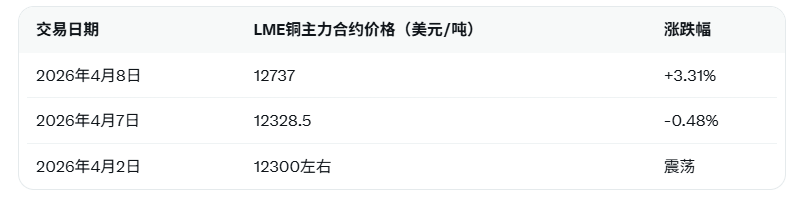
The table shows that the single-day increase was significantly higher than the recent average, indicating that market sentiment has shifted from cautious to positive.
Overall, the strong performance of the LME copper futures contract not only reflects the positive impact of easing short-term geopolitical risks but also indicates a strengthening of global industrial recovery signals. Investors need to continue to pay attention to the actual implementation effect of the Middle East ceasefire agreement, manufacturing data from major global economies, and the subsequent trend of energy prices, as these factors will jointly determine whether copper prices can maintain their current strength.
Editor's Summary
The more than 3% increase in the LME copper futures contract highlights the rapid transmission effect of easing geopolitical tensions on the industrial metals market. In the short term, declining energy costs and improved demand expectations are jointly supporting the price increase. However, in the medium to long term, we still need to be wary of the uncertainties brought about by the recovery of global supply and fluctuations in macroeconomic growth. Copper prices will seek a new equilibrium range in the dynamic balance of supply and demand.
As the global benchmark for industrial metal pricing, the recent surge in the LME copper futures contract reflects market optimism regarding declining energy costs and supply chain recovery. Copper, a crucial industrial raw material, is widely used in power generation, construction, new energy, and manufacturing, and is highly price-sensitive. Easing tensions in the Middle East have reduced overall commodity risk premiums, particularly mitigating the drag on global economic growth from high oil prices. This is expected to lower production costs for businesses, thereby stimulating downstream restocking demand.
A deeper analysis reveals that this price surge is not an isolated event, but rather the result of a confluence of factors. First, the Middle East ceasefire agreement directly improved energy market expectations, and the short-term decline in crude oil prices helped reduce global transportation and smelting costs, providing support for copper demand. Second, although global inventory levels have increased temporarily, previous supply-side disruptions have not been completely eliminated, and market concerns about future structural shortages persist. Third, the recovery in risk appetite in financial markets also drove speculative funds into copper futures, further amplifying price volatility.
To clearly illustrate the recent price trend of the LME copper futures contract, the following table presents key comparative data.
The table shows that the single-day increase was significantly higher than the recent average, indicating that market sentiment has shifted from cautious to positive.
Overall, the strong performance of the LME copper futures contract not only reflects the positive impact of easing short-term geopolitical risks but also indicates a strengthening of global industrial recovery signals. Investors need to continue to pay attention to the actual implementation effect of the Middle East ceasefire agreement, manufacturing data from major global economies, and the subsequent trend of energy prices, as these factors will jointly determine whether copper prices can maintain their current strength.
Editor's Summary
The more than 3% increase in the LME copper futures contract highlights the rapid transmission effect of easing geopolitical tensions on the industrial metals market. In the short term, declining energy costs and improved demand expectations are jointly supporting the price increase. However, in the medium to long term, we still need to be wary of the uncertainties brought about by the recovery of global supply and fluctuations in macroeconomic growth. Copper prices will seek a new equilibrium range in the dynamic balance of supply and demand.
- Risk Warning and Disclaimer
- The market involves risk, and trading may not be suitable for all investors. This article is for reference only and does not constitute personal investment advice, nor does it take into account certain users’ specific investment objectives, financial situation, or other needs. Any investment decisions made based on this information are at your own risk.