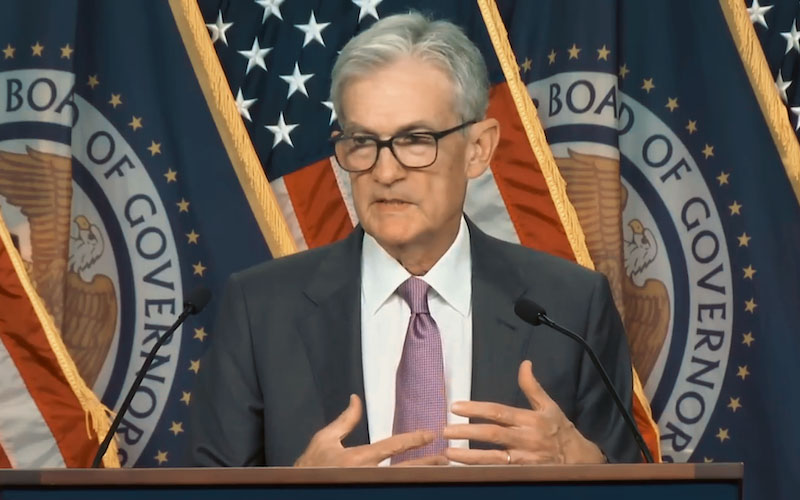
Has the Fed been "talking too much"? Warsh will limit excessive "forward guidance."
2026-05-23 02:16:11
At the inauguration ceremony of newly appointed Federal Reserve Chairman Kevin Warsh, US President Trump bluntly stated that Warsh would limit excessive "forward guidance," allowing the Fed to return to a more pragmatic, action-oriented style. This statement quickly ignited market attention and brought a long-debated academic question into the spotlight: How much should the Fed say? And what are the consequences of saying the wrong thing?
What is forward-looking guidance?
To understand this debate, we must first clarify what "forward guidance" actually is. Simply put, forward guidance is a policy tool used by the Federal Reserve to manage market expectations through public communication. The Fed no longer relies solely on raising or lowering interest rates to "take action," but also guides public opinion on the future path of interest rates through "talking," thereby influencing bond yields, stock market valuations, and overall financing costs.
It has several main forms:
Qualitative guidance, such as "interest rates will remain low for a considerable period of time," provides a clear direction but has ambiguous boundaries; calendar-based guidance explicitly states that interest rates will not be raised within a certain period, giving the market a time coordinate; state-dependent guidance links policies to economic data, such as specifying what level of unemployment or inflation should be reached before action is taken, making it more logically consistent.
Another well-known form is the dot plot. This is a chart of interest rate projections released by the Federal Reserve every quarter, with each dot representing a member of the FOMC's personal judgment on future interest rate levels. It is the most "visual" tool in the forward guidance toolbox, and also the most controversial.
However, one point must be clarified: the dot plot is not a policy commitment; its essence is the median set of individual committee members' forecasts, not the official policy roadmap of the Federal Reserve. It's just that the market often treats it as a set of ironclad rules, and when reality deviates, disappointment quickly amplifies volatility. This "misalignment" is the root of many problems.
Where did it come from? A tool born out of a crisis.
Forward guidance is not a traditional practice of the Federal Reserve. In the Greenspan era, "deliberate ambiguity" was even considered a virtue of the Fed—his famous quote, "If you think you understand what I'm saying, you're mistaken," perfectly encapsulates the Fed's philosophy at that time.
The real turning point came after the 2008 financial crisis.
With the federal funds rate falling to near zero, the traditional room for rate cuts has been exhausted, and the Federal Reserve needs new policy tools. Under Bernanke's leadership, the Fed has significantly expanded the use of forward guidance—sending a clear signal to the market through multiple channels, including FOMC statements, the chairman's press conference, and the dot plot: we will maintain an accommodative stance for a considerable period.
This strategy proved effective during the crisis. By making verbal commitments to lower long-term bond yields, the easing effect could extend to the far end of the yield curve even after short-term rates had bottomed out. At the same time, clear policy expectations stabilized market sentiment, reduced financing costs, and provided fertile ground for a gradual economic recovery.
From 2008 to 2015, the Federal Reserve's communication system became increasingly sophisticated: it introduced press conferences, released quarterly dot plots, and shifted its guidance from qualitative to quantitative. All of this transformed "speaking" itself into an independent monetary policy tool.
Where is the problem?
However, as forward guidance has evolved from a crisis emergency tool into daily practice, its inherent flaws have gradually become apparent.
The first problem: rigid policies.
Once the Federal Reserve publicly commits to a certain path, it easily becomes a "prisoner of its own words." Even if the data changes, policymakers often dare not easily reverse course in order to maintain established expectations and institutional credibility, and are forced to grit their teeth and stick to the original plan. Warsh has repeatedly criticized this point: forward guidance deprives the Federal Reserve of the flexibility to correct errors based on real-time information, turning what should be evidence-based decision-making into a performance to maintain commitments.
The second problem: the false expectations brought about by false precision.
While dot plots appear scientific and intuitive, they are built upon each committee member's personal assumptions about future economic trends. Economic forecasts are inherently uncertain, and this uncertainty is deliberately compressed when presented in a dot plot—the market receives a seemingly precise signal, but in reality, it's a probability estimate superimposed on a set of assumptions. If reality deviates from this pattern, investors' sense of being "disappointed" will be far stronger than when there is no guidance at all, thus exacerbating market volatility.
The third problem: excessive communication generates noise rather than information.
When the Federal Reserve Chairman, Vice Chairman, and regional Fed presidents take turns speaking, coupled with layers of media interpretation, the signals received by the market have turned from information into noise. Sometimes, the market volatility triggered by a single regional Fed president's speech far exceeds any change in economic fundamentals. The Fed's initial intention was to reduce uncertainty, but it has instead created another kind of uncertainty.
The most tragic case: the inflation lag in 2021-2022.
This period marks the most criticized historical juncture for forward guidance. Faced with rapidly escalating inflation signals, the Federal Reserve relied excessively on its previously established narrative of "temporary inflation," delaying aggressive tightening for months. When it was forced to change course, it could only slam on the brakes at an unprecedented speed, for which the market paid a heavy price. Critics argue that it was precisely the path dependence created by forward guidance that delayed the most critical policy juncture.
Powell's Compromise
During his tenure, Jerome Powell adopted a pragmatic compromise on forward guidance.
He embraced these tools, but remained fundamentally "data-dependent," resisting the idea of solidifying a particular path into a commitment. Over time, he gradually shifted the policy pace to a step-by-step review model of "meeting after meeting," rather than pre-determining future trends. After 2023, he began to explicitly state that he would no longer provide the kind of "clear forward guidance" of the past, a significant change in attitude.
In terms of effectiveness, communication during the Powell era was more transparent, with each Fed decision fully explained. However, this high transparency came at a cost: the Fed became the market's perpetual focus, and any subtle change in wording was amplified. The Fed became incredibly "important," sometimes even overshadowing the fundamentals of the real economy.
Walsh's criticism and blueprint for "institutional change"
Kevin Warsh, a former Federal Reserve governor, is a staunch critic of the current communication model. His core argument is that the Fed "talks too much."
In his view, forward guidance does more harm than good during normal economic times. It allows the Federal Reserve to "spoil" forecasts in advance, and human weakness makes policymakers reluctant to easily overturn publicly stated judgments, leading to the accumulation of errors through this "sunk cost effect." He advocates for a model of gradual review and decision-making based on the latest data, which can better avoid systemic misjudgments caused by path dependence.
Walsh called his reform direction "institutional change," and its core points are roughly as follows:
The dot plot should be significantly weakened or even phased out. While it provides "seemingly accurate" predictions, it lacks a matching flexible error correction mechanism and is one of the main sources of erroneous expectations.
Reduce the frequency of public statements by officials. Return to the traditional style of "less talk, more action," allowing the market to rely more on actual policy actions and economic data, rather than the rhetoric of Federal Reserve officials.
Continue to advance quantitative tightening (QT). While reducing the balance sheet, maintain flexibility in interest rate decisions, allowing balance sheet normalization to be a long-term, stable background process rather than a policy focus.
Returning to the core of its dual mandate, the Federal Reserve will focus on its two fundamental responsibilities of price stability and maximum employment, while limiting its scope for comment on broader issues such as financial stability and climate policy.
In short, Warsh wants the Federal Reserve to step less into the spotlight and do its job behind the scenes.
What does this mean for the market?
If the Warsh reforms are truly implemented, their impact will extend beyond the internal operations of the Federal Reserve, reaching the underlying logic of global asset pricing.
Volatility may increase structurally. For the past decade or so, forward guidance has served as a crucial anchor for market pricing. Once this anchor fades, the "uncertainty premium" will return to bond and stock pricing models. Investors will have to spend more time interpreting real-time economic data rather than waiting for the Federal Reserve to "announce" its next move.
The logic behind the shape of the yield curve will shift. Forward guidance has largely suppressed the far end of the yield curve. Without this "official pressure," the term premium is likely to rebound systematically, putting pressure on the repricing of long-duration bonds and highly valued growth stocks.
The signaling significance of policy independence. Warsh has repeatedly emphasized maintaining a distance from politics. However, given Trump's explicit involvement in Fed personnel appointments, whether this promise can be fulfilled is itself a variable that requires continuous market testing. Any wavering in expectations of independence could trigger a chain reaction affecting the credibility of the dollar and interest rate expectations.
A trade-off between short-term pain and long-term efficiency. Reducing forward guidance may make policies more timely and flexible, but the market's "learning period" will be accompanied by growing pains. Institutional investors need to rebuild their data frameworks, while retail investors will face more unpredictable market rhythms.
Conclusion: Less spoilers, more independent judgment.
Forward guidance is one of the most innovative inventions in the unconventional monetary policy toolkit of the post-crisis era. It bolstered policy effectiveness when interest rates bottomed out and stabilized market expectations when confidence was fragile. However, it also created path dependence, false precision, and communication noise, leaving unavoidable historical lessons in the inflation lag of 2021-2022.
Warsh's reform direction is essentially a critical reflection on this evolution. He may not be able to completely overturn the existing communication system, but the debate itself has forced markets and policymakers to rethink a fundamental question: In a world full of uncertainty, how much should the Fed's "commitment" really be worth?
For investors, the current priority is to reduce reliance on the Federal Reserve's "spoilers" and proactively build their own data-driven analytical framework and risk management system. Once the Fed's communication style changes, strategies that rely on "waiting to read the dot plot before placing bets" will face a fundamental risk of failure.
Three key issues warrant continued monitoring going forward: Will Warsh truly push forward with the dot plot reform? Can the Fed maintain its independence under political pressure? Has less forward guidance truly led to more flexible and timely policy responses? The answers to these questions will profoundly shape the landscape of global asset markets in the coming years.
What is forward-looking guidance?
To understand this debate, we must first clarify what "forward guidance" actually is. Simply put, forward guidance is a policy tool used by the Federal Reserve to manage market expectations through public communication. The Fed no longer relies solely on raising or lowering interest rates to "take action," but also guides public opinion on the future path of interest rates through "talking," thereby influencing bond yields, stock market valuations, and overall financing costs.
It has several main forms:
Qualitative guidance, such as "interest rates will remain low for a considerable period of time," provides a clear direction but has ambiguous boundaries; calendar-based guidance explicitly states that interest rates will not be raised within a certain period, giving the market a time coordinate; state-dependent guidance links policies to economic data, such as specifying what level of unemployment or inflation should be reached before action is taken, making it more logically consistent.
Another well-known form is the dot plot. This is a chart of interest rate projections released by the Federal Reserve every quarter, with each dot representing a member of the FOMC's personal judgment on future interest rate levels. It is the most "visual" tool in the forward guidance toolbox, and also the most controversial.
However, one point must be clarified: the dot plot is not a policy commitment; its essence is the median set of individual committee members' forecasts, not the official policy roadmap of the Federal Reserve. It's just that the market often treats it as a set of ironclad rules, and when reality deviates, disappointment quickly amplifies volatility. This "misalignment" is the root of many problems.
Where did it come from? A tool born out of a crisis.
Forward guidance is not a traditional practice of the Federal Reserve. In the Greenspan era, "deliberate ambiguity" was even considered a virtue of the Fed—his famous quote, "If you think you understand what I'm saying, you're mistaken," perfectly encapsulates the Fed's philosophy at that time.
The real turning point came after the 2008 financial crisis.
With the federal funds rate falling to near zero, the traditional room for rate cuts has been exhausted, and the Federal Reserve needs new policy tools. Under Bernanke's leadership, the Fed has significantly expanded the use of forward guidance—sending a clear signal to the market through multiple channels, including FOMC statements, the chairman's press conference, and the dot plot: we will maintain an accommodative stance for a considerable period.
This strategy proved effective during the crisis. By making verbal commitments to lower long-term bond yields, the easing effect could extend to the far end of the yield curve even after short-term rates had bottomed out. At the same time, clear policy expectations stabilized market sentiment, reduced financing costs, and provided fertile ground for a gradual economic recovery.
From 2008 to 2015, the Federal Reserve's communication system became increasingly sophisticated: it introduced press conferences, released quarterly dot plots, and shifted its guidance from qualitative to quantitative. All of this transformed "speaking" itself into an independent monetary policy tool.
Where is the problem?
However, as forward guidance has evolved from a crisis emergency tool into daily practice, its inherent flaws have gradually become apparent.
The first problem: rigid policies.
Once the Federal Reserve publicly commits to a certain path, it easily becomes a "prisoner of its own words." Even if the data changes, policymakers often dare not easily reverse course in order to maintain established expectations and institutional credibility, and are forced to grit their teeth and stick to the original plan. Warsh has repeatedly criticized this point: forward guidance deprives the Federal Reserve of the flexibility to correct errors based on real-time information, turning what should be evidence-based decision-making into a performance to maintain commitments.
The second problem: the false expectations brought about by false precision.
While dot plots appear scientific and intuitive, they are built upon each committee member's personal assumptions about future economic trends. Economic forecasts are inherently uncertain, and this uncertainty is deliberately compressed when presented in a dot plot—the market receives a seemingly precise signal, but in reality, it's a probability estimate superimposed on a set of assumptions. If reality deviates from this pattern, investors' sense of being "disappointed" will be far stronger than when there is no guidance at all, thus exacerbating market volatility.
The third problem: excessive communication generates noise rather than information.
When the Federal Reserve Chairman, Vice Chairman, and regional Fed presidents take turns speaking, coupled with layers of media interpretation, the signals received by the market have turned from information into noise. Sometimes, the market volatility triggered by a single regional Fed president's speech far exceeds any change in economic fundamentals. The Fed's initial intention was to reduce uncertainty, but it has instead created another kind of uncertainty.
The most tragic case: the inflation lag in 2021-2022.
This period marks the most criticized historical juncture for forward guidance. Faced with rapidly escalating inflation signals, the Federal Reserve relied excessively on its previously established narrative of "temporary inflation," delaying aggressive tightening for months. When it was forced to change course, it could only slam on the brakes at an unprecedented speed, for which the market paid a heavy price. Critics argue that it was precisely the path dependence created by forward guidance that delayed the most critical policy juncture.
Powell's Compromise
During his tenure, Jerome Powell adopted a pragmatic compromise on forward guidance.
He embraced these tools, but remained fundamentally "data-dependent," resisting the idea of solidifying a particular path into a commitment. Over time, he gradually shifted the policy pace to a step-by-step review model of "meeting after meeting," rather than pre-determining future trends. After 2023, he began to explicitly state that he would no longer provide the kind of "clear forward guidance" of the past, a significant change in attitude.
In terms of effectiveness, communication during the Powell era was more transparent, with each Fed decision fully explained. However, this high transparency came at a cost: the Fed became the market's perpetual focus, and any subtle change in wording was amplified. The Fed became incredibly "important," sometimes even overshadowing the fundamentals of the real economy.
Walsh's criticism and blueprint for "institutional change"
Kevin Warsh, a former Federal Reserve governor, is a staunch critic of the current communication model. His core argument is that the Fed "talks too much."
In his view, forward guidance does more harm than good during normal economic times. It allows the Federal Reserve to "spoil" forecasts in advance, and human weakness makes policymakers reluctant to easily overturn publicly stated judgments, leading to the accumulation of errors through this "sunk cost effect." He advocates for a model of gradual review and decision-making based on the latest data, which can better avoid systemic misjudgments caused by path dependence.
Walsh called his reform direction "institutional change," and its core points are roughly as follows:
The dot plot should be significantly weakened or even phased out. While it provides "seemingly accurate" predictions, it lacks a matching flexible error correction mechanism and is one of the main sources of erroneous expectations.
Reduce the frequency of public statements by officials. Return to the traditional style of "less talk, more action," allowing the market to rely more on actual policy actions and economic data, rather than the rhetoric of Federal Reserve officials.
Continue to advance quantitative tightening (QT). While reducing the balance sheet, maintain flexibility in interest rate decisions, allowing balance sheet normalization to be a long-term, stable background process rather than a policy focus.
Returning to the core of its dual mandate, the Federal Reserve will focus on its two fundamental responsibilities of price stability and maximum employment, while limiting its scope for comment on broader issues such as financial stability and climate policy.
In short, Warsh wants the Federal Reserve to step less into the spotlight and do its job behind the scenes.
What does this mean for the market?
If the Warsh reforms are truly implemented, their impact will extend beyond the internal operations of the Federal Reserve, reaching the underlying logic of global asset pricing.
Volatility may increase structurally. For the past decade or so, forward guidance has served as a crucial anchor for market pricing. Once this anchor fades, the "uncertainty premium" will return to bond and stock pricing models. Investors will have to spend more time interpreting real-time economic data rather than waiting for the Federal Reserve to "announce" its next move.
The logic behind the shape of the yield curve will shift. Forward guidance has largely suppressed the far end of the yield curve. Without this "official pressure," the term premium is likely to rebound systematically, putting pressure on the repricing of long-duration bonds and highly valued growth stocks.
The signaling significance of policy independence. Warsh has repeatedly emphasized maintaining a distance from politics. However, given Trump's explicit involvement in Fed personnel appointments, whether this promise can be fulfilled is itself a variable that requires continuous market testing. Any wavering in expectations of independence could trigger a chain reaction affecting the credibility of the dollar and interest rate expectations.
A trade-off between short-term pain and long-term efficiency. Reducing forward guidance may make policies more timely and flexible, but the market's "learning period" will be accompanied by growing pains. Institutional investors need to rebuild their data frameworks, while retail investors will face more unpredictable market rhythms.
Conclusion: Less spoilers, more independent judgment.
Forward guidance is one of the most innovative inventions in the unconventional monetary policy toolkit of the post-crisis era. It bolstered policy effectiveness when interest rates bottomed out and stabilized market expectations when confidence was fragile. However, it also created path dependence, false precision, and communication noise, leaving unavoidable historical lessons in the inflation lag of 2021-2022.
Warsh's reform direction is essentially a critical reflection on this evolution. He may not be able to completely overturn the existing communication system, but the debate itself has forced markets and policymakers to rethink a fundamental question: In a world full of uncertainty, how much should the Fed's "commitment" really be worth?
For investors, the current priority is to reduce reliance on the Federal Reserve's "spoilers" and proactively build their own data-driven analytical framework and risk management system. Once the Fed's communication style changes, strategies that rely on "waiting to read the dot plot before placing bets" will face a fundamental risk of failure.
Three key issues warrant continued monitoring going forward: Will Warsh truly push forward with the dot plot reform? Can the Fed maintain its independence under political pressure? Has less forward guidance truly led to more flexible and timely policy responses? The answers to these questions will profoundly shape the landscape of global asset markets in the coming years.
- Risk Warning and Disclaimer
- The market involves risk, and trading may not be suitable for all investors. This article is for reference only and does not constitute personal investment advice, nor does it take into account certain users’ specific investment objectives, financial situation, or other needs. Any investment decisions made based on this information are at your own risk.