The euro is nearing the 1.17 mark, rebounding on geopolitical momentum.
2026-04-08 17:55:12
On Wednesday, April 8th, during the European trading session, the euro rose 0.75% against the dollar to near 1.1700. The strength was primarily driven by a weaker dollar and a significant improvement in overall market risk sentiment. The dollar index fell 0.7% to near 98.80. Market sentiment shifted towards risk-sensitive assets, primarily driven by the temporary ceasefire agreement reached between the US and Iran.

The United States announced a suspension of planned attacks on Iranian civilian infrastructure in exchange for Tehran's agreement to reopen the Strait of Hormuz. Investors will now focus on the progress of negotiations between the United States and Iran regarding Tehran's proposed 10-point comprehensive ceasefire.
The rebound in the euro against the dollar is essentially a result of broad-based pressure on the dollar, rather than an improvement in the Eurozone's own fundamentals. The recovery in global risk appetite has directly weakened the dollar's safe-haven appeal, leading investors to sell dollars and allocate to higher-yielding assets, causing the dollar index to fall in tandem. The rise in S&P 500 futures further confirms this market dynamic; rising risk asset prices are typically accompanied by a relative decrease in dollar funding costs. The reopening of the Strait of Hormuz as a key energy corridor has alleviated concerns about potential supply disruptions and reduced the global uncertainty premium. This sentiment has spilled over into the foreign exchange market, causing the euro against the dollar to break free from purely fundamental constraints and exhibit typical cross-market correlation. Traders should note that such risk-driven market movements are often highly volatile, and if related events recur, the dollar may quickly recover its losses.
The temporary ceasefire agreement directly reduced the risk of energy supply chain disruptions, leading the market to price higher global growth expectations. The reopening of the Strait of Hormuz signifies a return to normalcy in oil shipping, reducing investor concerns about a double-dip inflation, thus boosting risk asset pricing. As a traditional safe-haven currency, the demand for the US dollar naturally weakens when uncertainty decreases, causing the euro to passively appreciate against the dollar. This transmission mechanism manifests in the foreign exchange market as a synchronized adjustment in the dollar index, rather than a change in Eurozone policy expectations. Traders have observed that similar geopolitical easing events typically amplify the impact of risk appetite on major currency pairs, especially when the dollar index is already relatively low, where the amplification effect is more pronounced.
Although Eurozone retail sales contracted by 0.2% month-on-month in February, worsening from the previous month's 0.1% and indicating a further slowdown in consumer demand, this data did not substantially drag down the euro against the dollar. The weak retail sales reflect the continued fragility of domestic demand in the Eurozone, possibly related to insufficient consumer confidence in a high-interest-rate environment; however, market focus has completely shifted to negative factors on the dollar side. Fundamental weaknesses were masked by risk-driven market sentiment, a common phenomenon in forex trading where the impact of domestic data is significantly diluted when external drivers are strong enough. While the Eurozone data itself showed insufficient economic resilience, it did not trigger adjustments to the European Central Bank's policy expectations, thus limiting its marginal impact on the exchange rate.
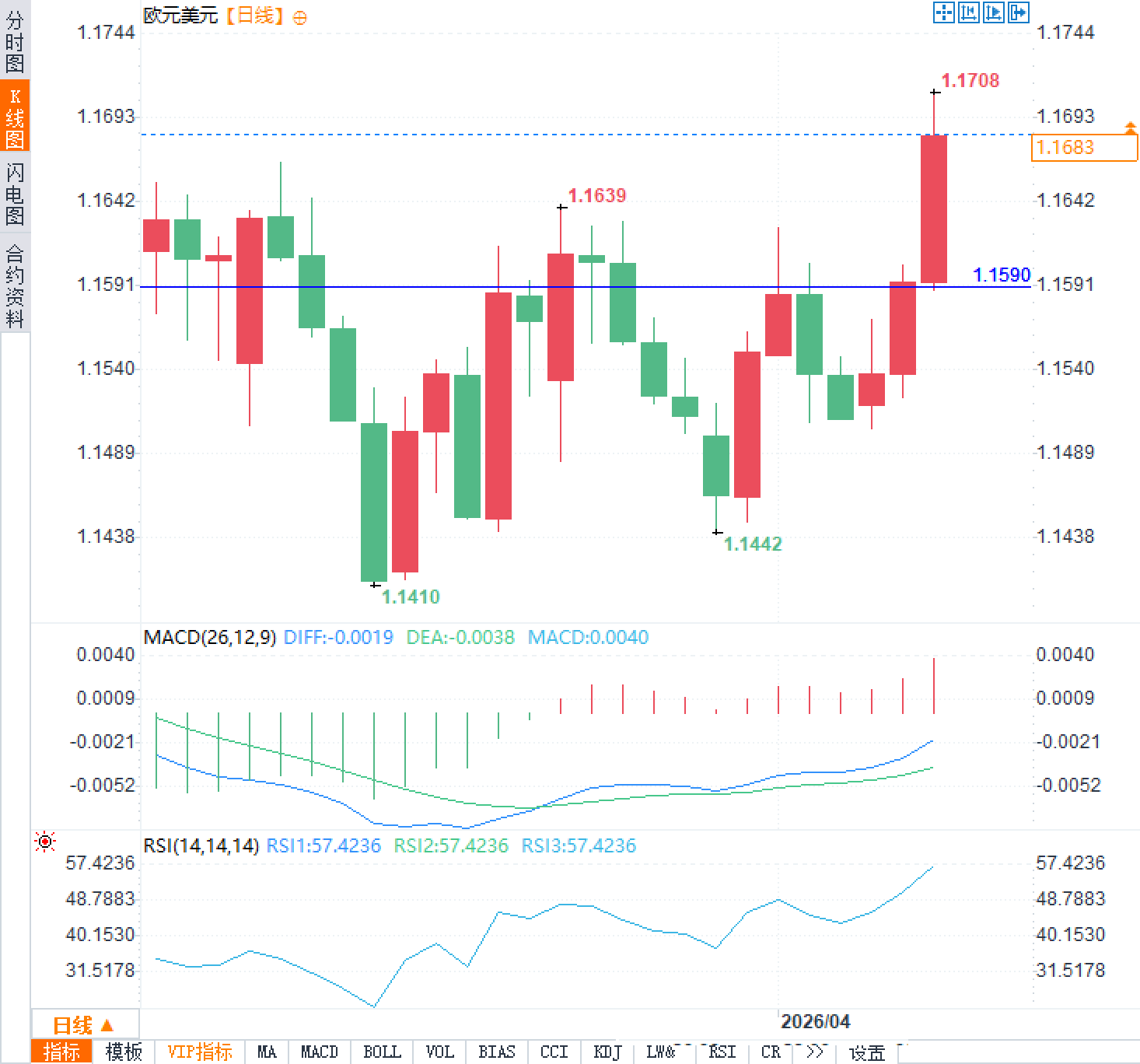
The United States announced a suspension of planned attacks on Iranian civilian infrastructure in exchange for Tehran's agreement to reopen the Strait of Hormuz. Investors will now focus on the progress of negotiations between the United States and Iran regarding Tehran's proposed 10-point comprehensive ceasefire.
Improved risk sentiment drives exchange rate movements
The rebound in the euro against the dollar is essentially a result of broad-based pressure on the dollar, rather than an improvement in the Eurozone's own fundamentals. The recovery in global risk appetite has directly weakened the dollar's safe-haven appeal, leading investors to sell dollars and allocate to higher-yielding assets, causing the dollar index to fall in tandem. The rise in S&P 500 futures further confirms this market dynamic; rising risk asset prices are typically accompanied by a relative decrease in dollar funding costs. The reopening of the Strait of Hormuz as a key energy corridor has alleviated concerns about potential supply disruptions and reduced the global uncertainty premium. This sentiment has spilled over into the foreign exchange market, causing the euro against the dollar to break free from purely fundamental constraints and exhibit typical cross-market correlation. Traders should note that such risk-driven market movements are often highly volatile, and if related events recur, the dollar may quickly recover its losses.
The transmission path of geopolitical easing in the foreign exchange market
The temporary ceasefire agreement directly reduced the risk of energy supply chain disruptions, leading the market to price higher global growth expectations. The reopening of the Strait of Hormuz signifies a return to normalcy in oil shipping, reducing investor concerns about a double-dip inflation, thus boosting risk asset pricing. As a traditional safe-haven currency, the demand for the US dollar naturally weakens when uncertainty decreases, causing the euro to passively appreciate against the dollar. This transmission mechanism manifests in the foreign exchange market as a synchronized adjustment in the dollar index, rather than a change in Eurozone policy expectations. Traders have observed that similar geopolitical easing events typically amplify the impact of risk appetite on major currency pairs, especially when the dollar index is already relatively low, where the amplification effect is more pronounced.
Secondary impacts of weak Eurozone retail data
Although Eurozone retail sales contracted by 0.2% month-on-month in February, worsening from the previous month's 0.1% and indicating a further slowdown in consumer demand, this data did not substantially drag down the euro against the dollar. The weak retail sales reflect the continued fragility of domestic demand in the Eurozone, possibly related to insufficient consumer confidence in a high-interest-rate environment; however, market focus has completely shifted to negative factors on the dollar side. Fundamental weaknesses were masked by risk-driven market sentiment, a common phenomenon in forex trading where the impact of domestic data is significantly diluted when external drivers are strong enough. While the Eurozone data itself showed insufficient economic resilience, it did not trigger adjustments to the European Central Bank's policy expectations, thus limiting its marginal impact on the exchange rate.
Frequently Asked Questions
Question 1: Why did the euro rise sharply against the dollar despite weak retail sales data from the Eurozone?
A: The core issue is that the synchronized weakening of the US dollar index has dominated the direction of exchange rates. Improved risk sentiment directly reduces the demand for the US dollar as a safe haven. Even with deteriorating Eurozone consumption data, the market prioritizes pricing in global growth expectations brought about by geopolitical easing, resulting in the euro passively benefiting. This cross-asset linkage mechanism marginalizes the impact of fundamental data.
Question 2: How long will the temporary ceasefire agreement support the euro against the dollar?
A: The sustainability of the ceasefire depends on the outcome of negotiations between the US and Iran on a 10-point comprehensive ceasefire plan. If the negotiations proceed smoothly, uncertainty will further decrease, and risk appetite may be maintained; conversely, if disagreements arise, demand for the US dollar as a safe haven may rebound rapidly, and the exchange rate may reverse. The current market situation is essentially event-driven, rather than a trend being established.
- Risk Warning and Disclaimer
- The market involves risk, and trading may not be suitable for all investors. This article is for reference only and does not constitute personal investment advice, nor does it take into account certain users’ specific investment objectives, financial situation, or other needs. Any investment decisions made based on this information are at your own risk.