Gold regains valuation space: Ceasefire breaks the curse of high oil prices
2026-04-08 19:40:48
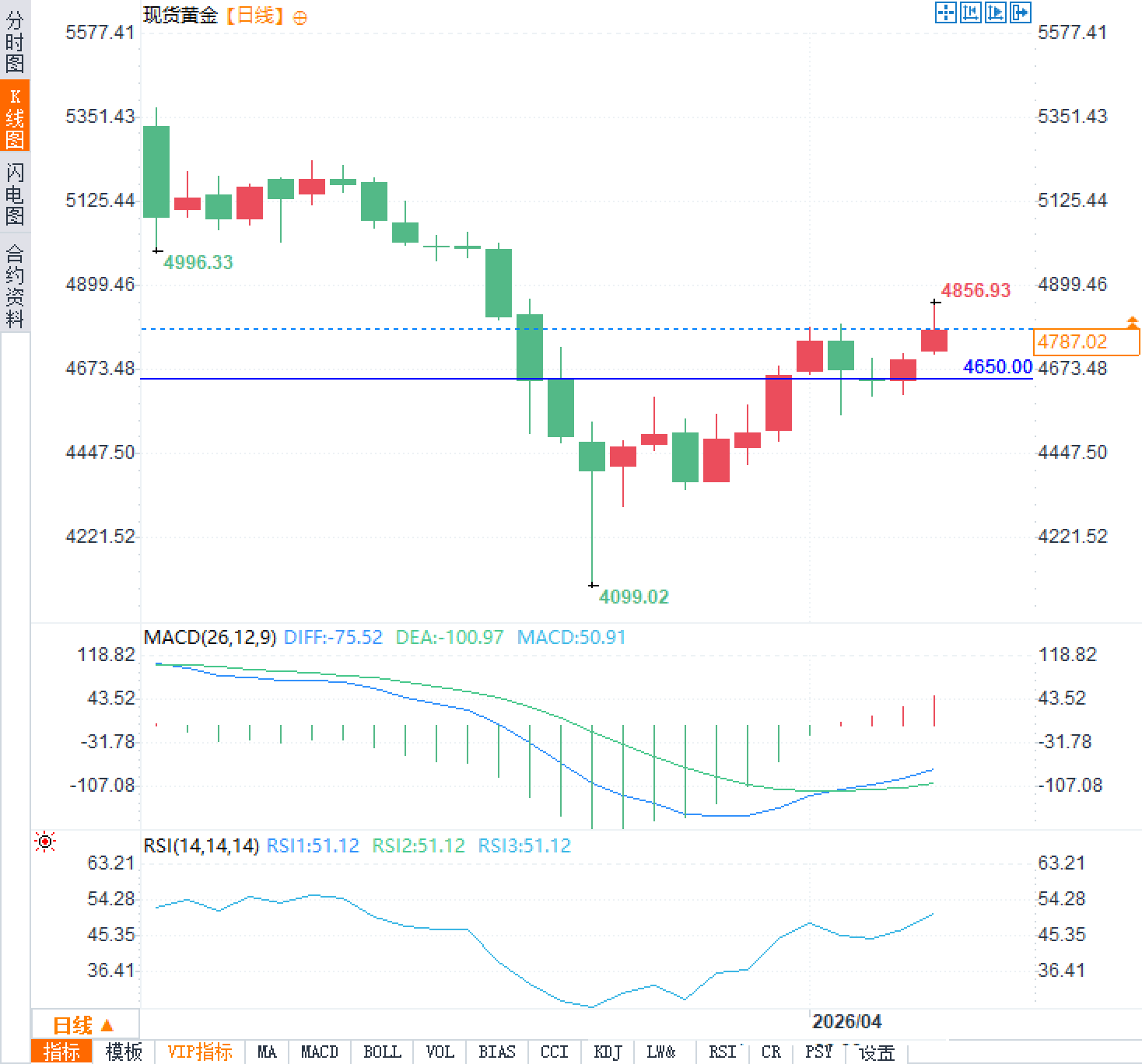
On Wednesday, April 8th, the spot gold market rebounded, with prices rising nearly 2% from the previous trading day, reaching a high of $4856 per ounce, a new high since March 19th. This move was directly driven by the two-week ceasefire agreement reached between the US and Iran, easing inflationary pressures caused by energy supply disruptions. Energy prices fell in tandem, and market expectations for the Federal Reserve's policy path in 2026 were subsequently adjusted. Previously, since the escalation of the conflict on February 28th, spot gold had fallen by more than 8%, with the high-interest-rate environment suppressing its non-interest-bearing asset attributes. The ceasefire news quickly changed the risk pricing logic.
The US and Iran announced a two-week ceasefire, with Iran pledging to keep the Strait of Hormuz open and ensure the safe passage of oil tankers. This agreement directly eliminated the biggest uncertainty surrounding the disruption of the global energy supply chain. Following the announcement, spot gold rose nearly 2% intraday, briefly testing the $4856/ounce level. Trump stated that Washington agreed to a two-week suspension of attacks and received a "workable" 10-point proposal from Iran as a basis for negotiations. This news triggered a short-term return of safe-haven funds, but the core driver was not traditional geopolitical panic, but rather improved interest rate sensitivity due to cooling inflation expectations.
The energy market reacted sharply, with crude oil prices falling back to around $94 per barrel, a significant drop from the peak of the conflict. Investors are reassessing the energy-driven inflation risk premium. In a high-interest-rate environment, gold typically comes under pressure due to rising opportunity costs, but this ceasefire has broken the previous negative feedback loop of "high oil prices - high inflation - Fed rate hike expectations".
The Strait of Hormuz, a vital waterway for 20% of global oil shipments, has seen its commitment to safe passage directly reduce the risk of supply shocks. Traders had previously worried that the ongoing conflict would drive up energy costs and subsequently transmit to core inflation, but the ceasefire agreement reversed this path. The decline in energy prices is expected to alleviate global inflationary pressures in 2026, particularly as lower US energy import costs will reduce upward pressure on the producer price index. This will lead the market to revise its pricing of energy-driven inflation, thereby easing pressure on gold's real yield.
Although the Federal Reserve's current federal funds rate remains between 3.5% and 3.75%, the decline in energy prices has reduced the necessity for interest rate hikes. During the previous conflict, the market was concerned that higher-than-expected inflation would force the Fed to postpone easing or even raise interest rates, but the ceasefire news reversed this narrative. Traders believe that every $10/barrel drop in energy prices roughly corresponds to a 0.2 to 0.3 percentage point decline in US inflation expectations, a magnitude sufficient to alter the marginal expectations in the Fed's dot plot.
The Federal Reserve kept interest rates unchanged at its March meeting, and the dot plot still projects one rate cut in 2026. However, the easing of inflation brought about by the ceasefire further solidified this path. Traders observed that federal funds rate futures indicate a slight increase in the probability of a rate cut this year, with the expectation of easing throughout 2026 revised from zero to a possible 25 basis point cut. Gold is highly sensitive to real interest rates, and this adjustment in expectations directly boosted its valuation center.
In a high-interest-rate environment, gold lacks yield-generating properties and should have remained under pressure. However, the fading risk of energy inflation has reduced the probability of rising real interest rates. As a result, the market has rebalanced the holding costs and safe-haven value of gold.
Spot gold has fallen more than 8% since the outbreak of the conflict, mainly due to the dual pressures of a stronger dollar and high interest rates. While the ceasefire agreement has eased geopolitical uncertainty, it has not completely eliminated long-term risk premiums. Traders need to distinguish between short-term event-driven rallies and medium-term trends: gold still faces structural pressure from high real interest rates, but downward revisions to inflation expectations have opened up room for valuation repair.
Future price movements will depend on the sustainability of the ceasefire, the speed of crude oil inventory replenishment, and the actual actions of the Federal Reserve. Progress in the negotiations on the 10-point proposal will further solidify energy price stability; conversely, if the agreement breaks down, gold may return to a safe-haven premium-driven pattern.
Immediate market impact after the ceasefire agreement was implemented
The US and Iran announced a two-week ceasefire, with Iran pledging to keep the Strait of Hormuz open and ensure the safe passage of oil tankers. This agreement directly eliminated the biggest uncertainty surrounding the disruption of the global energy supply chain. Following the announcement, spot gold rose nearly 2% intraday, briefly testing the $4856/ounce level. Trump stated that Washington agreed to a two-week suspension of attacks and received a "workable" 10-point proposal from Iran as a basis for negotiations. This news triggered a short-term return of safe-haven funds, but the core driver was not traditional geopolitical panic, but rather improved interest rate sensitivity due to cooling inflation expectations.
The energy market reacted sharply, with crude oil prices falling back to around $94 per barrel, a significant drop from the peak of the conflict. Investors are reassessing the energy-driven inflation risk premium. In a high-interest-rate environment, gold typically comes under pressure due to rising opportunity costs, but this ceasefire has broken the previous negative feedback loop of "high oil prices - high inflation - Fed rate hike expectations".
How Falling Energy Prices Will Reshape the Inflation Path
The Strait of Hormuz, a vital waterway for 20% of global oil shipments, has seen its commitment to safe passage directly reduce the risk of supply shocks. Traders had previously worried that the ongoing conflict would drive up energy costs and subsequently transmit to core inflation, but the ceasefire agreement reversed this path. The decline in energy prices is expected to alleviate global inflationary pressures in 2026, particularly as lower US energy import costs will reduce upward pressure on the producer price index. This will lead the market to revise its pricing of energy-driven inflation, thereby easing pressure on gold's real yield.
Although the Federal Reserve's current federal funds rate remains between 3.5% and 3.75%, the decline in energy prices has reduced the necessity for interest rate hikes. During the previous conflict, the market was concerned that higher-than-expected inflation would force the Fed to postpone easing or even raise interest rates, but the ceasefire news reversed this narrative. Traders believe that every $10/barrel drop in energy prices roughly corresponds to a 0.2 to 0.3 percentage point decline in US inflation expectations, a magnitude sufficient to alter the marginal expectations in the Fed's dot plot.
Adjustment of Federal Reserve monetary policy expectations
The Federal Reserve kept interest rates unchanged at its March meeting, and the dot plot still projects one rate cut in 2026. However, the easing of inflation brought about by the ceasefire further solidified this path. Traders observed that federal funds rate futures indicate a slight increase in the probability of a rate cut this year, with the expectation of easing throughout 2026 revised from zero to a possible 25 basis point cut. Gold is highly sensitive to real interest rates, and this adjustment in expectations directly boosted its valuation center.
In a high-interest-rate environment, gold lacks yield-generating properties and should have remained under pressure. However, the fading risk of energy inflation has reduced the probability of rising real interest rates. As a result, the market has rebalanced the holding costs and safe-haven value of gold.
The dynamic balance of gold's safe-haven properties in a high-interest-rate environment
Spot gold has fallen more than 8% since the outbreak of the conflict, mainly due to the dual pressures of a stronger dollar and high interest rates. While the ceasefire agreement has eased geopolitical uncertainty, it has not completely eliminated long-term risk premiums. Traders need to distinguish between short-term event-driven rallies and medium-term trends: gold still faces structural pressure from high real interest rates, but downward revisions to inflation expectations have opened up room for valuation repair.
Future price movements will depend on the sustainability of the ceasefire, the speed of crude oil inventory replenishment, and the actual actions of the Federal Reserve. Progress in the negotiations on the 10-point proposal will further solidify energy price stability; conversely, if the agreement breaks down, gold may return to a safe-haven premium-driven pattern.
Frequently Asked Questions
Question 1: Why did the US-Iran ceasefire agreement directly drive up the price of spot gold?
A: The ceasefire alleviated the risk of energy supply disruptions, and the decline in energy prices lowered inflation expectations, reducing the probability of a Fed rate hike. Gold had previously been pressured by concerns about high oil prices pushing up inflation; the agreement broke the negative feedback loop, and traders quickly adjusted their interest rate-sensitive positions, leading to a price rebound.
Question 2: What impact will the decline in energy prices have on the Federal Reserve's policy path in 2026?
A: Crude oil prices have fallen back to around $94 per barrel, which is expected to reduce US inflation by 0.2 to 0.3 percentage points, reinforcing expectations of a rate cut this year. The Fed's current interest rate is 3.5% to 3.75%. Lower energy costs have reduced the necessity for a rate hike, but the high-interest-rate environment still limits the long-term upside potential for gold.
- Risk Warning and Disclaimer
- The market involves risk, and trading may not be suitable for all investors. This article is for reference only and does not constitute personal investment advice, nor does it take into account certain users’ specific investment objectives, financial situation, or other needs. Any investment decisions made based on this information are at your own risk.