Renewed tensions in the Middle East and rising energy risks have boosted the US dollar, causing the USD/JPY pair to remain range-bound at high levels.
2026-04-09 10:35:09
The US dollar continued its rebound against the Japanese yen during the Asian session, recovering from a near three-week low of around 158 and now approaching the 159 level again. The core factors driving this rebound are renewed geopolitical tensions and the spillover effects of risks in the energy market.

From a fundamental perspective, uncertainty in the Middle East has increased significantly. Despite a temporary ceasefire agreement reached between the US and Iran, the situation quickly reversed. Israel's large-scale operations in Lebanon have raised questions about the ceasefire's sustainability, while Iran has also stated that the ceasefire terms have been violated. These developments have put renewed pressure on market risk appetite, leading to a shift of funds towards safe-haven assets such as the US dollar, thus supporting a stronger dollar index.
Meanwhile, energy transportation risks have become a significant variable affecting the yen. Reports indicate that shipping through the Strait of Hormuz was temporarily disrupted following the escalation of the conflict. Given Japan's high dependence on Middle Eastern crude oil imports, market concerns that disruptions to energy supplies will impact the Japanese economy further weaken the yen. Japan's structural reliance on energy imports means the yen is often under pressure during periods of rising energy risks.
Against this backdrop, the USD/JPY pair received dual support: on the one hand, the dollar's safe-haven appeal strengthened, and on the other hand, the yen's fundamentals came under pressure. This combination of a strong dollar and a weak yen propelled the exchange rate higher in the short term.
However, the upside potential for the US dollar remains somewhat limited. According to the latest meeting minutes, the Federal Reserve still favors a path of interest rate cuts as inflation gradually declines. The market widely expects further rate cuts this year, which keeps dollar bulls cautious. In other words, while short-term safe-haven demand supports the dollar, medium-term monetary policy expectations are constraining its growth.
The market will now focus on upcoming US inflation data, including the PCE price index and the CPI report. Higher-than-expected inflation data could strengthen expectations that the Federal Reserve will maintain high interest rates, further supporting the dollar; conversely, lower-than-expected inflation could weaken the dollar's momentum and put downward pressure on the exchange rate.
From a market sentiment perspective, investors are currently in a typical wait-and-see mode. On the one hand, geopolitical uncertainties bring volatility risks; on the other hand, key macroeconomic data has yet to be released, leaving the market lacking a clear direction. Therefore, exchange rates are more likely to exhibit a volatile trading pattern in the short term.
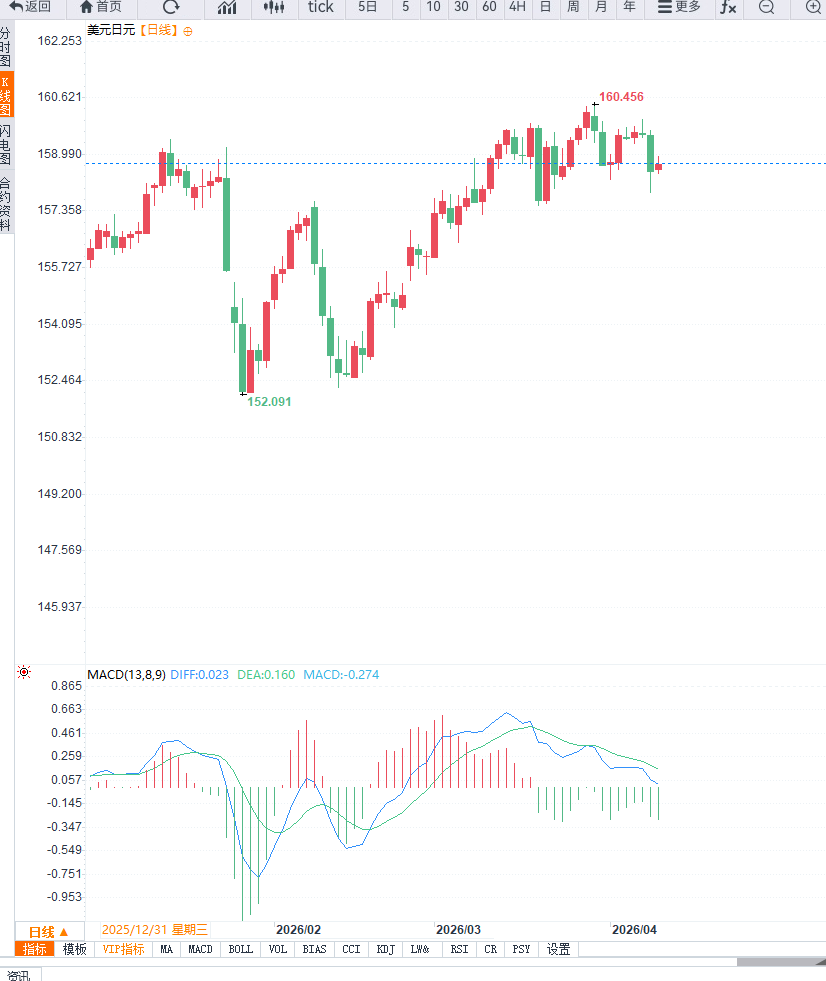
From a technical perspective, the daily chart shows that USD/JPY found support and rebounded after retracing below 158, remaining in a consolidation phase within a medium-term uptrend. The current price has risen back above the short-term moving averages, indicating a recovery in bullish momentum, but significant resistance remains around 159.20. A decisive break above this level could lead to a further test of the psychological level of 160.00. On the downside, the area around 158.20 forms key short-term support; a break below this level could lead to a retest of the previous lows.
Editor's Summary:
The current USD/JPY exchange rate movement exhibits typical multi-factor driven characteristics. In the short term, the volatile situation in the Middle East and rising energy risks have strengthened the safe-haven appeal of the US dollar, while simultaneously suppressing the yen's performance and driving a rebound in the exchange rate. However, in the medium term, the potential interest rate cut path of the Federal Reserve limits the upside potential of the US dollar, making it difficult for the exchange rate to form a one-sided trend. Future movements will depend on the evolution of the geopolitical situation and the performance of US inflation data. Before key variables become clearer, the exchange rate is likely to maintain a volatile but slightly bullish pattern.
From a fundamental perspective, uncertainty in the Middle East has increased significantly. Despite a temporary ceasefire agreement reached between the US and Iran, the situation quickly reversed. Israel's large-scale operations in Lebanon have raised questions about the ceasefire's sustainability, while Iran has also stated that the ceasefire terms have been violated. These developments have put renewed pressure on market risk appetite, leading to a shift of funds towards safe-haven assets such as the US dollar, thus supporting a stronger dollar index.
Meanwhile, energy transportation risks have become a significant variable affecting the yen. Reports indicate that shipping through the Strait of Hormuz was temporarily disrupted following the escalation of the conflict. Given Japan's high dependence on Middle Eastern crude oil imports, market concerns that disruptions to energy supplies will impact the Japanese economy further weaken the yen. Japan's structural reliance on energy imports means the yen is often under pressure during periods of rising energy risks.
Against this backdrop, the USD/JPY pair received dual support: on the one hand, the dollar's safe-haven appeal strengthened, and on the other hand, the yen's fundamentals came under pressure. This combination of a strong dollar and a weak yen propelled the exchange rate higher in the short term.
However, the upside potential for the US dollar remains somewhat limited. According to the latest meeting minutes, the Federal Reserve still favors a path of interest rate cuts as inflation gradually declines. The market widely expects further rate cuts this year, which keeps dollar bulls cautious. In other words, while short-term safe-haven demand supports the dollar, medium-term monetary policy expectations are constraining its growth.
The market will now focus on upcoming US inflation data, including the PCE price index and the CPI report. Higher-than-expected inflation data could strengthen expectations that the Federal Reserve will maintain high interest rates, further supporting the dollar; conversely, lower-than-expected inflation could weaken the dollar's momentum and put downward pressure on the exchange rate.
From a market sentiment perspective, investors are currently in a typical wait-and-see mode. On the one hand, geopolitical uncertainties bring volatility risks; on the other hand, key macroeconomic data has yet to be released, leaving the market lacking a clear direction. Therefore, exchange rates are more likely to exhibit a volatile trading pattern in the short term.
From a technical perspective, the daily chart shows that USD/JPY found support and rebounded after retracing below 158, remaining in a consolidation phase within a medium-term uptrend. The current price has risen back above the short-term moving averages, indicating a recovery in bullish momentum, but significant resistance remains around 159.20. A decisive break above this level could lead to a further test of the psychological level of 160.00. On the downside, the area around 158.20 forms key short-term support; a break below this level could lead to a retest of the previous lows.
Editor's Summary:
The current USD/JPY exchange rate movement exhibits typical multi-factor driven characteristics. In the short term, the volatile situation in the Middle East and rising energy risks have strengthened the safe-haven appeal of the US dollar, while simultaneously suppressing the yen's performance and driving a rebound in the exchange rate. However, in the medium term, the potential interest rate cut path of the Federal Reserve limits the upside potential of the US dollar, making it difficult for the exchange rate to form a one-sided trend. Future movements will depend on the evolution of the geopolitical situation and the performance of US inflation data. Before key variables become clearer, the exchange rate is likely to maintain a volatile but slightly bullish pattern.
- Risk Warning and Disclaimer
- The market involves risk, and trading may not be suitable for all investors. This article is for reference only and does not constitute personal investment advice, nor does it take into account certain users’ specific investment objectives, financial situation, or other needs. Any investment decisions made based on this information are at your own risk.