The escalating situation in the Middle East has fueled safe-haven demand, coupled with rising inflation expectations, causing the US dollar index to remain volatile at high levels.
2026-04-09 13:23:26
The US dollar index remained stable during the Asian session, currently hovering around 99.00, after declining for three consecutive trading days. Recent dollar movements have been primarily influenced by both geopolitical developments and monetary policy expectations.

From a fundamental perspective, the renewed volatility in the Middle East has become a significant factor driving the stabilization of the US dollar. Although the US and Iran previously reached a short-term ceasefire agreement, recent developments indicate its stability is weak. Iran has stated that the ceasefire terms have been violated and believes that continuing a long-term agreement is unreasonable. Meanwhile, reports that tanker traffic in the Strait of Hormuz was temporarily disrupted following Israel's escalation of its military operations in Lebanon have further exacerbated market uncertainty.
Against this backdrop, demand for safe-haven assets has rebounded. As the world's primary reserve currency, the US dollar often attracts capital during risk events, thus supporting the index. However, there are also signs that relevant trading routes may gradually resume, which has alleviated extreme market anxieties to some extent, limiting the dollar's gains.
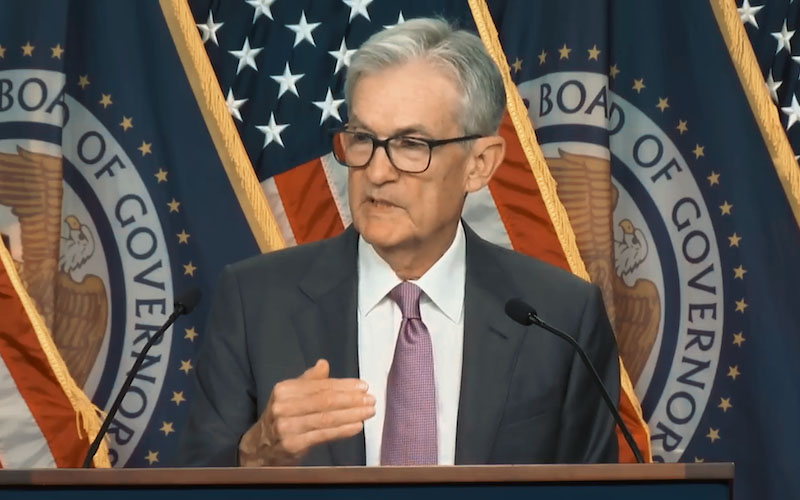
From a macroeconomic perspective, expectations regarding Federal Reserve policy remain a crucial variable influencing the US dollar. The latest meeting minutes show that the Fed maintained a generally "wait-and-see" stance, with most officials supporting no interest rate adjustments for the time being and believing that current policy is close to a neutral level. This implies a high threshold for further rate hikes in the short term, and also indicates that the policy path will be more dependent on data performance.
Market focus is gradually shifting to the upcoming US inflation data. Expectations suggest that the US March CPI may rise to 3.3% year-on-year, higher than the previous 2.4%, mainly driven by rising energy prices. If the inflation data is higher than expected, it will reinforce market expectations that interest rates will remain high, thus supporting the US dollar index; conversely, if inflation falls, it may increase market bets on interest rate cuts, putting pressure on the dollar.
From a market sentiment perspective, investors are currently leaning towards caution. On the one hand, geopolitical uncertainties make risk appetite unstable; on the other hand, key economic data has not yet been released, leaving the market lacking clear directional guidance. Under these circumstances, the US dollar index is more likely to maintain a range-bound trading pattern in the short term.
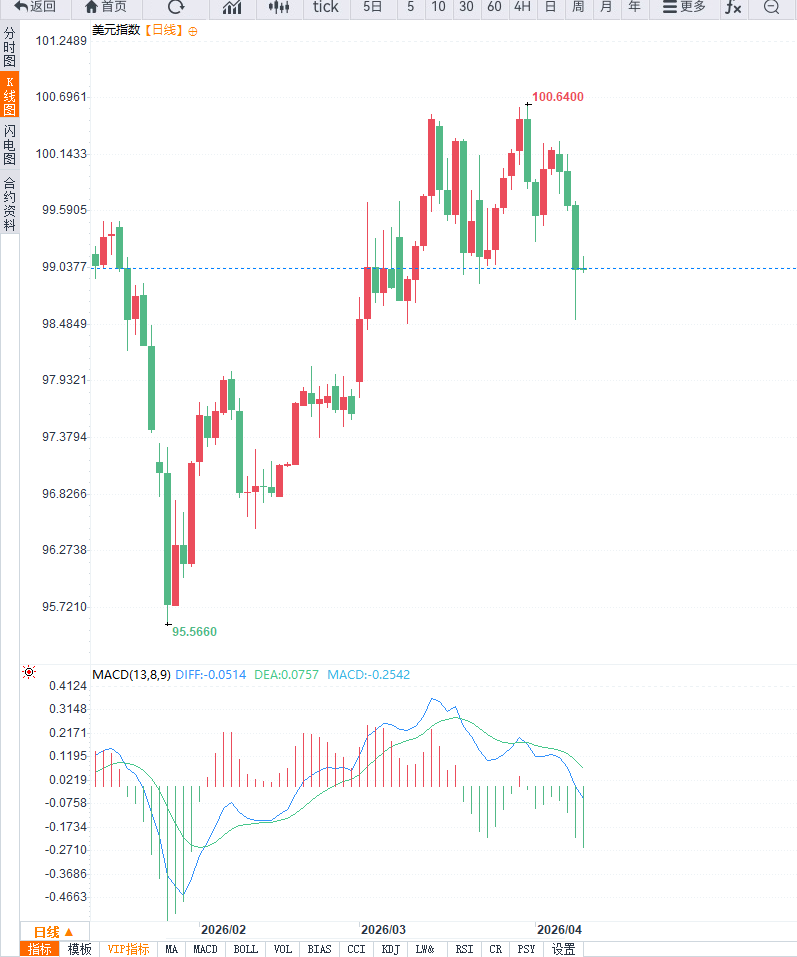
From a technical perspective, the daily chart shows that the US dollar index found support near 99 after a continuous pullback, and is still trading within a medium-term consolidation range. The current price is approaching the lower edge of the previous consolidation platform, with the 98.50 level forming a key support; a break below this level could open up further downside potential. On the upside, the 100.00 psychological level presents strong resistance, acting as both a psychological and technical barrier. In terms of momentum, the RSI is in neutral territory, and the MACD momentum is gradually converging, indicating that the trend direction is still unclear.
From a 4-hour chart perspective, the index has entered a consolidation phase after a short-term decline, with the moving average system gradually flattening out, indicating that the market is in a state of fluctuation and recovery. If it can break above 99.50 in the short term, it may further test the 100 level; conversely, if it falls below 99.00, it may retest the lower support area. Overall, the short-term trend is mainly volatile, and the direction still needs to be catalyzed by fundamental factors.
Editor's Summary:
The current trend of the US dollar index exhibits typical characteristics of "event-driven + data awaited." In the short term, the volatile situation in the Middle East provides safe-haven support for the dollar, but this impact is temporary. In the medium term, the Federal Reserve's policy path remains the core variable determining the dollar's direction. Before the release of inflation data, the market lacks clear guidance, and the dollar index is likely to maintain a consolidation pattern. Once there are significant changes in inflation data or policy expectations, the index may experience a directional breakout.
From a fundamental perspective, the renewed volatility in the Middle East has become a significant factor driving the stabilization of the US dollar. Although the US and Iran previously reached a short-term ceasefire agreement, recent developments indicate its stability is weak. Iran has stated that the ceasefire terms have been violated and believes that continuing a long-term agreement is unreasonable. Meanwhile, reports that tanker traffic in the Strait of Hormuz was temporarily disrupted following Israel's escalation of its military operations in Lebanon have further exacerbated market uncertainty.
Against this backdrop, demand for safe-haven assets has rebounded. As the world's primary reserve currency, the US dollar often attracts capital during risk events, thus supporting the index. However, there are also signs that relevant trading routes may gradually resume, which has alleviated extreme market anxieties to some extent, limiting the dollar's gains.
From a macroeconomic perspective, expectations regarding Federal Reserve policy remain a crucial variable influencing the US dollar. The latest meeting minutes show that the Fed maintained a generally "wait-and-see" stance, with most officials supporting no interest rate adjustments for the time being and believing that current policy is close to a neutral level. This implies a high threshold for further rate hikes in the short term, and also indicates that the policy path will be more dependent on data performance.
Market focus is gradually shifting to the upcoming US inflation data. Expectations suggest that the US March CPI may rise to 3.3% year-on-year, higher than the previous 2.4%, mainly driven by rising energy prices. If the inflation data is higher than expected, it will reinforce market expectations that interest rates will remain high, thus supporting the US dollar index; conversely, if inflation falls, it may increase market bets on interest rate cuts, putting pressure on the dollar.
From a market sentiment perspective, investors are currently leaning towards caution. On the one hand, geopolitical uncertainties make risk appetite unstable; on the other hand, key economic data has not yet been released, leaving the market lacking clear directional guidance. Under these circumstances, the US dollar index is more likely to maintain a range-bound trading pattern in the short term.
From a technical perspective, the daily chart shows that the US dollar index found support near 99 after a continuous pullback, and is still trading within a medium-term consolidation range. The current price is approaching the lower edge of the previous consolidation platform, with the 98.50 level forming a key support; a break below this level could open up further downside potential. On the upside, the 100.00 psychological level presents strong resistance, acting as both a psychological and technical barrier. In terms of momentum, the RSI is in neutral territory, and the MACD momentum is gradually converging, indicating that the trend direction is still unclear.
From a 4-hour chart perspective, the index has entered a consolidation phase after a short-term decline, with the moving average system gradually flattening out, indicating that the market is in a state of fluctuation and recovery. If it can break above 99.50 in the short term, it may further test the 100 level; conversely, if it falls below 99.00, it may retest the lower support area. Overall, the short-term trend is mainly volatile, and the direction still needs to be catalyzed by fundamental factors.
Editor's Summary:
The current trend of the US dollar index exhibits typical characteristics of "event-driven + data awaited." In the short term, the volatile situation in the Middle East provides safe-haven support for the dollar, but this impact is temporary. In the medium term, the Federal Reserve's policy path remains the core variable determining the dollar's direction. Before the release of inflation data, the market lacks clear guidance, and the dollar index is likely to maintain a consolidation pattern. Once there are significant changes in inflation data or policy expectations, the index may experience a directional breakout.
- Risk Warning and Disclaimer
- The market involves risk, and trading may not be suitable for all investors. This article is for reference only and does not constitute personal investment advice, nor does it take into account certain users’ specific investment objectives, financial situation, or other needs. Any investment decisions made based on this information are at your own risk.