Although the agreement was signed, the Strait of Hormuz remains under Iran's control. Why does Iran continue to guard the strait after the ceasefire?
2026-04-10 09:50:48
Although the ceasefire agreement between the United States and Iran officially took effect on April 8, 2026, maritime traffic through the Strait of Hormuz, a vital artery for global oil and commodity transport, remains strictly restricted by Iran. This crucial waterway has not seen a significant recovery in shipping activity, and tensions in the global energy supply chain have not eased.
The 14-day ceasefire agreement reportedly included Iran's lifting of its blockade of the Strait of Hormuz as a key condition. However, the reality after the agreement took effect shows that this commitment has not yet translated into actual freedom of navigation. On the mornings of April 8th and 9th, only a small number of vessels were observed leaving the Persian Gulf region. In contrast, approximately 135 vessels of various types pass through the strait daily during normal times.
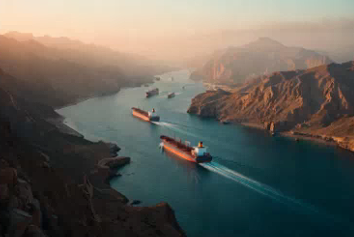
Iran has stated that the Strait of Hormuz remains open, but vessel passage requires coordination with its military and strict adherence to designated routes. Iran's continued de facto control over the waterway has led ship owners and crews to exercise extreme caution when attempting passage, thus preventing a rapid easing of pressure on global oil supplies.
Since the United States and Israel launched a war against Iran on February 28, 2026, Iran has publicly claimed control of the Strait of Hormuz and has effectively blocked most normal commercial shipping. During this period, Iran has taken action against ships in the Persian Gulf and surrounding waters from time to time and may have laid threatening facilities such as mines in the strait.
Nevertheless, Iran still allows some vessels to pass through certain routes close to its coastline, usually after negotiations on safe passage, sometimes requiring fees as high as $2 million. Meanwhile, Iran's own oil shipments through the Strait of Hormuz have remained largely at pre-war levels.
Following the ceasefire agreement's entry into force, ship owners reported that the restrictions had not changed significantly. On April 8, Iran broadcast a statement to maritime traffic, explicitly requiring vessels to obtain permission to pass through the maritime corridor. Iran further clarified that vessels would be restricted to two narrow routes close to its coastline to avoid anti-ship mines allegedly laid near the conventional shipping lanes on the southern side of the strait.
Most shipowners remain reluctant to take the risk of potential loss of personnel, cargo, and vessels. Jennifer Park, adjunct professor at the Institute for Defence and Security Studies at the University of Western Australia, said: “Global shipping flows won’t return to normal in 24 hours. Tanker owners, insurers, and crew need to truly believe that the risks have diminished, and not just that it’s temporarily suspended.”
The Strait of Hormuz is located between northern Iran and southern United Arab Emirates and Oman, connecting the Persian Gulf and the Indian Ocean. The strait is approximately 100 miles (161 kilometers) long, and its narrowest point is about 24 miles wide, with each two-way channel only about 12 miles wide.
This strait is a crucial choke point for the global oil market, handling approximately one-quarter of the world's seaborne oil trade. Countries such as Saudi Arabia, Iraq, Iran, Kuwait, Bahrain, Qatar, and the United Arab Emirates export oil through the Strait of Hormuz, with the majority of their cargo ultimately destined for Asian markets. The Gulf states also possess extensive refining facilities, producing diesel, naphtha (used in the manufacture of plastics and gasoline), and other petroleum derivatives, which are exported worldwide via the strait.
Besides energy resources, the Strait of Hormuz is also a bottleneck for transporting important industrial raw materials such as aluminum, fertilizers, and even helium, with helium playing an irreplaceable role in fields like semiconductor manufacturing. Any long-term restrictions on the strait will have a profound impact on global supply chains and energy prices.
For the Strait of Hormuz to fully reopen to international shipping, shipowners must first be assured that the safety of their crews and vessels is guaranteed. This may require Iran to lift its regulations mandating passage through its waters and charging associated fees. Furthermore, if vessels wish to resume using the traditional southern route, shipowners and crews will need explicit confirmation that the route is free from security threats such as mines.
Even if the above conditions are met, the sheer number of vessels waiting for two-way passage will present practical difficulties. In the absence of a comprehensive traffic management system, an effective traffic scheduling mechanism is needed. Both the traditional southern route and the newly established northern route with Iran have designated traffic separation schemes, which help reduce the risk of vessel collisions.
Some ship owners may be willing to negotiate passage directly with Iranian authorities. Previously, Iran had allowed vessels from certain countries, including Pakistan and Malaysia, to pass through the strait, while Thailand is actively seeking passage permits for nine vessels stranded in the Persian Gulf.
Iran has made it clear that even after the war ends, it plans to continue controlling passage through the Strait of Hormuz and translate this strategic leverage into tangible benefits. Reports indicate that the Iranian parliament is reviewing a bill to enshrine Iran's sovereignty over the strait in national law and formally establish a system for levying fees on passing vessels.
Under the United Nations Convention on the Law of the Sea (UNCLOS), states have sovereignty over their territorial waters extending 12 nautical miles from their coastlines. Parts of the Strait of Hormuz fall within the territorial waters of Iran and Oman. However, the Convention also stipulates that states must allow "innocent passage" of foreign vessels and must not obstruct "transit passage" in straits used for international navigation. The Convention also explicitly prohibits states from charging foreign vessels fees solely for their passage through their territorial waters.
Although Iran signed the United Nations Convention on the Law of the Sea in 1982, its parliament has never formally ratified the treaty. The head of the International Maritime Organization (IMO), the world's leading shipping organization, stated on April 9 that any attempt by Iran to permanently implement a toll system for passage through the Strait of Hormuz is unacceptable and would set a dangerous precedent.
While the ceasefire agreement has brought hope for easing tensions, the actual opening of the Strait of Hormuz still faces multiple obstacles. Iran's continued control of the strait reflects both its strategic considerations and highlights the complexity of rebuilding regional security trust. Only when ship owners, insurance companies, and the international community are truly convinced that the risks have been significantly reduced and that the relevant navigation rules comply with the principles of international freedom of navigation can this vital global energy artery return to its former bustling state.
Shipping data in the coming days and weeks will be a key indicator of the effectiveness of the ceasefire agreement and will also profoundly influence the direction of the global oil market and geopolitical landscape.
The ceasefire agreement took effect, but it did not bring about smooth shipping.
The 14-day ceasefire agreement reportedly included Iran's lifting of its blockade of the Strait of Hormuz as a key condition. However, the reality after the agreement took effect shows that this commitment has not yet translated into actual freedom of navigation. On the mornings of April 8th and 9th, only a small number of vessels were observed leaving the Persian Gulf region. In contrast, approximately 135 vessels of various types pass through the strait daily during normal times.
Iran has stated that the Strait of Hormuz remains open, but vessel passage requires coordination with its military and strict adherence to designated routes. Iran's continued de facto control over the waterway has led ship owners and crews to exercise extreme caution when attempting passage, thus preventing a rapid easing of pressure on global oil supplies.
Iran's de facto control over the Strait of Hormuz since the outbreak of the war
Since the United States and Israel launched a war against Iran on February 28, 2026, Iran has publicly claimed control of the Strait of Hormuz and has effectively blocked most normal commercial shipping. During this period, Iran has taken action against ships in the Persian Gulf and surrounding waters from time to time and may have laid threatening facilities such as mines in the strait.
Nevertheless, Iran still allows some vessels to pass through certain routes close to its coastline, usually after negotiations on safe passage, sometimes requiring fees as high as $2 million. Meanwhile, Iran's own oil shipments through the Strait of Hormuz have remained largely at pre-war levels.
Following the ceasefire agreement's entry into force, ship owners reported that the restrictions had not changed significantly. On April 8, Iran broadcast a statement to maritime traffic, explicitly requiring vessels to obtain permission to pass through the maritime corridor. Iran further clarified that vessels would be restricted to two narrow routes close to its coastline to avoid anti-ship mines allegedly laid near the conventional shipping lanes on the southern side of the strait.
Most shipowners remain reluctant to take the risk of potential loss of personnel, cargo, and vessels. Jennifer Park, adjunct professor at the Institute for Defence and Security Studies at the University of Western Australia, said: “Global shipping flows won’t return to normal in 24 hours. Tanker owners, insurers, and crew need to truly believe that the risks have diminished, and not just that it’s temporarily suspended.”
The strategic importance of the Strait of Hormuz
The Strait of Hormuz is located between northern Iran and southern United Arab Emirates and Oman, connecting the Persian Gulf and the Indian Ocean. The strait is approximately 100 miles (161 kilometers) long, and its narrowest point is about 24 miles wide, with each two-way channel only about 12 miles wide.
This strait is a crucial choke point for the global oil market, handling approximately one-quarter of the world's seaborne oil trade. Countries such as Saudi Arabia, Iraq, Iran, Kuwait, Bahrain, Qatar, and the United Arab Emirates export oil through the Strait of Hormuz, with the majority of their cargo ultimately destined for Asian markets. The Gulf states also possess extensive refining facilities, producing diesel, naphtha (used in the manufacture of plastics and gasoline), and other petroleum derivatives, which are exported worldwide via the strait.
Besides energy resources, the Strait of Hormuz is also a bottleneck for transporting important industrial raw materials such as aluminum, fertilizers, and even helium, with helium playing an irreplaceable role in fields like semiconductor manufacturing. Any long-term restrictions on the strait will have a profound impact on global supply chains and energy prices.
What conditions must be met to reopen the strait?
For the Strait of Hormuz to fully reopen to international shipping, shipowners must first be assured that the safety of their crews and vessels is guaranteed. This may require Iran to lift its regulations mandating passage through its waters and charging associated fees. Furthermore, if vessels wish to resume using the traditional southern route, shipowners and crews will need explicit confirmation that the route is free from security threats such as mines.
Even if the above conditions are met, the sheer number of vessels waiting for two-way passage will present practical difficulties. In the absence of a comprehensive traffic management system, an effective traffic scheduling mechanism is needed. Both the traditional southern route and the newly established northern route with Iran have designated traffic separation schemes, which help reduce the risk of vessel collisions.
Some ship owners may be willing to negotiate passage directly with Iranian authorities. Previously, Iran had allowed vessels from certain countries, including Pakistan and Malaysia, to pass through the strait, while Thailand is actively seeking passage permits for nine vessels stranded in the Persian Gulf.
Iran's legal and political stance on control of the Straits
Iran has made it clear that even after the war ends, it plans to continue controlling passage through the Strait of Hormuz and translate this strategic leverage into tangible benefits. Reports indicate that the Iranian parliament is reviewing a bill to enshrine Iran's sovereignty over the strait in national law and formally establish a system for levying fees on passing vessels.
Under the United Nations Convention on the Law of the Sea (UNCLOS), states have sovereignty over their territorial waters extending 12 nautical miles from their coastlines. Parts of the Strait of Hormuz fall within the territorial waters of Iran and Oman. However, the Convention also stipulates that states must allow "innocent passage" of foreign vessels and must not obstruct "transit passage" in straits used for international navigation. The Convention also explicitly prohibits states from charging foreign vessels fees solely for their passage through their territorial waters.
Although Iran signed the United Nations Convention on the Law of the Sea in 1982, its parliament has never formally ratified the treaty. The head of the International Maritime Organization (IMO), the world's leading shipping organization, stated on April 9 that any attempt by Iran to permanently implement a toll system for passage through the Strait of Hormuz is unacceptable and would set a dangerous precedent.
Conclusion: The reopening of the Taiwan Strait still requires the joint efforts of all parties.
While the ceasefire agreement has brought hope for easing tensions, the actual opening of the Strait of Hormuz still faces multiple obstacles. Iran's continued control of the strait reflects both its strategic considerations and highlights the complexity of rebuilding regional security trust. Only when ship owners, insurance companies, and the international community are truly convinced that the risks have been significantly reduced and that the relevant navigation rules comply with the principles of international freedom of navigation can this vital global energy artery return to its former bustling state.
Shipping data in the coming days and weeks will be a key indicator of the effectiveness of the ceasefire agreement and will also profoundly influence the direction of the global oil market and geopolitical landscape.
- Risk Warning and Disclaimer
- The market involves risk, and trading may not be suitable for all investors. This article is for reference only and does not constitute personal investment advice, nor does it take into account certain users’ specific investment objectives, financial situation, or other needs. Any investment decisions made based on this information are at your own risk.