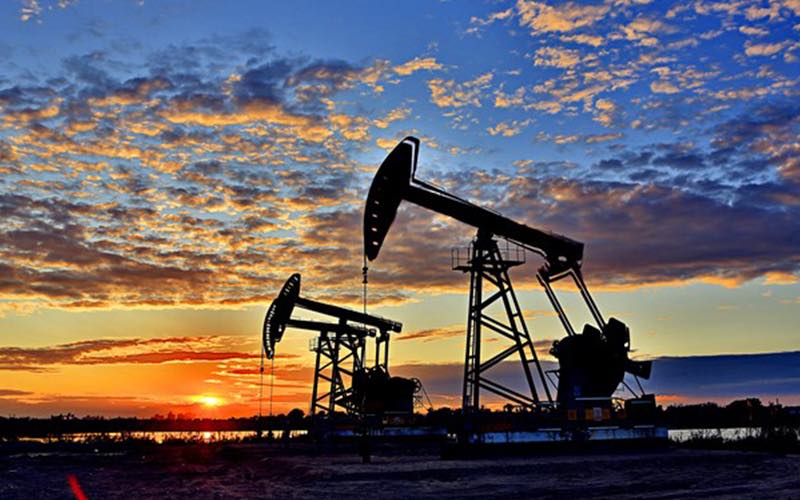
Oil crisis: Will the Federal Reserve intervene?
2026-04-10 19:10:29
Amidst the dramatic volatility in global energy markets and escalating geopolitical conflicts, the market is rife with extremely pessimistic predictions. Many pessimists firmly believe that if the global economy were to experience a sudden oil supply shock, governments and central banks would be forced into a passive, helpless state, left to allow the crisis to unfold unchecked. However, this core implicit assumption is completely untenable in the face of realistic logic and historical patterns.
The oil crisis is considered one of the most intractable and destructive economic shocks precisely because it possesses the dual characteristics of stagflation—while rapidly pushing up inflation across society, it severely drags down economic growth momentum, plunging policymakers into a dilemma between "fighting inflation" and "stabilizing growth." Throughout modern economic history, countless crises have repeatedly demonstrated that, in the face of such complex supply shocks, proactively adopting defensive strategies and preparing for risk hedging in advance is the most rational and wise choice.
Historical lessons: Systemic responses to supply shocks
Previously, we analyzed the transmission path of the economic recession that the oil crisis might trigger, and clearly pointed out that global investors often have a fatal misconception: they always learn the wrong lessons from the superficial phenomena of the most recent crisis, while ignoring the underlying core laws. When the Arab oil embargo broke out in 1973, the market generally believed that the geopolitical shock was only a short-term phenomenon, underestimating its long-term destructive power; the second oil crisis triggered by the Iranian Revolution in 1979 made the market that underestimated the risks pay a heavy price; although the Iraq War in 2003 briefly pushed up oil prices, it did not trigger a full-blown recession, and traders quickly regained their blind confidence; until the oil price surge and the financial crisis overlapped in 2008, the crisis script was brutally repeated again.
History seems to be repeating itself. Since the joint US-Israel military attack on Iran in late February, the global energy supply chain has been directly impacted, with Brent crude oil prices surging by over 60% in just over a month, breaking through key psychological barriers. Faced with such a dramatic increase, the market has once again fallen into the dangerous mindset that "this crisis is controllable and will end soon." However, we must be clear that whether the oil shock will evolve into a full-blown economic recession is not determined by sentiment, but by a series of specific, quantifiable, and trackable core conditions. This is the key point that this article needs to focus on dissecting and analyzing.
Looking back at history, the global economy, central banks, and governments have never truly been "inactive" in the face of major oil supply shocks. The 1973 oil embargo reduced global oil supply by about 6%, an unprecedented shock, but the global system did not collapse. In 1990, Iraq's invasion of Kuwait caused oil prices to surge by nearly 80% within three months, but through policy coordination and production capacity adjustments, prices largely returned to normal within six months. Although oil prices reached a high of $147 per barrel in 2008, what truly breached the global financial system was the accumulated leverage within the financial system itself, not the oil price itself.
The current situation follows the same historical logic, and the global response system has been rapidly activated. The International Energy Agency (IEA) urgently approved the release of 400 million barrels of strategic oil reserves, a record large, directly injecting liquidity into the market to stabilize prices; Saudi Arabia quickly adjusted its transportation routes, diverting oil to Yanbu Port on the Red Sea via east-west pipelines to avoid the risks of the Strait of Hormuz; and the US military has been fully involved since March 19, conducting mine clearance and escort operations to push for the restoration of normal navigation in the strait. These intensive measures clearly demonstrate that the global energy and economic system is proactively adapting and adjusting under pressure, rather than passively waiting and passively accepting its fate.
The real risk: Sequencing Trap
Many investors mistakenly believe that the risk of the oil crisis is a sudden market collapse and a precipitous drop in asset prices within weeks. However, the most critical and hidden risk is not a sudden collapse, but the "sequencing trap"—a fatal cycle repeatedly proven by history, which is the key path for each oil crisis to evolve into a recession.
The logic of this cycle is clear and brutal: the oil crisis first drives up energy prices, directly triggering a rapid rise in inflation across society. With inflation soaring, the Federal Reserve is unable to immediately implement easing policies. Subsequently, high energy costs act like a "regressive tax," squeezing the disposable income of all consumers regardless of wealth, while simultaneously significantly increasing production, transportation, and operating costs for businesses, eroding profit margins. When income and profits are under pressure, aggregate demand collapses rapidly, economic momentum cools drastically, and inflation quickly reverses. Ultimately, the combination of high inflation in the early stages and the collapse in demand in the later stages leads to a deep economic recession. This complete cycle has been repeated in 1974, 1980, 1982, and 2008. Oil prices often plummet from their peak within months, but the recession cycles tend to last longer, causing more lasting damage to the economy and markets.
The Federal Reserve's policy toolbox has drastically different effects under different types of shocks. Faced with demand-driven deflationary shocks (such as the 2008-2009 financial crisis and the March 2020 pandemic), the Fed can readily inject liquidity into the market through significant interest rate cuts and quantitative easing to quickly stabilize the financial system. However, when faced with supply-side stagflation shocks, the policy logic is completely reversed: significant interest rate cuts or large-scale quantitative easing at this time will not only fail to alleviate supply shortages but may further push up dollar-denominated energy and commodity prices, reigniting the wage-price spiral and causing stagflation to spiral out of control. Former Fed officials vividly remember the policy mistakes of then-Chairman Arthur Burns in the 1970s, which determines the Fed's extreme caution at this stage.
However, compared to the 1970s, the current economic environment in which the Federal Reserve operates has fundamentally improved, significantly increasing its policy buffer. On the one hand, US energy consumption per unit of GDP has decreased by approximately 60% since 1973, significantly reducing the economy's dependence on oil. On the other hand, the US has transformed from a net energy importer to a net energy exporter, significantly mitigating the impact of high oil prices on the US balance of payments and household consumption. These two structural changes provide the Federal Reserve with crucial room to buffer the transmission of high oil prices to core inflation.
This means the Federal Reserve is not entirely powerless, but it cannot simply replicate past easing models. It can precisely stabilize the credit market and prevent liquidity shortages through targeted liquidity support, regular repurchase operations, and dollar swap agreements with major central banks such as the European Central Bank and the Bank of Japan, while mitigating the risk of inflationary backlash from full-scale quantitative easing. It is certain that the Fed will ultimately provide the necessary support to the market; the only uncertainty lies in the timing of the policy and political will. At current levels, oil prices approached $120 per barrel this week, failing to trigger conditions for immediate large-scale unconventional intervention by the Fed.
Three Scenario Probabilities and Market Outlook
The ultimate outcome of this oil crisis hinges heavily on the duration of the Strait of Hormuz blockade and the extent to which navigation resumes; this is a core variable affecting global oil supply. Based on the latest geopolitical developments, military operations, and diplomatic maneuvering, we assess the probability of three future scenarios and outline their key impacts on various asset classes:
Scenario 1 (probability 50%): Basically resolved within 6-8 weeks
This is the baseline scenario. Simultaneous US military pressure and diplomatic mediation lead to internal compromises within Iran, resulting in a rapid de-escalation of the conflict. The subsequent clearing of mines in the Strait and restoration of commercial shipping insurance will require several additional weeks, but overall disruptions are manageable. Oil prices will gradually fall back to a reasonable range of $80-90 per barrel.
The Federal Reserve will maintain a gradual pace, implementing 2-3 regular interest rate cuts in the second half of 2026, returning to a normal monetary policy cycle.
The 10-year US Treasury yield fell back to the 3.8%-4.0% range; the US dollar index weakened moderately by 3%-5%; the S&P 500 index gradually recovered, but due to the previous shock and earnings downgrades, it will still be 8%-12% lower than the pre-conflict high at the end of the year.
Scenario 2 (probability 35%): The turmoil continues until the third quarter of 2026.
Although a temporary ceasefire has been achieved, long-term safety risks remain in the Taiwan Strait, commercial shipping is recovering slowly, and the oil supply gap persists. Oil prices are expected to remain high at $100-120 per barrel for two quarters, continuing to suppress demand. The drag on consumption and businesses from high oil prices is gradually becoming apparent, and a sharp decline in demand could trigger a substantial economic recession.
The Federal Reserve was forced to abandon its gradual approach, cutting interest rates by 150-200 basis points in succession and restarting quantitative easing to fully support the economy.
The 10-year Treasury yield fell rapidly to 3.0%-3.2%; the US dollar initially rose 5%-8% due to global safe-haven demand, but then fell back as the Federal Reserve eased monetary policy; the S&P 500 index may experience a deep correction of 20%-25% before the Federal Reserve intervenes explicitly, testing the key support range of 4800-5000 points.
Scenario 3 (15% probability): Prolonged lockdown triggers a credit crisis
This is the least probable but most destructive tail risk. If the Strait of Hormuz is blocked for a prolonged period, the energy crisis and the high-interest-rate environment will overlap, triggering liquidity crises and debt defaults among large financial institutions and highly indebted companies. The risk will spread rapidly and eventually evolve into a full-blown credit crisis.
The Federal Reserve was forced to adopt extreme easing measures, lowering policy rates to the zero range and launching large-scale quantitative easing to bail out the market.
The 10-year Treasury yield fell to a historic low of 2.5%-2.8%; the US dollar initially strengthened rapidly due to safe-haven demand, but then fell sharply following unlimited easing; the S&P 500 index will experience an epic pullback, with the low point possibly reaching 3800-4200 points, a maximum pullback of 40%-50%, before a rapid rebound will occur after strong intervention from the Federal Reserve.
Strategies investors should adopt now
Having personally experienced and reviewed four major market crises, we have clearly identified two types of investment behaviors that are most fatal and most likely to lead to permanent losses: First, blindly liquidating positions when the market is most panicked and assets are cheapest, selling at the lowest point; second, harboring wishful thinking because "the disaster has not yet occurred," ignoring the gradual accumulation of risk, and delaying defensive measures. These two extreme mindsets are the core reasons why ordinary investors lose money during crises.
Given the evolving pace of the current oil shock and the constraints of Federal Reserve policy, a defensive approach combined with steady progress is the most reasonable and likely-to-win strategy. Specifically, this involves steadily increasing cash and short-term Treasury bond holdings to enhance portfolio liquidity and resilience against volatility; simultaneously, reducing exposure to sectors highly sensitive to economic cycles to mitigate the downside risk to earnings from the combined impact of energy and interest rate shocks.
The once-popular "reflation trade" logic has largely ended, and the market is now in a critical phase of shifting from stagflation expectations to recession expectations. Because the decline in inflation has a lag, the Federal Reserve's policy actions are likely to be slower than market expectations. Before a real policy shift, economic growth momentum and corporate profitability will continue to be under pressure, making this window of opportunity the riskiest and most vulnerable phase for investment portfolios.
We do not doubt that the Federal Reserve will eventually step in to support the market, but investors must face a core question: before the Federal Reserve officially provides policy support, can your portfolio protect its principal and avoid permanent capital loss? The impact of this oil crisis is gradual and cascading, rather than erupting overnight, which provides us with a valuable window of opportunity to adjust our positions.
The current market environment is neither suitable for panicking under the influence of extreme pessimism nor for aggressively increasing positions driven by blind optimism. Now is the best time to focus on defense, control risk, and wait for opportune moments to attack. Is your investment portfolio prepared for the slowly but clearly emerging risk of an oil crisis?
The oil crisis is considered one of the most intractable and destructive economic shocks precisely because it possesses the dual characteristics of stagflation—while rapidly pushing up inflation across society, it severely drags down economic growth momentum, plunging policymakers into a dilemma between "fighting inflation" and "stabilizing growth." Throughout modern economic history, countless crises have repeatedly demonstrated that, in the face of such complex supply shocks, proactively adopting defensive strategies and preparing for risk hedging in advance is the most rational and wise choice.
Historical lessons: Systemic responses to supply shocks
Previously, we analyzed the transmission path of the economic recession that the oil crisis might trigger, and clearly pointed out that global investors often have a fatal misconception: they always learn the wrong lessons from the superficial phenomena of the most recent crisis, while ignoring the underlying core laws. When the Arab oil embargo broke out in 1973, the market generally believed that the geopolitical shock was only a short-term phenomenon, underestimating its long-term destructive power; the second oil crisis triggered by the Iranian Revolution in 1979 made the market that underestimated the risks pay a heavy price; although the Iraq War in 2003 briefly pushed up oil prices, it did not trigger a full-blown recession, and traders quickly regained their blind confidence; until the oil price surge and the financial crisis overlapped in 2008, the crisis script was brutally repeated again.
History seems to be repeating itself. Since the joint US-Israel military attack on Iran in late February, the global energy supply chain has been directly impacted, with Brent crude oil prices surging by over 60% in just over a month, breaking through key psychological barriers. Faced with such a dramatic increase, the market has once again fallen into the dangerous mindset that "this crisis is controllable and will end soon." However, we must be clear that whether the oil shock will evolve into a full-blown economic recession is not determined by sentiment, but by a series of specific, quantifiable, and trackable core conditions. This is the key point that this article needs to focus on dissecting and analyzing.
Looking back at history, the global economy, central banks, and governments have never truly been "inactive" in the face of major oil supply shocks. The 1973 oil embargo reduced global oil supply by about 6%, an unprecedented shock, but the global system did not collapse. In 1990, Iraq's invasion of Kuwait caused oil prices to surge by nearly 80% within three months, but through policy coordination and production capacity adjustments, prices largely returned to normal within six months. Although oil prices reached a high of $147 per barrel in 2008, what truly breached the global financial system was the accumulated leverage within the financial system itself, not the oil price itself.
The current situation follows the same historical logic, and the global response system has been rapidly activated. The International Energy Agency (IEA) urgently approved the release of 400 million barrels of strategic oil reserves, a record large, directly injecting liquidity into the market to stabilize prices; Saudi Arabia quickly adjusted its transportation routes, diverting oil to Yanbu Port on the Red Sea via east-west pipelines to avoid the risks of the Strait of Hormuz; and the US military has been fully involved since March 19, conducting mine clearance and escort operations to push for the restoration of normal navigation in the strait. These intensive measures clearly demonstrate that the global energy and economic system is proactively adapting and adjusting under pressure, rather than passively waiting and passively accepting its fate.
The real risk: Sequencing Trap
Many investors mistakenly believe that the risk of the oil crisis is a sudden market collapse and a precipitous drop in asset prices within weeks. However, the most critical and hidden risk is not a sudden collapse, but the "sequencing trap"—a fatal cycle repeatedly proven by history, which is the key path for each oil crisis to evolve into a recession.
The logic of this cycle is clear and brutal: the oil crisis first drives up energy prices, directly triggering a rapid rise in inflation across society. With inflation soaring, the Federal Reserve is unable to immediately implement easing policies. Subsequently, high energy costs act like a "regressive tax," squeezing the disposable income of all consumers regardless of wealth, while simultaneously significantly increasing production, transportation, and operating costs for businesses, eroding profit margins. When income and profits are under pressure, aggregate demand collapses rapidly, economic momentum cools drastically, and inflation quickly reverses. Ultimately, the combination of high inflation in the early stages and the collapse in demand in the later stages leads to a deep economic recession. This complete cycle has been repeated in 1974, 1980, 1982, and 2008. Oil prices often plummet from their peak within months, but the recession cycles tend to last longer, causing more lasting damage to the economy and markets.
The Federal Reserve's policy toolbox has drastically different effects under different types of shocks. Faced with demand-driven deflationary shocks (such as the 2008-2009 financial crisis and the March 2020 pandemic), the Fed can readily inject liquidity into the market through significant interest rate cuts and quantitative easing to quickly stabilize the financial system. However, when faced with supply-side stagflation shocks, the policy logic is completely reversed: significant interest rate cuts or large-scale quantitative easing at this time will not only fail to alleviate supply shortages but may further push up dollar-denominated energy and commodity prices, reigniting the wage-price spiral and causing stagflation to spiral out of control. Former Fed officials vividly remember the policy mistakes of then-Chairman Arthur Burns in the 1970s, which determines the Fed's extreme caution at this stage.
However, compared to the 1970s, the current economic environment in which the Federal Reserve operates has fundamentally improved, significantly increasing its policy buffer. On the one hand, US energy consumption per unit of GDP has decreased by approximately 60% since 1973, significantly reducing the economy's dependence on oil. On the other hand, the US has transformed from a net energy importer to a net energy exporter, significantly mitigating the impact of high oil prices on the US balance of payments and household consumption. These two structural changes provide the Federal Reserve with crucial room to buffer the transmission of high oil prices to core inflation.
This means the Federal Reserve is not entirely powerless, but it cannot simply replicate past easing models. It can precisely stabilize the credit market and prevent liquidity shortages through targeted liquidity support, regular repurchase operations, and dollar swap agreements with major central banks such as the European Central Bank and the Bank of Japan, while mitigating the risk of inflationary backlash from full-scale quantitative easing. It is certain that the Fed will ultimately provide the necessary support to the market; the only uncertainty lies in the timing of the policy and political will. At current levels, oil prices approached $120 per barrel this week, failing to trigger conditions for immediate large-scale unconventional intervention by the Fed.
Three Scenario Probabilities and Market Outlook
The ultimate outcome of this oil crisis hinges heavily on the duration of the Strait of Hormuz blockade and the extent to which navigation resumes; this is a core variable affecting global oil supply. Based on the latest geopolitical developments, military operations, and diplomatic maneuvering, we assess the probability of three future scenarios and outline their key impacts on various asset classes:
Scenario 1 (probability 50%): Basically resolved within 6-8 weeks
This is the baseline scenario. Simultaneous US military pressure and diplomatic mediation lead to internal compromises within Iran, resulting in a rapid de-escalation of the conflict. The subsequent clearing of mines in the Strait and restoration of commercial shipping insurance will require several additional weeks, but overall disruptions are manageable. Oil prices will gradually fall back to a reasonable range of $80-90 per barrel.
The Federal Reserve will maintain a gradual pace, implementing 2-3 regular interest rate cuts in the second half of 2026, returning to a normal monetary policy cycle.
The 10-year US Treasury yield fell back to the 3.8%-4.0% range; the US dollar index weakened moderately by 3%-5%; the S&P 500 index gradually recovered, but due to the previous shock and earnings downgrades, it will still be 8%-12% lower than the pre-conflict high at the end of the year.
Scenario 2 (probability 35%): The turmoil continues until the third quarter of 2026.
Although a temporary ceasefire has been achieved, long-term safety risks remain in the Taiwan Strait, commercial shipping is recovering slowly, and the oil supply gap persists. Oil prices are expected to remain high at $100-120 per barrel for two quarters, continuing to suppress demand. The drag on consumption and businesses from high oil prices is gradually becoming apparent, and a sharp decline in demand could trigger a substantial economic recession.
The Federal Reserve was forced to abandon its gradual approach, cutting interest rates by 150-200 basis points in succession and restarting quantitative easing to fully support the economy.
The 10-year Treasury yield fell rapidly to 3.0%-3.2%; the US dollar initially rose 5%-8% due to global safe-haven demand, but then fell back as the Federal Reserve eased monetary policy; the S&P 500 index may experience a deep correction of 20%-25% before the Federal Reserve intervenes explicitly, testing the key support range of 4800-5000 points.
Scenario 3 (15% probability): Prolonged lockdown triggers a credit crisis
This is the least probable but most destructive tail risk. If the Strait of Hormuz is blocked for a prolonged period, the energy crisis and the high-interest-rate environment will overlap, triggering liquidity crises and debt defaults among large financial institutions and highly indebted companies. The risk will spread rapidly and eventually evolve into a full-blown credit crisis.
The Federal Reserve was forced to adopt extreme easing measures, lowering policy rates to the zero range and launching large-scale quantitative easing to bail out the market.
The 10-year Treasury yield fell to a historic low of 2.5%-2.8%; the US dollar initially strengthened rapidly due to safe-haven demand, but then fell sharply following unlimited easing; the S&P 500 index will experience an epic pullback, with the low point possibly reaching 3800-4200 points, a maximum pullback of 40%-50%, before a rapid rebound will occur after strong intervention from the Federal Reserve.
Strategies investors should adopt now
Having personally experienced and reviewed four major market crises, we have clearly identified two types of investment behaviors that are most fatal and most likely to lead to permanent losses: First, blindly liquidating positions when the market is most panicked and assets are cheapest, selling at the lowest point; second, harboring wishful thinking because "the disaster has not yet occurred," ignoring the gradual accumulation of risk, and delaying defensive measures. These two extreme mindsets are the core reasons why ordinary investors lose money during crises.
Given the evolving pace of the current oil shock and the constraints of Federal Reserve policy, a defensive approach combined with steady progress is the most reasonable and likely-to-win strategy. Specifically, this involves steadily increasing cash and short-term Treasury bond holdings to enhance portfolio liquidity and resilience against volatility; simultaneously, reducing exposure to sectors highly sensitive to economic cycles to mitigate the downside risk to earnings from the combined impact of energy and interest rate shocks.
The once-popular "reflation trade" logic has largely ended, and the market is now in a critical phase of shifting from stagflation expectations to recession expectations. Because the decline in inflation has a lag, the Federal Reserve's policy actions are likely to be slower than market expectations. Before a real policy shift, economic growth momentum and corporate profitability will continue to be under pressure, making this window of opportunity the riskiest and most vulnerable phase for investment portfolios.
We do not doubt that the Federal Reserve will eventually step in to support the market, but investors must face a core question: before the Federal Reserve officially provides policy support, can your portfolio protect its principal and avoid permanent capital loss? The impact of this oil crisis is gradual and cascading, rather than erupting overnight, which provides us with a valuable window of opportunity to adjust our positions.
The current market environment is neither suitable for panicking under the influence of extreme pessimism nor for aggressively increasing positions driven by blind optimism. Now is the best time to focus on defense, control risk, and wait for opportune moments to attack. Is your investment portfolio prepared for the slowly but clearly emerging risk of an oil crisis?
- Risk Warning and Disclaimer
- The market involves risk, and trading may not be suitable for all investors. This article is for reference only and does not constitute personal investment advice, nor does it take into account certain users’ specific investment objectives, financial situation, or other needs. Any investment decisions made based on this information are at your own risk.