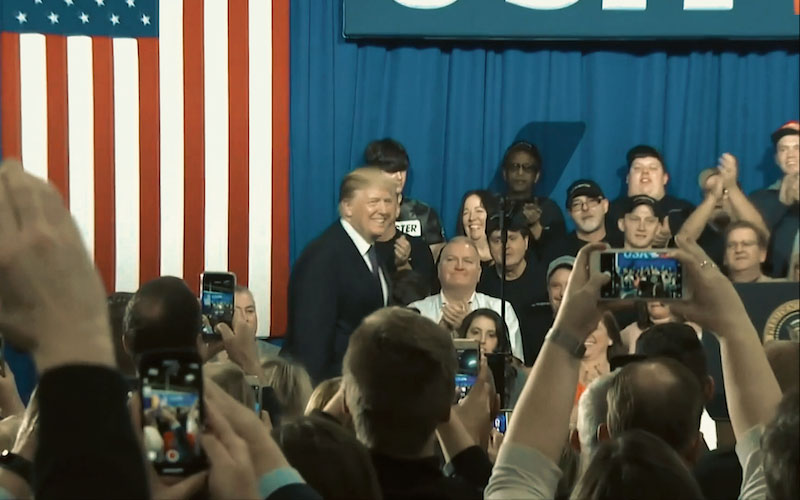
US-Iran talks break down, Trump orders Strait blockade! Oil prices surge over 8%, Wall Street panics.
2026-04-13 09:59:36
Marathon talks between the US and Iran in Islamabad, Pakistan, failed to reach an agreement to end the conflict, and the situation escalated sharply afterward. US President Trump announced on Sunday (April 12) that the US Navy would begin a blockade of maritime traffic to and from Iranian ports on April 13, a move that seriously threatened the already fragile two-week ceasefire agreement.
The core reason for the breakdown in negotiations lies in the significant differences in the two sides' core demands. The United States demanded that Iran cease all uranium enrichment activities, dismantle its main enrichment facilities and transfer highly enriched uranium, while also halting funding to Hamas, Hezbollah, and the Houthi rebels, and fully opening the Strait of Hormuz. Iran, however, rejected these "excessive demands," emphasizing that a "balanced and fair" agreement must be reached within the framework of international law.
Iranian President Peskhozzian, in a phone call with Russian President Putin, stated that Tehran hopes to reach a balanced agreement, and that such an agreement is imminent if the United States returns to the framework of international law. Putin, in turn, expressed his willingness to continue mediation.
The U.S. Central Command has stated that the blockade will begin at 10:00 AM Eastern Time on April 13 (10:00 PM Beijing Time), targeting all vessels entering and leaving Iranian ports and coastal areas , including those in the Arabian Gulf and the Gulf of Oman. The U.S. military emphasized that it will not impede the freedom of navigation of vessels traveling to and from non-Iranian ports and will provide information to merchant ships through formal notification prior to the operation.
Trump further hardened his stance on Truth Social, stating that the United States will intercept all ships in international waters that have paid tolls to Iran and clear Iranian mines from the Straits. He warned, "Anyone who pays illegal tolls will not be able to pass safely on the high seas, and any Iranian who fires at us or our peaceful ships will be sent to hell!"
This blockade targets approximately 20% of the world's oil shipping routes, highlighting the strategic importance of the Strait of Hormuz. Shipping data shows that even during the ceasefire, supertankers continued to attempt passage, but a new blockade could lead to a significant disruption to crude oil exports .
The Iranian Revolutionary Guard responded swiftly, stating that any warships approaching the Strait would be considered in violation of the ceasefire agreement and would be severely punished. Iranian Parliament Speaker Mohammad Ghalibaf, one of the lead negotiators for Iran, stated that Trump's new threats would have no impact on Iran. He emphasized, "If you start a war, we will start a war; if you treat us with reason, we will treat you with reason."
Kalibaf also posted a map of gasoline prices in the Washington area on social media, sarcastically remarking that with the "lockdown" in place, Americans would soon miss gasoline prices of $4 to $5 per gallon . Meanwhile, Iranian Ambassador to Islamabad, Reza Amiri Moghadam, pointed out that the talks "were not an event, but a process," laying the foundation for a diplomatic process .
In an interview, Trump remained optimistic, saying he believed Iran would return to the negotiating table because no one would be foolish enough to say, "We want nuclear weapons," and that they had no leverage. He also said that NATO allies wanted to assist with the Strait of Hormuz operation.
Following news of the breakdown in US-Iran negotiations, oil prices have fluctuated significantly. US crude oil prices jumped at the open on Monday (April 13th) and are currently trading around $104.35 per barrel, a daily increase of approximately 8.1%, after previously reaching $105.63 per barrel. Oil prices had previously retreated during the ceasefire period, but the threat of a blockade could push prices back above $105 or even higher.
As a vital global energy choke point, the Strait of Hormuz, if blocked for an extended period, will have a cascading impact on import-dependent regions such as Europe and Asia, driving up inflation and hindering economic growth.
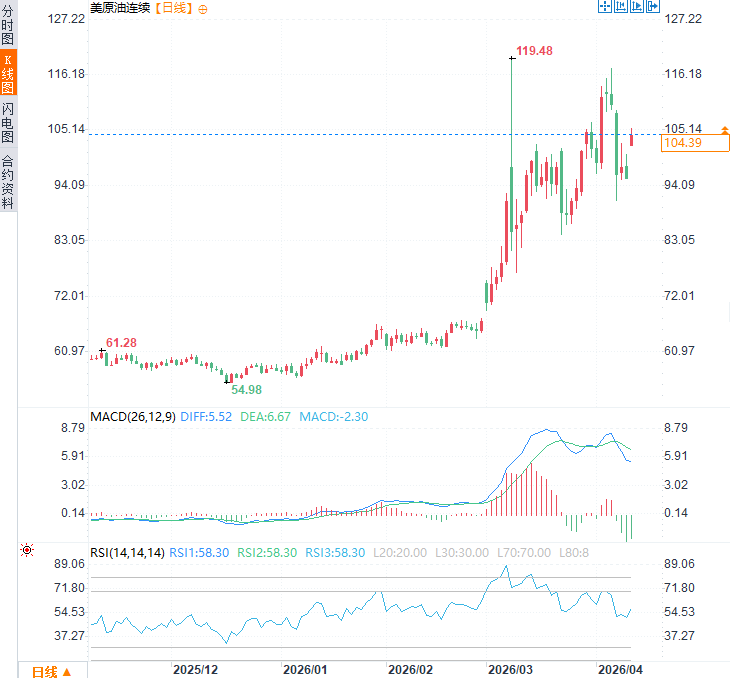
(US crude oil daily chart, source: FX678)
Despite the breakdown in negotiations, Trump still believes further dialogue is possible and described the previous talks as "very friendly." Iran, on the other hand, emphasized that a lack of trust was the main obstacle, with Kalibaf accusing the US of failing to win Tehran's trust, but also stating that it had put forward forward-looking initiatives.
Russian President Vladimir Putin reiterated his willingness to mediate and promote a political and diplomatic solution during a phone call with Petzchiyan. The differences between the US and Iran on their nuclear programs, the opening of the Strait of Hormuz, and regional proxy issues remain deep and are unlikely to be bridged in the short term .
In terms of geopolitical risks, the Iranian Revolutionary Guard's tough response, coupled with the US blockade, could trigger localized military clashes and further escalate global energy security concerns.
Following the failure of US-Iran negotiations, the US quickly shifted to military pressure, attempting to force Iran to make concessions by blocking the Strait of Hormuz, while Iran demonstrated a willingness to confront. Oil price volatility and market risk aversion highlighted the global impact of this event. The future trajectory depends on whether the two sides can return to negotiations on the basis of rebuilding trust, and whether third-party mediation can play a substantial role. The situation remains highly uncertain, and any miscalculation could lead to broader consequences.
At 9:59 AM Beijing time, US crude oil futures were trading at $104.40 per barrel.
The core reason for the breakdown in negotiations lies in the significant differences in the two sides' core demands. The United States demanded that Iran cease all uranium enrichment activities, dismantle its main enrichment facilities and transfer highly enriched uranium, while also halting funding to Hamas, Hezbollah, and the Houthi rebels, and fully opening the Strait of Hormuz. Iran, however, rejected these "excessive demands," emphasizing that a "balanced and fair" agreement must be reached within the framework of international law.
Iranian President Peskhozzian, in a phone call with Russian President Putin, stated that Tehran hopes to reach a balanced agreement, and that such an agreement is imminent if the United States returns to the framework of international law. Putin, in turn, expressed his willingness to continue mediation.
Details of the US military's blockade of the Strait of Hormuz
The U.S. Central Command has stated that the blockade will begin at 10:00 AM Eastern Time on April 13 (10:00 PM Beijing Time), targeting all vessels entering and leaving Iranian ports and coastal areas , including those in the Arabian Gulf and the Gulf of Oman. The U.S. military emphasized that it will not impede the freedom of navigation of vessels traveling to and from non-Iranian ports and will provide information to merchant ships through formal notification prior to the operation.
Trump further hardened his stance on Truth Social, stating that the United States will intercept all ships in international waters that have paid tolls to Iran and clear Iranian mines from the Straits. He warned, "Anyone who pays illegal tolls will not be able to pass safely on the high seas, and any Iranian who fires at us or our peaceful ships will be sent to hell!"
This blockade targets approximately 20% of the world's oil shipping routes, highlighting the strategic importance of the Strait of Hormuz. Shipping data shows that even during the ceasefire, supertankers continued to attempt passage, but a new blockade could lead to a significant disruption to crude oil exports .
Statements from both the US and Iran
The Iranian Revolutionary Guard responded swiftly, stating that any warships approaching the Strait would be considered in violation of the ceasefire agreement and would be severely punished. Iranian Parliament Speaker Mohammad Ghalibaf, one of the lead negotiators for Iran, stated that Trump's new threats would have no impact on Iran. He emphasized, "If you start a war, we will start a war; if you treat us with reason, we will treat you with reason."
Kalibaf also posted a map of gasoline prices in the Washington area on social media, sarcastically remarking that with the "lockdown" in place, Americans would soon miss gasoline prices of $4 to $5 per gallon . Meanwhile, Iranian Ambassador to Islamabad, Reza Amiri Moghadam, pointed out that the talks "were not an event, but a process," laying the foundation for a diplomatic process .
In an interview, Trump remained optimistic, saying he believed Iran would return to the negotiating table because no one would be foolish enough to say, "We want nuclear weapons," and that they had no leverage. He also said that NATO allies wanted to assist with the Strait of Hormuz operation.
Oil Price and Market Impact Analysis
Following news of the breakdown in US-Iran negotiations, oil prices have fluctuated significantly. US crude oil prices jumped at the open on Monday (April 13th) and are currently trading around $104.35 per barrel, a daily increase of approximately 8.1%, after previously reaching $105.63 per barrel. Oil prices had previously retreated during the ceasefire period, but the threat of a blockade could push prices back above $105 or even higher.
As a vital global energy choke point, the Strait of Hormuz, if blocked for an extended period, will have a cascading impact on import-dependent regions such as Europe and Asia, driving up inflation and hindering economic growth.
(US crude oil daily chart, source: FX678)
Future Negotiation Prospects and Geopolitical Risks
Despite the breakdown in negotiations, Trump still believes further dialogue is possible and described the previous talks as "very friendly." Iran, on the other hand, emphasized that a lack of trust was the main obstacle, with Kalibaf accusing the US of failing to win Tehran's trust, but also stating that it had put forward forward-looking initiatives.
Russian President Vladimir Putin reiterated his willingness to mediate and promote a political and diplomatic solution during a phone call with Petzchiyan. The differences between the US and Iran on their nuclear programs, the opening of the Strait of Hormuz, and regional proxy issues remain deep and are unlikely to be bridged in the short term .
In terms of geopolitical risks, the Iranian Revolutionary Guard's tough response, coupled with the US blockade, could trigger localized military clashes and further escalate global energy security concerns.
Editor's Summary
Following the failure of US-Iran negotiations, the US quickly shifted to military pressure, attempting to force Iran to make concessions by blocking the Strait of Hormuz, while Iran demonstrated a willingness to confront. Oil price volatility and market risk aversion highlighted the global impact of this event. The future trajectory depends on whether the two sides can return to negotiations on the basis of rebuilding trust, and whether third-party mediation can play a substantial role. The situation remains highly uncertain, and any miscalculation could lead to broader consequences.
At 9:59 AM Beijing time, US crude oil futures were trading at $104.40 per barrel.
- Risk Warning and Disclaimer
- The market involves risk, and trading may not be suitable for all investors. This article is for reference only and does not constitute personal investment advice, nor does it take into account certain users’ specific investment objectives, financial situation, or other needs. Any investment decisions made based on this information are at your own risk.