US and Iran may restart negotiations within two days; oil prices buck the trend and fall for the fourth consecutive day despite the Strait of Hormuz blockade.
2026-04-15 11:48:01
White House officials said on Tuesday (April 14) that a second round of peace talks between the United States and Iran is under discussion, but a formal timetable has not yet been set. President Trump later said in an interview that the next round of US-Iran talks "could be held in Islamabad within the next two days."
Trump initially indicated that the new round of negotiations might proceed slowly and be held in Europe, but later called to update the information, suggesting it might resume soon in Pakistan. Multiple media outlets, citing Pakistani and Iranian officials, reported that representatives from both sides might return to Islamabad this weekend or early next week to continue talks.
An official from the Iranian embassy in Islamabad said that further negotiations might take place later this week or early next week, but nothing is finalized yet. The fragile two-week ceasefire agreement expires on April 21, and the resumption of negotiations is hoped to bring some signs of easing tensions.
Oil prices fell after news broke that a new round of negotiations might resume. During Wednesday's Asian trading session, US crude oil prices initially declined before rebounding, currently trading around $91 per barrel. It had previously touched $86.96 per barrel, a drop of over 4%, before recovering on bargain hunting. The daily decline was approximately 0.3%, marking the fourth consecutive trading day of declines for oil prices.
Last weekend, led by U.S. Vice President JD Vance, special envoys Steve Witkoff and Jared Kushner, the U.S. and Iran held marathon talks in Islamabad for over 21 hours, but failed to reach an agreement to end the war. The core disagreement centered on Iran's nuclear program, with the U.S. insisting that Iran must relinquish its nuclear weapons capabilities and undergo rigorous verification.
Vance stated on Monday that the United States has put forward a large number of substantive proposals, and "the ball is now in Iran's court." Iran, however, has accused the US of making "maximumism" demands and constantly changing its objectives, failing to win Tehran's trust. Iranian Foreign Minister Abbas Araqchi and Parliament Speaker Mohammad Bagher Ghalibaf both expressed doubts about the sincerity of the US proposals.
After negotiations failed, Trump announced a blockade of the Strait of Hormuz, targeting all ships entering and leaving Iranian ports and coastal areas. U.S. Central Command stated on Tuesday that "no ships passed through the U.S. blockade" during the first 24 hours, and six merchant ships complied with U.S. military instructions to turn back to Iranian ports.
More than 10,000 U.S. Marines and Air Force personnel, over ten warships, and dozens of aircraft participated in the blockade operation. Trump emphasized that the United States cannot allow Iran to "blackmail or extort the world." The blockade aims to cut off Iran's oil export revenue and restore freedom of navigation in the Strait of Hormuz, which Iran had previously effectively restricted.
The Strait of Hormuz typically handles about 20% of global oil shipments, and its blockade has exacerbated expectations of energy supply shortages.
Vance reiterated that an agreement would benefit both countries if Iran met the U.S. "red lines" on the nuclear issue. The U.S. demands that Iran remove its enriched uranium and implement credible verification measures, while also fully opening the Strait of Hormuz.
Iranian officials stated that the US blockade and its "maximumism" stance have hindered the building of trust. While both sides blaming each other, neither has completely closed the door to dialogue, leaving room for a potential second round of negotiations.
Oil prices fell after news broke that a new round of negotiations might resume. Investors' optimism about a peace agreement temporarily eased geopolitical risk premiums.
Although the blockade remains in effect, markets believe that keeping diplomatic channels open helps prevent further escalation of the conflict. The progress of negotiations will be a major variable influencing global energy prices and financial markets before the ceasefire expires.
Although the first round of US-Iran talks ended in failure, both the White House and Trump confirmed that a second round of talks is under discussion and may soon resume in Islamabad. Meanwhile, the US blockade of the Strait of Hormuz was strictly enforced on its first day, with no ships attempting to breach it. Significant differences remain between the two sides on their nuclear programs and the opening of the strait, but neither has completely closed the door to negotiations. Oil prices fluctuated in response to hopes for improved negotiations, indicating that the market is weighing military pressure against diplomatic prospects. The developments in the negotiations over the next few days will determine whether the ceasefire can be extended and whether the energy crisis will ease.
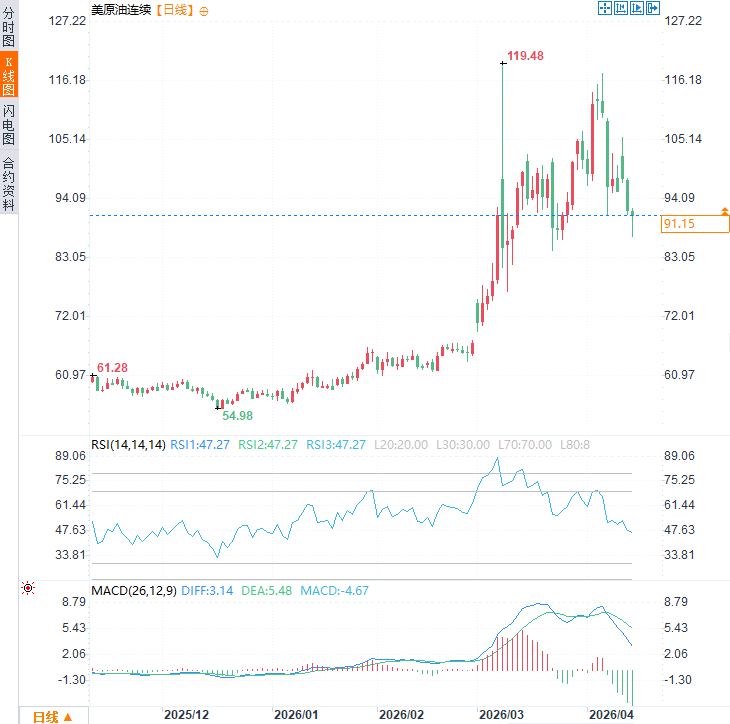
(US crude oil daily chart, source: FX678)
At 11:47 Beijing time, US crude oil futures were trading at $91.06 per barrel.
Trump initially indicated that the new round of negotiations might proceed slowly and be held in Europe, but later called to update the information, suggesting it might resume soon in Pakistan. Multiple media outlets, citing Pakistani and Iranian officials, reported that representatives from both sides might return to Islamabad this weekend or early next week to continue talks.
An official from the Iranian embassy in Islamabad said that further negotiations might take place later this week or early next week, but nothing is finalized yet. The fragile two-week ceasefire agreement expires on April 21, and the resumption of negotiations is hoped to bring some signs of easing tensions.
Oil prices fell after news broke that a new round of negotiations might resume. During Wednesday's Asian trading session, US crude oil prices initially declined before rebounding, currently trading around $91 per barrel. It had previously touched $86.96 per barrel, a drop of over 4%, before recovering on bargain hunting. The daily decline was approximately 0.3%, marking the fourth consecutive trading day of declines for oil prices.
A Review of the First Round of Negotiations in Islamabad
Last weekend, led by U.S. Vice President JD Vance, special envoys Steve Witkoff and Jared Kushner, the U.S. and Iran held marathon talks in Islamabad for over 21 hours, but failed to reach an agreement to end the war. The core disagreement centered on Iran's nuclear program, with the U.S. insisting that Iran must relinquish its nuclear weapons capabilities and undergo rigorous verification.
Vance stated on Monday that the United States has put forward a large number of substantive proposals, and "the ball is now in Iran's court." Iran, however, has accused the US of making "maximumism" demands and constantly changing its objectives, failing to win Tehran's trust. Iranian Foreign Minister Abbas Araqchi and Parliament Speaker Mohammad Bagher Ghalibaf both expressed doubts about the sincerity of the US proposals.
Strait of Hormuz blockade implemented
After negotiations failed, Trump announced a blockade of the Strait of Hormuz, targeting all ships entering and leaving Iranian ports and coastal areas. U.S. Central Command stated on Tuesday that "no ships passed through the U.S. blockade" during the first 24 hours, and six merchant ships complied with U.S. military instructions to turn back to Iranian ports.
More than 10,000 U.S. Marines and Air Force personnel, over ten warships, and dozens of aircraft participated in the blockade operation. Trump emphasized that the United States cannot allow Iran to "blackmail or extort the world." The blockade aims to cut off Iran's oil export revenue and restore freedom of navigation in the Strait of Hormuz, which Iran had previously effectively restricted.
The Strait of Hormuz typically handles about 20% of global oil shipments, and its blockade has exacerbated expectations of energy supply shortages.
Latest positions of the US and Iran
Vance reiterated that an agreement would benefit both countries if Iran met the U.S. "red lines" on the nuclear issue. The U.S. demands that Iran remove its enriched uranium and implement credible verification measures, while also fully opening the Strait of Hormuz.
Iranian officials stated that the US blockade and its "maximumism" stance have hindered the building of trust. While both sides blaming each other, neither has completely closed the door to dialogue, leaving room for a potential second round of negotiations.
Market reaction to negotiation hopes
Oil prices fell after news broke that a new round of negotiations might resume. Investors' optimism about a peace agreement temporarily eased geopolitical risk premiums.
Although the blockade remains in effect, markets believe that keeping diplomatic channels open helps prevent further escalation of the conflict. The progress of negotiations will be a major variable influencing global energy prices and financial markets before the ceasefire expires.
Editor's Summary
Although the first round of US-Iran talks ended in failure, both the White House and Trump confirmed that a second round of talks is under discussion and may soon resume in Islamabad. Meanwhile, the US blockade of the Strait of Hormuz was strictly enforced on its first day, with no ships attempting to breach it. Significant differences remain between the two sides on their nuclear programs and the opening of the strait, but neither has completely closed the door to negotiations. Oil prices fluctuated in response to hopes for improved negotiations, indicating that the market is weighing military pressure against diplomatic prospects. The developments in the negotiations over the next few days will determine whether the ceasefire can be extended and whether the energy crisis will ease.
(US crude oil daily chart, source: FX678)
At 11:47 Beijing time, US crude oil futures were trading at $91.06 per barrel.
- Risk Warning and Disclaimer
- The market involves risk, and trading may not be suitable for all investors. This article is for reference only and does not constitute personal investment advice, nor does it take into account certain users’ specific investment objectives, financial situation, or other needs. Any investment decisions made based on this information are at your own risk.