The International Energy Agency has issued an urgent warning: the Middle East war has reduced daily supply by 20 million barrels, and oil prices are about to surge.
2026-04-15 12:12:43
Just as oil futures prices were falling again due to market expectations of a swift end to the Middle East war, International Energy Agency Executive Director Fatih Birol issued a strong warning: current oil prices do not reflect the severity of the crisis and prices will soon rise sharply again.
"Oil prices are currently high, but they don't fully reflect the severity of the problem," Birol said at an event this week. "I agree there's a clear disconnect right now. But I think we'll see them converge soon, which is an extremely sensitive issue for the global economy."

According to data from the International Energy Agency, the war has resulted in a daily loss of up to 13 million barrels of crude oil production in Middle Eastern oil-producing countries. Including refined products, total crude oil and refined product exports have decreased by approximately 20 million barrels. The damage to more than 80 oil and gas facilities in the region has further exacerbated the supply shortage.
Nomura Securities warned this week that Middle Eastern oil production is expected to decrease by an additional 2.3 million barrels per day in March. Compared to the same period last year, Middle Eastern oil production has cumulatively fallen by 9.3 million barrels per day, representing a supply contraction of 57%.
Although oil prices briefly broke through $100 a barrel earlier this week after Trump announced a comprehensive blockade of Iranian ports, benchmark prices subsequently retreated. Analysts believe the market is still hoping that the ceasefire agreement reached last weekend will not collapse due to the blockade.
However, the physical oil market is experiencing extremely tight supply, and spot oil prices have surged. Currently, crude oil prices for immediate delivery in Europe and Africa have reached a record high of $150 per barrel. This phenomenon is mainly due to a scramble in Europe and Asia to buy up the remaining oil, as the last batch of tankers that left the Middle East before Iran closed the Strait of Hormuz are about to arrive at their destination refineries.
“Western markets will feel the real shock a month from now when all the crude oil purchased in Asia leaves the Atlantic basin,” noted Nic Dyer, an analyst at energy consultancy Energy Aspects. “Starting next month, refineries in Europe and the United States will also have to reduce their operating rates to share the pressure of the shortage.”
In Asia, refineries are gradually reducing their operating rates despite the significant use of strategic and commercial stocks. This indicates that the tightness of crude oil supply is far greater than many futures traders anticipated, and confirms Birol's assessment that oil prices will rise further.
JPMorgan analyst Natasha Kaneva said, "There are signs that the entire oil system is under increasing pressure. Refineries in Europe and Asia are fiercely competing for remaining cargoes, pushing spot Brent crude prices, which are more directly related to immediate physical delivery, to record highs. "
Earlier this month, Birol stated explicitly that the current oil crisis is more severe than all oil shocks combined in the 20th and 21st centuries. He emphasized, "The world has never experienced an energy supply disruption of this scale."
The International Energy Agency (IEA) announced last month that it would coordinate the emergency release of 400 million barrels of oil reserves by OECD member countries, the largest emergency oil release in the agency's history.
For the past two years, the International Energy Agency (IEA) has been predicting a decline in global oil demand that would lead to a supply glut. Now, its tone has completely reversed, a shift that is itself highly alarming. It demonstrates that a surplus in the oil market can quickly turn into a severe shortage in a very short period, shattering many market assumptions, including those regarding oil demand.
Although the futures market has temporarily retreated due to hopes for a ceasefire, the International Energy Agency's warning clearly indicates that the actual impact of the Middle East war on global oil supply is far from over, and the "disconnect" between oil prices and reality is about to be corrected.
The future trend of oil prices will not only depend on the progress of the war, but will also directly affect global inflation, economic growth and energy security, which deserves continued close attention.
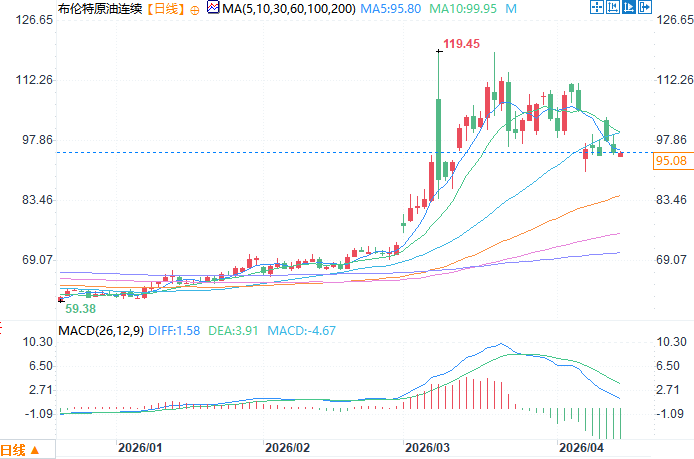
Brent crude oil daily chart source: EasyForex
At 12:05 Beijing time on April 15, Brent crude oil futures were trading at $95.03 per barrel.
Supply disruption far exceeds expectations: daily reduction of up to 20 million barrels.
"Oil prices are currently high, but they don't fully reflect the severity of the problem," Birol said at an event this week. "I agree there's a clear disconnect right now. But I think we'll see them converge soon, which is an extremely sensitive issue for the global economy."
According to data from the International Energy Agency, the war has resulted in a daily loss of up to 13 million barrels of crude oil production in Middle Eastern oil-producing countries. Including refined products, total crude oil and refined product exports have decreased by approximately 20 million barrels. The damage to more than 80 oil and gas facilities in the region has further exacerbated the supply shortage.
Nomura Securities warned this week that Middle Eastern oil production is expected to decrease by an additional 2.3 million barrels per day in March. Compared to the same period last year, Middle Eastern oil production has cumulatively fallen by 9.3 million barrels per day, representing a supply contraction of 57%.
Futures and spot prices are severely diverging: Spot oil prices have surged to $150.
Although oil prices briefly broke through $100 a barrel earlier this week after Trump announced a comprehensive blockade of Iranian ports, benchmark prices subsequently retreated. Analysts believe the market is still hoping that the ceasefire agreement reached last weekend will not collapse due to the blockade.
However, the physical oil market is experiencing extremely tight supply, and spot oil prices have surged. Currently, crude oil prices for immediate delivery in Europe and Africa have reached a record high of $150 per barrel. This phenomenon is mainly due to a scramble in Europe and Asia to buy up the remaining oil, as the last batch of tankers that left the Middle East before Iran closed the Strait of Hormuz are about to arrive at their destination refineries.
“Western markets will feel the real shock a month from now when all the crude oil purchased in Asia leaves the Atlantic basin,” noted Nic Dyer, an analyst at energy consultancy Energy Aspects. “Starting next month, refineries in Europe and the United States will also have to reduce their operating rates to share the pressure of the shortage.”
Asian refineries have begun cutting production: the crisis is more severe than the futures market imagined.
In Asia, refineries are gradually reducing their operating rates despite the significant use of strategic and commercial stocks. This indicates that the tightness of crude oil supply is far greater than many futures traders anticipated, and confirms Birol's assessment that oil prices will rise further.
JPMorgan analyst Natasha Kaneva said, "There are signs that the entire oil system is under increasing pressure. Refineries in Europe and Asia are fiercely competing for remaining cargoes, pushing spot Brent crude prices, which are more directly related to immediate physical delivery, to record highs. "
The worst energy crisis in history: The International Energy Agency's attitude changes abruptly
Earlier this month, Birol stated explicitly that the current oil crisis is more severe than all oil shocks combined in the 20th and 21st centuries. He emphasized, "The world has never experienced an energy supply disruption of this scale."
The International Energy Agency (IEA) announced last month that it would coordinate the emergency release of 400 million barrels of oil reserves by OECD member countries, the largest emergency oil release in the agency's history.
For the past two years, the International Energy Agency (IEA) has been predicting a decline in global oil demand that would lead to a supply glut. Now, its tone has completely reversed, a shift that is itself highly alarming. It demonstrates that a surplus in the oil market can quickly turn into a severe shortage in a very short period, shattering many market assumptions, including those regarding oil demand.
Summary and Outlook
Although the futures market has temporarily retreated due to hopes for a ceasefire, the International Energy Agency's warning clearly indicates that the actual impact of the Middle East war on global oil supply is far from over, and the "disconnect" between oil prices and reality is about to be corrected.
The future trend of oil prices will not only depend on the progress of the war, but will also directly affect global inflation, economic growth and energy security, which deserves continued close attention.
Brent crude oil daily chart source: EasyForex
At 12:05 Beijing time on April 15, Brent crude oil futures were trading at $95.03 per barrel.
- Risk Warning and Disclaimer
- The market involves risk, and trading may not be suitable for all investors. This article is for reference only and does not constitute personal investment advice, nor does it take into account certain users’ specific investment objectives, financial situation, or other needs. Any investment decisions made based on this information are at your own risk.