Spot oil prices are about $50 higher than futures prices, and the Middle East war is triggering a severe global oil supply crisis.
2026-04-15 14:19:18
Although the extreme volatility in crude oil futures prices has eased somewhat in recent days, the market still reacted strongly to news of the breakdown in US-Iran negotiations and the US beginning to block the Strait of Hormuz in early trading on Monday, with a gain of up as much as 8%.
Traders continue to react to how this worst energy market disruption in history might unfold. With uncertainty remaining extremely high, oil market participants are constantly placing bets based on various signals and attempting to predict future price movements.
Analysts believe the most volatile phase may have passed, with investors and speculators seemingly having exhausted their ability to react extremely to the Trump administration's evolving policy narrative.
The oil market appears to be gradually adapting to the sharp two-way price fluctuations triggered by each statement from Trump regarding the situation in Iran, the progress of negotiations, or the status of navigation in the Strait of Hormuz. Before the war, the Strait of Hormuz handled approximately 20% of the world's daily oil and gas transport, making it a crucial oil chokepoint.

Some market observers have pointed out that many of Trump's public statements may be part of his negotiating strategy, and traders may have gradually calmed down from their initial extreme fear and panic, and are now waiting for the actual results with a more composed attitude.
"The market has reached its peak of uncertainty," said Billy Leung, investment strategist for Global X ETFs, earlier this week. He added, "The market's reaction is no longer as extreme as it has been before."
Hours after these comments were published, Trump announced that the U.S. Navy would blockade the Strait of Hormuz. This blockade has now officially begun.
However, even though this blockade is seen as one of the negotiating tactics employed by the US president, it has further exacerbated the physical constraints on the actual flow of crude oil. Previously, the Strait of Hormuz, the world's most important shipping route for oil, natural gas, fuel, and fertilizers, had been effectively closed for seven weeks, severely impacting supply.
Iran's threat that "no port in the Persian Gulf will be safe if Iranian ports are blocked" has further delayed the resumption of free navigation in the Strait of Hormuz and exacerbated the already strained physical oil supply situation.
Even if the Strait of Hormuz were to reopen today, it would take several months to fully restore normal shipping operations.
Global oil and fuel supplies are dwindling due to shipping disruptions, causing energy prices to continue rising. Gasoline prices in the United States have increased by more than $1 per gallon compared to seven weeks ago.
The U.S.-imposed blockade raises a central question for analysts, policymakers, and war decision-makers. "Will a closed Strait of Hormuz cause faster damage to Iran or to the global economy?" SEB Bank's chief emerging markets strategist, Erik Meyersson, wrote in a report on Monday.
Furthermore, Meyersson points out that the US blockade further underscores the importance of keeping the Houthi rebels in Yemen out of the conflict. Over the past two years, the Houthis have repeatedly attacked commercial vessels in the Bab el-Mandeb Strait, the only alternative route for Saudi oil to bypass the Strait of Hormuz and a crucial waterway for maintaining the Suez Canal's navigation.
So far, the Houthi rebels have maintained a relatively low profile in this war and have not actively blocked the passage of ships along the Yemeni coast, but no one can be sure whether they will remain neutral indefinitely.
Meyersson stated, "Both the United States and Iran have once again demonstrated their deeply entrenched positions." "Given the time pressure and the potential military preparations on both sides, the path to continued war remains open in the absence of a diplomatic breakthrough."
Oil futures traders are betting on conflicting trends, hoping for the best while remaining wary of the worst. Nevertheless, they are better equipped than ever to handle the hourly shifting and contradictory signals.
However, the physical crude oil market is far from prepared. Currently, spot crude oil prices have surged to near-historical highs or even record levels, comparable to the price increases before the 2008 financial crisis.
Ole Hansen, head of commodities strategy at Saxo Bank, said on Monday that last week's sharp drop in crude oil futures prices was likely due primarily to overcrowded long positions rather than a substantial easing of fundamentals. The underlying fundamentals still clearly point to continued tightening in the physical market.
As of 2:00 PM Wednesday, US crude oil futures prices were close to $90 per barrel. However, due to severely constrained supply, the price of physical crude oil for immediate delivery has risen sharply, exceeding the futures price by about $60.
Although Brent crude futures have fallen below $100 per barrel, the supply shock continues to intensify. The sharp rise in physical crude oil prices fully reflects the enormous scale of the supply shock. Currently, approximately 10 million barrels per day of crude oil are stuck in the Strait of Hormuz, unable to reach refineries.
The massive premium of approximately $50 per barrel between physical crude oil and futures prices clearly indicates the severity of the actual oil supply shock. Even if the futures market sentiment is temporarily optimistic about a swift resolution to the Middle East crisis, the tense situation in the physical market cannot be ignored.
Currently, while the crude oil futures market has seen some pullback due to hopes for a ceasefire, the supply shortage in the physical oil market continues to worsen. The stark contrast between the soaring spot prices and the relatively calm futures prices highlights the disconnect between geopolitical risks and actual supply constraints. The potential blockade of the Strait of Hormuz not only exacerbates uncertainty in global energy supply but also poses a serious challenge to policymakers worldwide.
The future trend of oil prices and the energy security landscape will still depend on the development of the conflict and whether diplomatic efforts can achieve substantial breakthroughs.
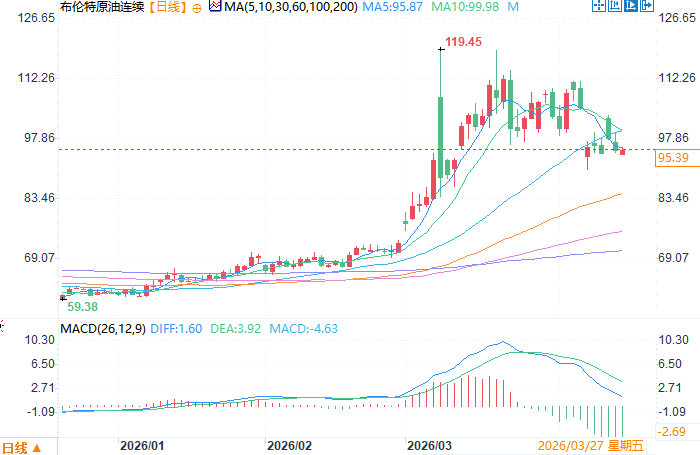
Brent crude oil daily chart source: EasyForex
At 14:18 Beijing time on April 15, Brent crude oil futures were trading at $94.68 per barrel.
Traders continue to react to how this worst energy market disruption in history might unfold. With uncertainty remaining extremely high, oil market participants are constantly placing bets based on various signals and attempting to predict future price movements.
Analysts believe the most volatile phase may have passed, with investors and speculators seemingly having exhausted their ability to react extremely to the Trump administration's evolving policy narrative.
The oil market appears to be gradually adapting to the sharp two-way price fluctuations triggered by each statement from Trump regarding the situation in Iran, the progress of negotiations, or the status of navigation in the Strait of Hormuz. Before the war, the Strait of Hormuz handled approximately 20% of the world's daily oil and gas transport, making it a crucial oil chokepoint.
Some market observers have pointed out that many of Trump's public statements may be part of his negotiating strategy, and traders may have gradually calmed down from their initial extreme fear and panic, and are now waiting for the actual results with a more composed attitude.
Market enters peak uncertainty phase
"The market has reached its peak of uncertainty," said Billy Leung, investment strategist for Global X ETFs, earlier this week. He added, "The market's reaction is no longer as extreme as it has been before."
Hours after these comments were published, Trump announced that the U.S. Navy would blockade the Strait of Hormuz. This blockade has now officially begun.
However, even though this blockade is seen as one of the negotiating tactics employed by the US president, it has further exacerbated the physical constraints on the actual flow of crude oil. Previously, the Strait of Hormuz, the world's most important shipping route for oil, natural gas, fuel, and fertilizers, had been effectively closed for seven weeks, severely impacting supply.
Iran's threat that "no port in the Persian Gulf will be safe if Iranian ports are blocked" has further delayed the resumption of free navigation in the Strait of Hormuz and exacerbated the already strained physical oil supply situation.
Even if the Strait of Hormuz were to reopen today, it would take several months to fully restore normal shipping operations.
Global supply continues to contract, and energy prices have risen significantly.
Global oil and fuel supplies are dwindling due to shipping disruptions, causing energy prices to continue rising. Gasoline prices in the United States have increased by more than $1 per gallon compared to seven weeks ago.
The U.S.-imposed blockade raises a central question for analysts, policymakers, and war decision-makers. "Will a closed Strait of Hormuz cause faster damage to Iran or to the global economy?" SEB Bank's chief emerging markets strategist, Erik Meyersson, wrote in a report on Monday.
Furthermore, Meyersson points out that the US blockade further underscores the importance of keeping the Houthi rebels in Yemen out of the conflict. Over the past two years, the Houthis have repeatedly attacked commercial vessels in the Bab el-Mandeb Strait, the only alternative route for Saudi oil to bypass the Strait of Hormuz and a crucial waterway for maintaining the Suez Canal's navigation.
So far, the Houthi rebels have maintained a relatively low profile in this war and have not actively blocked the passage of ships along the Yemeni coast, but no one can be sure whether they will remain neutral indefinitely.
Meyersson stated, "Both the United States and Iran have once again demonstrated their deeply entrenched positions." "Given the time pressure and the potential military preparations on both sides, the path to continued war remains open in the absence of a diplomatic breakthrough."
Geopolitical maneuvering contrasts sharply with the tightening of physical supplies.
Oil futures traders are betting on conflicting trends, hoping for the best while remaining wary of the worst. Nevertheless, they are better equipped than ever to handle the hourly shifting and contradictory signals.
However, the physical crude oil market is far from prepared. Currently, spot crude oil prices have surged to near-historical highs or even record levels, comparable to the price increases before the 2008 financial crisis.
Ole Hansen, head of commodities strategy at Saxo Bank, said on Monday that last week's sharp drop in crude oil futures prices was likely due primarily to overcrowded long positions rather than a substantial easing of fundamentals. The underlying fundamentals still clearly point to continued tightening in the physical market.
As of 2:00 PM Wednesday, US crude oil futures prices were close to $90 per barrel. However, due to severely constrained supply, the price of physical crude oil for immediate delivery has risen sharply, exceeding the futures price by about $60.
Although Brent crude futures have fallen below $100 per barrel, the supply shock continues to intensify. The sharp rise in physical crude oil prices fully reflects the enormous scale of the supply shock. Currently, approximately 10 million barrels per day of crude oil are stuck in the Strait of Hormuz, unable to reach refineries.
The massive premium of approximately $50 per barrel between physical crude oil and futures prices clearly indicates the severity of the actual oil supply shock. Even if the futures market sentiment is temporarily optimistic about a swift resolution to the Middle East crisis, the tense situation in the physical market cannot be ignored.
Overall Outlook
Currently, while the crude oil futures market has seen some pullback due to hopes for a ceasefire, the supply shortage in the physical oil market continues to worsen. The stark contrast between the soaring spot prices and the relatively calm futures prices highlights the disconnect between geopolitical risks and actual supply constraints. The potential blockade of the Strait of Hormuz not only exacerbates uncertainty in global energy supply but also poses a serious challenge to policymakers worldwide.
The future trend of oil prices and the energy security landscape will still depend on the development of the conflict and whether diplomatic efforts can achieve substantial breakthroughs.
Brent crude oil daily chart source: EasyForex
At 14:18 Beijing time on April 15, Brent crude oil futures were trading at $94.68 per barrel.
- Risk Warning and Disclaimer
- The market involves risk, and trading may not be suitable for all investors. This article is for reference only and does not constitute personal investment advice, nor does it take into account certain users’ specific investment objectives, financial situation, or other needs. Any investment decisions made based on this information are at your own risk.