Aluminum prices fall below four-year high, facing new supply and demand challenges.
2026-04-15 15:43:08
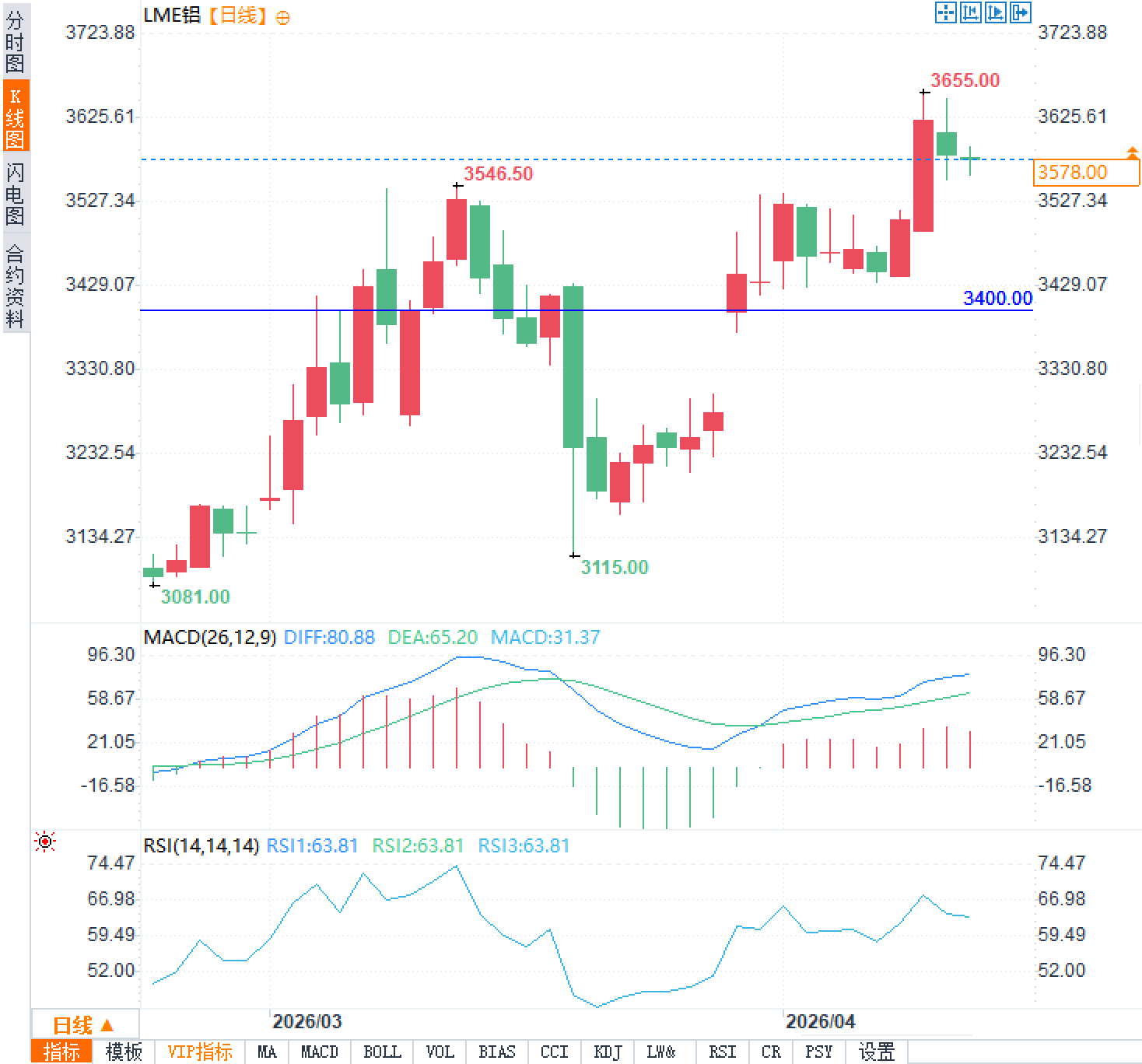
On Wednesday, April 15th, aluminum futures prices on the London Metal Exchange (LME) retreated. The three-month aluminum futures contract traded around $3,575 per tonne, continuing its downward pressure. This movement marks a gradual retreat in aluminum prices from the recent four-year high, with market traders focusing on the ongoing supply impact of geopolitical events in the Persian Gulf and signs of easing. Prices had recently surged due to logistical disruptions in the Strait of Hormuz and damage to major smelting facilities in the region; now, with rising expectations of alternative supply, tensions have eased. LME aluminum inventories remain at a low level of approximately 396,000 tons, and the physical premium for cash remains high, indicating that a rebalancing process of supply and demand is underway.

Aluminum futures prices surged this month before retreating slightly. Recently, driven by unexpected supply-side events, prices briefly hit a near four-year high, before declining further to the current range after closing at $3,584 per ton on April 14th. While this high is still lower than the 2022 peak of $4,103 per ton, it fully reflects the amplifying effect of geopolitical factors on industrial metal pricing. Traders should pay attention to changes in trading volume and open interest; the premium of the spot market over futures remains a key indicator for assessing physical supply and demand balance.
The Persian Gulf region accounts for approximately 9% of global primary aluminum production, and the disruption of its exports has directly amplified global supply pressure. The closure of the Strait of Hormuz at the end of February disrupted regional logistics, with shipping delays and soaring freight rates further driving up delivery costs. Subsequently, Emiretz Global Aluminium, the region's largest producer, announced the suspension of operations at its Altavira plant. This plant has an annual capacity of approximately 1.6 million tons, and the recovery period could take up to 12 months. Another large smelter in the region also reported significant damage and is unlikely to return to full production in the short term. This series of events led to a sharp decline in Middle Eastern primary aluminum exports, directly impacting the raw material procurement schedules of downstream users in Europe, North America, and Asia. Traders observed that while LME delivery inventories have not declined significantly, the forward curve has shown a clear term premium, indicating that market concerns about a supply gap in the first half of 2026 have dominated pricing. In the spot market, the aluminum ingot spot premium has widened to historically high levels, highlighting the transmission effect of logistical bottlenecks on the industrial chain. In the long term, such geopolitical events may force further diversification of global smelting capacity, changing the traditional supply chain dependence pattern.
Faced with a supply gap in the Persian Gulf, the world's largest aluminum producer has clearly signaled its intention to increase exports to overseas customers. This move has effectively filled the capacity gap in the affected region, pushing futures prices down from their highs. LME aluminum inventories remain at a relatively low level of around 396,000 tons, still providing a floor for prices, but the tight spot market situation has shown marginal improvement as alternative sources gradually enter the market. On the fundamental front, the potential supply gap in the global aluminum market in 2026 is projected to be over 500,000 tons, but the rapid actions of major producers have reduced the risk of extreme shortages. Inventory turnover and changes in delivery willingness will become key indicators for judging the speed of market rebalancing. At the same time, attention must be paid to the transmission of energy prices to smelting costs; given the high proportion of electricity costs, any fluctuation in raw material prices could amplify profit pressures on downstream industries.
Despite short-term supply-side disruptions, downstream demand has demonstrated strong resilience in the energy transition, automotive lightweighting, and infrastructure construction sectors. The use of aluminum in electric vehicles and renewable energy equipment continues to grow, while the construction and packaging industries maintain a stable procurement pace. This structural demand for aluminum in these sectors provides medium- to long-term price support, but also amplifies the cost transmission effects of supply chain disruptions. At the macro level, global economic growth expectations and monetary policy paths will continue to dominate commodity market sentiment. Changes in the interest rate environment may affect inventory financing costs, thereby indirectly shaping the price fluctuation range of aluminum.
Analysis of Recent Aluminum Price Trends
Aluminum futures prices surged this month before retreating slightly. Recently, driven by unexpected supply-side events, prices briefly hit a near four-year high, before declining further to the current range after closing at $3,584 per ton on April 14th. While this high is still lower than the 2022 peak of $4,103 per ton, it fully reflects the amplifying effect of geopolitical factors on industrial metal pricing. Traders should pay attention to changes in trading volume and open interest; the premium of the spot market over futures remains a key indicator for assessing physical supply and demand balance.
The profound impact of supply disruptions in the Persian Gulf
The Persian Gulf region accounts for approximately 9% of global primary aluminum production, and the disruption of its exports has directly amplified global supply pressure. The closure of the Strait of Hormuz at the end of February disrupted regional logistics, with shipping delays and soaring freight rates further driving up delivery costs. Subsequently, Emiretz Global Aluminium, the region's largest producer, announced the suspension of operations at its Altavira plant. This plant has an annual capacity of approximately 1.6 million tons, and the recovery period could take up to 12 months. Another large smelter in the region also reported significant damage and is unlikely to return to full production in the short term. This series of events led to a sharp decline in Middle Eastern primary aluminum exports, directly impacting the raw material procurement schedules of downstream users in Europe, North America, and Asia. Traders observed that while LME delivery inventories have not declined significantly, the forward curve has shown a clear term premium, indicating that market concerns about a supply gap in the first half of 2026 have dominated pricing. In the spot market, the aluminum ingot spot premium has widened to historically high levels, highlighting the transmission effect of logistical bottlenecks on the industrial chain. In the long term, such geopolitical events may force further diversification of global smelting capacity, changing the traditional supply chain dependence pattern.
Global supply response and market rebalancing mechanism
Faced with a supply gap in the Persian Gulf, the world's largest aluminum producer has clearly signaled its intention to increase exports to overseas customers. This move has effectively filled the capacity gap in the affected region, pushing futures prices down from their highs. LME aluminum inventories remain at a relatively low level of around 396,000 tons, still providing a floor for prices, but the tight spot market situation has shown marginal improvement as alternative sources gradually enter the market. On the fundamental front, the potential supply gap in the global aluminum market in 2026 is projected to be over 500,000 tons, but the rapid actions of major producers have reduced the risk of extreme shortages. Inventory turnover and changes in delivery willingness will become key indicators for judging the speed of market rebalancing. At the same time, attention must be paid to the transmission of energy prices to smelting costs; given the high proportion of electricity costs, any fluctuation in raw material prices could amplify profit pressures on downstream industries.
Downstream demand resilience and the impact of the macro environment
Despite short-term supply-side disruptions, downstream demand has demonstrated strong resilience in the energy transition, automotive lightweighting, and infrastructure construction sectors. The use of aluminum in electric vehicles and renewable energy equipment continues to grow, while the construction and packaging industries maintain a stable procurement pace. This structural demand for aluminum in these sectors provides medium- to long-term price support, but also amplifies the cost transmission effects of supply chain disruptions. At the macro level, global economic growth expectations and monetary policy paths will continue to dominate commodity market sentiment. Changes in the interest rate environment may affect inventory financing costs, thereby indirectly shaping the price fluctuation range of aluminum.
Frequently Asked Questions
Question 1: Why did aluminum prices fall from a four-year high?
A: The core driver was the marginal easing of concerns about supply disruptions in the Persian Gulf. Clear signals of increased exports from the world's largest aluminum producer could fill a 9% capacity gap in the Middle East. This, coupled with low LME inventories but a slight easing of tight spot demand, led to a shift in market supply and demand expectations from an extremely tight balance to dynamic adjustment, causing futures prices to naturally decline.
Question 2: What will be the long-term impact of the Persian Gulf incident on the global aluminum supply chain?
A: This event could widen the global aluminum supply gap by hundreds of thousands of tons in 2026. Logistics bottlenecks in the Strait of Hormuz and the year-long recovery period at the Altavira plant will drive up transportation and procurement costs. Downstream companies may accelerate supply chain diversification, changing traditional reliance patterns, while also prompting the industry to focus on the feasibility of alternative metals and optimize inventory strategies.
- Risk Warning and Disclaimer
- The market involves risk, and trading may not be suitable for all investors. This article is for reference only and does not constitute personal investment advice, nor does it take into account certain users’ specific investment objectives, financial situation, or other needs. Any investment decisions made based on this information are at your own risk.