US retail sales saw their biggest increase in two years, but why did the dollar surge and then retreat, nearing a turning point? Gold's V-shaped reversal reveals a key critical point for bulls and bears.
2026-04-21 20:46:13
On Tuesday (April 21) at 8:30 PM, the U.S. Census Bureau released the highly anticipated March retail sales data. Against the backdrop of a complex global macroeconomic environment, fluctuating inflation expectations, and stabilizing external geopolitical uncertainties, this consumer performance report serves as a crucial window for assessing economic momentum in the second quarter.

Since the beginning of 2026, the statistical lag effect caused by last year's government shutdown has gradually subsided, and the release of this data marks a return to normal statistical frequency. Prior to the data release, there was disagreement in the market regarding the resilience of consumption. On the one hand, a robust labor market provided support; on the other hand, energy price fluctuations caused by external conflicts continued to squeeze residents' disposable income.
Latest data shows that US retail sales rose 1.7% month-on-month in March, significantly exceeding market expectations of 1.4% and marking the fastest growth since January 2023. The revised February figure was also revised upward from 0.6% to 0.7%. Among the sub-categories, gas station sales surged 15.5%, driven by rising energy costs, becoming the main driver of the overall figure. Core retail sales, excluding automobiles, gasoline, building materials, and food services, recorded a 0.7% increase, also better than the expected 0.2%.
Fundamental Perspective: The Divergence Between Nominal Growth and Real Spending
From a fundamental perspective, while the 1.7% month-on-month increase exceeded expectations, its intrinsic quality warrants attention. According to data from the Energy Information Administration, retail gasoline prices rose 24.1% in March. This means that the retail growth was largely driven by price increases rather than increased consumption. Reuters points out that while increased tax rebates provided support in some areas, the erosion of consumer sentiment by soaring energy prices cannot be ignored. The consumer confidence index fell to a record low in April, suggesting potential downward pressure on future consumer spending.
Technical analysis and real-time market reaction
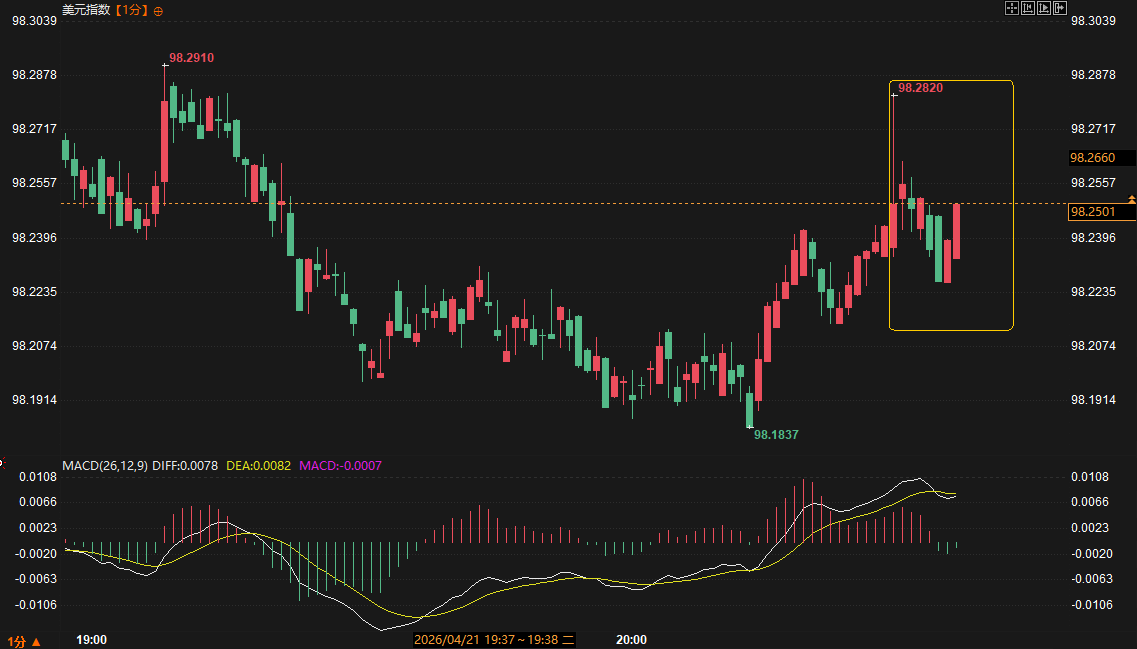
Immediately after the data release, the market experienced significant two-way volatility. The US dollar index briefly surged to 98.2820, but then quickly retreated, erasing all gains. This reflects market concerns, after initially digesting the strong data, about the negative impact of high inflation on long-term growth.
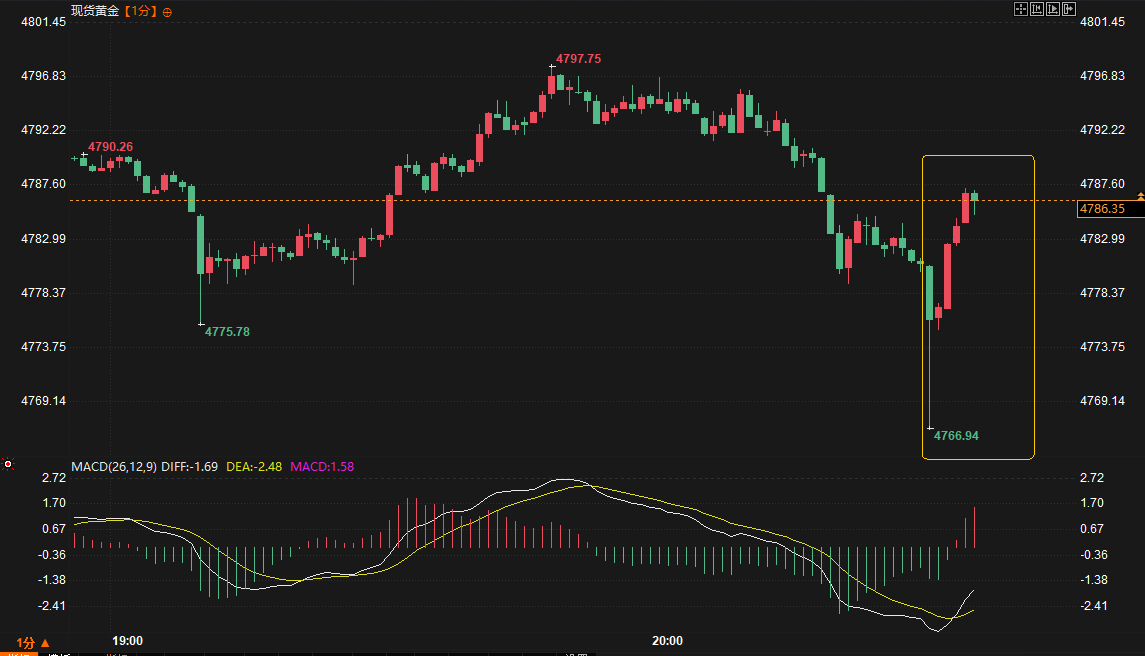
The performance of spot gold was even more telling. In the first five minutes after the data release, gold prices briefly fell by about $14, hitting a low of $4766.94, due to a stronger dollar and fluctuating interest rate expectations. Subsequently, driven by hedging demand for inflation risk and considerations of geopolitical uncertainty, buying quickly emerged, and gold prices rebounded by $20.50, recovering to around $4787. This V-shaped movement highlights the resilience of gold prices in the face of strong data.
Institutional investors and retail investors present drastically different perspectives.
Institutional Views: Focus on Macroeconomic Correction and Policy Path
Most prominent investment banks are focusing on upward revisions to core retail sales data. Analysts believe that the 0.7% core growth suggests potential upward revisions to first-quarter GDP, and the Atlanta Fed's GDPNow model has been adjusted accordingly. Institutions generally warn that despite strong nominal consumption, if energy prices remain high, second-quarter consumption growth could slow significantly.
Retail investor perspective: Focus on cost of living and market volatility
Retail investors reacted more directly on social media. Many expressed skepticism about the 1.7% growth rate, believing it merely reflected rising fuel prices and frequently mentioning the increased annual living expenses due to higher energy costs. In terms of market sentiment, the rapid drop immediately after the data release triggered some short covering, but the subsequent rebound caused losses for those who chased the short positions, with discussion forums filled with complaints about market manipulation.
Extrapolating from the market logic, the unexpectedly strong retail data provided short-term support for the US dollar, but the sustainability of the rebound is limited by the decline in actual purchasing power. For the precious metals market, the increased short-term volatility has not changed its role as an inflation hedge. Looking ahead, the preliminary Q1 GDP figures to be released next week will be a key indicator of whether consumption can translate into sustained growth. Against the backdrop of continued external volatility, market focus may shift from the speed of economic growth to the quality of growth and the persistence of inflation.
Q: Why did the US dollar index rise and then fall despite retail sales data far exceeding expectations?
A: While the 1.7% monthly growth figure was impressive, market participants quickly identified the underlying structural reasons. The growth was primarily driven by gas station sales, and this passive spending increase stemming from soaring energy prices is often seen as squeezing out other consumer sectors. Market concerns about insufficient long-term economic growth momentum, coupled with the fact that inflation expectations had already been partially priced in, led to profit-taking in the dollar after it hit resistance levels.
Q: What is the significance of the core retail sales figure mentioned in this data for GDP?
A: Core retail sales, excluding highly volatile components like automobiles and gasoline, most closely resemble the composition of consumer spending in GDP. This indicator grew by 0.7% in March, higher than the expected 0.2%, and the February data was also revised upwards. This suggests that U.S. residents still have a willingness to consume in areas other than necessities, providing positive support for the final first-quarter GDP figure and reducing the probability of the economy stagnating in the short term.
Q: How do changes in energy prices affect subsequent market sentiment through retail data?
A: Rising energy prices are a double-edged sword. In retail data, they've boosted nominal sales; but at the macro level, they've led to a collapse in consumer confidence. The consumer confidence index hit a new low in April, meaning this cost-driven sales growth is unsustainable. Investors should pay attention to whether high oil prices will lead to a substantial, trend-driven decline in retail sales in the coming months.
Q: What role did the tax refund policy play in this data?
A: According to IRS data, the average tax refund has increased this year, which has mitigated the impact of rising energy prices on low- and middle-income groups to some extent. The influx of refunds has supported sales of some non-essential goods, slowing the overall collapse in consumer spending. However, whether this compensatory effect can offset the projected increase in energy spending (approximately $857) for the whole year remains to be seen, depending on the retail performance in the second quarter.
Q: In the current environment, why were gold prices able to quickly recover their losses after the release of strong data?
A: Gold prices reacted following typical safe-haven and hedging logic. The initial decline was an instinctive response to the surge in the US dollar and rising expectations of real interest rates; however, the subsequent rebound reflected market fears of runaway inflation. When retail data confirmed that inflationary pressures (through gasoline prices) remained substantial, gold's appeal as an inflation hedge once again outweighed the pressure from interest rate hike expectations. Furthermore, the Russia-Ukraine situation and other geopolitical factors also provided a sustained safe-haven premium for gold prices.
Market Background and Data Summary
Since the beginning of 2026, the statistical lag effect caused by last year's government shutdown has gradually subsided, and the release of this data marks a return to normal statistical frequency. Prior to the data release, there was disagreement in the market regarding the resilience of consumption. On the one hand, a robust labor market provided support; on the other hand, energy price fluctuations caused by external conflicts continued to squeeze residents' disposable income.
Latest data shows that US retail sales rose 1.7% month-on-month in March, significantly exceeding market expectations of 1.4% and marking the fastest growth since January 2023. The revised February figure was also revised upward from 0.6% to 0.7%. Among the sub-categories, gas station sales surged 15.5%, driven by rising energy costs, becoming the main driver of the overall figure. Core retail sales, excluding automobiles, gasoline, building materials, and food services, recorded a 0.7% increase, also better than the expected 0.2%.
Deep Connectivity Analysis: The Game Between Energy Prices and Consumption Structure
Fundamental Perspective: The Divergence Between Nominal Growth and Real Spending
From a fundamental perspective, while the 1.7% month-on-month increase exceeded expectations, its intrinsic quality warrants attention. According to data from the Energy Information Administration, retail gasoline prices rose 24.1% in March. This means that the retail growth was largely driven by price increases rather than increased consumption. Reuters points out that while increased tax rebates provided support in some areas, the erosion of consumer sentiment by soaring energy prices cannot be ignored. The consumer confidence index fell to a record low in April, suggesting potential downward pressure on future consumer spending.
Technical analysis and real-time market reaction
Immediately after the data release, the market experienced significant two-way volatility. The US dollar index briefly surged to 98.2820, but then quickly retreated, erasing all gains. This reflects market concerns, after initially digesting the strong data, about the negative impact of high inflation on long-term growth.
The performance of spot gold was even more telling. In the first five minutes after the data release, gold prices briefly fell by about $14, hitting a low of $4766.94, due to a stronger dollar and fluctuating interest rate expectations. Subsequently, driven by hedging demand for inflation risk and considerations of geopolitical uncertainty, buying quickly emerged, and gold prices rebounded by $20.50, recovering to around $4787. This V-shaped movement highlights the resilience of gold prices in the face of strong data.
Discrepancy between institutional and retail investor expectations
Institutional investors and retail investors present drastically different perspectives.
Institutional Views: Focus on Macroeconomic Correction and Policy Path
Most prominent investment banks are focusing on upward revisions to core retail sales data. Analysts believe that the 0.7% core growth suggests potential upward revisions to first-quarter GDP, and the Atlanta Fed's GDPNow model has been adjusted accordingly. Institutions generally warn that despite strong nominal consumption, if energy prices remain high, second-quarter consumption growth could slow significantly.
Retail investor perspective: Focus on cost of living and market volatility
Retail investors reacted more directly on social media. Many expressed skepticism about the 1.7% growth rate, believing it merely reflected rising fuel prices and frequently mentioning the increased annual living expenses due to higher energy costs. In terms of market sentiment, the rapid drop immediately after the data release triggered some short covering, but the subsequent rebound caused losses for those who chased the short positions, with discussion forums filled with complaints about market manipulation.
Trend Outlook
Extrapolating from the market logic, the unexpectedly strong retail data provided short-term support for the US dollar, but the sustainability of the rebound is limited by the decline in actual purchasing power. For the precious metals market, the increased short-term volatility has not changed its role as an inflation hedge. Looking ahead, the preliminary Q1 GDP figures to be released next week will be a key indicator of whether consumption can translate into sustained growth. Against the backdrop of continued external volatility, market focus may shift from the speed of economic growth to the quality of growth and the persistence of inflation.
Frequently Asked Questions
Q: Why did the US dollar index rise and then fall despite retail sales data far exceeding expectations?
A: While the 1.7% monthly growth figure was impressive, market participants quickly identified the underlying structural reasons. The growth was primarily driven by gas station sales, and this passive spending increase stemming from soaring energy prices is often seen as squeezing out other consumer sectors. Market concerns about insufficient long-term economic growth momentum, coupled with the fact that inflation expectations had already been partially priced in, led to profit-taking in the dollar after it hit resistance levels.
Q: What is the significance of the core retail sales figure mentioned in this data for GDP?
A: Core retail sales, excluding highly volatile components like automobiles and gasoline, most closely resemble the composition of consumer spending in GDP. This indicator grew by 0.7% in March, higher than the expected 0.2%, and the February data was also revised upwards. This suggests that U.S. residents still have a willingness to consume in areas other than necessities, providing positive support for the final first-quarter GDP figure and reducing the probability of the economy stagnating in the short term.
Q: How do changes in energy prices affect subsequent market sentiment through retail data?
A: Rising energy prices are a double-edged sword. In retail data, they've boosted nominal sales; but at the macro level, they've led to a collapse in consumer confidence. The consumer confidence index hit a new low in April, meaning this cost-driven sales growth is unsustainable. Investors should pay attention to whether high oil prices will lead to a substantial, trend-driven decline in retail sales in the coming months.
Q: What role did the tax refund policy play in this data?
A: According to IRS data, the average tax refund has increased this year, which has mitigated the impact of rising energy prices on low- and middle-income groups to some extent. The influx of refunds has supported sales of some non-essential goods, slowing the overall collapse in consumer spending. However, whether this compensatory effect can offset the projected increase in energy spending (approximately $857) for the whole year remains to be seen, depending on the retail performance in the second quarter.
Q: In the current environment, why were gold prices able to quickly recover their losses after the release of strong data?
A: Gold prices reacted following typical safe-haven and hedging logic. The initial decline was an instinctive response to the surge in the US dollar and rising expectations of real interest rates; however, the subsequent rebound reflected market fears of runaway inflation. When retail data confirmed that inflationary pressures (through gasoline prices) remained substantial, gold's appeal as an inflation hedge once again outweighed the pressure from interest rate hike expectations. Furthermore, the Russia-Ukraine situation and other geopolitical factors also provided a sustained safe-haven premium for gold prices.
- Risk Warning and Disclaimer
- The market involves risk, and trading may not be suitable for all investors. This article is for reference only and does not constitute personal investment advice, nor does it take into account certain users’ specific investment objectives, financial situation, or other needs. Any investment decisions made based on this information are at your own risk.