Key Takeaways from the Walsh Hearing
2026-04-21 21:45:35
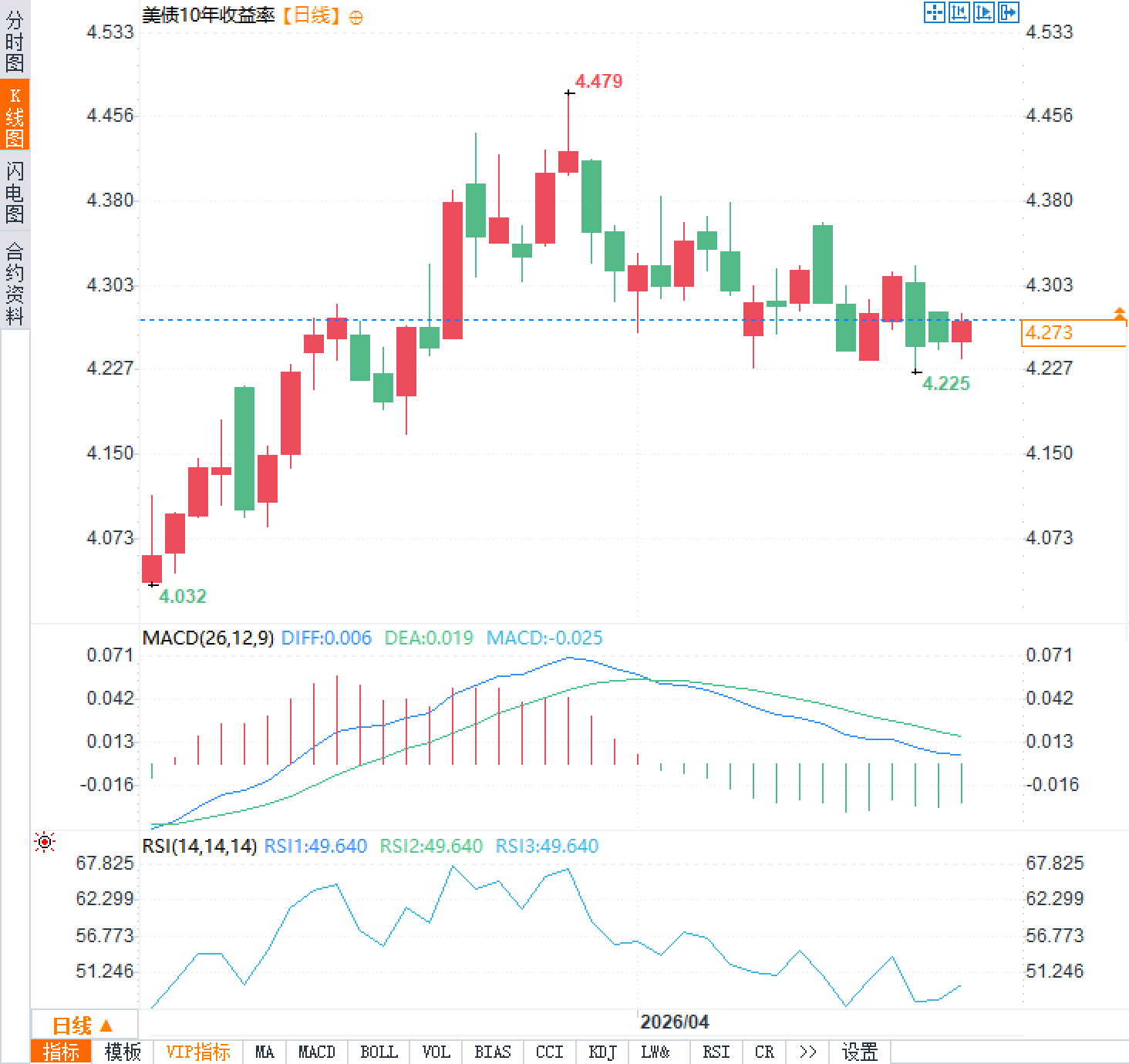
On Tuesday, April 21st, during North American trading hours, the US dollar index fluctuated around 98.2; the 10-year US Treasury yield hovered between 4.25% and 4.28%. The Federal Reserve's target range for the federal funds rate remained locked at 3.5% to 3.75%, and the March consumer price index rose to 3.3% year-on-year, a slight increase from the previous reading. In this market environment, Kevin Warsh, Trump's nominee for Federal Reserve Chair, will undergo his confirmation hearing before the Senate Banking Committee at 10:00 PM today.
Warsh's prepared remarks made it clear that the independence of monetary policymakers is crucial for controlling inflation, but is not under particular threat. This statement contrasted with Trump's tough stance in an earlier interview, where he explicitly stated he would be disappointed if Warsh, once approved, did not immediately push for interest rate cuts, and mentioned that the controversy surrounding the cost of the Federal Reserve headquarters renovation project might force Warsh to work temporarily near the White House.
In a recent interview, Trump stated that he was disappointed that the new chairman had failed to implement interest rate cuts "immediately" and emphasized that the US should have the lowest interest rates globally. He also avoided addressing whether the Justice Department should drop its criminal investigation into current Chairman Jay Powell, instead criticizing the Federal Reserve building renovation project, which he claimed could cost over $4 billion, compared to the official estimate of $2.5 billion. This statement directly amplified market concerns about policy continuity. Although the Fed kept interest rates unchanged at its March meeting, Trump's public pressure highlighted the potential tension between the executive branch and the central bank on interest rate decisions. Traders need to pay attention to whether such comments will affect the steepening of the yield curve through expectations, especially given the current slight rebound in inflation. If Warsh is confirmed to take office as early as May 16, his initial policy signals will be a core variable in market pricing.
In his prepared testimony, Warsh emphasized that the Federal Reserve's independence is "essential," but must be rewarded with sound economic outcomes. During his early tenure as a Federal Reserve Governor (2006-2011), he repeatedly stated publicly that central bank independence is not an inalienable right, but rather a "revokeable privilege," demanding that the central bank avoid favoring either side in its independent operations. Regarding inflation, he consistently argued that it is a consequence of "excessive government spending and excessive money printing," and that failure to effectively constrain this constitutes dereliction of duty on the part of the central bank. Minutes of a 2011 Federal Open Market Committee meeting show that he questioned staff forecasts for energy and commodity prices, arguing that loose monetary policy could push up inflation expectations and supporting tighter measures in response to energy shocks. In the current environment, if Warsh continues this line of thinking, he may be inclined to incorporate fiscal expansion pressures into policy considerations while remaining cautious about the size of the Federal Reserve's balance sheet. Currently, the balance sheet is approximately $6.7 trillion, and he has repeatedly criticized its expansion as blurring the boundaries between fiscal and monetary policy and potentially undermining independence. Warsh also advocated reducing the frequency of monetary policy meetings and communication noise to prevent policymakers from becoming prisoners of their own predictions, views that may reshape the Fed's communication framework.
Warsh also pointed out that productivity gains, especially AI-driven productivity, could constitute a significant inflation-suppressing force, which leaves room for a moderately loose policy stance, but requires stricter financial conditions to achieve rebalancing.
The hearing faces multiple political obstacles. Senate Banking Committee Democratic senator Elizabeth Warren has publicly questioned Warsh's failure to fully disclose over $100 million in investments, including multiple products from the Stanley Druckenmiller family office's Duquesne fund, one of which did not disclose its underlying assets due to a confidentiality agreement. On the Republican side, North Carolina Senator Thom Tillis has made it clear that he will vote against any Trump nominee for Federal Reserve governor until the Justice Department drops its criminal investigation into Powell, a stance that could play a key role in balancing the committee seats. Committee Chairman Tim Scott is expected to focus on the Fed's recent "politicization," including actions beyond its traditional mandate, and emphasize the central bank's central role in supporting economic stability and improving affordability. Warsh needs to demonstrate distance from the executive branch during the hearing to address external doubts about his independence.
Warsh's prepared remarks made it clear that the independence of monetary policymakers is crucial for controlling inflation, but is not under particular threat. This statement contrasted with Trump's tough stance in an earlier interview, where he explicitly stated he would be disappointed if Warsh, once approved, did not immediately push for interest rate cuts, and mentioned that the controversy surrounding the cost of the Federal Reserve headquarters renovation project might force Warsh to work temporarily near the White House.
Trump's statement directly addresses the path of interest rates.
In a recent interview, Trump stated that he was disappointed that the new chairman had failed to implement interest rate cuts "immediately" and emphasized that the US should have the lowest interest rates globally. He also avoided addressing whether the Justice Department should drop its criminal investigation into current Chairman Jay Powell, instead criticizing the Federal Reserve building renovation project, which he claimed could cost over $4 billion, compared to the official estimate of $2.5 billion. This statement directly amplified market concerns about policy continuity. Although the Fed kept interest rates unchanged at its March meeting, Trump's public pressure highlighted the potential tension between the executive branch and the central bank on interest rate decisions. Traders need to pay attention to whether such comments will affect the steepening of the yield curve through expectations, especially given the current slight rebound in inflation. If Warsh is confirmed to take office as early as May 16, his initial policy signals will be a core variable in market pricing.
In-depth analysis of Walsh's policy ideas
In his prepared testimony, Warsh emphasized that the Federal Reserve's independence is "essential," but must be rewarded with sound economic outcomes. During his early tenure as a Federal Reserve Governor (2006-2011), he repeatedly stated publicly that central bank independence is not an inalienable right, but rather a "revokeable privilege," demanding that the central bank avoid favoring either side in its independent operations. Regarding inflation, he consistently argued that it is a consequence of "excessive government spending and excessive money printing," and that failure to effectively constrain this constitutes dereliction of duty on the part of the central bank. Minutes of a 2011 Federal Open Market Committee meeting show that he questioned staff forecasts for energy and commodity prices, arguing that loose monetary policy could push up inflation expectations and supporting tighter measures in response to energy shocks. In the current environment, if Warsh continues this line of thinking, he may be inclined to incorporate fiscal expansion pressures into policy considerations while remaining cautious about the size of the Federal Reserve's balance sheet. Currently, the balance sheet is approximately $6.7 trillion, and he has repeatedly criticized its expansion as blurring the boundaries between fiscal and monetary policy and potentially undermining independence. Warsh also advocated reducing the frequency of monetary policy meetings and communication noise to prevent policymakers from becoming prisoners of their own predictions, views that may reshape the Fed's communication framework.
| index | Current value | Previous value comparison |
|---|---|---|
| Federal Funds Rate Target Range | 3.5% to 3.75% | March remained unchanged |
| March CPI year-on-year | 3.3% | Rebound from 2.4% |
| Federal Reserve Balance Sheet | Approximately $6.7 trillion | A slight increase of $12 billion compared to last week |
| 10-year Treasury yield | 4.25% to 4.28% | Recent narrow range fluctuations |
Nomination barriers and the debate on independence
The hearing faces multiple political obstacles. Senate Banking Committee Democratic senator Elizabeth Warren has publicly questioned Warsh's failure to fully disclose over $100 million in investments, including multiple products from the Stanley Druckenmiller family office's Duquesne fund, one of which did not disclose its underlying assets due to a confidentiality agreement. On the Republican side, North Carolina Senator Thom Tillis has made it clear that he will vote against any Trump nominee for Federal Reserve governor until the Justice Department drops its criminal investigation into Powell, a stance that could play a key role in balancing the committee seats. Committee Chairman Tim Scott is expected to focus on the Fed's recent "politicization," including actions beyond its traditional mandate, and emphasize the central bank's central role in supporting economic stability and improving affordability. Warsh needs to demonstrate distance from the executive branch during the hearing to address external doubts about his independence.
Frequently Asked Questions
Question: How does Warsh's past view that "inflation is a choice" apply to the current 3.3% CPI environment?
A: Warsh believes the root cause of inflation lies in fiscal spending and monetary expansion, and central banks bear responsibility if they fail to restrain these activities. Given the current slight rebound in CPI, his stance may drive a policy orientation that places greater emphasis on fiscal discipline, while utilizing productivity gains to buffer inflationary pressures. However, we must be wary of the energy shock transmitting to core inflation.
- Risk Warning and Disclaimer
- The market involves risk, and trading may not be suitable for all investors. This article is for reference only and does not constitute personal investment advice, nor does it take into account certain users’ specific investment objectives, financial situation, or other needs. Any investment decisions made based on this information are at your own risk.