With the Warsh hearing imminent, is the dollar about to undergo a major transformation?
2026-04-21 21:10:33
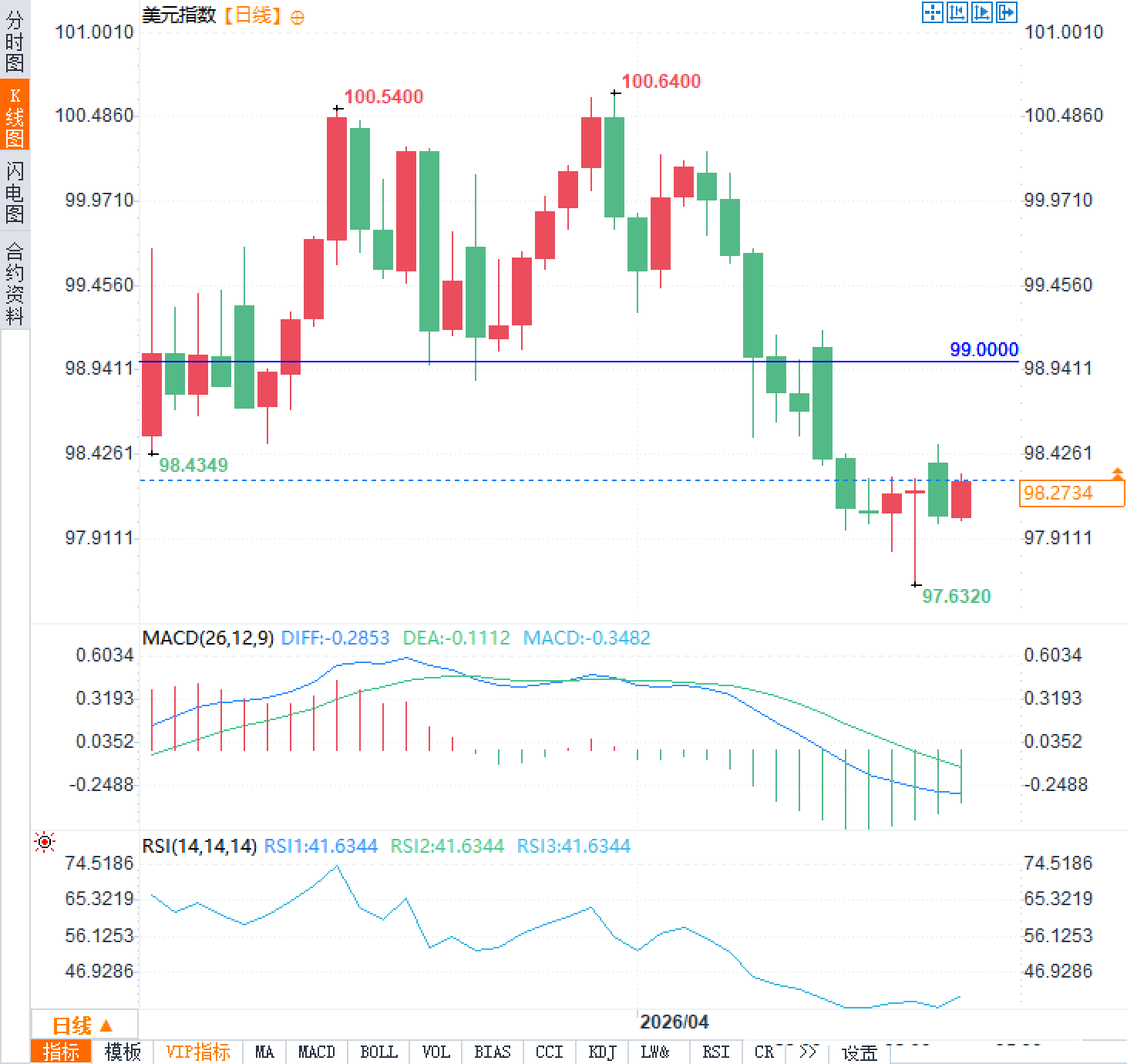
On Tuesday, April 21, the US dollar index rebounded slightly, trading around 98.25, up about 0.2% from the previous trading day. This move occurred as the deadline for Middle East ceasefire negotiations approached, and the Senate confirmation hearing for the Federal Reserve Chair nominee was also held that day. Traders are weighing the combined impact of safe-haven demand stemming from geopolitical uncertainty against potential signals of a shift in monetary policy, while persistently high oil prices of $95 per barrel further exacerbate pressure on import-dependent economies. Overall market sentiment is binary: progress in negotiations may lead to a recovery in risk appetite, while any delays could strengthen the dollar's defensive attributes.
Uncertainty surrounding the Middle East peace process continues to dominate pricing logic in the foreign exchange market. The two-week ceasefire agreement between the US and Iran, announced by Trump on April 7, is set to expire at 8 p.m. Washington time on Wednesday, and the peace negotiations are facing a critical test. Although the US has expressed confidence in a second round of talks, Iran has not yet confirmed its participation, and the naval blockade will remain in place until an agreement is reached. Any progress or delays within this timeframe will directly influence risk asset pricing and demand for the US dollar.
Brent crude oil prices are currently hovering around $95 per barrel, a significant rebound from recent lows. This is putting considerable cost pressure on major oil-importing regions such as the Eurozone and Japan, leading to downward pressure on the euro and yen exchange rates. Traders have observed that the dollar index is finding support above the 98 level, a result of the combined effect of safe-haven inflows and weakness in commodity currencies.
Analysts point out that under the current dual-risk landscape, as long as negotiations continue, the US dollar tends to adopt a defensive stance; conversely, if tensions escalate, it may turn strong. While the US dollar index hasn't seen a one-sided surge, its intraday volatility remains low, reflecting traders' cautious positioning awaiting a clear catalyst. The ongoing corporate earnings season and slight gains in US stock futures haven't fully offset the support for the dollar from geopolitical factors.
Today's confirmation hearing for Kevin Warsh by the Senate Banking Committee became another focus of market attention. As Trump's nominee for Federal Reserve Chair, Warsh's statements will directly influence market expectations regarding the future path of interest rates and the size of the Fed's balance sheet. In his prepared opening remarks, Warsh reiterated his commitment to maintaining monetary policy independence, but emphasized that this independence stems from strong economic performance, not from an inalienable right. He has previously stated that central bank independence is a "revocable privilege," requiring central banks to act independently and without bias after being authorized.
Warsh's views on energy shocks are particularly noteworthy for traders. As early as the 2011 Federal Open Market Committee meeting, he questioned whether rising commodity prices would quickly transmit to domestic inflation, and argued that loose monetary policy might amplify inflation expectations. This stance echoes the current environment of high energy prices, suggesting he may be inclined to adopt a relatively cautious policy response to supply-side shocks.
Furthermore, Warsh has long opposed the expansion of the Federal Reserve's balance sheet to its current size of approximately $6.7 trillion, arguing that it blurs the lines between fiscal and monetary policy and undermines the central bank's independence. He advocates for adjusting the banking regulatory framework to encourage financial institutions to hold more U.S. Treasury bonds rather than reserves, thereby achieving an orderly contraction of the balance sheet. If this policy shift is implemented, it could push up long-term yields, thus providing additional support for the dollar. Warsh also emphasizes that productivity booms, especially growth driven by artificial intelligence, will constitute a significant deflationary force, providing a theoretical basis for his moderately accommodative policy stance, but also cautioning against the risk of a structural shift in the central level of interest rates. The hearing results may further clarify the impact of these views on the medium- to long-term pricing of the dollar index.
Geopolitical uncertainty supports the safe-haven status of the US dollar.
Uncertainty surrounding the Middle East peace process continues to dominate pricing logic in the foreign exchange market. The two-week ceasefire agreement between the US and Iran, announced by Trump on April 7, is set to expire at 8 p.m. Washington time on Wednesday, and the peace negotiations are facing a critical test. Although the US has expressed confidence in a second round of talks, Iran has not yet confirmed its participation, and the naval blockade will remain in place until an agreement is reached. Any progress or delays within this timeframe will directly influence risk asset pricing and demand for the US dollar.
Brent crude oil prices are currently hovering around $95 per barrel, a significant rebound from recent lows. This is putting considerable cost pressure on major oil-importing regions such as the Eurozone and Japan, leading to downward pressure on the euro and yen exchange rates. Traders have observed that the dollar index is finding support above the 98 level, a result of the combined effect of safe-haven inflows and weakness in commodity currencies.
Analysts point out that under the current dual-risk landscape, as long as negotiations continue, the US dollar tends to adopt a defensive stance; conversely, if tensions escalate, it may turn strong. While the US dollar index hasn't seen a one-sided surge, its intraday volatility remains low, reflecting traders' cautious positioning awaiting a clear catalyst. The ongoing corporate earnings season and slight gains in US stock futures haven't fully offset the support for the dollar from geopolitical factors.
The impact of the Federal Reserve Chair nomination on monetary policy expectations
Today's confirmation hearing for Kevin Warsh by the Senate Banking Committee became another focus of market attention. As Trump's nominee for Federal Reserve Chair, Warsh's statements will directly influence market expectations regarding the future path of interest rates and the size of the Fed's balance sheet. In his prepared opening remarks, Warsh reiterated his commitment to maintaining monetary policy independence, but emphasized that this independence stems from strong economic performance, not from an inalienable right. He has previously stated that central bank independence is a "revocable privilege," requiring central banks to act independently and without bias after being authorized.
Warsh's views on energy shocks are particularly noteworthy for traders. As early as the 2011 Federal Open Market Committee meeting, he questioned whether rising commodity prices would quickly transmit to domestic inflation, and argued that loose monetary policy might amplify inflation expectations. This stance echoes the current environment of high energy prices, suggesting he may be inclined to adopt a relatively cautious policy response to supply-side shocks.
Furthermore, Warsh has long opposed the expansion of the Federal Reserve's balance sheet to its current size of approximately $6.7 trillion, arguing that it blurs the lines between fiscal and monetary policy and undermines the central bank's independence. He advocates for adjusting the banking regulatory framework to encourage financial institutions to hold more U.S. Treasury bonds rather than reserves, thereby achieving an orderly contraction of the balance sheet. If this policy shift is implemented, it could push up long-term yields, thus providing additional support for the dollar. Warsh also emphasizes that productivity booms, especially growth driven by artificial intelligence, will constitute a significant deflationary force, providing a theoretical basis for his moderately accommodative policy stance, but also cautioning against the risk of a structural shift in the central level of interest rates. The hearing results may further clarify the impact of these views on the medium- to long-term pricing of the dollar index.
Frequently Asked Questions
Question 1: How will the deadline for the Middle East ceasefire negotiations directly affect the short-term positioning of the US dollar index?
A: Uncertainty surrounding the negotiation deadline has strengthened the safe-haven appeal of the US dollar, especially with oil prices remaining high, putting additional downward pressure on importing currencies such as the euro and yen. The market exhibits a dual expectation: an agreement extension or conclusion would alleviate risk appetite and weaken the dollar's defensive stance; while any sign of a breakdown could drive further inflows into dollar assets, causing the index to quickly test the 98.5 area.
Question 2: How might Warsh's policy ideas change the dollar yield curve after he becomes the Federal Reserve Chairman?
A: Warsh emphasized the inflation theory driven by balance sheet contraction and fiscal spending, suggesting it may prompt adjustments to bank regulation to reduce reserve holdings, while acknowledging the deflationary effect of productivity growth. This could lead to a relatively moderate short-term interest rate path, but upward pressure on long-term yields, ultimately supporting the central level of the US dollar exchange rate. His statements at the hearing will be a key pricing benchmark, with the market focusing on his balanced approach to energy shocks and independence.
- Risk Warning and Disclaimer
- The market involves risk, and trading may not be suitable for all investors. This article is for reference only and does not constitute personal investment advice, nor does it take into account certain users’ specific investment objectives, financial situation, or other needs. Any investment decisions made based on this information are at your own risk.