Gold's safe-haven appeal is fading; what is the market fearing?
2026-04-23 20:43:06
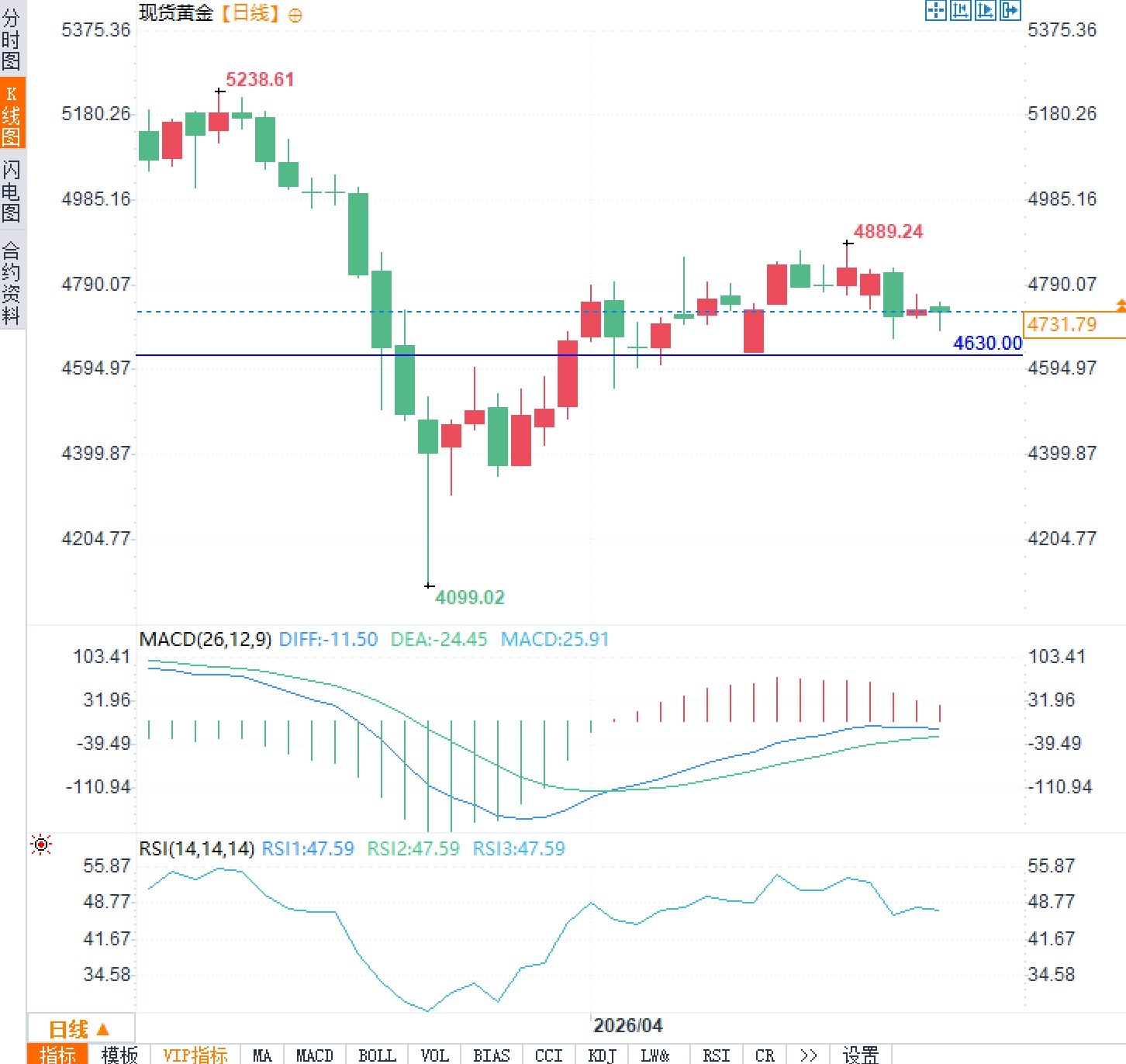
On Thursday, April 23, spot gold prices came under slight pressure, falling about 0.2% from the previous trading day, briefly dipping to around $4,700 per ounce. This movement was mainly due to the combined pressure of a slightly stronger US dollar and Brent crude oil prices remaining above $100 per barrel. The latter's continued rise in energy costs due to the stalemate in US-Iran peace talks has reignited market concerns about inflation.
Investors are closely assessing the potential impact of escalating tensions in the Strait of Hormuz, while the yield on the 10-year U.S. Treasury note rose to a one-week high, further increasing the opportunity cost of holding non-interest-bearing assets. Overall, spot gold faces multiple macroeconomic headwinds in the short term, but the interplay of geopolitical factors and monetary policy paths still introduces variables into its medium- to long-term trend.
The Strait of Hormuz, a crucial global oil shipping route, has seen tensions directly impact the crude oil market. Iran has tightened its control over the strait and seized two vessels after Trump announced an indefinite moratorium on attacks, but there are no signs of renewed peace talks. Iranian officials have accused the US of maintaining a maritime trade blockade, violating the ceasefire agreement, while the US has not made a clear statement on extending the ceasefire. This standoff has caused Brent crude prices to rise above $102 per barrel, rebounding from recent lows. The sharp rise in energy costs not only exacerbates supply chain pressures but also directly pushes up global inflation expectations. For spot gold, traditionally considered an inflation hedge, the ripple effects of soaring oil prices have the opposite effect: higher energy prices are often accompanied by stronger dollar demand and a more persistent high-interest-rate environment, thus weakening gold's appeal. Traders need to pay close attention to subsequent changes in crude oil inventory data and shipping volumes in the strait, as these indicators will determine the sustainability of the energy shock.
A slight rebound in the US dollar index has made dollar-denominated gold more expensive for holders of other currencies. Meanwhile, the yield on the 10-year US Treasury note rose above 4.32%, a one-week high. This increase in yield directly raises the opportunity cost of holding non-interest-bearing gold. Analysts point out that gold continues to derive signals from the oil market, with rising energy costs making a short-term strengthening dollar and high inflation risks a focal point. In the current environment, traders observe a negative correlation between gold, the dollar, and real yields: for every 1% appreciation of the dollar, gold often faces corresponding pressure, while every 10 basis point increase in yields also suppresses gold valuations through the discount rate mechanism. Market participants are weighing whether continued high energy prices will further strengthen this transmission path through safe-haven buying of the dollar.
The rebound in inflation triggered by the energy crisis is forcing the Federal Reserve to postpone its pace of interest rate cuts. An economist survey indicates that the Fed is likely to wait at least six months before considering its first rate cut this year, as the previous high-interest-rate environment has been further solidified by the war-driven energy shock. In a high-interest-rate environment, gold's attractiveness as a zero-interest asset has significantly decreased. Although some analysts believe gold remains a long-term inflation hedge, the expectation of high policy rates in the short term is directly suppressing bullish momentum. Traders need to pay attention to subsequent statements from Fed officials, especially their assessment of the interaction between core inflation and energy prices, as these will determine the timing of a shift in monetary policy. Some analysts believe that the current consolidation is more of a pause driven by interest rate uncertainty than a structural shift, and maintain the view that gold may reach new record highs by the end of 2026 or early 2027.
While spot gold was under pressure, related commodities such as silver, platinum, and palladium also saw corrections. Spot silver prices fell approximately 2.7% to $76.3 per ounce, platinum fell 3.2% to $2007.98 per ounce, and palladium fell 4.8% to $1470.79 per ounce. These precious metals, with their stronger industrial attributes, are more sensitive to slowing economic growth, and their declines exceeded those of gold, especially given the potential drag on the real economy from rising energy costs. The gold-to-oil price ratio is currently in a historically neutral range, allowing traders to observe the market's pricing efficiency in the transmission of inflation.
Investors are closely assessing the potential impact of escalating tensions in the Strait of Hormuz, while the yield on the 10-year U.S. Treasury note rose to a one-week high, further increasing the opportunity cost of holding non-interest-bearing assets. Overall, spot gold faces multiple macroeconomic headwinds in the short term, but the interplay of geopolitical factors and monetary policy paths still introduces variables into its medium- to long-term trend.
Geopolitical stalemate drives up energy costs
The Strait of Hormuz, a crucial global oil shipping route, has seen tensions directly impact the crude oil market. Iran has tightened its control over the strait and seized two vessels after Trump announced an indefinite moratorium on attacks, but there are no signs of renewed peace talks. Iranian officials have accused the US of maintaining a maritime trade blockade, violating the ceasefire agreement, while the US has not made a clear statement on extending the ceasefire. This standoff has caused Brent crude prices to rise above $102 per barrel, rebounding from recent lows. The sharp rise in energy costs not only exacerbates supply chain pressures but also directly pushes up global inflation expectations. For spot gold, traditionally considered an inflation hedge, the ripple effects of soaring oil prices have the opposite effect: higher energy prices are often accompanied by stronger dollar demand and a more persistent high-interest-rate environment, thus weakening gold's appeal. Traders need to pay close attention to subsequent changes in crude oil inventory data and shipping volumes in the strait, as these indicators will determine the sustainability of the energy shock.
The dual pressure from a stronger dollar and lower bond yields
A slight rebound in the US dollar index has made dollar-denominated gold more expensive for holders of other currencies. Meanwhile, the yield on the 10-year US Treasury note rose above 4.32%, a one-week high. This increase in yield directly raises the opportunity cost of holding non-interest-bearing gold. Analysts point out that gold continues to derive signals from the oil market, with rising energy costs making a short-term strengthening dollar and high inflation risks a focal point. In the current environment, traders observe a negative correlation between gold, the dollar, and real yields: for every 1% appreciation of the dollar, gold often faces corresponding pressure, while every 10 basis point increase in yields also suppresses gold valuations through the discount rate mechanism. Market participants are weighing whether continued high energy prices will further strengthen this transmission path through safe-haven buying of the dollar.
Uncertainty surrounding the Federal Reserve's policy path
The rebound in inflation triggered by the energy crisis is forcing the Federal Reserve to postpone its pace of interest rate cuts. An economist survey indicates that the Fed is likely to wait at least six months before considering its first rate cut this year, as the previous high-interest-rate environment has been further solidified by the war-driven energy shock. In a high-interest-rate environment, gold's attractiveness as a zero-interest asset has significantly decreased. Although some analysts believe gold remains a long-term inflation hedge, the expectation of high policy rates in the short term is directly suppressing bullish momentum. Traders need to pay attention to subsequent statements from Fed officials, especially their assessment of the interaction between core inflation and energy prices, as these will determine the timing of a shift in monetary policy. Some analysts believe that the current consolidation is more of a pause driven by interest rate uncertainty than a structural shift, and maintain the view that gold may reach new record highs by the end of 2026 or early 2027.
Other precious metals also fell.
While spot gold was under pressure, related commodities such as silver, platinum, and palladium also saw corrections. Spot silver prices fell approximately 2.7% to $76.3 per ounce, platinum fell 3.2% to $2007.98 per ounce, and palladium fell 4.8% to $1470.79 per ounce. These precious metals, with their stronger industrial attributes, are more sensitive to slowing economic growth, and their declines exceeded those of gold, especially given the potential drag on the real economy from rising energy costs. The gold-to-oil price ratio is currently in a historically neutral range, allowing traders to observe the market's pricing efficiency in the transmission of inflation.
Frequently Asked Questions
Question 1: Why did spot gold fall when Brent crude oil prices broke through $100 per barrel?
A: While rising oil prices have boosted inflation expectations, they have also reinforced the Federal Reserve's need to maintain high interest rates, which directly increase the opportunity cost of holding zero-interest gold. Furthermore, the strengthening US dollar due to energy demand further impacts gold prices.
Question 2: What does the Fed's postponement of interest rate cuts mean for the medium- to long-term trend of gold?
A: The energy shock prolongs the high-interest-rate cycle, potentially delaying the release of monetary easing benefits for gold, but persistent geopolitical risks continue to provide a floor for gold prices. Some analysts believe this is merely a temporary consolidation, and still expect gold prices to reach new highs by the end of 2026 or early 2027, the core issue being the final interplay between the inflation path and policy shift.
- Risk Warning and Disclaimer
- The market involves risk, and trading may not be suitable for all investors. This article is for reference only and does not constitute personal investment advice, nor does it take into account certain users’ specific investment objectives, financial situation, or other needs. Any investment decisions made based on this information are at your own risk.