Market Calculations Behind Gold's Stability
2026-04-27 21:13:57
On Monday, April 27, spot gold was quoted at around $4,700 per ounce in early US trading, essentially unchanged from the previous session, while the June futures contract fell slightly by 0.4% to around $4,722.60 per ounce. This week saw a flurry of central bank policy meetings, with traders focusing on assessing the transmission effects of geopolitical tensions on global energy supplies and inflation expectations. Brent crude oil prices resumed their upward trend after the weekend, rising 2.5% to above $107 per barrel, primarily driven by supply constraints at key Middle East shipping routes. Although direct military conflict has entered a ceasefire phase, repeated diplomatic maneuvering has made it difficult for market risk premiums to dissipate quickly, and the dollar index weakened to around 98.3, providing some support for gold.
The evolving situation in the Middle East remains a core variable in commodity pricing. Despite the ceasefire agreement, disagreements between the US and Iran over nuclear issues and control of the Strait of Hormuz have hindered breakthroughs in indirect negotiations. Iran's phased approach prioritizes ending the conflict and providing guarantees against restarting the war, followed by resolving shipping issues in the Strait, and only then touching on details of its nuclear program. This path differs significantly from Washington's position of addressing the nuclear issue first. The cancellation of face-to-face talks with Pakistan as a mediator due to the cancellation of the US envoy's trip, and the subsequent trip by the Iranian Foreign Minister to Russia to seek support from a long-standing ally, further highlight the significant gap between the two sides' positions.
The Strait of Hormuz handles about one-fifth of global oil shipments, and restrictions on its navigation directly lead to supply shortages. Iran maintains control over some of these shipments, and obstruction of Iranian vessels by other parties exacerbates this bottleneck. As a result, Brent crude prices rebounded rapidly, which traders interpreted as a manifestation of long-term uncertainty. High oil prices not only raise global energy costs but also transmit these costs through the supply chain to the manufacturing and consumer sectors, amplifying the risk of economic downturn.
Against this backdrop, gold's appeal as a traditional safe-haven asset has been maintained, despite limited short-term volatility. Traders have observed that geopolitical risk premiums are gradually being embedded in the far-month contracts of the crude oil futures curve, while the stability of spot gold reflects traders' reluctance to over-bet on one-sided directions while awaiting further diplomatic signals.
Sustained high oil prices have directly pushed up global inflation expectations. Rising energy costs have begun to be passed on to the PPI and CPI, and traders expect statements from this week's meetings of the Federal Reserve, the Bank of Japan, the European Central Bank, and the Bank of England to be more cautious about inflation risks than before. Market analysts point out that traders are preparing for potentially more hawkish signals from central banks, as rising oil prices have clearly increased price pressures. In a high-interest-rate environment, the cost of holding non-interest-bearing assets such as gold has increased, leading to a temporary suppression of their attractiveness.
However, safe-haven demand driven by geopolitical factors offset this pressure. A slight weakening of the US dollar reduced the cost of gold purchases for holders of non-dollar currencies, further balancing some of the selling pressure. The Federal Reserve is expected to keep interest rates unchanged, but the wording regarding the path of inflation in its policy statement will be crucial. If the statement emphasizes energy prices, market expectations for further rate hikes or delayed rate cuts may rise, directly impacting gold's valuation range.
At the current stage, traders' position adjustments reflect this dual game: on the one hand, locking in geopolitical premiums, and on the other hand, reserving flexibility for central bank signals.
The stability of spot gold is not an isolated phenomenon, but rather the result of a combination of factors. Geopolitical uncertainty provides underlying support for gold, but the flurry of central bank meetings constitutes a short-term ceiling. Traders generally believe that rising oil prices will push up inflation, prompting policymakers to maintain or strengthen their tightening stance, which directly drags down gold. The divergent performance of industrial precious metals such as silver and platinum during the same period also reflects the differentiated impact of energy costs on different assets.
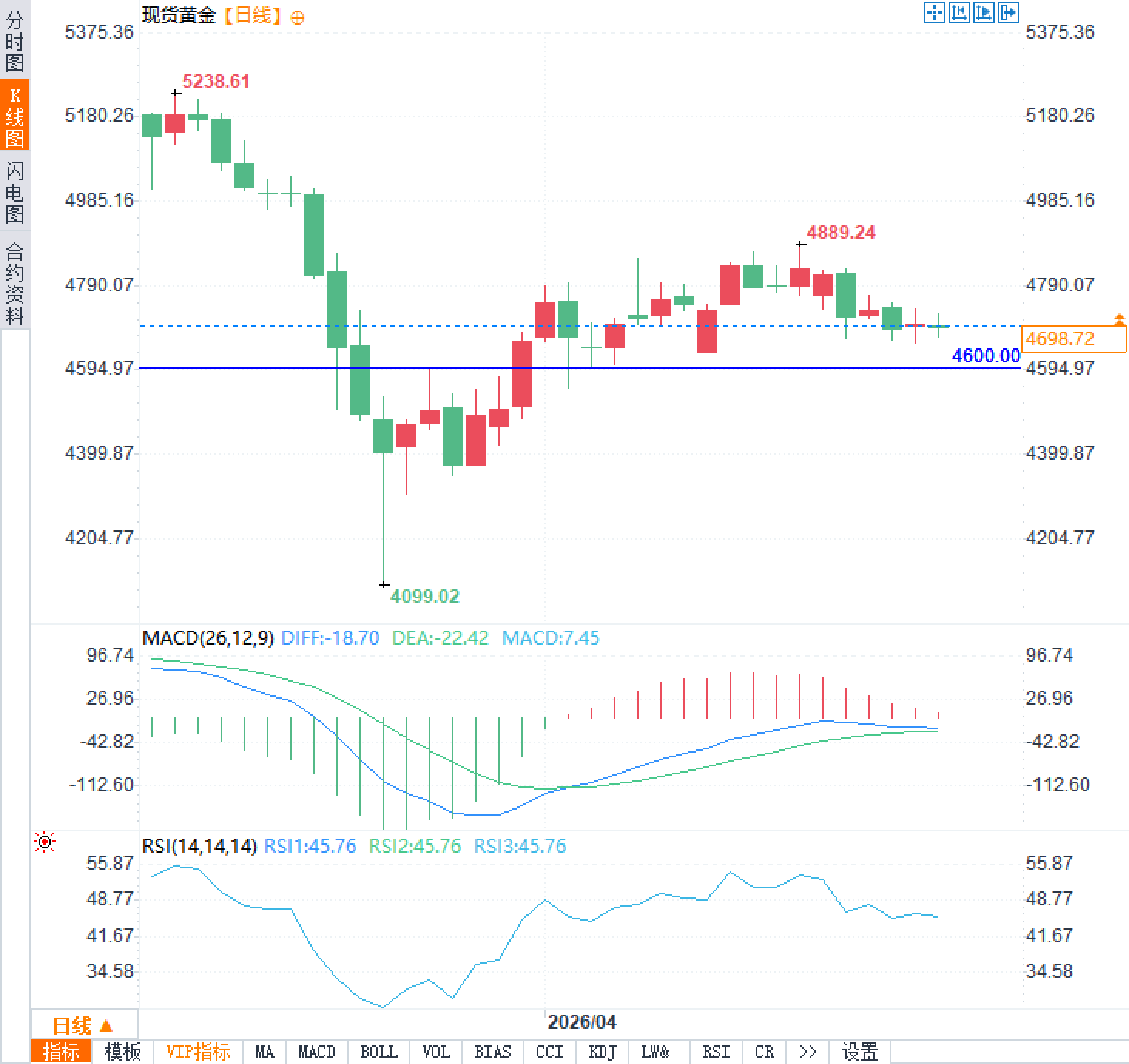
Looking deeper, the global economic growth outlook is becoming more cautious due to high energy prices. While the risk of supply chain disruptions has not yet fully materialized, it is enough to prompt companies to reassess their inventory strategies. In this environment, gold plays a role more akin to "insurance" than a speculative asset. Overall, the current narrow range of gold prices reflects the market's rational pricing of uncertainty: the safe-haven logic has not completely given way to the tightening logic, but any diplomatic breakthrough or unexpected signals from central banks could disrupt the balance.
Geopolitical deadlock drives up energy risk premium
The evolving situation in the Middle East remains a core variable in commodity pricing. Despite the ceasefire agreement, disagreements between the US and Iran over nuclear issues and control of the Strait of Hormuz have hindered breakthroughs in indirect negotiations. Iran's phased approach prioritizes ending the conflict and providing guarantees against restarting the war, followed by resolving shipping issues in the Strait, and only then touching on details of its nuclear program. This path differs significantly from Washington's position of addressing the nuclear issue first. The cancellation of face-to-face talks with Pakistan as a mediator due to the cancellation of the US envoy's trip, and the subsequent trip by the Iranian Foreign Minister to Russia to seek support from a long-standing ally, further highlight the significant gap between the two sides' positions.
The Strait of Hormuz handles about one-fifth of global oil shipments, and restrictions on its navigation directly lead to supply shortages. Iran maintains control over some of these shipments, and obstruction of Iranian vessels by other parties exacerbates this bottleneck. As a result, Brent crude prices rebounded rapidly, which traders interpreted as a manifestation of long-term uncertainty. High oil prices not only raise global energy costs but also transmit these costs through the supply chain to the manufacturing and consumer sectors, amplifying the risk of economic downturn.
Against this backdrop, gold's appeal as a traditional safe-haven asset has been maintained, despite limited short-term volatility. Traders have observed that geopolitical risk premiums are gradually being embedded in the far-month contracts of the crude oil futures curve, while the stability of spot gold reflects traders' reluctance to over-bet on one-sided directions while awaiting further diplomatic signals.
Oil price transmission exacerbates inflationary pressures, testing monetary policy.
Sustained high oil prices have directly pushed up global inflation expectations. Rising energy costs have begun to be passed on to the PPI and CPI, and traders expect statements from this week's meetings of the Federal Reserve, the Bank of Japan, the European Central Bank, and the Bank of England to be more cautious about inflation risks than before. Market analysts point out that traders are preparing for potentially more hawkish signals from central banks, as rising oil prices have clearly increased price pressures. In a high-interest-rate environment, the cost of holding non-interest-bearing assets such as gold has increased, leading to a temporary suppression of their attractiveness.
However, safe-haven demand driven by geopolitical factors offset this pressure. A slight weakening of the US dollar reduced the cost of gold purchases for holders of non-dollar currencies, further balancing some of the selling pressure. The Federal Reserve is expected to keep interest rates unchanged, but the wording regarding the path of inflation in its policy statement will be crucial. If the statement emphasizes energy prices, market expectations for further rate hikes or delayed rate cuts may rise, directly impacting gold's valuation range.
At the current stage, traders' position adjustments reflect this dual game: on the one hand, locking in geopolitical premiums, and on the other hand, reserving flexibility for central bank signals.
The dynamic balance between safe-haven demand and interest rate sensitivity in the gold market
The stability of spot gold is not an isolated phenomenon, but rather the result of a combination of factors. Geopolitical uncertainty provides underlying support for gold, but the flurry of central bank meetings constitutes a short-term ceiling. Traders generally believe that rising oil prices will push up inflation, prompting policymakers to maintain or strengthen their tightening stance, which directly drags down gold. The divergent performance of industrial precious metals such as silver and platinum during the same period also reflects the differentiated impact of energy costs on different assets.
Looking deeper, the global economic growth outlook is becoming more cautious due to high energy prices. While the risk of supply chain disruptions has not yet fully materialized, it is enough to prompt companies to reassess their inventory strategies. In this environment, gold plays a role more akin to "insurance" than a speculative asset. Overall, the current narrow range of gold prices reflects the market's rational pricing of uncertainty: the safe-haven logic has not completely given way to the tightening logic, but any diplomatic breakthrough or unexpected signals from central banks could disrupt the balance.
Frequently Asked Questions
Question 1: How will meetings of the Federal Reserve and other central banks influence the gold market?
A: The market expects the Federal Reserve to keep interest rates unchanged, but rising oil prices may lead to a more hawkish statement, emphasizing inflation risks. High interest rate environments typically suppress the prices of non-interest-bearing assets such as gold. Traders are therefore cautious.
Question 2: What are the long-term implications of the stalemate in US-Iran negotiations for precious metals?
A: Negotiations are proceeding in phases, with the nuclear issue and the control of the Taiwan Strait being the core points of contention. Short-term uncertainty supports demand for gold as a safe haven, but prolonged delays could exacerbate economic pain points, ultimately impacting global growth and asset pricing.
- Risk Warning and Disclaimer
- The market involves risk, and trading may not be suitable for all investors. This article is for reference only and does not constitute personal investment advice, nor does it take into account certain users’ specific investment objectives, financial situation, or other needs. Any investment decisions made based on this information are at your own risk.