Oil prices retreated from their highs, and the Federal Reserve's hawkish stance diverged the dollar's trajectory, causing the USD/CAD to fluctuate and decline.
2026-04-30 10:51:04
The US dollar edged lower against the Canadian dollar to around 1.3680 in Asian trading on Thursday, after trading sideways for two consecutive days. While the dollar saw a short-term pullback, the overall decline was limited, mainly due to the drag from falling oil prices on the Canadian dollar. As one of the world's major energy exporters, Canada's economy is highly dependent on oil exports, and fluctuations in oil prices directly impact the Canadian dollar's performance.
From an energy market perspective, WTI crude oil prices experienced a technical pullback after three consecutive days of gains, currently hovering around $104 per barrel . Despite this, tensions remain high in the Middle East, with the US imposing a naval blockade on Iranian ports and the UAE announcing its withdrawal from the Organization of the Petroleum Exporting Countries (OPEC), keeping market concerns about the global supply outlook alive. Overall, while oil prices have seen a short-term correction, they still possess upward momentum in the medium term, which to some extent limits the downside potential of the USD/CAD exchange rate.
At the same time, Canada's energy sector is attracting more international capital. Several international energy giants are reassessing their Canadian oil and gas asset allocations, including large-scale mergers and acquisitions and strategic investments. This trend reflects Canada's rising importance as a stable energy supply source amid escalating geopolitical risks, potentially supporting the Canadian dollar.
Regarding the US dollar, the short-term pullback was mainly due to profit-taking, but the overall fundamentals remain strong. The Federal Reserve, in its latest meeting, voted 8-4 to maintain interest rates in the 3.50%-3.75% range, the most divergent vote in decades. The meeting statement noted that inflation remains high, partly due to rising energy prices, which reinforced market expectations of a continued high-interest-rate environment.
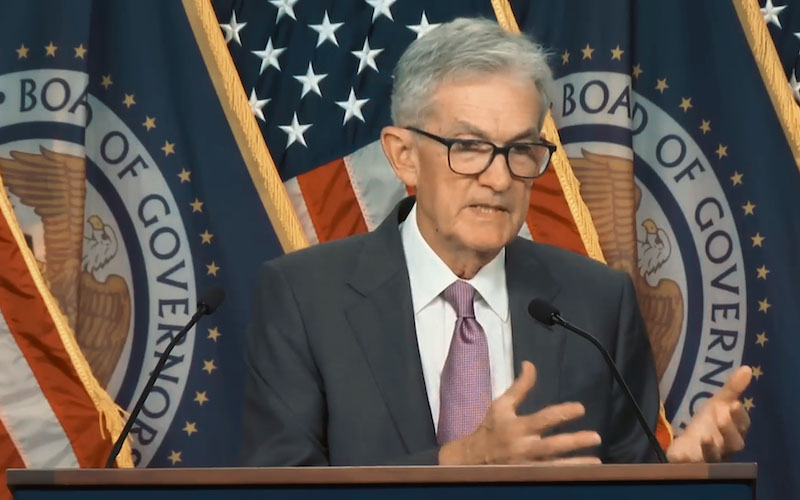
Federal Reserve Chairman Jerome Powell emphasized at a press conference that he will continue to serve as a governor for some time after his term ends, and reiterated the importance of policy independence. Meanwhile, the market is assessing the policy leanings of his successor, Kevin Warsh, in advance, keeping dollar assets attractive. Against the backdrop of ongoing geopolitical risks, the dollar remains a favorite safe-haven asset.
From a market sentiment perspective, USD/CAD is currently in a phase of mixed bullish and bearish factors. On one hand, high oil prices are supporting the Canadian dollar; on the other hand, the Federal Reserve's hawkish stance and safe-haven demand are supporting the US dollar. These factors offset each other, resulting in a short-term volatile trading pattern for the exchange rate.
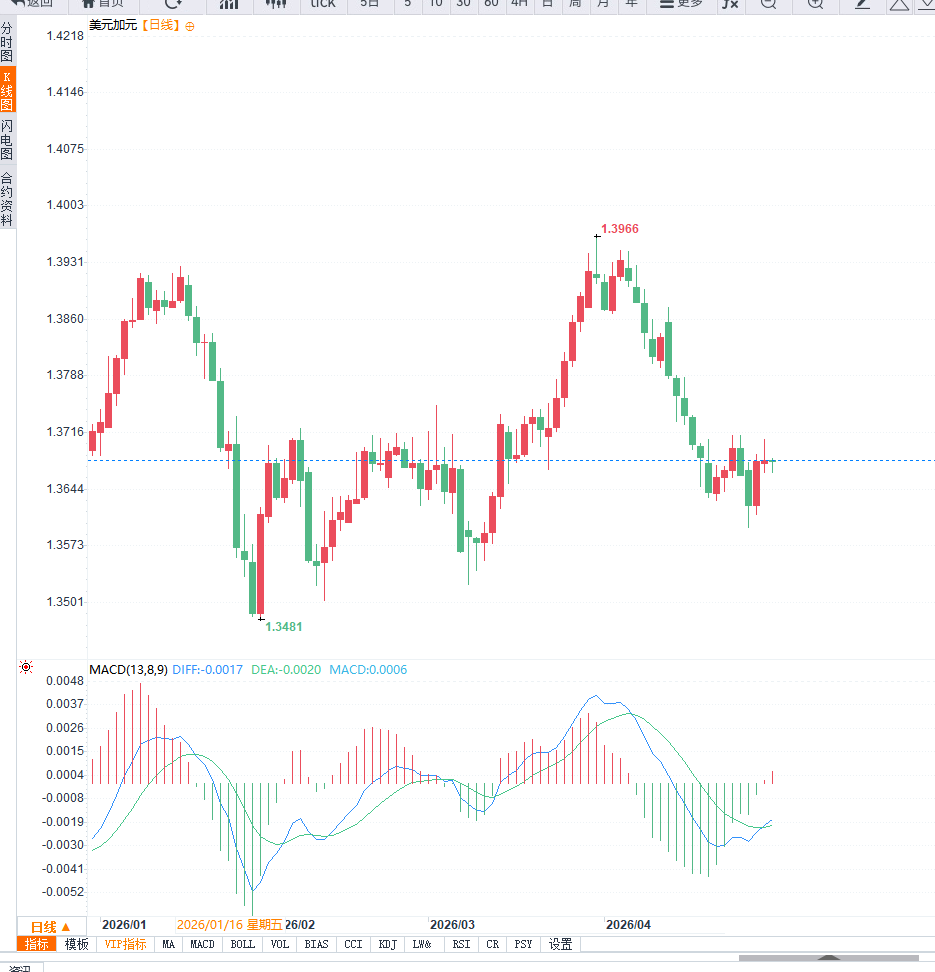
From a technical perspective, the USD/CAD daily chart maintains a range-bound trading pattern, with the price currently trading below 1.3700 . Resistance levels to watch are 1.3750 and 1.3800 ; a break above these levels could open up further upside potential. Support levels are at 1.3650 and 1.3600 ; a break below these levels could test the 1.3550 area. In terms of momentum indicators, the RSI is in neutral territory, suggesting a lack of clear market direction.
On the 4-hour chart, the exchange rate shows a slightly weak, oscillating structure, with short-term moving averages flattening out, indicating a balance between bullish and bearish forces. If the price continues to trade below 1.3700, the short-term bias remains towards testing support; however, if it regains and stabilizes above this level, an upward trend may resume. Overall, the short-term direction of USD/CAD still needs further clarification regarding the direction of oil prices and the US dollar.
Editor's Summary:
The current USD/CAD exchange rate movement reflects the interplay between energy prices and monetary policy. The pullback in oil prices from their highs has weakened support for the Canadian dollar, while the Federal Reserve's hawkish stance has maintained a strong US dollar, causing the exchange rate to fluctuate. In the short term, the market will continue to focus on oil price movements and Fed policy signals, and the exchange rate is expected to fluctuate repeatedly within a key range, awaiting new driving factors.
From an energy market perspective, WTI crude oil prices experienced a technical pullback after three consecutive days of gains, currently hovering around $104 per barrel . Despite this, tensions remain high in the Middle East, with the US imposing a naval blockade on Iranian ports and the UAE announcing its withdrawal from the Organization of the Petroleum Exporting Countries (OPEC), keeping market concerns about the global supply outlook alive. Overall, while oil prices have seen a short-term correction, they still possess upward momentum in the medium term, which to some extent limits the downside potential of the USD/CAD exchange rate.
At the same time, Canada's energy sector is attracting more international capital. Several international energy giants are reassessing their Canadian oil and gas asset allocations, including large-scale mergers and acquisitions and strategic investments. This trend reflects Canada's rising importance as a stable energy supply source amid escalating geopolitical risks, potentially supporting the Canadian dollar.
Regarding the US dollar, the short-term pullback was mainly due to profit-taking, but the overall fundamentals remain strong. The Federal Reserve, in its latest meeting, voted 8-4 to maintain interest rates in the 3.50%-3.75% range, the most divergent vote in decades. The meeting statement noted that inflation remains high, partly due to rising energy prices, which reinforced market expectations of a continued high-interest-rate environment.
Federal Reserve Chairman Jerome Powell emphasized at a press conference that he will continue to serve as a governor for some time after his term ends, and reiterated the importance of policy independence. Meanwhile, the market is assessing the policy leanings of his successor, Kevin Warsh, in advance, keeping dollar assets attractive. Against the backdrop of ongoing geopolitical risks, the dollar remains a favorite safe-haven asset.
From a market sentiment perspective, USD/CAD is currently in a phase of mixed bullish and bearish factors. On one hand, high oil prices are supporting the Canadian dollar; on the other hand, the Federal Reserve's hawkish stance and safe-haven demand are supporting the US dollar. These factors offset each other, resulting in a short-term volatile trading pattern for the exchange rate.
From a technical perspective, the USD/CAD daily chart maintains a range-bound trading pattern, with the price currently trading below 1.3700 . Resistance levels to watch are 1.3750 and 1.3800 ; a break above these levels could open up further upside potential. Support levels are at 1.3650 and 1.3600 ; a break below these levels could test the 1.3550 area. In terms of momentum indicators, the RSI is in neutral territory, suggesting a lack of clear market direction.
On the 4-hour chart, the exchange rate shows a slightly weak, oscillating structure, with short-term moving averages flattening out, indicating a balance between bullish and bearish forces. If the price continues to trade below 1.3700, the short-term bias remains towards testing support; however, if it regains and stabilizes above this level, an upward trend may resume. Overall, the short-term direction of USD/CAD still needs further clarification regarding the direction of oil prices and the US dollar.
Editor's Summary:
The current USD/CAD exchange rate movement reflects the interplay between energy prices and monetary policy. The pullback in oil prices from their highs has weakened support for the Canadian dollar, while the Federal Reserve's hawkish stance has maintained a strong US dollar, causing the exchange rate to fluctuate. In the short term, the market will continue to focus on oil price movements and Fed policy signals, and the exchange rate is expected to fluctuate repeatedly within a key range, awaiting new driving factors.
- Risk Warning and Disclaimer
- The market involves risk, and trading may not be suitable for all investors. This article is for reference only and does not constitute personal investment advice, nor does it take into account certain users’ specific investment objectives, financial situation, or other needs. Any investment decisions made based on this information are at your own risk.