













Tokyo inflation fell short of expectations, weakening expectations of an interest rate hike, causing the USD/JPY pair to drop sharply and begin a correction.
2026-05-01 09:19:58
The latest inflation data released in Tokyo showed an overall moderate trend. Data showed that Tokyo's overall CPI rose 1.5% year-on-year in April, slightly higher than the previous month's 1.4%, but the core inflation indicator, which is more closely watched by the market, weakened. Specifically, the core CPI excluding fresh food rose 1.5% year-on-year, lower than the market expectation of 1.8% and significantly lower than the previous month's 1.7%. At the same time, the core CPI excluding fresh food and energy also fell from 1.7% to 1.5%, indicating a further weakening of inflationary momentum.

This data structure indicates that while Japanese inflation remains in positive territory, endogenous inflationary pressures are insufficient, particularly with a slowdown in core price momentum, weakening market expectations for further policy tightening by the Bank of Japan in the near term. Previously, the market had bet that the Bank of Japan might continue to raise interest rates in the coming months, but this data undoubtedly dampens that expectation.
From an exchange rate perspective, the USD/JPY pair experienced significant volatility following the data release. Yesterday, USD/JPY fell by over 2% intraday, retreating to around 156, indicating a rapid adjustment in previous long positions. This decline reflects not only the impact of the data itself but also short-term fund flows and technical adjustments. A rebound occurred during Friday's Asian session, but the rebound was limited, further increasing the probability of continued short-term correction.
It's worth noting that while weaker inflation should theoretically be bearish for the yen, the market is currently largely digesting previously over-priced policy expectations. The USD/JPY pair was previously trading at high levels with concentrated long positions; therefore, weaker-than-expected data could trigger widespread liquidation, amplifying exchange rate volatility.
In addition, the global macroeconomic environment also affects exchange rates. Regarding the US dollar, market uncertainty remains regarding the Federal Reserve's policy path, and recent fluctuations in risk sentiment have also influenced the allocation of funds between safe-haven and yield assets, leading to increased short-term volatility in the foreign exchange market.
From a technical perspective, the USD/JPY daily chart shows a clear pullback structure. The price quickly broke below short-term moving average support, indicating a weakening short-term trend. The 156 level has become a key support; a further decline to the 153 area is possible if this level is breached. The short-term resistance level has fallen back to the 158-159 range. In terms of momentum indicators, the RSI is falling rapidly, and the MACD shows signs of a death cross, indicating increasing short-term bearish momentum.
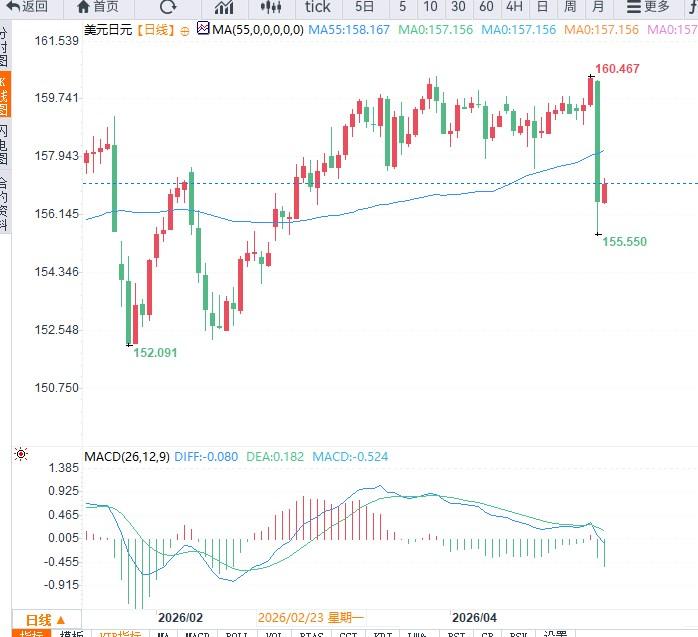
Editor's Viewpoint : The core significance of this Tokyo inflation data lies in weakening market confidence in the Bank of Japan's pace of interest rate hikes. However, the significant exchange rate fluctuations are more due to position adjustments and technical factors. In the short term, USD/JPY may enter a period of consolidation and correction. Its future trend will depend on whether Japanese inflation continues to weaken and changes in expectations regarding the Federal Reserve's policy.
This data structure indicates that while Japanese inflation remains in positive territory, endogenous inflationary pressures are insufficient, particularly with a slowdown in core price momentum, weakening market expectations for further policy tightening by the Bank of Japan in the near term. Previously, the market had bet that the Bank of Japan might continue to raise interest rates in the coming months, but this data undoubtedly dampens that expectation.
From an exchange rate perspective, the USD/JPY pair experienced significant volatility following the data release. Yesterday, USD/JPY fell by over 2% intraday, retreating to around 156, indicating a rapid adjustment in previous long positions. This decline reflects not only the impact of the data itself but also short-term fund flows and technical adjustments. A rebound occurred during Friday's Asian session, but the rebound was limited, further increasing the probability of continued short-term correction.
It's worth noting that while weaker inflation should theoretically be bearish for the yen, the market is currently largely digesting previously over-priced policy expectations. The USD/JPY pair was previously trading at high levels with concentrated long positions; therefore, weaker-than-expected data could trigger widespread liquidation, amplifying exchange rate volatility.
In addition, the global macroeconomic environment also affects exchange rates. Regarding the US dollar, market uncertainty remains regarding the Federal Reserve's policy path, and recent fluctuations in risk sentiment have also influenced the allocation of funds between safe-haven and yield assets, leading to increased short-term volatility in the foreign exchange market.
From a technical perspective, the USD/JPY daily chart shows a clear pullback structure. The price quickly broke below short-term moving average support, indicating a weakening short-term trend. The 156 level has become a key support; a further decline to the 153 area is possible if this level is breached. The short-term resistance level has fallen back to the 158-159 range. In terms of momentum indicators, the RSI is falling rapidly, and the MACD shows signs of a death cross, indicating increasing short-term bearish momentum.
Editor's Viewpoint : The core significance of this Tokyo inflation data lies in weakening market confidence in the Bank of Japan's pace of interest rate hikes. However, the significant exchange rate fluctuations are more due to position adjustments and technical factors. In the short term, USD/JPY may enter a period of consolidation and correction. Its future trend will depend on whether Japanese inflation continues to weaken and changes in expectations regarding the Federal Reserve's policy.
- Risk Warning and Disclaimer
- The market involves risk, and trading may not be suitable for all investors. This article is for reference only and does not constitute personal investment advice, nor does it take into account certain users’ specific investment objectives, financial situation, or other needs. Any investment decisions made based on this information are at your own risk.

