Breaking News! Trump's "Freedom Plan" Stirs Up a Powder Keg: Iran Retaliates Fully, Strait of Hormuz Descends into a Blood-Soaked Standoff.
2026-05-05 08:15:57
On May 4, US President Trump officially launched a military operation called "Operation Freedom," attempting to use US naval power to forcibly open the Strait of Hormuz, which is blocked by Iran. This move quickly triggered a strong retaliation from Iran, and the two sides clashed violently in and around the strait, the most serious armed conflict since a ceasefire was announced four weeks earlier. According to multiple reports, several merchant ships were attacked, a major oil port in the UAE caught fire, a South Korean merchant ship exploded and caught fire, and an oil tanker belonging to the UAE National Oil Company was also accused of being attacked by Iranian drones. The US and Iran have conflicting accounts of the actual passage through the strait, plunging the situation into a state of high chaos and uncertainty.
The Strait of Hormuz, situated between the Arabian Peninsula and the Iranian Plateau, is the only waterway connecting the Persian Gulf and the Indian Ocean. Before the war, approximately one-fifth of the world's crude oil and liquefied natural gas transported through this strait, making it a vital choke point for the global economy. Leveraging its geographical advantage, Iran has long maintained a strong military presence and blockade capability in the strait. Since the US-Iran ceasefire agreement took effect, while there have been occasional skirmishes in navigation through the strait, no large-scale direct confrontation has erupted. However, Trump's "Freedom Initiative" has shattered this fragile balance, pushing both sides back to the brink of conflict.
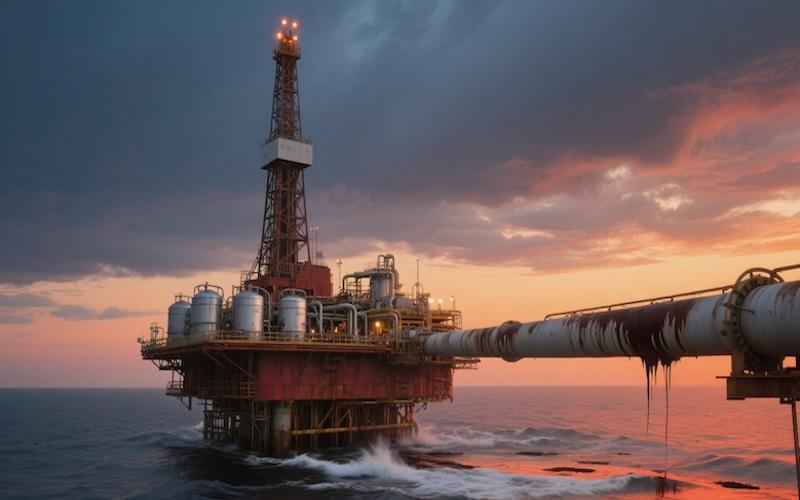
On the night of May 4th, Trump announced the launch of "Operation Freedom" via social media. The program's stated goal is to "guide blocked ships through the Strait of Hormuz" to lift Iran's blockade of international shipping. The U.S. military subsequently dispatched several guided-missile destroyers to the Persian Gulf to assist two merchant ships flying the U.S. flag in their attempt to pass through the strait. U.S. Central Command posted on the social media platform X that the two merchant ships had successfully passed and were "safely continuing their journey." However, the U.S. did not disclose the specific identities of the warships and merchant ships involved, nor did it specify the exact time of the passage.
Initial results suggest that the "Freedom of Navigation" program has not achieved its intended goals. Several major shipping companies have indicated they may wait until the conflict officially ends before considering resuming navigation. Merchant ship traffic has not increased significantly; instead, it has provoked a more intense display of force from Iran. Trump's risky move has, in effect, backfired.
Faced with direct US intervention, Iran swiftly launched a multi-layered counterattack. First, the Iranian Islamic Revolutionary Guard Corps publicly denied that any merchant ships had passed through the Strait of Hormuz, directly refuting the US claims. Second, Iranian authorities released a new map claiming that the area of waters they control extends far beyond the Strait of Hormuz, reaching a large area along the coastline of the United Arab Emirates, attempting to legally and practically expand their defensive depth.
On the military front, Iran fired "warning shots" at a U.S. warship approaching the Strait of Hormuz, initially reporting that it had struck a U.S. vessel (a claim denied by Washington, which Iran later revised). Simultaneously, Iran launched drone and missile attacks on targets within the UAE. The UAE National Oil Company confirmed that one of its empty oil tankers was attacked by an Iranian drone. Multiple drone and missile attacks were reported throughout the day within the UAE, and a major oil port was engulfed in flames. The UAE government stated that the Iranian attacks marked a serious escalation of the situation and reserved the right to respond.
South Korea reported that one of its merchant ships exploded and caught fire in the strait. The UK Maritime Safety Authority (UKMTO) stated that two vessels were attacked off the coast of the United Arab Emirates. These incidents further indicate that the conflict has spread beyond the strait.
The most striking feature of the entire incident is the completely contradictory accounts given by the US and Iran. The US military claimed that six small Iranian vessels had been destroyed and two US merchant ships had successfully passed through the strait. Iran, however, categorically denied these claims, denying both the passage of merchant ships and the destruction of any of its vessels. US Navy Admiral Brad Cooper stated that he had "strongly advised" Iranian forces to stay away from US military assets involved in the operation; while the Iranian Revolutionary Guard insisted that no merchant ships had passed through the strait in the past few hours.
This information chaos makes it difficult for outsiders to independently verify the true situation in the Strait. Reuters acknowledged in its report that, due to conflicting accounts from both sides, it was impossible to independently confirm the overall situation on Monday. This Rashomon-like narrative conflict is itself a dangerous sign of escalating tensions.
On the same day, Trump displayed contradictory stances in various media interviews. In an interview with Fox News, he issued an extreme threat: if Iran fires on American ships in the Persian Gulf or the Strait of Hormuz, it will be "wiped off the face of the earth." He also stated that there are only two paths—either Iran reaches an agreement in good faith, or the United States will ultimately have to resume military operations, emphasizing that the US military has sufficient combat supplies and is ready to be deployed at any time.
However, in an interview with ABC News, Trump noticeably downplayed the severity of the attacks that day. He called the attacks "not a fierce exchange of fire" and stated that "there was no exchange of fire." Regarding Iran's missile and drone strikes against the UAE, he said the vast majority were shot down, "only one escaped, and the damage wasn't serious." He even stated that overreacting would be very bad for Iran, "but not for me." When explicitly asked whether the ceasefire agreement was still in effect, Trump refused to give a direct answer, saying, "I can't tell you that."
Analysts point out that this "all bark and no bite" approach may be Trump's attempt to demonstrate a tough stance while avoiding a complete loss of control of the situation. However, judging from Iran's reaction, this ambiguous strategy has not had a calming effect.
Iranian Foreign Minister Araqchi issued a formal response to the US actions in a social media post early on May 5. He pointed out that the events in the Strait of Hormuz clearly demonstrate that political crises cannot be resolved through military means. He stated that current negotiations are progressing under the active mediation of Pakistan, and the US should remain vigilant to avoid being dragged into a quagmire by "malicious elements." He warned the UAE to be equally cautious and bluntly stated that the "Freedom Project" is a "stalemate project." This statement highlights Iran's strategy of combining military confrontation with diplomatic negotiations: demonstrating red lines with force while maintaining a window for dialogue.
The ceasefire agreement reached between the US and Iran four weeks ago is now facing a severe test. Trump's refusal to explicitly state whether the ceasefire has been violated or remains in effect leaves much room for interpretation. CCTV, citing analysts, points out that Iran is currently employing a "brinkmanship tactic"—pushing the situation to a tipping point through actions such as missile warnings to US warships, forcing the US to choose between military control and economic sanctions. Meanwhile, the US is adopting an "erosion strategy" of economic and financial pressure. The two sides are likely to be embroiled in a protracted war of attrition, with little hope of a peaceful resolution in the short term.
The US military claims its operations are aimed at ensuring freedom of navigation, but in reality, under Iran's strong countermeasures, the situation in the Strait of Hormuz has not improved; on the contrary, it has become more dangerous. Several major shipping companies have clearly stated that they may not resume routes until the conflict officially ends. This means that Trump's "freedom plan" has not only failed to open up the strait in its initial stages, but has also exacerbated the blockade and confrontation.
Tensions in the Strait of Hormuz escalated dramatically on May 4, 2026. The United States, under the guise of the "Freedom Project," used naval power to force passage through the strait, directly challenging Iran's de facto control. Iran retaliated in multiple ways, including displays of force, denials of claims, expansion of its claimed control, and attacks on targets in neighboring countries. Fundamental disagreements exist between the US and Iran regarding the facts on the ground, making independent verification difficult. Trump's wavering statements between threats and de-escalation, and his refusal to clarify the effectiveness of the ceasefire agreement, further increased uncertainty. Iran's foreign minister explicitly opposed a military solution and warned that the "Freedom Project" would lead to a stalemate. The UAE, a regional power, has already suffered actual attacks and reserved the right to respond. Analysts believe that the two sides are increasingly locked in a protracted war of attrition, employing "brinkmanship tactics" and "erosion strategies," making a return to normal navigation in the strait unlikely in the short term, and placing new pressure on the global economy and energy markets.
Question 1: What is the "Freedom Project"? Why did Trump launch it?
A: "Operation Freedom" is a military operation announced by Trump on May 4, 2026, aimed at using U.S. naval power to forcibly open the Strait of Hormuz, which is blocked by Iran. Prior to this, Iran had effectively controlled the strait through military deployments, disrupting international shipping. Trump hoped to use military escort to allow blocked merchant ships to pass safely, thereby lifting Iran's blockade of this most important global energy route. However, in its initial stages, the plan escalated the conflict. Iran not only denied that any ships had successfully passed but also launched attacks on U.S. warships and targets in neighboring UAE, further escalating the situation.
Question 2: Why is the Strait of Hormuz so important?
A: The Strait of Hormuz, located between Oman and Iran, connects the Persian Gulf and the Indian Ocean and is the world's most crucial oil shipping route. Before the war, approximately one-fifth of the world's crude oil and liquefied natural gas transported through this strait. Major oil-producing countries such as Saudi Arabia, Iraq, the UAE, and Kuwait rely almost entirely on this waterway for their exports. If the strait were blocked or passage were obstructed, international oil prices would fluctuate dramatically, potentially plunging the global economy into an energy crisis. Therefore, control of the Strait of Hormuz has always been a vital geopolitical bargaining chip for Iran, while the United States and its allies have long been committed to ensuring freedom of navigation in the strait.
Question 3: Why are the accounts of the situation in the Strait of Hormuz completely contradictory between the US and Iran on that day?
A: The US military claims that two US merchant ships successfully passed through the Strait of Hormuz and destroyed six Iranian small boats; while the Iranian Revolutionary Guard vehemently denies that any merchant ships passed through or that its vessels were destroyed. This contradiction stems from the propaganda and information warfare strategies of both sides. Each side attempts to shape domestic and international public opinion by controlling the narrative: the US needs to demonstrate the effectiveness of the "Freedom Project" to showcase its military resolve; Iran, on the other hand, needs to deny US achievements to maintain its deterrent power. Due to the lack of independent observation posts in the strait and the restrictions imposed by both sides on external access, international media outlets such as Reuters cannot independently verify the facts. This information chaos itself is a dangerous sign of escalating conflict.
Question 4: What is Iran's "brinkmanship"? How does it differ from the United States' "erosion strategy"?
A: "Cliffhanger tactics" is a term analysts use to describe Iran's current strategy. Through limited military actions—such as warning shots at US warships and attacks on neighboring targets with drones and missiles—Iran is pushing the situation to the brink of full-scale war, forcing the US to make a difficult choice between "accepting losses" and "escalating the war." Iran hopes to deter further US action while simultaneously gaining room for diplomatic negotiations. The US's "erosion strategy," on the other hand, refers to gradually weakening Iran's strength and will through economic sanctions, financial pressure, and incremental military pressure, avoiding a one-off decisive battle. The conflict between these two strategies means both sides are avoiding full-scale war, but the risk of accidental clashes is extremely high, potentially leading to a protracted, low-intensity, attrition warfare.
Question 5: Is the ceasefire agreement between the US and Iran still in effect?
A: The legal validity of the ceasefire agreement is currently highly ambiguous. In interviews, Trump refused to explicitly state whether the ceasefire had ended or whether military strikes would resume. He warned Iran that if it attacked US ships, it would be "wiped off the face of the earth," while downplaying the severity of the day's attacks, calling it "not a fierce exchange of fire." This contradictory statement makes it impossible to determine whether the US government considers Iran to have violated the ceasefire agreement. Iran, through its foreign minister, hinted at a willingness to continue negotiations under Pakistan's mediation, but simultaneously demonstrated through actions (attacks, expanding its controlled territories) that it would not accept unilateral US military action. Therefore, while the ceasefire agreement may nominally still exist, it is practically precarious, and any new conflict could completely dismantle it.
The Strait of Hormuz, situated between the Arabian Peninsula and the Iranian Plateau, is the only waterway connecting the Persian Gulf and the Indian Ocean. Before the war, approximately one-fifth of the world's crude oil and liquefied natural gas transported through this strait, making it a vital choke point for the global economy. Leveraging its geographical advantage, Iran has long maintained a strong military presence and blockade capability in the strait. Since the US-Iran ceasefire agreement took effect, while there have been occasional skirmishes in navigation through the strait, no large-scale direct confrontation has erupted. However, Trump's "Freedom Initiative" has shattered this fragile balance, pushing both sides back to the brink of conflict.
Trump's "Freedom Project": Intent, Deployment, and Initial Results
On the night of May 4th, Trump announced the launch of "Operation Freedom" via social media. The program's stated goal is to "guide blocked ships through the Strait of Hormuz" to lift Iran's blockade of international shipping. The U.S. military subsequently dispatched several guided-missile destroyers to the Persian Gulf to assist two merchant ships flying the U.S. flag in their attempt to pass through the strait. U.S. Central Command posted on the social media platform X that the two merchant ships had successfully passed and were "safely continuing their journey." However, the U.S. did not disclose the specific identities of the warships and merchant ships involved, nor did it specify the exact time of the passage.
Initial results suggest that the "Freedom of Navigation" program has not achieved its intended goals. Several major shipping companies have indicated they may wait until the conflict officially ends before considering resuming navigation. Merchant ship traffic has not increased significantly; instead, it has provoked a more intense display of force from Iran. Trump's risky move has, in effect, backfired.
Iran's strong counterattack: show of force, maritime expansion, and denial tactics
Faced with direct US intervention, Iran swiftly launched a multi-layered counterattack. First, the Iranian Islamic Revolutionary Guard Corps publicly denied that any merchant ships had passed through the Strait of Hormuz, directly refuting the US claims. Second, Iranian authorities released a new map claiming that the area of waters they control extends far beyond the Strait of Hormuz, reaching a large area along the coastline of the United Arab Emirates, attempting to legally and practically expand their defensive depth.
On the military front, Iran fired "warning shots" at a U.S. warship approaching the Strait of Hormuz, initially reporting that it had struck a U.S. vessel (a claim denied by Washington, which Iran later revised). Simultaneously, Iran launched drone and missile attacks on targets within the UAE. The UAE National Oil Company confirmed that one of its empty oil tankers was attacked by an Iranian drone. Multiple drone and missile attacks were reported throughout the day within the UAE, and a major oil port was engulfed in flames. The UAE government stated that the Iranian attacks marked a serious escalation of the situation and reserved the right to respond.
South Korea reported that one of its merchant ships exploded and caught fire in the strait. The UK Maritime Safety Authority (UKMTO) stated that two vessels were attacked off the coast of the United Arab Emirates. These incidents further indicate that the conflict has spread beyond the strait.
The statements from the US and Iran are sharply contradictory: Who is telling the truth?
The most striking feature of the entire incident is the completely contradictory accounts given by the US and Iran. The US military claimed that six small Iranian vessels had been destroyed and two US merchant ships had successfully passed through the strait. Iran, however, categorically denied these claims, denying both the passage of merchant ships and the destruction of any of its vessels. US Navy Admiral Brad Cooper stated that he had "strongly advised" Iranian forces to stay away from US military assets involved in the operation; while the Iranian Revolutionary Guard insisted that no merchant ships had passed through the strait in the past few hours.
This information chaos makes it difficult for outsiders to independently verify the true situation in the Strait. Reuters acknowledged in its report that, due to conflicting accounts from both sides, it was impossible to independently confirm the overall situation on Monday. This Rashomon-like narrative conflict is itself a dangerous sign of escalating tensions.
Trump's contradictory statements: a mix of threats and de-emphasis
On the same day, Trump displayed contradictory stances in various media interviews. In an interview with Fox News, he issued an extreme threat: if Iran fires on American ships in the Persian Gulf or the Strait of Hormuz, it will be "wiped off the face of the earth." He also stated that there are only two paths—either Iran reaches an agreement in good faith, or the United States will ultimately have to resume military operations, emphasizing that the US military has sufficient combat supplies and is ready to be deployed at any time.
However, in an interview with ABC News, Trump noticeably downplayed the severity of the attacks that day. He called the attacks "not a fierce exchange of fire" and stated that "there was no exchange of fire." Regarding Iran's missile and drone strikes against the UAE, he said the vast majority were shot down, "only one escaped, and the damage wasn't serious." He even stated that overreacting would be very bad for Iran, "but not for me." When explicitly asked whether the ceasefire agreement was still in effect, Trump refused to give a direct answer, saying, "I can't tell you that."
Analysts point out that this "all bark and no bite" approach may be Trump's attempt to demonstrate a tough stance while avoiding a complete loss of control of the situation. However, judging from Iran's reaction, this ambiguous strategy has not had a calming effect.
Iranian Foreign Minister warns: "Freedom Project" is actually a "stalemate project".
Iranian Foreign Minister Araqchi issued a formal response to the US actions in a social media post early on May 5. He pointed out that the events in the Strait of Hormuz clearly demonstrate that political crises cannot be resolved through military means. He stated that current negotiations are progressing under the active mediation of Pakistan, and the US should remain vigilant to avoid being dragged into a quagmire by "malicious elements." He warned the UAE to be equally cautious and bluntly stated that the "Freedom Project" is a "stalemate project." This statement highlights Iran's strategy of combining military confrontation with diplomatic negotiations: demonstrating red lines with force while maintaining a window for dialogue.
The suspense surrounding the ceasefire agreement and its future direction
The ceasefire agreement reached between the US and Iran four weeks ago is now facing a severe test. Trump's refusal to explicitly state whether the ceasefire has been violated or remains in effect leaves much room for interpretation. CCTV, citing analysts, points out that Iran is currently employing a "brinkmanship tactic"—pushing the situation to a tipping point through actions such as missile warnings to US warships, forcing the US to choose between military control and economic sanctions. Meanwhile, the US is adopting an "erosion strategy" of economic and financial pressure. The two sides are likely to be embroiled in a protracted war of attrition, with little hope of a peaceful resolution in the short term.
The US military claims its operations are aimed at ensuring freedom of navigation, but in reality, under Iran's strong countermeasures, the situation in the Strait of Hormuz has not improved; on the contrary, it has become more dangerous. Several major shipping companies have clearly stated that they may not resume routes until the conflict officially ends. This means that Trump's "freedom plan" has not only failed to open up the strait in its initial stages, but has also exacerbated the blockade and confrontation.
Editor's Summary
Tensions in the Strait of Hormuz escalated dramatically on May 4, 2026. The United States, under the guise of the "Freedom Project," used naval power to force passage through the strait, directly challenging Iran's de facto control. Iran retaliated in multiple ways, including displays of force, denials of claims, expansion of its claimed control, and attacks on targets in neighboring countries. Fundamental disagreements exist between the US and Iran regarding the facts on the ground, making independent verification difficult. Trump's wavering statements between threats and de-escalation, and his refusal to clarify the effectiveness of the ceasefire agreement, further increased uncertainty. Iran's foreign minister explicitly opposed a military solution and warned that the "Freedom Project" would lead to a stalemate. The UAE, a regional power, has already suffered actual attacks and reserved the right to respond. Analysts believe that the two sides are increasingly locked in a protracted war of attrition, employing "brinkmanship tactics" and "erosion strategies," making a return to normal navigation in the strait unlikely in the short term, and placing new pressure on the global economy and energy markets.
Frequently Asked Questions
Question 1: What is the "Freedom Project"? Why did Trump launch it?
A: "Operation Freedom" is a military operation announced by Trump on May 4, 2026, aimed at using U.S. naval power to forcibly open the Strait of Hormuz, which is blocked by Iran. Prior to this, Iran had effectively controlled the strait through military deployments, disrupting international shipping. Trump hoped to use military escort to allow blocked merchant ships to pass safely, thereby lifting Iran's blockade of this most important global energy route. However, in its initial stages, the plan escalated the conflict. Iran not only denied that any ships had successfully passed but also launched attacks on U.S. warships and targets in neighboring UAE, further escalating the situation.
Question 2: Why is the Strait of Hormuz so important?
A: The Strait of Hormuz, located between Oman and Iran, connects the Persian Gulf and the Indian Ocean and is the world's most crucial oil shipping route. Before the war, approximately one-fifth of the world's crude oil and liquefied natural gas transported through this strait. Major oil-producing countries such as Saudi Arabia, Iraq, the UAE, and Kuwait rely almost entirely on this waterway for their exports. If the strait were blocked or passage were obstructed, international oil prices would fluctuate dramatically, potentially plunging the global economy into an energy crisis. Therefore, control of the Strait of Hormuz has always been a vital geopolitical bargaining chip for Iran, while the United States and its allies have long been committed to ensuring freedom of navigation in the strait.
Question 3: Why are the accounts of the situation in the Strait of Hormuz completely contradictory between the US and Iran on that day?
A: The US military claims that two US merchant ships successfully passed through the Strait of Hormuz and destroyed six Iranian small boats; while the Iranian Revolutionary Guard vehemently denies that any merchant ships passed through or that its vessels were destroyed. This contradiction stems from the propaganda and information warfare strategies of both sides. Each side attempts to shape domestic and international public opinion by controlling the narrative: the US needs to demonstrate the effectiveness of the "Freedom Project" to showcase its military resolve; Iran, on the other hand, needs to deny US achievements to maintain its deterrent power. Due to the lack of independent observation posts in the strait and the restrictions imposed by both sides on external access, international media outlets such as Reuters cannot independently verify the facts. This information chaos itself is a dangerous sign of escalating conflict.
Question 4: What is Iran's "brinkmanship"? How does it differ from the United States' "erosion strategy"?
A: "Cliffhanger tactics" is a term analysts use to describe Iran's current strategy. Through limited military actions—such as warning shots at US warships and attacks on neighboring targets with drones and missiles—Iran is pushing the situation to the brink of full-scale war, forcing the US to make a difficult choice between "accepting losses" and "escalating the war." Iran hopes to deter further US action while simultaneously gaining room for diplomatic negotiations. The US's "erosion strategy," on the other hand, refers to gradually weakening Iran's strength and will through economic sanctions, financial pressure, and incremental military pressure, avoiding a one-off decisive battle. The conflict between these two strategies means both sides are avoiding full-scale war, but the risk of accidental clashes is extremely high, potentially leading to a protracted, low-intensity, attrition warfare.
Question 5: Is the ceasefire agreement between the US and Iran still in effect?
A: The legal validity of the ceasefire agreement is currently highly ambiguous. In interviews, Trump refused to explicitly state whether the ceasefire had ended or whether military strikes would resume. He warned Iran that if it attacked US ships, it would be "wiped off the face of the earth," while downplaying the severity of the day's attacks, calling it "not a fierce exchange of fire." This contradictory statement makes it impossible to determine whether the US government considers Iran to have violated the ceasefire agreement. Iran, through its foreign minister, hinted at a willingness to continue negotiations under Pakistan's mediation, but simultaneously demonstrated through actions (attacks, expanding its controlled territories) that it would not accept unilateral US military action. Therefore, while the ceasefire agreement may nominally still exist, it is practically precarious, and any new conflict could completely dismantle it.
- Risk Warning and Disclaimer
- The market involves risk, and trading may not be suitable for all investors. This article is for reference only and does not constitute personal investment advice, nor does it take into account certain users’ specific investment objectives, financial situation, or other needs. Any investment decisions made based on this information are at your own risk.