May 6th Financial Breakfast: The US-Iran ceasefire agreement remains in effect, the "Freedom Project" is suspended, gold prices rebounded from their lows to test $4600, and US oil fell below the $100 mark.
2026-05-06 07:24:07
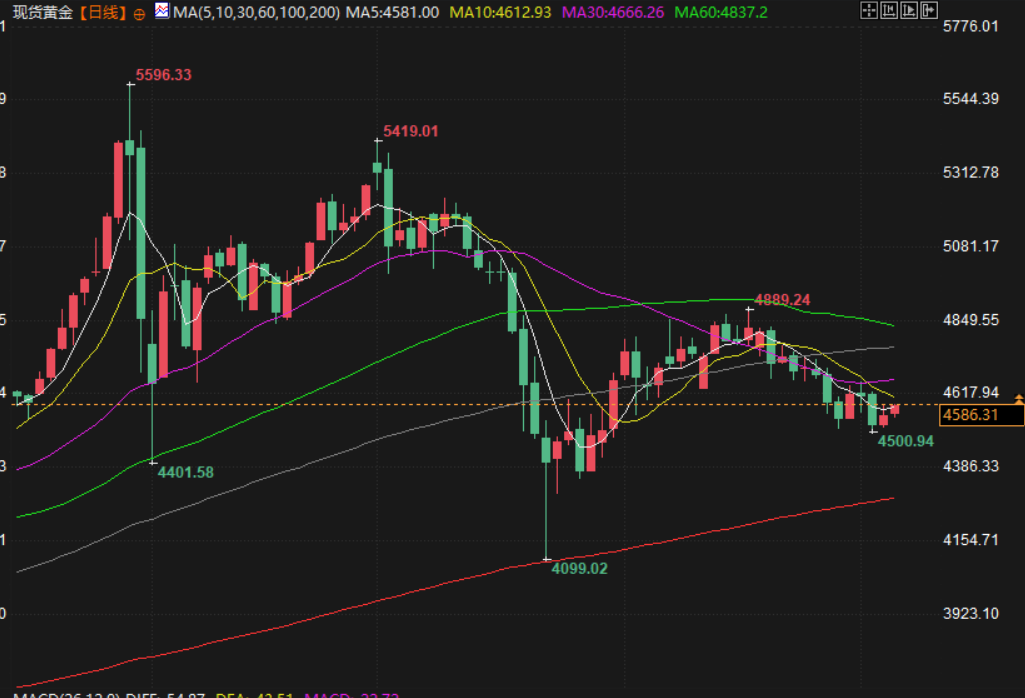
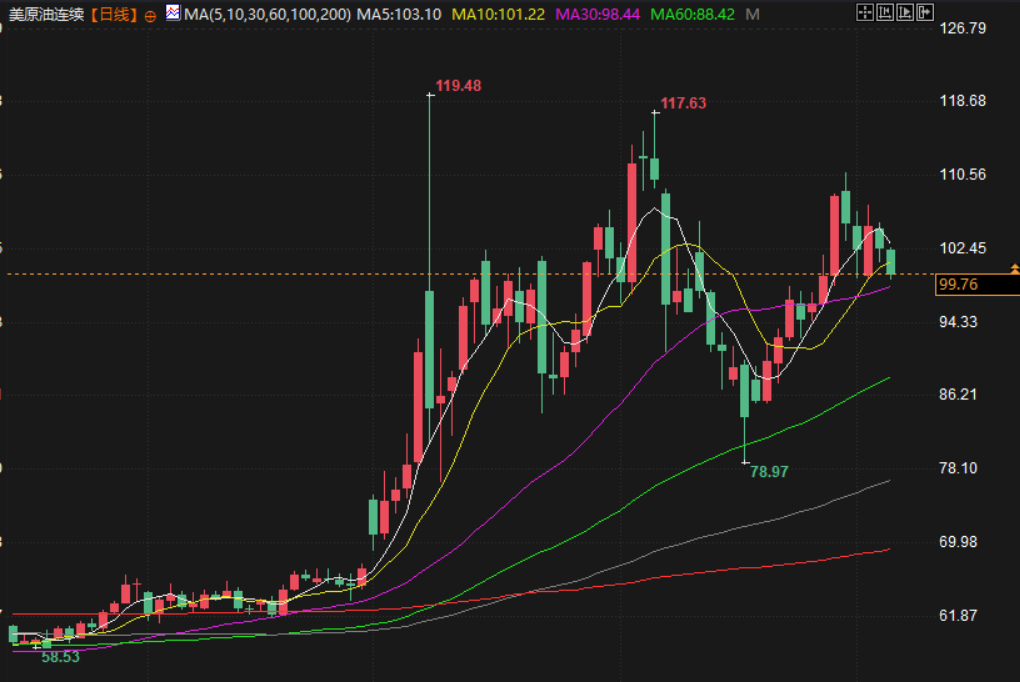
On Wednesday (May 6, Beijing time) in early Asian trading, spot gold was trading around $4,585 per ounce. Gold prices rebounded slightly on Tuesday and may test the $4,600 per ounce level again during the day. The US-Iran ceasefire agreement remains in effect, and Trump stated that the "Freedom Program" will be suspended for a period of time. Meanwhile, gold prices were supported by bargain hunting. Oil prices fell, with US crude oil dropping by more than 2%, returning below $100 per barrel.

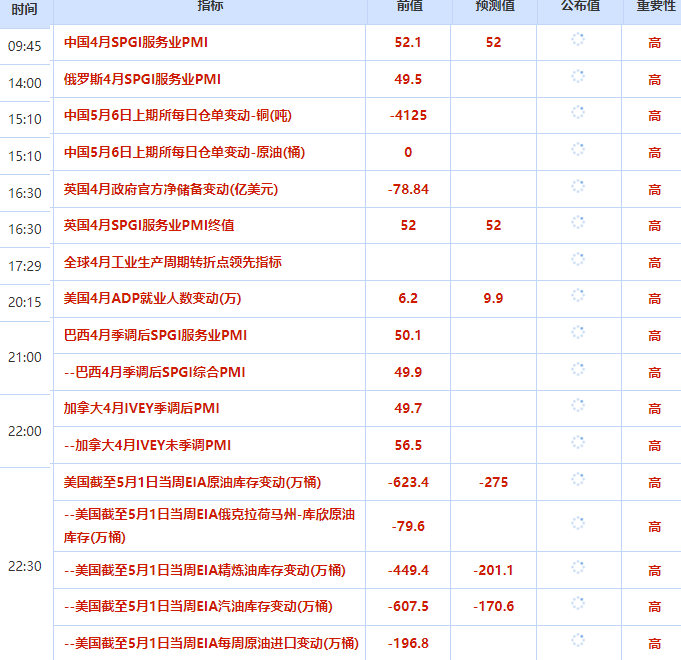
U.S. stocks, including the S&P 500 and Nasdaq, both hit record closing highs on Tuesday. The S&P 500 rose 0.81% to close at 7,259.22, the Nasdaq rose 1.03% to close at 25,326.13, and the Dow Jones Industrial Average rose 0.73% to close at 49,298.25.
Intel surged 13% on reports that it was in talks with Apple about chip manufacturing, boosted by gains in other AI-related stocks. AMD also rose 4%, and the Philadelphia Semiconductor Index jumped 4.2% to a record high.
The preservation of the US-Iran ceasefire agreement eased geopolitical concerns, while strong quarterly earnings reports boosted market confidence, with all 11 S&P sectors rising, led by materials and information technology. Data showed that US job openings in March totaled 6.866 million and the non-manufacturing PMI in April was 53.6, both largely in line with expectations. Stocks such as Archer-Daniels-Midland, DuPont, and Pinterest also rose due to better-than-expected earnings or optimistic outlooks.
Gold prices rebounded on Tuesday, with spot gold rising 0.8% to $4,557.56 an ounce and U.S. gold futures settling up 0.8% at $4,568.50, mainly supported by bargain hunting and a pullback in oil prices.
Markets are still assessing the fragile ceasefire in the Middle East – the UAE claims Iranian missile and drone attacks, the Strait of Hormuz has been largely closed since the end of February, and while the US-Iran ceasefire agreement has been maintained, high energy prices could fuel inflation and delay central bank easing cycles, while high interest rates typically diminish the appeal of non-yielding gold.
Analysts say gold bulls need significant fundamental positives to regain confidence, but demand for inflation hedging and continued central bank buying have helped limit further declines; the market is focused on the US jobs report later this week to assess the Fed's policy outlook.
In other precious metals, spot silver rose 0.4% to $73.03, platinum rose 1% to $1963.30, and palladium rose 1.5% to $1501.41.
Oil prices fell about 4% on Tuesday, with Brent crude futures settling at $109.87 a barrel, down 4%, and U.S. crude at $102.27, down 3.9%, mainly due to the U.S. saying that the fragile ceasefire agreement with Iran remained in effect and two U.S. merchant ships passing through the Strait of Hormuz escorted by U.S. destroyers. This occurred despite the UAE claiming it was under attack by Iranian missiles and drones, and Iran denying recent attacks on the UAE and denying any ships passing through. Shipping company Maersk confirmed that the U.S.-flagged "Allied Fairfax" had left the Gulf.
Analysts point out that the sell-off was partly influenced by the Trump administration's optimistic comments about a ceasefire, but it is more likely a technical correction after the previous surge in oil prices; currently, hundreds of ships are queuing to pass through this key waterway, which has been largely closed since the end of February (the strait once carried about 20% of the world's oil supply), and the market is awaiting the Energy Information Administration's weekly inventory report to determine the next move.
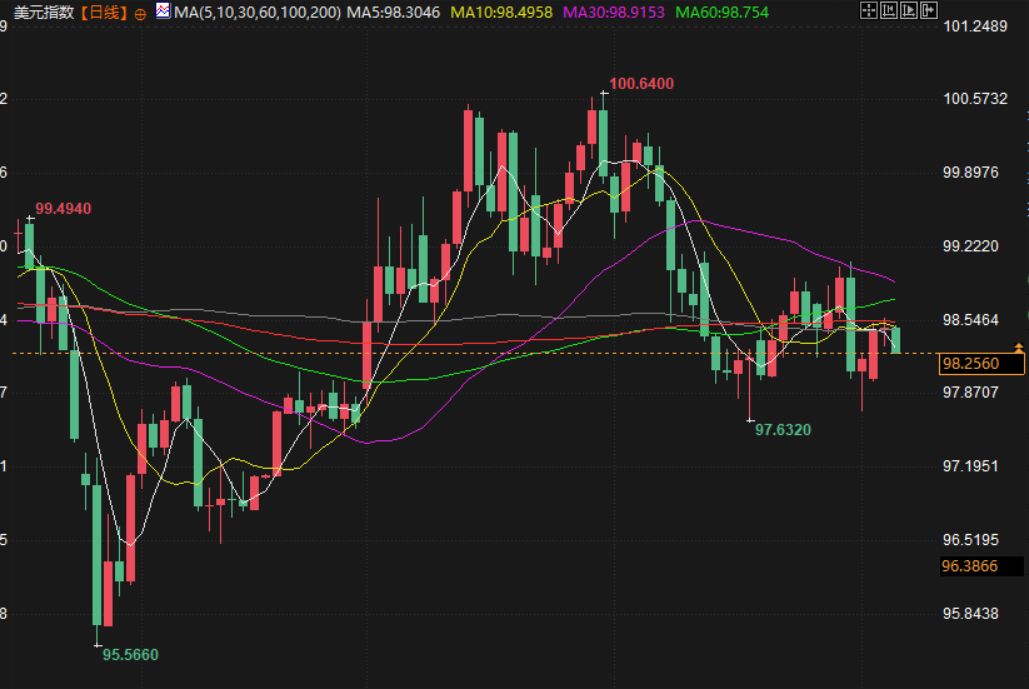
The dollar edged lower on Tuesday, with the dollar index falling 0.03% to 98.437, as markets remained cautious amid tensions in Iran – despite clashes between the US and Iran in the Persian Gulf and the UAE claiming an attack, the US stated that the ceasefire agreement remained in effect.
The euro rose 0.1% to $1.17005, and the pound rose 0.1% to $1.35510. The yen fell 0.4% against the dollar to 157.85 as traders remained cautious after suspected intervention, following Tokyo's intervention of about $35 billion in the currency market last week.
The Reserve Bank of Australia raised interest rates for the third consecutive time as expected, sending the Australian dollar up 0.3% to US$0.7187. The central bank also significantly raised its inflation forecast. Risk currencies strengthened, with the US dollar falling 0.8% against the Mexican peso and nearly 0.7% against the South African rand.
Trump: Lockdown will remain in effect; Freedom Project suspended for a period of time
US President Trump posted on Truth Social that, given the demands of Pakistan and other countries, the “huge victory” achieved by the US in its military action against Iran, and the “significant progress” made with Iranian representatives in reaching a final agreement, all parties agreed that the Freedom of Navigation Program would be temporarily suspended while the blockade remains fully effective. Trump stated that this move is to observe whether an agreement can ultimately be reached and signed. This means that while maintaining the naval blockade against Iran, the US has suspended the Freedom of Navigation Program, which aims to guide ships through the Strait of Hormuz, to make room for diplomatic negotiations.
The probability of the Federal Reserve keeping interest rates unchanged in June is 96%, and the probability of a rate hike this year is approximately 36.9%.
According to CME's "FedWatch": The probability of the Federal Reserve keeping interest rates unchanged by June is 96%, with a 4% probability of a cumulative rate cut of 25 basis points. The probability of the Federal Reserve keeping interest rates unchanged by July is 88.8%, with a 10.9% probability of a cumulative rate cut of 25 basis points and a 0.3% probability of a cumulative rate cut of 50 basis points. The probability of the Federal Reserve keeping interest rates unchanged by September is 74.6%, with a 9% probability of a cumulative rate cut of 25 basis points and a 0.2% probability of a cumulative rate cut of 50 basis points. The probability of the Federal Reserve keeping interest rates unchanged by December is 50%, with a 13.1% probability of at least a 25 basis point rate cut and a 36.9% probability of a 25 basis point rate hike (compared to 33.9% the previous day).
The US Secretary of State stated that the US is advancing its "maximum pressure" campaign against Iran.
On May 5 local time, US Secretary of State Marco Rubio stated at a media briefing that the US military is advancing its "Freedom of Navigation Initiative" in the Strait of Hormuz to restore freedom of navigation in this crucial international waterway. He stated that this operation is a "defensive action," and the US will not initiate fire, but will respond "lethally" should an attack occur. The US objective is to ensure the waterway remains open and to eliminate mine-laying and toll collection practices. On the economic front, Rubio stated that the US is simultaneously pursuing "maximum pressure" on Iran, including strengthening sanctions and blockade measures. Rubio indicated that US President Trump still prefers to resolve the issue through diplomatic means. (CCTV News)
Iranian Presidential Chief of Staff: There is no disagreement between the President and the Revolutionary Guard Commander
According to Iran's Tasnim News Agency on the 5th, Haji Mirzai, the chief of staff of the Iranian president's office, responded to rumors of a disagreement between President Pezechzian and the commander of the Iranian Islamic Revolutionary Guard Corps, explicitly denying the allegations. He stated that in all meetings attended by the president and relevant commanders, all decisions were made unanimously, and there were no disagreements. Earlier that day, an official from the Iranian president's office denied rumors that Pezechzian might resign, calling them rumors fabricated by some media outlets to create hype. (Xinhua)
Iran has officially launched new shipping regulations in the Strait of Hormuz, requiring vessels to obtain permits for passage.
Iran has officially launched a new mechanism for managing maritime traffic in the Strait of Hormuz. All vessels intending to pass through the strait will receive an email from the official address info@PGSA.ir outlining the rules and regulations for passage. Vessels will need to adjust their operations according to this framework and obtain a passage permit before transiting the Strait of Hormuz. This initiative, described as part of a sovereign governance system, is now operational in the Strait of Hormuz, which has been under Iranian control since the early stages of the (Iranian) war.
Russian Foreign Ministry: We must be vigilant against the resurgence of armed conflict in the Persian Gulf region.
Russian Foreign Ministry spokeswoman Maria Zakharova said on May 5 that the mediation and negotiation process in the Persian Gulf region has stalled, and all parties should exercise maximum restraint and calm. According to a statement released on the Russian Foreign Ministry website that day, Zakharova called on all parties to be vigilant against potential provocations by forces "attempting to undermine peace efforts," stating that "any action" could lead to a resurgence of large-scale armed conflict in the Persian Gulf region. Zakharova reiterated that Russia consistently advocates resolving differences through political and diplomatic means and is willing to provide necessary assistance.
The U.S. Securities and Exchange Commission has announced a proposal to allow companies to publish financial reports every six months.
The U.S. Securities and Exchange Commission (SEC) has proposed rule changes to allow companies to file semi-annual reports on a new Form 10-S, replacing the quarterly reports on Form 10-Q, thereby fulfilling the interim reporting obligations under the Securities Exchange Act of 1934. The SEC also proposes adjustments to the financial reporting requirements in Regulation SX to facilitate semi-annual reporting and simplify rules regarding the timeliness of financial statements.
Foreign investors' portfolio adjustments have become apparent.
With the release of listed companies' first-quarter reports, the portfolio adjustments of foreign investors have become clear. As of the end of the first quarter, QFIIs (Qualified Foreign Institutional Investors) held significant positions in the banking, electronics, and telecommunications sectors. Among these, the electronics sector saw the largest increase in the number of shares held, rising by 745 million; the telecommunications sector saw the largest increase in market value, rising by 10 billion yuan. Foreign institutions interviewed believe that the resilience of China's economy and financial markets has been evident this year. Supported by policy tools, the annual economic growth rate is expected to remain within the target range of 4.5%-5%, providing support for the stock market. They are optimistic about sectors such as technology, energy, and raw materials, as well as industries with potential for significant profit improvement, such as pharmaceuticals and agriculture.
Key Focus Today
stock market
U.S. stocks, including the S&P 500 and Nasdaq, both hit record closing highs on Tuesday. The S&P 500 rose 0.81% to close at 7,259.22, the Nasdaq rose 1.03% to close at 25,326.13, and the Dow Jones Industrial Average rose 0.73% to close at 49,298.25.
Intel surged 13% on reports that it was in talks with Apple about chip manufacturing, boosted by gains in other AI-related stocks. AMD also rose 4%, and the Philadelphia Semiconductor Index jumped 4.2% to a record high.
The preservation of the US-Iran ceasefire agreement eased geopolitical concerns, while strong quarterly earnings reports boosted market confidence, with all 11 S&P sectors rising, led by materials and information technology. Data showed that US job openings in March totaled 6.866 million and the non-manufacturing PMI in April was 53.6, both largely in line with expectations. Stocks such as Archer-Daniels-Midland, DuPont, and Pinterest also rose due to better-than-expected earnings or optimistic outlooks.
Gold Market
Gold prices rebounded on Tuesday, with spot gold rising 0.8% to $4,557.56 an ounce and U.S. gold futures settling up 0.8% at $4,568.50, mainly supported by bargain hunting and a pullback in oil prices.
Markets are still assessing the fragile ceasefire in the Middle East – the UAE claims Iranian missile and drone attacks, the Strait of Hormuz has been largely closed since the end of February, and while the US-Iran ceasefire agreement has been maintained, high energy prices could fuel inflation and delay central bank easing cycles, while high interest rates typically diminish the appeal of non-yielding gold.
Analysts say gold bulls need significant fundamental positives to regain confidence, but demand for inflation hedging and continued central bank buying have helped limit further declines; the market is focused on the US jobs report later this week to assess the Fed's policy outlook.
In other precious metals, spot silver rose 0.4% to $73.03, platinum rose 1% to $1963.30, and palladium rose 1.5% to $1501.41.
oil market
Oil prices fell about 4% on Tuesday, with Brent crude futures settling at $109.87 a barrel, down 4%, and U.S. crude at $102.27, down 3.9%, mainly due to the U.S. saying that the fragile ceasefire agreement with Iran remained in effect and two U.S. merchant ships passing through the Strait of Hormuz escorted by U.S. destroyers. This occurred despite the UAE claiming it was under attack by Iranian missiles and drones, and Iran denying recent attacks on the UAE and denying any ships passing through. Shipping company Maersk confirmed that the U.S.-flagged "Allied Fairfax" had left the Gulf.
Analysts point out that the sell-off was partly influenced by the Trump administration's optimistic comments about a ceasefire, but it is more likely a technical correction after the previous surge in oil prices; currently, hundreds of ships are queuing to pass through this key waterway, which has been largely closed since the end of February (the strait once carried about 20% of the world's oil supply), and the market is awaiting the Energy Information Administration's weekly inventory report to determine the next move.
Foreign exchange market
The dollar edged lower on Tuesday, with the dollar index falling 0.03% to 98.437, as markets remained cautious amid tensions in Iran – despite clashes between the US and Iran in the Persian Gulf and the UAE claiming an attack, the US stated that the ceasefire agreement remained in effect.
The euro rose 0.1% to $1.17005, and the pound rose 0.1% to $1.35510. The yen fell 0.4% against the dollar to 157.85 as traders remained cautious after suspected intervention, following Tokyo's intervention of about $35 billion in the currency market last week.
The Reserve Bank of Australia raised interest rates for the third consecutive time as expected, sending the Australian dollar up 0.3% to US$0.7187. The central bank also significantly raised its inflation forecast. Risk currencies strengthened, with the US dollar falling 0.8% against the Mexican peso and nearly 0.7% against the South African rand.
International News
Trump: Lockdown will remain in effect; Freedom Project suspended for a period of time
US President Trump posted on Truth Social that, given the demands of Pakistan and other countries, the “huge victory” achieved by the US in its military action against Iran, and the “significant progress” made with Iranian representatives in reaching a final agreement, all parties agreed that the Freedom of Navigation Program would be temporarily suspended while the blockade remains fully effective. Trump stated that this move is to observe whether an agreement can ultimately be reached and signed. This means that while maintaining the naval blockade against Iran, the US has suspended the Freedom of Navigation Program, which aims to guide ships through the Strait of Hormuz, to make room for diplomatic negotiations.
The probability of the Federal Reserve keeping interest rates unchanged in June is 96%, and the probability of a rate hike this year is approximately 36.9%.
According to CME's "FedWatch": The probability of the Federal Reserve keeping interest rates unchanged by June is 96%, with a 4% probability of a cumulative rate cut of 25 basis points. The probability of the Federal Reserve keeping interest rates unchanged by July is 88.8%, with a 10.9% probability of a cumulative rate cut of 25 basis points and a 0.3% probability of a cumulative rate cut of 50 basis points. The probability of the Federal Reserve keeping interest rates unchanged by September is 74.6%, with a 9% probability of a cumulative rate cut of 25 basis points and a 0.2% probability of a cumulative rate cut of 50 basis points. The probability of the Federal Reserve keeping interest rates unchanged by December is 50%, with a 13.1% probability of at least a 25 basis point rate cut and a 36.9% probability of a 25 basis point rate hike (compared to 33.9% the previous day).
The US Secretary of State stated that the US is advancing its "maximum pressure" campaign against Iran.
On May 5 local time, US Secretary of State Marco Rubio stated at a media briefing that the US military is advancing its "Freedom of Navigation Initiative" in the Strait of Hormuz to restore freedom of navigation in this crucial international waterway. He stated that this operation is a "defensive action," and the US will not initiate fire, but will respond "lethally" should an attack occur. The US objective is to ensure the waterway remains open and to eliminate mine-laying and toll collection practices. On the economic front, Rubio stated that the US is simultaneously pursuing "maximum pressure" on Iran, including strengthening sanctions and blockade measures. Rubio indicated that US President Trump still prefers to resolve the issue through diplomatic means. (CCTV News)
Iranian Presidential Chief of Staff: There is no disagreement between the President and the Revolutionary Guard Commander
According to Iran's Tasnim News Agency on the 5th, Haji Mirzai, the chief of staff of the Iranian president's office, responded to rumors of a disagreement between President Pezechzian and the commander of the Iranian Islamic Revolutionary Guard Corps, explicitly denying the allegations. He stated that in all meetings attended by the president and relevant commanders, all decisions were made unanimously, and there were no disagreements. Earlier that day, an official from the Iranian president's office denied rumors that Pezechzian might resign, calling them rumors fabricated by some media outlets to create hype. (Xinhua)
Iran has officially launched new shipping regulations in the Strait of Hormuz, requiring vessels to obtain permits for passage.
Iran has officially launched a new mechanism for managing maritime traffic in the Strait of Hormuz. All vessels intending to pass through the strait will receive an email from the official address info@PGSA.ir outlining the rules and regulations for passage. Vessels will need to adjust their operations according to this framework and obtain a passage permit before transiting the Strait of Hormuz. This initiative, described as part of a sovereign governance system, is now operational in the Strait of Hormuz, which has been under Iranian control since the early stages of the (Iranian) war.
Russian Foreign Ministry: We must be vigilant against the resurgence of armed conflict in the Persian Gulf region.
Russian Foreign Ministry spokeswoman Maria Zakharova said on May 5 that the mediation and negotiation process in the Persian Gulf region has stalled, and all parties should exercise maximum restraint and calm. According to a statement released on the Russian Foreign Ministry website that day, Zakharova called on all parties to be vigilant against potential provocations by forces "attempting to undermine peace efforts," stating that "any action" could lead to a resurgence of large-scale armed conflict in the Persian Gulf region. Zakharova reiterated that Russia consistently advocates resolving differences through political and diplomatic means and is willing to provide necessary assistance.
The U.S. Securities and Exchange Commission has announced a proposal to allow companies to publish financial reports every six months.
The U.S. Securities and Exchange Commission (SEC) has proposed rule changes to allow companies to file semi-annual reports on a new Form 10-S, replacing the quarterly reports on Form 10-Q, thereby fulfilling the interim reporting obligations under the Securities Exchange Act of 1934. The SEC also proposes adjustments to the financial reporting requirements in Regulation SX to facilitate semi-annual reporting and simplify rules regarding the timeliness of financial statements.
Domestic News
Foreign investors' portfolio adjustments have become apparent.
With the release of listed companies' first-quarter reports, the portfolio adjustments of foreign investors have become clear. As of the end of the first quarter, QFIIs (Qualified Foreign Institutional Investors) held significant positions in the banking, electronics, and telecommunications sectors. Among these, the electronics sector saw the largest increase in the number of shares held, rising by 745 million; the telecommunications sector saw the largest increase in market value, rising by 10 billion yuan. Foreign institutions interviewed believe that the resilience of China's economy and financial markets has been evident this year. Supported by policy tools, the annual economic growth rate is expected to remain within the target range of 4.5%-5%, providing support for the stock market. They are optimistic about sectors such as technology, energy, and raw materials, as well as industries with potential for significant profit improvement, such as pharmaceuticals and agriculture.
- Risk Warning and Disclaimer
- The market involves risk, and trading may not be suitable for all investors. This article is for reference only and does not constitute personal investment advice, nor does it take into account certain users’ specific investment objectives, financial situation, or other needs. Any investment decisions made based on this information are at your own risk.