Is the ongoing turmoil in the Middle East signaling a gradual end to the pricing of geopolitical risk premiums?
2026-05-09 02:23:35
Over the past few months, the situation in the Middle East has been characterized by dramatic fluctuations and repeated back-and-forth battles, with regional geopolitical tensions continuing to affect the global energy market. Since the conflict between the United States and Iran erupted at the end of February, the Strait of Hormuz, a vital waterway for approximately one-fifth of the world's oil shipments, has suffered unprecedented and severe disruptions, significantly increasing the safety risks of the shipping lanes and directly driving international oil prices to a peak. However, since the two sides reached a temporary ceasefire agreement in early April, despite several instances of localized clashes and stalled negotiations, each tense situation has been successfully resolved through new diplomatic communication signals. The latest developments indicate that the Trump administration is actively pushing for a framework agreement, and the market's pricing logic for geopolitical risk premiums is gradually shifting from a "panic premium" to a "controllable conclusion," with uncertainty gradually diminishing.
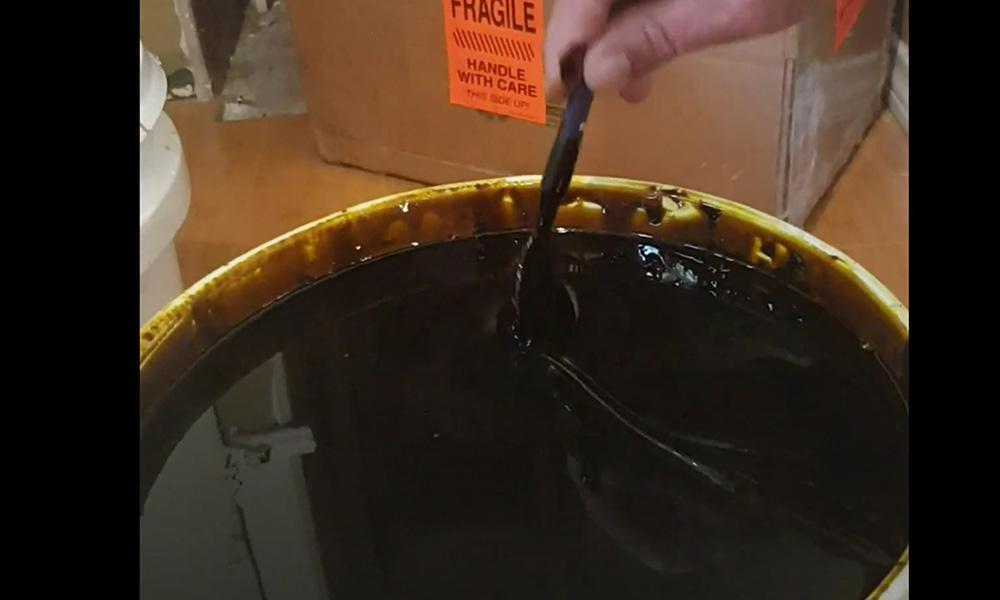
The Trump administration initially hoped to replicate the "Venezuela model" through swift military action, attempting to fundamentally change Iran policy within weeks through precision military strikes and maximum pressure, thereby gaining control of the Middle East's energy landscape at low cost. However, things didn't go as planned. The actual cost of the conflict has far exceeded expectations, accumulating to tens of billions of dollars. Furthermore, the chain reaction in global energy supply triggered by the Strait of Hormuz blockade has far exceeded the White House's initial predictions, not only pushing up global inflation but also causing significant strategic losses for the United States itself. The ceasefire agreement officially took effect in early April and has been extended multiple times. Despite the unexpected incident this week where Iran launched sporadic attacks on US warships, the Trump administration has clearly maintained its official stance that the ceasefire is "effective," while simultaneously mediating through third-party channels such as Pakistan to urge Iran to respond to the latest US proposal.
Oil prices are fluctuating at high levels.
Oil prices have fallen from a peak of $126 to the $100 range, with the oscillation pattern gradually stabilizing. In the early stages of the conflict, market panic over potential supply disruptions dominated, with investors widely concerned that a disruption to shipping in the Strait of Hormuz would widen the global oil supply gap. This pushed Brent crude prices to above $126 per barrel, more than 50% higher than pre-war levels, reaching a new high in recent years. However, the announcement of a temporary ceasefire quickly reversed market panic: on the day the two-week ceasefire was announced in early April, Brent crude fell by 13-16% in a single day, and WTI crude also recorded one of its largest single-day drops since 2020, initiating a rapid correction in oil prices.
Entering May, international oil prices gradually entered a high-level fluctuation range, with Brent crude oil prices hovering around $100-110 per barrel. Although significantly lower than the previous peak, it is still significantly higher than the normal level before the outbreak of the conflict, highlighting that the lingering effects of geopolitical risks remain. The latest trading data shows that on May 8th, Brent crude oil was quoted at approximately $101.44 per barrel, a slight increase of 0.3% from the previous day, but overall maintaining a high-level downward trend. It is worth noting that the spread between Brent crude oil spot and futures prices continued to narrow. This key signal clearly indicates that market expectations for the gradual restoration of navigation order in the Strait of Hormuz are rising. At the same time, the forward price curve also reflects that the 2027 contract price is significantly lower than the spot price, indicating that the market is gradually digesting the previously superimposed geopolitical risk premium, and the pricing logic is returning to rationality.
Trump has recently sent several positive signals in public, explicitly stating that international oil prices will "fall like a rock" once a US-Iran agreement is reached, and repeatedly emphasizing that negotiations with Iran have made "significant progress." These statements, coupled with reports that Iranian officials are carefully reviewing the US proposal, have continued to suppress the upside potential of oil prices, significantly dampening market bullish sentiment. Although sporadic clashes occurred this week involving Iranian attacks on US warships, oil prices did not experience the sharp fluctuations seen in March and April. Implied volatility in crude oil prices has significantly decreased from previous highs, further confirming that market expectations for manageable geopolitical risks are strengthening.
Fundamentals and Trading Signals
The recovery of shipping in the Strait of Hormuz is still lagging behind expectations, with current traffic volume remaining far below normal levels. Normally, about 3,000 ships pass through the strait each month, but in April, the number plummeted to only 191, and recently, during certain periods, the number of ships passing through in 24 hours has even been less than five, a drop of over 90%, bringing it to near-paralysis. Currently, the US Navy maintains a blockade around the strait, but with the progress of diplomatic negotiations, some oil tankers have attempted to navigate through the strait within a limited safe window, showing a slight easing of the shipping deadlock. Meanwhile, the orderly replenishment of global crude oil inventories, the release of potential increased production capacity from US shale oil, and the adaptive adjustment of crude oil demand in Europe and Asia are three factors working together to provide solid downward support for international oil prices and alleviate supply-side pressures.
Energy industry analysts generally point out that the current pattern of alternating "tense events and peace signals" in the Middle East has become the norm during US-Iran negotiations. This is not a sign of the situation spiraling out of control, but rather reflects the potential willingness of both sides to seek compromise in the game. Although international oil and gas giants such as Shell have recorded huge operating profits by taking advantage of the current high oil prices (Shell's cumulative profit since the outbreak of the conflict has reached $6.9 billion, exceeding market expectations), market attention has gradually shifted from short-term profits to the compression of long-term geopolitical risk premiums, and the long-term valuation logic of energy companies has also been adjusted accordingly.
For investors, it is crucial to closely monitor three key variables: official statements from the Trump administration, the timing of Iran's formal response to the US proposal, and actual ship traffic data in the Strait of Hormuz. Historically, official news of "significant progress" in negotiations has likely driven oil prices down by 5-10%; while sporadic localized conflicts only offer brief short-term rebounds with limited sustainability, unlikely to alter the overall downward trend. In the medium term, the upside potential for international oil prices is clearly limited, and the downward trend is more certain. As the geopolitical risk premium is gradually absorbed by the market and the global oil supply and demand balances, oil prices are expected to gradually return to pre-conflict normal levels, and the excess premium previously driven by panic will further contract.
Outlook: The probability of reaching a pragmatic agreement continues to rise.
Although the details of the US-Iran negotiations have not been fully bridged—the core differences lie in key issues such as restrictions on nuclear activities, the extent of adjustments to sanctions against Iran, and the specific conditions for opening the Strait of Hormuz—the risk of a full-scale war has significantly decreased, making peace negotiations the optimal choice for both sides. The Trump team currently prefers a combination of pressure and compromise to secure core US interests in the Middle East, rather than getting bogged down in indefinite military involvement and strategic attrition. This inclination has laid the foundation for an agreement.
For the global market, a pragmatic agreement between the US and Iran would ease the global energy supply shortage and gradually alleviate inflationary pressures, which would be beneficial for global stock markets and end consumers. However, at the same time, oil-producing countries and some energy companies that rely on high oil prices for profits need to prepare for the impact of oil prices returning to normal. In the coming days, Iran's formal response to the US proposal will be a key catalyst in determining short-term oil price trends, and the market will closely monitor the progress of this crucial juncture.
The Trump administration initially hoped to replicate the "Venezuela model" through swift military action, attempting to fundamentally change Iran policy within weeks through precision military strikes and maximum pressure, thereby gaining control of the Middle East's energy landscape at low cost. However, things didn't go as planned. The actual cost of the conflict has far exceeded expectations, accumulating to tens of billions of dollars. Furthermore, the chain reaction in global energy supply triggered by the Strait of Hormuz blockade has far exceeded the White House's initial predictions, not only pushing up global inflation but also causing significant strategic losses for the United States itself. The ceasefire agreement officially took effect in early April and has been extended multiple times. Despite the unexpected incident this week where Iran launched sporadic attacks on US warships, the Trump administration has clearly maintained its official stance that the ceasefire is "effective," while simultaneously mediating through third-party channels such as Pakistan to urge Iran to respond to the latest US proposal.
Oil prices are fluctuating at high levels.
Oil prices have fallen from a peak of $126 to the $100 range, with the oscillation pattern gradually stabilizing. In the early stages of the conflict, market panic over potential supply disruptions dominated, with investors widely concerned that a disruption to shipping in the Strait of Hormuz would widen the global oil supply gap. This pushed Brent crude prices to above $126 per barrel, more than 50% higher than pre-war levels, reaching a new high in recent years. However, the announcement of a temporary ceasefire quickly reversed market panic: on the day the two-week ceasefire was announced in early April, Brent crude fell by 13-16% in a single day, and WTI crude also recorded one of its largest single-day drops since 2020, initiating a rapid correction in oil prices.
Entering May, international oil prices gradually entered a high-level fluctuation range, with Brent crude oil prices hovering around $100-110 per barrel. Although significantly lower than the previous peak, it is still significantly higher than the normal level before the outbreak of the conflict, highlighting that the lingering effects of geopolitical risks remain. The latest trading data shows that on May 8th, Brent crude oil was quoted at approximately $101.44 per barrel, a slight increase of 0.3% from the previous day, but overall maintaining a high-level downward trend. It is worth noting that the spread between Brent crude oil spot and futures prices continued to narrow. This key signal clearly indicates that market expectations for the gradual restoration of navigation order in the Strait of Hormuz are rising. At the same time, the forward price curve also reflects that the 2027 contract price is significantly lower than the spot price, indicating that the market is gradually digesting the previously superimposed geopolitical risk premium, and the pricing logic is returning to rationality.
Trump has recently sent several positive signals in public, explicitly stating that international oil prices will "fall like a rock" once a US-Iran agreement is reached, and repeatedly emphasizing that negotiations with Iran have made "significant progress." These statements, coupled with reports that Iranian officials are carefully reviewing the US proposal, have continued to suppress the upside potential of oil prices, significantly dampening market bullish sentiment. Although sporadic clashes occurred this week involving Iranian attacks on US warships, oil prices did not experience the sharp fluctuations seen in March and April. Implied volatility in crude oil prices has significantly decreased from previous highs, further confirming that market expectations for manageable geopolitical risks are strengthening.
Fundamentals and Trading Signals
The recovery of shipping in the Strait of Hormuz is still lagging behind expectations, with current traffic volume remaining far below normal levels. Normally, about 3,000 ships pass through the strait each month, but in April, the number plummeted to only 191, and recently, during certain periods, the number of ships passing through in 24 hours has even been less than five, a drop of over 90%, bringing it to near-paralysis. Currently, the US Navy maintains a blockade around the strait, but with the progress of diplomatic negotiations, some oil tankers have attempted to navigate through the strait within a limited safe window, showing a slight easing of the shipping deadlock. Meanwhile, the orderly replenishment of global crude oil inventories, the release of potential increased production capacity from US shale oil, and the adaptive adjustment of crude oil demand in Europe and Asia are three factors working together to provide solid downward support for international oil prices and alleviate supply-side pressures.
Energy industry analysts generally point out that the current pattern of alternating "tense events and peace signals" in the Middle East has become the norm during US-Iran negotiations. This is not a sign of the situation spiraling out of control, but rather reflects the potential willingness of both sides to seek compromise in the game. Although international oil and gas giants such as Shell have recorded huge operating profits by taking advantage of the current high oil prices (Shell's cumulative profit since the outbreak of the conflict has reached $6.9 billion, exceeding market expectations), market attention has gradually shifted from short-term profits to the compression of long-term geopolitical risk premiums, and the long-term valuation logic of energy companies has also been adjusted accordingly.
For investors, it is crucial to closely monitor three key variables: official statements from the Trump administration, the timing of Iran's formal response to the US proposal, and actual ship traffic data in the Strait of Hormuz. Historically, official news of "significant progress" in negotiations has likely driven oil prices down by 5-10%; while sporadic localized conflicts only offer brief short-term rebounds with limited sustainability, unlikely to alter the overall downward trend. In the medium term, the upside potential for international oil prices is clearly limited, and the downward trend is more certain. As the geopolitical risk premium is gradually absorbed by the market and the global oil supply and demand balances, oil prices are expected to gradually return to pre-conflict normal levels, and the excess premium previously driven by panic will further contract.
Outlook: The probability of reaching a pragmatic agreement continues to rise.
Although the details of the US-Iran negotiations have not been fully bridged—the core differences lie in key issues such as restrictions on nuclear activities, the extent of adjustments to sanctions against Iran, and the specific conditions for opening the Strait of Hormuz—the risk of a full-scale war has significantly decreased, making peace negotiations the optimal choice for both sides. The Trump team currently prefers a combination of pressure and compromise to secure core US interests in the Middle East, rather than getting bogged down in indefinite military involvement and strategic attrition. This inclination has laid the foundation for an agreement.
For the global market, a pragmatic agreement between the US and Iran would ease the global energy supply shortage and gradually alleviate inflationary pressures, which would be beneficial for global stock markets and end consumers. However, at the same time, oil-producing countries and some energy companies that rely on high oil prices for profits need to prepare for the impact of oil prices returning to normal. In the coming days, Iran's formal response to the US proposal will be a key catalyst in determining short-term oil price trends, and the market will closely monitor the progress of this crucial juncture.
- Risk Warning and Disclaimer
- The market involves risk, and trading may not be suitable for all investors. This article is for reference only and does not constitute personal investment advice, nor does it take into account certain users’ specific investment objectives, financial situation, or other needs. Any investment decisions made based on this information are at your own risk.