US inflation expectations drove a rebound in the dollar index, while the pound sterling rose against the dollar before falling back, maintaining a range-bound trading pattern.
2026-05-12 14:38:39
The British pound fell against the US dollar (GBP/USD) during Asian trading on Tuesday, trading around 1.3590. As the US dollar index rebounded, risk aversion in the market increased again, putting significant pressure on the pound in the short term.
The market's current focus is primarily on the upcoming US Consumer Price Index (CPI) data for April. The market expects the overall US CPI to rise to 3.7% year-on-year in April, significantly higher than the previous level of 3.3%, while core inflation is projected to rise to 2.7% year-on-year, higher than the previous 2.6%.
The market generally believes that the recent rise in international oil prices is a significant reason for the renewed rise in US inflation. Due to the continued deterioration of the situation in the Middle East, international crude oil prices have remained high, with Brent crude oil stabilizing around $104. Rising energy prices are pushing up global inflation risks again and may change market expectations regarding the future policy path of the Federal Reserve.
If US inflation data exceeds market expectations, the Federal Reserve may extend its high-interest-rate policy, further supporting the strengthening of the US dollar. A high-interest-rate environment typically enhances the attractiveness of dollar-denominated assets while putting pressure on non-US currencies. Meanwhile, geopolitical risks in the Middle East are also driving a resurgence in safe-haven demand. US President Trump has previously rejected Iran's latest peace proposal, stating that the current ceasefire is "extremely fragile." According to CNN, the Trump administration is seriously considering resuming large-scale military operations.
Furthermore, Iranian Parliament Speaker Mohammad Bagher Ghalibaf stated that the Iranian military is prepared to respond to any future attacks. Market concerns about a potential escalation of tensions in the Middle East have reignited risk appetite in global financial markets.
Amid rising demand for safe-haven assets, the US dollar, as the global reserve currency, has regained support from capital inflows. The dollar market has gradually shifted from a previous "interest rate cut trade" to a dual driver of "safe-haven logic + high inflation logic."
In contrast, the pound sterling is affected by domestic political uncertainty in the UK. British Prime Minister Keir Starmer is facing increasing political pressure. Recent election results in several parts of the UK showed significant losses for the ruling Labour Party, raising concerns in the market about the stability of the British political situation.
Although Starmer has stated he will not resign, increased domestic political noise in the UK, coupled with the recent rise in UK government bond yields, has made the market cautious about the UK's fiscal and economic prospects. The market believes that the UK economy still faces the problem of slowing growth and high inflation, and political uncertainty may further erode market confidence in sterling assets.
From the perspective of the global foreign exchange market, investors are currently reassessing the differences in future central bank policies worldwide. In the US, the Federal Reserve is likely to maintain a hawkish stance due to rising inflation risks; while in the UK, weak economic growth may limit the Bank of England's room for further policy tightening.
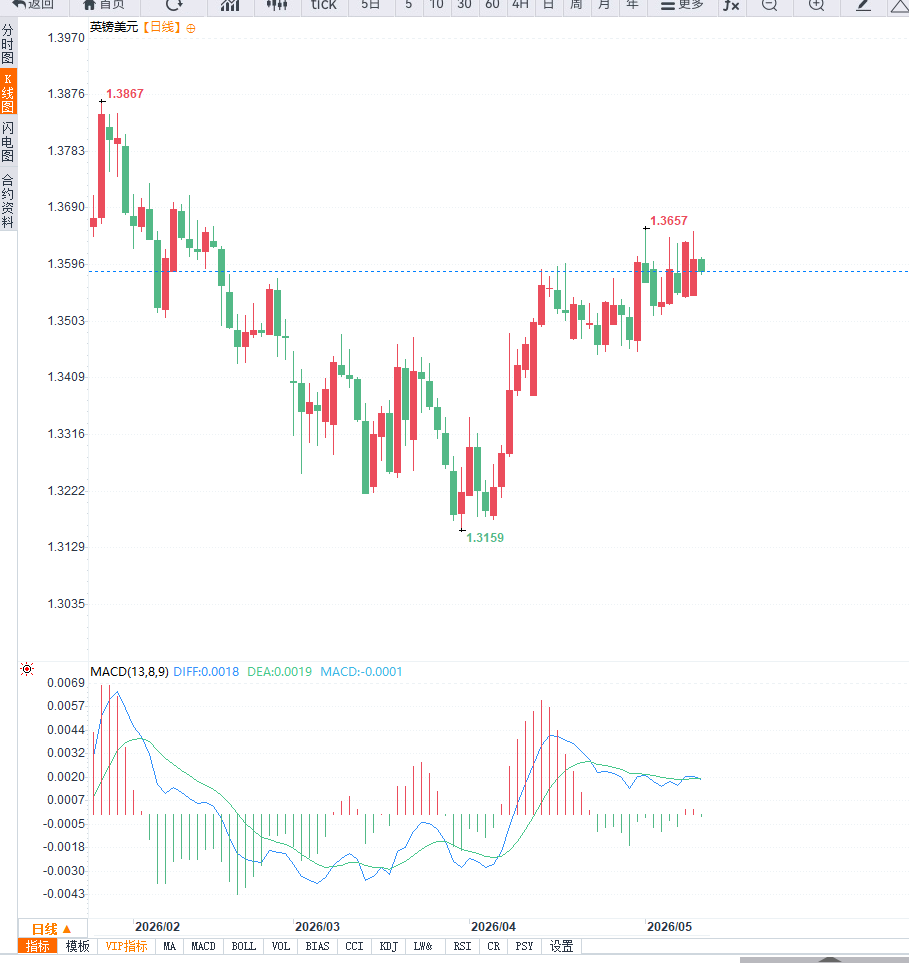
From a technical perspective, the GBP/USD pair is currently maintaining a high-level consolidation structure on the daily chart, but short-term bullish momentum has weakened. The MACD indicator shows signs of overbought conditions, indicating that the market's upward pace is slowing. On the 4-hour chart, the exchange rate has broken below some short-term moving average support, and the RSI indicator has fallen back to near neutral territory, suggesting a risk of further short-term correction. If the GBP/USD pair breaks below the 1.3550 support level, it may fall further to the 1.3480 area; however, if it regains a foothold above 1.3650, it may retest the 1.3700 level.
The most crucial variable in the market remains the performance of US inflation data. If the US CPI continues to exceed expectations, the US dollar index may rise further, thus continuing to suppress the pound's performance. However, if the data falls short of market expectations, it may reinforcing market bets on a Federal Reserve rate cut, thereby helping the pound stabilize in the short term.
Overall, the current pound/dollar market is simultaneously affected by both the strengthening of the dollar as a safe haven and the escalating political risks in the UK. In the future, US inflation data, the situation in the Middle East, and changes in the UK political landscape will continue to dominate the direction of the exchange rate market.
Editor's Summary : The current GBP/USD exchange rate is clearly dominated by the strength of the US dollar. Escalating tensions in the Middle East have fueled a resurgence of global risk aversion, while rising international oil prices have reinforced market concerns about a rebound in US inflation, thus supporting the dollar's continued rebound. At the same time, increased domestic political pressure in the UK has weakened market confidence in the pound. Although the Bank of England still needs to monitor inflation, slowing economic growth and political uncertainty may limit the pound's future upside potential. Going forward, the market will need to focus on US CPI data, Federal Reserve policy expectations, and developments in the Middle East, as these factors will continue to determine the dollar's direction. Meanwhile, the stability of the UK political situation and changes in UK government bond yields will also be important variables influencing the pound's movement.
The market's current focus is primarily on the upcoming US Consumer Price Index (CPI) data for April. The market expects the overall US CPI to rise to 3.7% year-on-year in April, significantly higher than the previous level of 3.3%, while core inflation is projected to rise to 2.7% year-on-year, higher than the previous 2.6%.
The market generally believes that the recent rise in international oil prices is a significant reason for the renewed rise in US inflation. Due to the continued deterioration of the situation in the Middle East, international crude oil prices have remained high, with Brent crude oil stabilizing around $104. Rising energy prices are pushing up global inflation risks again and may change market expectations regarding the future policy path of the Federal Reserve.
If US inflation data exceeds market expectations, the Federal Reserve may extend its high-interest-rate policy, further supporting the strengthening of the US dollar. A high-interest-rate environment typically enhances the attractiveness of dollar-denominated assets while putting pressure on non-US currencies. Meanwhile, geopolitical risks in the Middle East are also driving a resurgence in safe-haven demand. US President Trump has previously rejected Iran's latest peace proposal, stating that the current ceasefire is "extremely fragile." According to CNN, the Trump administration is seriously considering resuming large-scale military operations.
Furthermore, Iranian Parliament Speaker Mohammad Bagher Ghalibaf stated that the Iranian military is prepared to respond to any future attacks. Market concerns about a potential escalation of tensions in the Middle East have reignited risk appetite in global financial markets.
Amid rising demand for safe-haven assets, the US dollar, as the global reserve currency, has regained support from capital inflows. The dollar market has gradually shifted from a previous "interest rate cut trade" to a dual driver of "safe-haven logic + high inflation logic."
In contrast, the pound sterling is affected by domestic political uncertainty in the UK. British Prime Minister Keir Starmer is facing increasing political pressure. Recent election results in several parts of the UK showed significant losses for the ruling Labour Party, raising concerns in the market about the stability of the British political situation.
Although Starmer has stated he will not resign, increased domestic political noise in the UK, coupled with the recent rise in UK government bond yields, has made the market cautious about the UK's fiscal and economic prospects. The market believes that the UK economy still faces the problem of slowing growth and high inflation, and political uncertainty may further erode market confidence in sterling assets.
From the perspective of the global foreign exchange market, investors are currently reassessing the differences in future central bank policies worldwide. In the US, the Federal Reserve is likely to maintain a hawkish stance due to rising inflation risks; while in the UK, weak economic growth may limit the Bank of England's room for further policy tightening.
From a technical perspective, the GBP/USD pair is currently maintaining a high-level consolidation structure on the daily chart, but short-term bullish momentum has weakened. The MACD indicator shows signs of overbought conditions, indicating that the market's upward pace is slowing. On the 4-hour chart, the exchange rate has broken below some short-term moving average support, and the RSI indicator has fallen back to near neutral territory, suggesting a risk of further short-term correction. If the GBP/USD pair breaks below the 1.3550 support level, it may fall further to the 1.3480 area; however, if it regains a foothold above 1.3650, it may retest the 1.3700 level.
The most crucial variable in the market remains the performance of US inflation data. If the US CPI continues to exceed expectations, the US dollar index may rise further, thus continuing to suppress the pound's performance. However, if the data falls short of market expectations, it may reinforcing market bets on a Federal Reserve rate cut, thereby helping the pound stabilize in the short term.
Overall, the current pound/dollar market is simultaneously affected by both the strengthening of the dollar as a safe haven and the escalating political risks in the UK. In the future, US inflation data, the situation in the Middle East, and changes in the UK political landscape will continue to dominate the direction of the exchange rate market.
Editor's Summary : The current GBP/USD exchange rate is clearly dominated by the strength of the US dollar. Escalating tensions in the Middle East have fueled a resurgence of global risk aversion, while rising international oil prices have reinforced market concerns about a rebound in US inflation, thus supporting the dollar's continued rebound. At the same time, increased domestic political pressure in the UK has weakened market confidence in the pound. Although the Bank of England still needs to monitor inflation, slowing economic growth and political uncertainty may limit the pound's future upside potential. Going forward, the market will need to focus on US CPI data, Federal Reserve policy expectations, and developments in the Middle East, as these factors will continue to determine the dollar's direction. Meanwhile, the stability of the UK political situation and changes in UK government bond yields will also be important variables influencing the pound's movement.
- Risk Warning and Disclaimer
- The market involves risk, and trading may not be suitable for all investors. This article is for reference only and does not constitute personal investment advice, nor does it take into account certain users’ specific investment objectives, financial situation, or other needs. Any investment decisions made based on this information are at your own risk.