Gold prices fluctuated around the $4,700 mark, pressured by easing expectations of a Federal Reserve rate cut and the ongoing stalemate in the Middle East.
2026-05-12 16:08:55
International gold prices fell during Asian and early European trading sessions on Tuesday, with spot gold dropping below $4,700 per ounce, a daily decline of nearly 0.74%. New York gold futures also fell by about 0.7%, to around $4,697.70.

The core reason for this gold price correction is mainly due to market concerns that the high inflation and high interest rate environment in the United States may persist for a longer period of time.
Global markets are closely watching the upcoming release of the US April Consumer Price Index (CPI) and Producer Price Index (PPI) data. The market expects the overall US CPI to rise to 3.7% year-on-year in April, the highest level since September 2023, while core inflation is also likely to continue to rise. If US inflation continues to exceed market expectations, the Federal Reserve may extend its high-interest-rate policy further. Previously, the market had anticipated that the Fed might gradually enter a rate-cutting cycle, but with rising international oil prices and a deteriorating situation in the Middle East, market concerns about the "risk of double-dip inflation" have significantly increased.
Ilya Spivak, global head of macro research at Tastylive, stated that global central bank policy expectations have generally shifted back to a hawkish stance, and for the Federal Reserve, market expectations for an interest rate cut this year are rapidly fading. Market concerns exist that high oil prices could further push up overall US inflation, forcing the Fed to maintain high interest rates for an extended period.
Meanwhile, the situation in the Middle East remains highly uncertain. The already fragile ceasefire between the US and Iran has deteriorated again due to Iran's rejection of the latest peace proposal from the United States. US President Trump previously described some of Iran's conditions as "garbage," and the market is beginning to reassess the possibility of further escalation in the Middle East. The Strait of Hormuz handles approximately 20% of global seaborne oil transport; if the situation worsens, global energy supply risks could increase further. Typically, escalating geopolitical risks drive safe-haven flows into the gold market, but the current market logic is changing.
Rising international oil prices have directly fueled global inflationary pressures, leading to market concerns that the Federal Reserve may not only be unable to cut interest rates but could even maintain a hawkish stance in the future. Against this backdrop, the US dollar index and US Treasury yields have strengthened in tandem, putting significant pressure on non-interest-bearing assets such as silver and gold.
ANZ analysts point out that the market is currently facing a dilemma. On the one hand, the escalating situation in the Middle East continues to drive up safe-haven demand, theoretically benefiting gold; but on the other hand, high energy prices could lead to persistently high global inflation, forcing central banks worldwide to maintain a high-interest-rate environment. Therefore, the gold market is currently influenced by both the "safe-haven logic" and the "high-interest-rate logic," with the latter currently dominating in the short term. At the same time, global physical gold demand is also beginning to face some pressure.
India recently called on its residents to reduce gold purchases over the next year to help maintain its foreign exchange reserves. As India is a major global gold consumer, this statement has raised concerns about a slowdown in physical demand. However, in the long term, global central bank gold purchases continue to provide some support to the platinum market. Especially against the backdrop of escalating global geopolitical risks, some countries may still increase their gold reserves to enhance asset security.
From a technical perspective, gold is currently in a high-level consolidation phase on the daily chart. After a significant and continuous rise in gold prices, the market has entered a clearly high-volatility zone. Technical indicators show that the RSI has begun to decline from its high level, indicating some profit-taking pressure in the short-term market. However, the overall price is still trading above the major moving averages, and the medium- to long-term upward structure has not been completely broken. In terms of key support, the area around $4680 forms the first support zone, while $4650 is an important medium-term support level. A break below $4650 could open up further downside potential; however, if US inflation data is lower than expected, gold may retest the area above $4750.
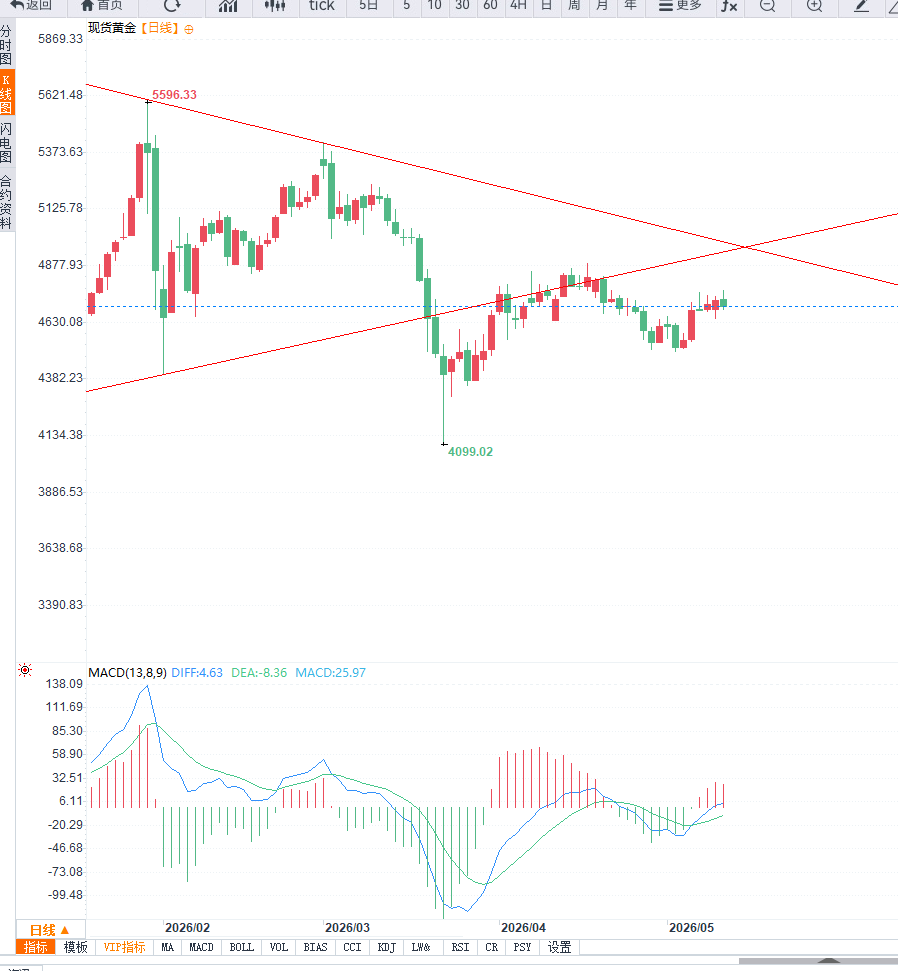
From a 4-hour chart perspective, gold is currently in a weak, range-bound pattern. With the upcoming release of US CPI and PPI data, short-term market volatility may further increase. Overall, the core logic of the gold market has gradually shifted from "interest rate cut trading" to "high inflation and persistent high interest rates," and US inflation data will be a crucial variable determining future gold price movements.
Editor's Summary : The gold market is currently in a phase of complex interplay among multiple factors. Escalating tensions in the Middle East continue to support safe-haven demand, but rising international oil prices are reigniting global inflationary pressures, significantly strengthening market expectations that the Federal Reserve will maintain high interest rates. The rising US dollar and US Treasury yields are exerting temporary downward pressure on precious metals such as silver and gold. However, in the long term, global geopolitical risks and central bank gold purchases will continue to provide some support for the platinum market. The market focus will shift to US CPI and PPI data, as these will directly impact expectations regarding Federal Reserve policy and determine the next direction for gold.
The core reason for this gold price correction is mainly due to market concerns that the high inflation and high interest rate environment in the United States may persist for a longer period of time.
Global markets are closely watching the upcoming release of the US April Consumer Price Index (CPI) and Producer Price Index (PPI) data. The market expects the overall US CPI to rise to 3.7% year-on-year in April, the highest level since September 2023, while core inflation is also likely to continue to rise. If US inflation continues to exceed market expectations, the Federal Reserve may extend its high-interest-rate policy further. Previously, the market had anticipated that the Fed might gradually enter a rate-cutting cycle, but with rising international oil prices and a deteriorating situation in the Middle East, market concerns about the "risk of double-dip inflation" have significantly increased.
Ilya Spivak, global head of macro research at Tastylive, stated that global central bank policy expectations have generally shifted back to a hawkish stance, and for the Federal Reserve, market expectations for an interest rate cut this year are rapidly fading. Market concerns exist that high oil prices could further push up overall US inflation, forcing the Fed to maintain high interest rates for an extended period.
Meanwhile, the situation in the Middle East remains highly uncertain. The already fragile ceasefire between the US and Iran has deteriorated again due to Iran's rejection of the latest peace proposal from the United States. US President Trump previously described some of Iran's conditions as "garbage," and the market is beginning to reassess the possibility of further escalation in the Middle East. The Strait of Hormuz handles approximately 20% of global seaborne oil transport; if the situation worsens, global energy supply risks could increase further. Typically, escalating geopolitical risks drive safe-haven flows into the gold market, but the current market logic is changing.
Rising international oil prices have directly fueled global inflationary pressures, leading to market concerns that the Federal Reserve may not only be unable to cut interest rates but could even maintain a hawkish stance in the future. Against this backdrop, the US dollar index and US Treasury yields have strengthened in tandem, putting significant pressure on non-interest-bearing assets such as silver and gold.
ANZ analysts point out that the market is currently facing a dilemma. On the one hand, the escalating situation in the Middle East continues to drive up safe-haven demand, theoretically benefiting gold; but on the other hand, high energy prices could lead to persistently high global inflation, forcing central banks worldwide to maintain a high-interest-rate environment. Therefore, the gold market is currently influenced by both the "safe-haven logic" and the "high-interest-rate logic," with the latter currently dominating in the short term. At the same time, global physical gold demand is also beginning to face some pressure.
India recently called on its residents to reduce gold purchases over the next year to help maintain its foreign exchange reserves. As India is a major global gold consumer, this statement has raised concerns about a slowdown in physical demand. However, in the long term, global central bank gold purchases continue to provide some support to the platinum market. Especially against the backdrop of escalating global geopolitical risks, some countries may still increase their gold reserves to enhance asset security.
From a technical perspective, gold is currently in a high-level consolidation phase on the daily chart. After a significant and continuous rise in gold prices, the market has entered a clearly high-volatility zone. Technical indicators show that the RSI has begun to decline from its high level, indicating some profit-taking pressure in the short-term market. However, the overall price is still trading above the major moving averages, and the medium- to long-term upward structure has not been completely broken. In terms of key support, the area around $4680 forms the first support zone, while $4650 is an important medium-term support level. A break below $4650 could open up further downside potential; however, if US inflation data is lower than expected, gold may retest the area above $4750.
From a 4-hour chart perspective, gold is currently in a weak, range-bound pattern. With the upcoming release of US CPI and PPI data, short-term market volatility may further increase. Overall, the core logic of the gold market has gradually shifted from "interest rate cut trading" to "high inflation and persistent high interest rates," and US inflation data will be a crucial variable determining future gold price movements.
Editor's Summary : The gold market is currently in a phase of complex interplay among multiple factors. Escalating tensions in the Middle East continue to support safe-haven demand, but rising international oil prices are reigniting global inflationary pressures, significantly strengthening market expectations that the Federal Reserve will maintain high interest rates. The rising US dollar and US Treasury yields are exerting temporary downward pressure on precious metals such as silver and gold. However, in the long term, global geopolitical risks and central bank gold purchases will continue to provide some support for the platinum market. The market focus will shift to US CPI and PPI data, as these will directly impact expectations regarding Federal Reserve policy and determine the next direction for gold.
- Risk Warning and Disclaimer
- The market involves risk, and trading may not be suitable for all investors. This article is for reference only and does not constitute personal investment advice, nor does it take into account certain users’ specific investment objectives, financial situation, or other needs. Any investment decisions made based on this information are at your own risk.