How many billions of yen is the US Treasury Secretary's "confidence" worth? Analyzing the exchange of interests behind US-Japan currency market coordination.
2026-05-12 17:59:16
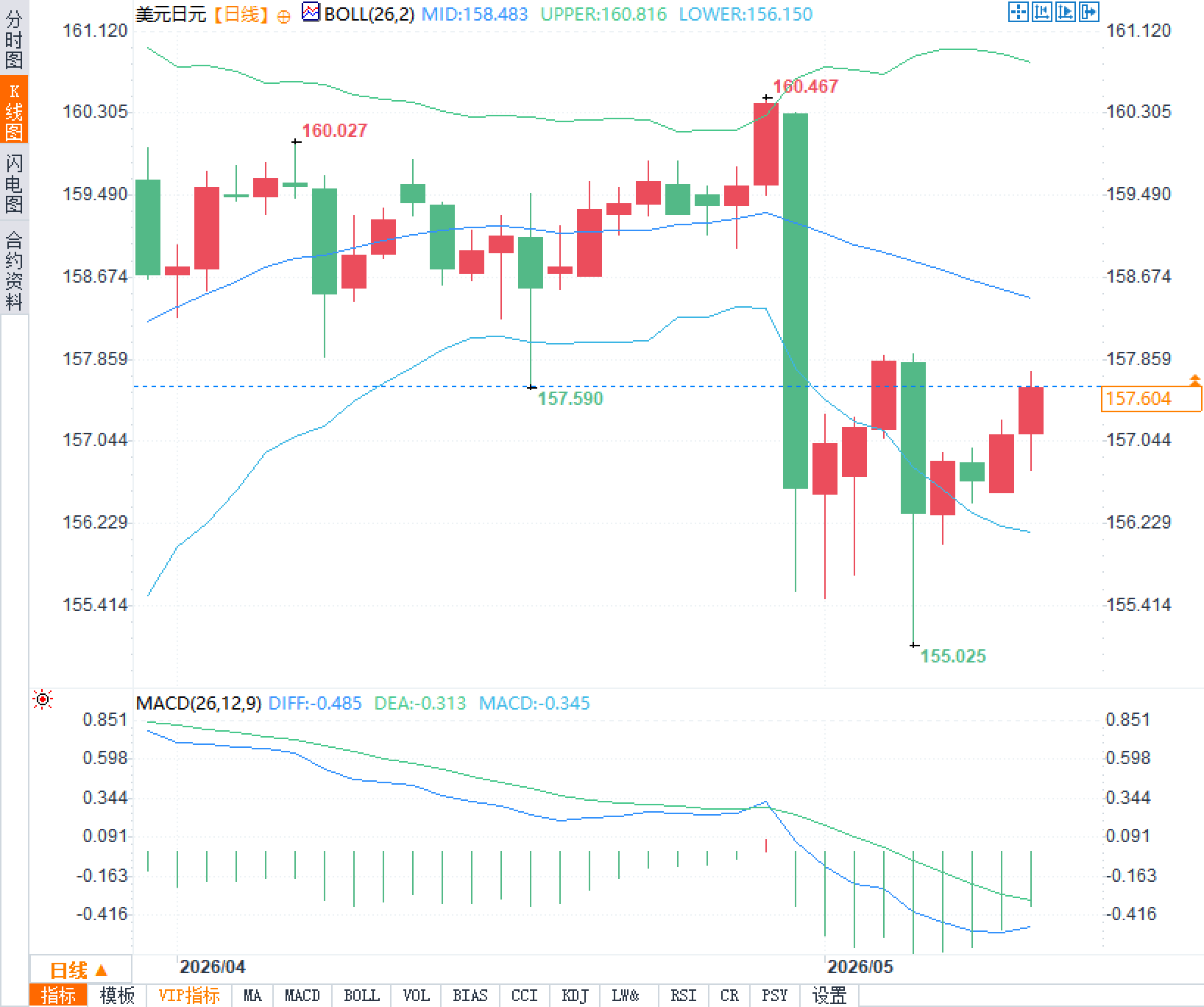
On Tuesday, May 12th, during the European session, the USD/JPY exchange rate traded around 157.5, a significant pullback from its high of 160.467 reached at the end of April. Recent large-scale foreign exchange intervention by Japanese authorities to alleviate pressure on the yen's depreciation, and the coordinated signals released by US Treasury Secretary Scott Bessenter after his meeting with Japanese Prime Minister Sanae Takaichi and Finance Minister Katayama in Tokyo, have become the focus of market attention. Market data shows that the exchange rate initially fell from 157.72 to around 156.75 due to speculation about intervention, before stabilizing slightly to around 157.60. This dynamic reflects the close communication between the US and Japan in dealing with excessive volatility in the foreign exchange market. Coupled with external factors such as rising oil prices, traders are closely assessing the interaction between the intervention's effectiveness and expectations for monetary policy.
Following the meeting, Bessant clearly stated that both the US and Japan agreed that excessive volatility in the foreign exchange market was undesirable and that they were maintaining close contact with the Japanese Ministry of Finance. He also expressed a positive view on the resilience of the Japanese economic fundamentals, believing that this foundation would ultimately be reflected in exchange rate movements. Katayama confirmed that both sides would maintain coordination in handling abnormal exchange rate fluctuations, based on the joint statement issued last September. While these statements did not exceed market expectations of a strong warning, they still provided diplomatic support for Japanese intervention. The USD/JPY exchange rate experienced increased short-term volatility after the statements, initially rising slightly before plummeting due to rumors of a "testing the waters," reflecting the market's immediate interpretation of the coordinated signal. Such high-level communication can often temporarily curb unilateral speculation, but its long-term effects depend on the evolution of fundamentals.
Japan's recent intervention has been massive, with cumulative spending since the end of April potentially approaching 10 trillion yen, aimed at curbing the upward pressure on import costs caused by the unilateral depreciation of the yen. The daily chart shows the Bollinger Bands (26,2) with the middle band at 158.483, the upper band at 160.816, and the lower band at 156.150; the current price is in the lower half of the band. The MACD (26,12,9) shows DIFF at -0.485, DEA at -0.313, and MACD at -0.345, indicating weak short-term momentum. While the intervention has temporarily stabilized the exchange rate, the rebound strength suggests that fundamental pressures remain, with high oil prices and other factors continuing to test the authorities' resolve. Traders have observed that such operations can reduce net short positions in speculative positions, but without supporting policies, the effect is often limited to the short term.
The Bank of Japan (BOJ) maintained its short-term interest rate target at 0.75% at its policy meeting last month. The meeting's summary showed that some members advocated for a rate hike as soon as possible, with one mentioning possible action in June to address inflationary pressures stemming from rising oil prices. Bessant expressed high confidence in BOJ Governor Kazuo Ueda, believing he can successfully guide monetary policy and avoid falling behind the curve in dealing with inflation risks. Ueda is returning to Tokyo from a meeting at the Bank for International Settlements in Switzerland, and his subsequent statements will further shape market expectations. Interest rate differentials remain a core driver of exchange rate volatility, with traders focusing on the potential contribution of the probability of a rate hike to the yen's support, as well as its interaction with global risk appetite. While the Japanese economy is assessed as strong and resilient, the caution of the policy path still needs to be verified by data.
Latest signals of US-Japan exchange rate policy coordination
Following the meeting, Bessant clearly stated that both the US and Japan agreed that excessive volatility in the foreign exchange market was undesirable and that they were maintaining close contact with the Japanese Ministry of Finance. He also expressed a positive view on the resilience of the Japanese economic fundamentals, believing that this foundation would ultimately be reflected in exchange rate movements. Katayama confirmed that both sides would maintain coordination in handling abnormal exchange rate fluctuations, based on the joint statement issued last September. While these statements did not exceed market expectations of a strong warning, they still provided diplomatic support for Japanese intervention. The USD/JPY exchange rate experienced increased short-term volatility after the statements, initially rising slightly before plummeting due to rumors of a "testing the waters," reflecting the market's immediate interpretation of the coordinated signal. Such high-level communication can often temporarily curb unilateral speculation, but its long-term effects depend on the evolution of fundamentals.
The scale and market effects of Japan's foreign exchange intervention
Japan's recent intervention has been massive, with cumulative spending since the end of April potentially approaching 10 trillion yen, aimed at curbing the upward pressure on import costs caused by the unilateral depreciation of the yen. The daily chart shows the Bollinger Bands (26,2) with the middle band at 158.483, the upper band at 160.816, and the lower band at 156.150; the current price is in the lower half of the band. The MACD (26,12,9) shows DIFF at -0.485, DEA at -0.313, and MACD at -0.345, indicating weak short-term momentum. While the intervention has temporarily stabilized the exchange rate, the rebound strength suggests that fundamental pressures remain, with high oil prices and other factors continuing to test the authorities' resolve. Traders have observed that such operations can reduce net short positions in speculative positions, but without supporting policies, the effect is often limited to the short term.
Analysis of the Bank of Japan's Monetary Policy Stance
The Bank of Japan (BOJ) maintained its short-term interest rate target at 0.75% at its policy meeting last month. The meeting's summary showed that some members advocated for a rate hike as soon as possible, with one mentioning possible action in June to address inflationary pressures stemming from rising oil prices. Bessant expressed high confidence in BOJ Governor Kazuo Ueda, believing he can successfully guide monetary policy and avoid falling behind the curve in dealing with inflation risks. Ueda is returning to Tokyo from a meeting at the Bank for International Settlements in Switzerland, and his subsequent statements will further shape market expectations. Interest rate differentials remain a core driver of exchange rate volatility, with traders focusing on the potential contribution of the probability of a rate hike to the yen's support, as well as its interaction with global risk appetite. While the Japanese economy is assessed as strong and resilient, the caution of the policy path still needs to be verified by data.
Frequently Asked Questions
Question 1: Does Bessant's statement mean that the United States fully supports Japan's yen intervention?
A: Bessant emphasized that both the US and Japan agree that excessive exchange rate volatility is undesirable and stated that they are maintaining close contact with the Japanese Ministry of Finance. This demonstrates the US's understanding of Japan's actions in dealing with "disorderly" market fluctuations, consistent with the spirit of the bilateral joint statement last September, but without a clear commitment to joint intervention or direct support. Market reactions indicate that this statement provided some psychological support, but exchange rates are ultimately driven by fundamentals.
Question 2: What are the main pressures facing the Bank of Japan's current monetary policy?
A: The Bank of Japan's policy rate remained at 0.75%, but the summary of opinions from the April meeting showed that some members advocated for a rate hike as soon as possible to address inflationary pressures from rising oil prices. Governor Kazuo Ueda needs to balance economic growth and price stability to avoid falling behind the curve. Bessant expressed confidence in Ueda, believing he can successfully guide policy.
Question 3: What specific impact does the exchange rate level have on the Japanese economy?
A: While a weaker yen benefits export-oriented companies, it significantly increases import costs, particularly energy prices, exacerbating inflationary pressures and impacting residents' lives. Japan's economic fundamentals are considered strong and resilient, but exchange rate volatility could amplify external shocks. Traders need to pay attention to the interaction between the effects of interventions and policy adjustments.
- Risk Warning and Disclaimer
- The market involves risk, and trading may not be suitable for all investors. This article is for reference only and does not constitute personal investment advice, nor does it take into account certain users’ specific investment objectives, financial situation, or other needs. Any investment decisions made based on this information are at your own risk.