Political turmoil in Britain has pushed borrowing costs to a 30-year high, while Starmer's refusal to resign has sent the pound to a near two-week low.
2026-05-13 10:38:47
British Prime Minister Keir Starmer ignored calls for his resignation from within his party on Tuesday (May 12) and made it clear that he would continue to govern. Following the Labour Party's crushing defeat in local elections, more than 80 MPs have publicly called on Starmer to set a timetable for his departure, and four junior ministers have also resigned, fueling growing calls for his resignation.
Starmer reiterated at a cabinet meeting that the leadership election process had not yet been formally launched. He told cabinet ministers, "The country expects us to continue in power. That's what I'm doing, and that's what our cabinet must do." Several senior officials loyal to Starmer expressed their support, including Deputy Prime Minister Lamy and Employment and Pensions Secretary McFadden, the latter saying no one at the cabinet meeting challenged the prime minister.
Support for Starmer within the Labour Party is waning. Prominent MP Jess Phillips has joined four junior ministers who have resigned, urging Starmer to set a timetable for his departure. Attention is now focused on senior figures like Health Secretary Wes Streitting, who is seen as aspiring to become prime minister. Sources indicate that Streitting will meet with Starmer on Wednesday.
British borrowing costs have surged to their highest level in nearly 30 years. Starmer acknowledged, "The past 48 hours have brought turmoil to the government, causing real economic damage to the country and every household." Bond markets are highly sensitive to talk of Starmer and Chancellor Reeves potentially stepping down, with investors worried that a more left-leaning successor could push for increased spending, further straining Britain's already tight finances.
Compared to the opposition Conservative Party, it is more difficult for Labour MPs to remove the Prime Minister. A leadership contest requires 81 MPs to unite and support the same candidate. Statistics show that about half of those currently calling for Starmer's resignation are from the party's left wing, and slightly more than a quarter are from the centrists; no candidate has yet garnered sufficient support. Junior Minister for Foreign Affairs Jenny Chapman stated that the majority of Labour's 403 MPs "do not want chaos."
Overall, while Starmer faces the most severe internal party pressure since taking office, he has demonstrated a firm resolve to continue governing. However, support within the Labour Party is weakening, the whereabouts of senior potential challengers remain unclear, and markets are highly sensitive to the economic consequences of political turmoil. Therefore, Starmer's leadership position is unlikely to be secure in the short term. The final stances of key cabinet figures in the coming days will determine the course of this political crisis.
Influenced by news related to Starmer and a rising dollar, the pound fell against the dollar on Tuesday (May 12), dropping as much as 0.79% to 1.3500, a near two-week low, before closing at 1.3538, a decline of about 0.51%. In early Asian trading on Wednesday (May 13), the pound traded in a narrow range near its two-week low, currently hovering around 1.3540.
eToro strategist Lale Akoner said that the pound's decline and the rise in UK government bond yields as Prime Minister Keir Starmer faces increasing pressure to resign may indicate a broader confidence problem in UK assets. "If this were simply due to rising interest rate expectations, the pound would typically find some support," she said. She added that long-term UK government bonds are likely to remain under pressure until the political situation becomes clearer and fiscal credibility is assured. The near-term outlook for the pound also remains fragile. Expectations of rising UK interest rates may provide marginal support, but political uncertainty, concerns about economic growth, and a higher UK risk premium could all weigh on the pound's performance.
Allianz Chief Economist El-Erian stated that despite the sharp rise in UK government bond yields that day, the pound failed to find support and remained under pressure. With the 10-year UK government bond yield breaking through 5.10% and the 30-year yield hitting its highest level since March 1998, the market is sending a clear signal that should serve as a sobering warning: convincing the market that fiscal stability will continue is essential to avoiding a repeat of the 2022 "Liz Truss moment"—an event that pushed the UK pension system to the brink of collapse. This is especially important given the current developments from outside the UK that are exacerbating economic and financial headwinds.
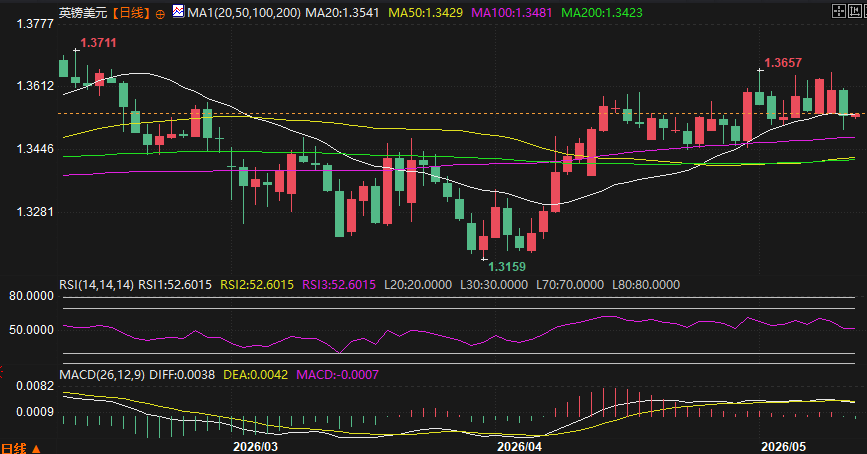
(GBP/USD daily chart, source: FX678)
At 10:36 AM Beijing time on May 13, the British pound was trading at 1.3539/40 against the US dollar.
Starmer insists on continuing to govern, and some cabinet ministers have expressed their support.
Starmer reiterated at a cabinet meeting that the leadership election process had not yet been formally launched. He told cabinet ministers, "The country expects us to continue in power. That's what I'm doing, and that's what our cabinet must do." Several senior officials loyal to Starmer expressed their support, including Deputy Prime Minister Lamy and Employment and Pensions Secretary McFadden, the latter saying no one at the cabinet meeting challenged the prime minister.
With support within the party weakening, the movements of senior figures are becoming the focus.
Support for Starmer within the Labour Party is waning. Prominent MP Jess Phillips has joined four junior ministers who have resigned, urging Starmer to set a timetable for his departure. Attention is now focused on senior figures like Health Secretary Wes Streitting, who is seen as aspiring to become prime minister. Sources indicate that Streitting will meet with Starmer on Wednesday.
Political instability has driven up borrowing costs, and markets are worried about the fiscal outlook.
British borrowing costs have surged to their highest level in nearly 30 years. Starmer acknowledged, "The past 48 hours have brought turmoil to the government, causing real economic damage to the country and every household." Bond markets are highly sensitive to talk of Starmer and Chancellor Reeves potentially stepping down, with investors worried that a more left-leaning successor could push for increased spending, further straining Britain's already tight finances.
The Labour Prime Minister is unlikely to be removed from office; there is currently insufficient support to trigger a challenge.
Compared to the opposition Conservative Party, it is more difficult for Labour MPs to remove the Prime Minister. A leadership contest requires 81 MPs to unite and support the same candidate. Statistics show that about half of those currently calling for Starmer's resignation are from the party's left wing, and slightly more than a quarter are from the centrists; no candidate has yet garnered sufficient support. Junior Minister for Foreign Affairs Jenny Chapman stated that the majority of Labour's 403 MPs "do not want chaos."
Starmer remains determined to continue in power, but his political future remains uncertain.
Overall, while Starmer faces the most severe internal party pressure since taking office, he has demonstrated a firm resolve to continue governing. However, support within the Labour Party is weakening, the whereabouts of senior potential challengers remain unclear, and markets are highly sensitive to the economic consequences of political turmoil. Therefore, Starmer's leadership position is unlikely to be secure in the short term. The final stances of key cabinet figures in the coming days will determine the course of this political crisis.
Analysts warn: UK assets face "confidence problem"
Influenced by news related to Starmer and a rising dollar, the pound fell against the dollar on Tuesday (May 12), dropping as much as 0.79% to 1.3500, a near two-week low, before closing at 1.3538, a decline of about 0.51%. In early Asian trading on Wednesday (May 13), the pound traded in a narrow range near its two-week low, currently hovering around 1.3540.
eToro strategist Lale Akoner said that the pound's decline and the rise in UK government bond yields as Prime Minister Keir Starmer faces increasing pressure to resign may indicate a broader confidence problem in UK assets. "If this were simply due to rising interest rate expectations, the pound would typically find some support," she said. She added that long-term UK government bonds are likely to remain under pressure until the political situation becomes clearer and fiscal credibility is assured. The near-term outlook for the pound also remains fragile. Expectations of rising UK interest rates may provide marginal support, but political uncertainty, concerns about economic growth, and a higher UK risk premium could all weigh on the pound's performance.
Allianz Chief Economist El-Erian stated that despite the sharp rise in UK government bond yields that day, the pound failed to find support and remained under pressure. With the 10-year UK government bond yield breaking through 5.10% and the 30-year yield hitting its highest level since March 1998, the market is sending a clear signal that should serve as a sobering warning: convincing the market that fiscal stability will continue is essential to avoiding a repeat of the 2022 "Liz Truss moment"—an event that pushed the UK pension system to the brink of collapse. This is especially important given the current developments from outside the UK that are exacerbating economic and financial headwinds.
(GBP/USD daily chart, source: FX678)
At 10:36 AM Beijing time on May 13, the British pound was trading at 1.3539/40 against the US dollar.
- Risk Warning and Disclaimer
- The market involves risk, and trading may not be suitable for all investors. This article is for reference only and does not constitute personal investment advice, nor does it take into account certain users’ specific investment objectives, financial situation, or other needs. Any investment decisions made based on this information are at your own risk.