May 14th Financial Breakfast: The US Senate approves Warsh as Federal Reserve Chairman; gold prices continue to face pressure at the $4700 level; and a larger-than-expected decline in inventories helps oil prices.
2026-05-14 07:26:12
On Thursday (May 14, Beijing time) in early Asian trading, spot gold was trading around $4,700 per ounce. Gold prices fell for the second consecutive trading day on Wednesday, pressured by inflation concerns that dampened expectations of interest rate cuts. US crude oil was trading around $101 per barrel. Although it closed down more than 1% on Wednesday, it briefly touched $102.72 per barrel during the session. US crude oil inventories fell more than expected last week, and the stalemate in US-Iran negotiations continued, with the market focusing on the US-China meeting.

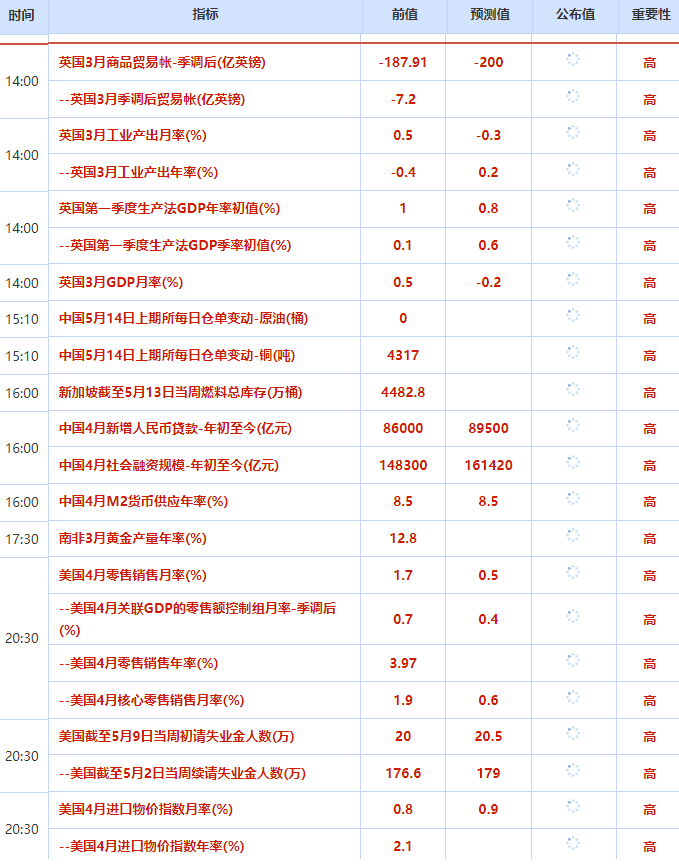
Key Focus Today
Boosted by a rebound in chip stocks, the S&P 500 and Nasdaq Composite indexes closed at record highs on Wednesday. The S&P 500 rose 0.58% to 7444.14 points, the Nasdaq Composite gained 1.21% to 26404.74 points, and the Dow Jones Industrial Average dipped 0.13% to 49693.63 points. Morgan Stanley raised its annual target for the S&P 500 to 8000 points due to strong earnings.
The market temporarily ignored the stronger-than-expected US April Producer Price Index (PPI) – which saw its largest increase in four years, further diminishing hopes for a near-term interest rate cut by the Federal Reserve. The chip sector index (.SOX) rebounded from yesterday's decline, led by AI-related technology stocks such as Nvidia and Tesla.
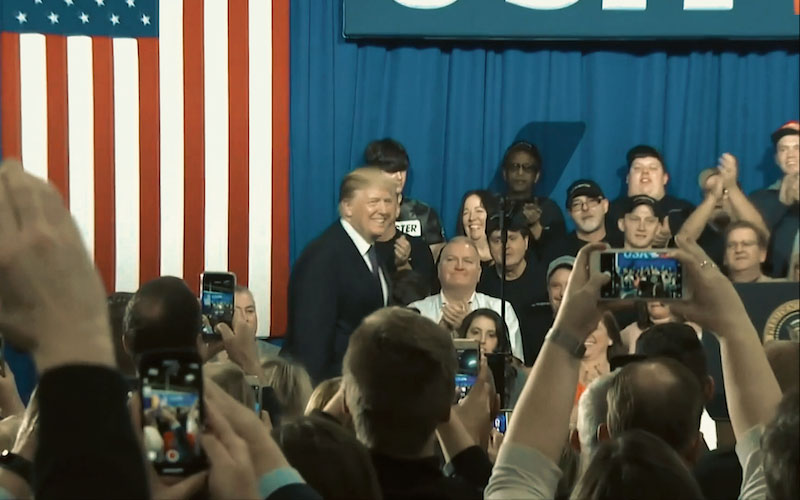
Boston Federal Reserve President Collins stated that an interest rate hike may be inevitable if inflationary pressures do not ease. Meanwhile, Trump, accompanied by Nvidia CEO Jensen Huang and Elon Musk, visited China.
Gold prices fell for a second straight session on Wednesday as inflation concerns dampened expectations of interest rate cuts. Spot gold fell 0.56% to $4,688.71 an ounce.
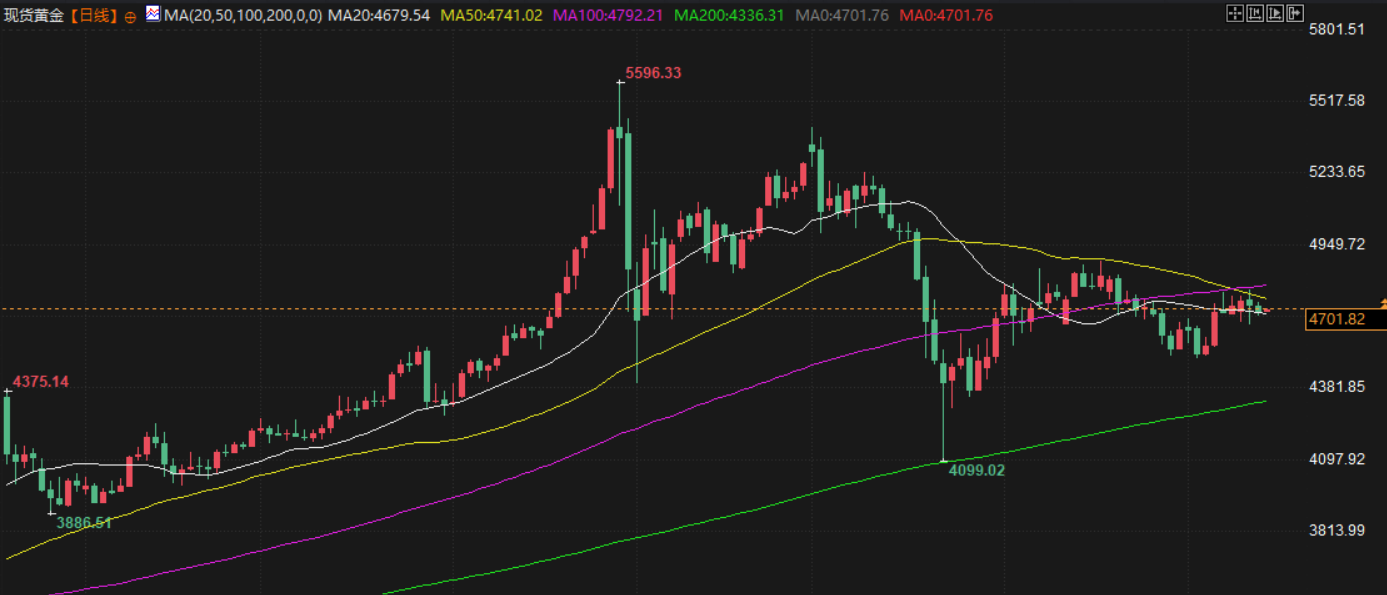
The U.S. Producer Price Index (PPI) posted its biggest increase since early 2022 in April, coupled with previously strong consumer inflation data, which has largely ruled out the possibility of a Federal Reserve rate cut this year. The vice president of Zaner Metals stated that persistent inflation has reinforced expectations that interest rates will remain high for an extended period, putting pressure on gold prices.
In addition, India raised import tariffs on gold and silver from 6% to 15% to curb imports and ease pressure on foreign exchange reserves, raising concerns about demand.
In other precious metals, spot silver rose 1.6% to $87.88, platinum rose 1.6% to $2159.58, and palladium rose 1.2% to $1508.39.
Oil prices closed lower on Wednesday amid concerns over a potential U.S. interest rate hike, while investors also focused on the U.S.-China meeting. Brent crude fell 1.73% to $105.55 a barrel, and WTI crude fell 1.03% to $101 a barrel, but both remained above $100.
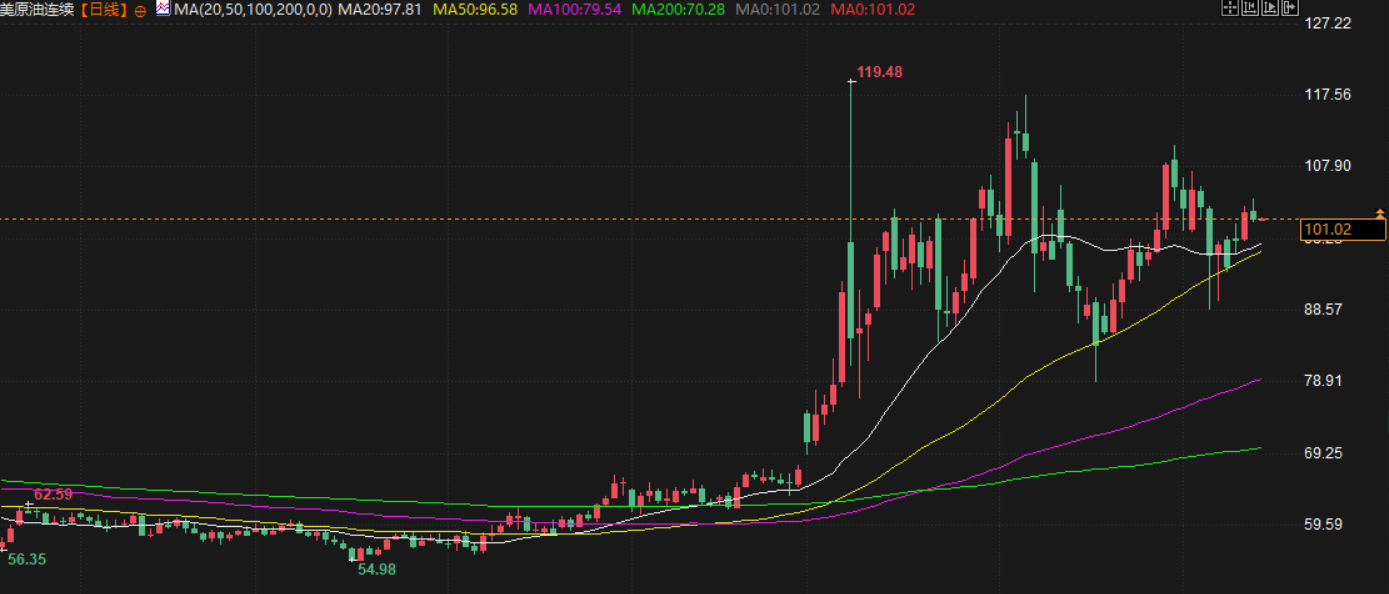
Boston Fed President Collins said the Fed may need to raise interest rates if inflationary pressures persist; the US PPI rose by the most in four years in April, and consumer inflation continues to rise. Raising interest rates will increase borrowing costs, potentially slowing economic growth and suppressing oil demand.
On the supply side, U.S. EIA data showed that crude oil inventories fell by 4.3 million barrels last week (compared to an expected decrease of 2.1 million barrels), gasoline inventories fell by 4.1 million barrels, and distillate fuel inventories unexpectedly increased by 200,000 barrels. Furthermore, OPEC lowered its 2026 global oil demand growth forecast, while the IEA stated that war has damaged oil production in the Middle East, and global supply will be unable to meet demand.
The dollar strengthened on Wednesday, with the dollar index rising 0.21% to 98.53, hitting a two-week high during the session, driven by a 1.4% surge in the U.S. producer price index (PPI) for April, the biggest increase in nearly four years.
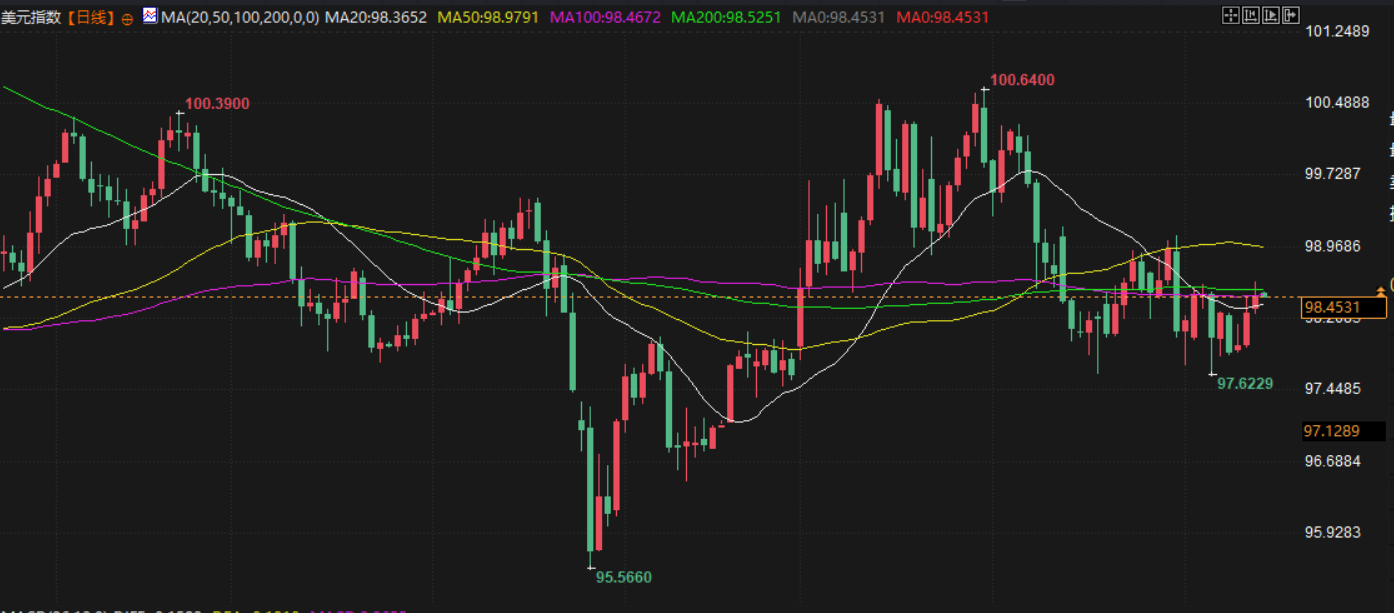
Market expectations for a Federal Reserve rate cut have largely disappeared, with the expectation of at least a 25 basis point rate hike at the December meeting rising to 35%. Boston Fed President Collins and Minneapolis Fed President Kashkari both indicated that a rate hike may be necessary if inflationary pressures persist.
The US Senate has confirmed Warsh, Trump's nominee, as Chairman of the Federal Reserve. The yen fell 0.18% to 157.88 against the dollar, and the pound fell 0.17% to $1.3513.
The US Senate approved Kevin Warsh as Chairman of the Federal Reserve.
On May 13 local time, the U.S. Senate formally approved Kevin Warsh as Chairman of the Federal Reserve. The Senate had previously approved Warsh's appointment as a Federal Reserve Governor on May 12 for a 14-year term. With the confirmation of his appointment on the 13th, Warsh will officially assume office after completing the relevant signing procedures at the White House, succeeding current Chairman Jerome Powell, whose term ends this Friday (May 15). However, Powell is expected to remain as a Federal Reserve Governor. (CCTV News)
The probability of the Federal Reserve keeping interest rates unchanged in June is 99%, and the probability of a 25 basis point rate hike this year is 31.8%.
According to CME's "FedWatch": The probability of the Federal Reserve keeping interest rates unchanged by June is 99%, and the probability of a cumulative 25 basis point rate cut is 1%. The probability of the Federal Reserve keeping interest rates unchanged by July is 99%, and the probability of a cumulative 25 basis point rate cut is 1%. The probability of the Federal Reserve keeping interest rates unchanged by December is 67.5%, the probability of a cumulative 25 basis point rate cut is 0.7%, and the probability of a 25 basis point rate hike is 31.8% (approximately 36% the previous day).
Disruptions to shipping in the Strait of Hormuz could lead to a helium shortage that could jeopardize the semiconductor industry.
The Middle East conflict has not only driven up oil and natural gas prices but also exacerbated the global shortage of industrial helium. Since helium is an indispensable raw material for semiconductor manufacturing, the prolonged disruption of shipping through the Strait of Hormuz could jeopardize the development of the global semiconductor industry. Qatar is the world's second-largest helium producer, accounting for approximately one-third of global production. The disruption of shipping through the Strait of Hormuz has prevented Qatari-produced helium from being shipped out. (CCTV News)
Another cruise ship experiences a cluster of cases.
On May 13, the government of the Nouvelle-Aquitaine region in southwestern France banned disembarkation from a cruise ship docked in Bordeaux. It is understood that "dozens of suspected gastroenteritis cases" have emerged on the ship. The Nouvelle-Aquitaine health department stated in a statement that the ban on passengers and crew disembarking is temporary and is pending medical test results—however, "there is no reason to link it to the recent cluster of hantavirus cases on the 'Hundius' cruise ship." The cruise ship, named "Ambition," departed from the UK on May 8 for a 14-day voyage through the UK, France, and Spain. It carried 1,233 passengers (most of whom are British or Irish citizens) and 514 crew members. On May 11, while the cruise ship was docked in Brest, Brittany, France, a 92-year-old British passenger "died on board due to cardiac arrest"—but currently, this death "does not appear to be related to the suspected gastrointestinal cluster." Gastrointestinal illnesses are reportedly "relatively common" on cruise ships. The U.S. Centers for Disease Control and Prevention (CDC) has reported two outbreaks of E. coli and two outbreaks of norovirus on cruise ships this year. The main symptoms of gastroenteritis include vomiting and diarrhea, and can sometimes lead to more severe symptoms, including dehydration. The disease is highly contagious but usually does not have serious consequences. (CCTV International News)
Iranian official: Strait of Hormuz management plan has been submitted to Iranian parliament for review.
Iranian Parliament National Security and Foreign Policy Committee Chairman Aziz stated on the 13th that Iran hopes to transform its geographical advantage in the Strait of Hormuz into leverage for enhancing national power through "smart management." He revealed that the Strait of Hormuz management plan has been finalized within the committee and submitted to the Iranian Parliament for review, awaiting final approval. (CCTV News)
U.S. jet fuel exports hit a record high to fill overseas supply gap.
As airlines around the world struggle to cope with the impact of the Strait of Hormuz closure, U.S. refiners have shipped record amounts of jet fuel overseas. A recent report from the U.S. Energy Information Administration (EIA) states that U.S. jet fuel exports surged to a record 455,000 barrels per day last week, surpassing the previous high set in early April. In Europe and Asia, jet fuel prices are skyrocketing, as airlines and refiners in these regions heavily rely on a stable supply of oil and other energy resources from the Persian Gulf. According to data compiled by Bloomberg, jet fuel prices in Singapore and the European Union have risen by 61% and 59%, respectively, since the start of the conflict.
The EIA reported that oil flows through the Strait of Hormuz plummeted by nearly 30% last quarter.
Crude oil and fuel flows through the Strait of Hormuz fell by nearly 6 million barrels per day in the first quarter, a massive energy shock that disrupted the global supply chain and caused prices to soar. According to data released Wednesday by the U.S. Energy Information Administration (EIA), approximately 14.6 million barrels of crude oil and petroleum liquids passed through the Strait of Hormuz daily in the first three months of this year. This is significantly lower than the 20.4 million barrels per day in the same period last year and also lower than the 20.7 million barrels per day projected for the fourth quarter of 2025. Shipping through the Strait of Hormuz has been virtually paralyzed since the outbreak of the war with Iran, hindering about a quarter of global seaborne oil transport. The global benchmark Brent crude has surged by more than 45% since the conflict began. In the United States, the national average retail gasoline price has surpassed $4.50 per gallon, hovering near its highest level since 2022.
The Bank of Canada remains vigilant about the rapid changes in inflation dynamics.
According to the latest meeting minutes of the Bank of Canada, officials unanimously agreed that they needed to be prepared to adjust interest rate policy quickly in light of developments in the Middle East and trade tensions with the United States. The central bank policymakers agreed that while the US-Iran conflict had initially impacted gasoline prices, they could remain patient and keep the main interest rate unchanged for now. The minutes stated, "The situation could change rapidly, and monetary policy may need to be adjusted to guard against the risk of a broadening and more persistent inflation." The minutes covered the deliberations of the six-member Governing Council, which began on April 21. Eight days later, the central bank said it would maintain its overnight interest rate target at 2.25%, adding that it did not expect significant changes in interest rates as long as economic developments met expectations. This forecast was based on the assumption that the level and magnitude of tariffs imposed by the Trump administration on Canadian goods would remain unchanged. Furthermore, the Bank of Canada assumed that inflation would peak at around 3% in April and that crude oil prices would fall back to $75 per barrel by mid-2027.
A Chinese research team has successfully developed a programmable quantum computing prototype, "Jiuzhang-4".
Reporters learned from the University of Science and Technology of China (USTC) that a research team led by Academician Pan Jianwei, in collaboration with several other domestic research institutions and universities, has recently successfully developed a programmable quantum computing prototype, "Nine Chapters-4." Its computing power for specific problems far surpasses that of El Capitan, currently the world's fastest supercomputer, successfully establishing the strongest "quantum computing supremacy" internationally. The relevant findings were published on May 13 in the international academic journal *Nature*. (CCTV News)
Chinese humanoid robots are selling like hotcakes globally; 8 out of every 10 humanoid robots in the world come from China.
In the new wave of Chinese brands going global, robots and artificial intelligence are taking center stage. Moving away from the traditional model of relying on scale and price competition, Chinese technology products are integrating into the global market with a more modern and technologically advanced approach. From the Spring Festival Gala stage to the marathon track, the confident debut of robots has shown the world the "evolutionary speed" of China's robotics industry. Eight out of every ten humanoid robots globally come from China. In the first quarter of this year, my country's industrial robot exports reached 3.16 billion yuan, a year-on-year increase of 42%. China's artificial intelligence industry is accelerating its transformation from exporting single products to a comprehensive export of "technology + solutions + services," becoming a "new calling card" for Chinese brands going global. In 2025, China's smart glasses shipments reached 2.46 million units, a year-on-year increase of 87.1%, with overseas shipments increasing by 64.9%, covering 32 countries and regions. Today, China's artificial intelligence industry is exporting not only end products but also the "infrastructure" supporting the intelligent world. In the first quarter of 2026, my country's exports of storage components and central processing components closely related to servers increased by 39.1% combined. Core power equipment such as photovoltaic and wind power inverters are deeply integrated with the artificial intelligence industry, setting off a new trend of AI infrastructure going global. What my country is exporting is no longer just hardware, but a sustainable business loop of "hardware customer acquisition, software customer retention, and service value-added," polishing another "Chinese brand" in the global AI arena. Chinese brands are moving from "growing bigger" to "growing stronger," achieving a crucial leap from "proactive integration" to "active shaping." (CCTV Finance)
Key Focus Today
stock market
Boosted by a rebound in chip stocks, the S&P 500 and Nasdaq Composite indexes closed at record highs on Wednesday. The S&P 500 rose 0.58% to 7444.14 points, the Nasdaq Composite gained 1.21% to 26404.74 points, and the Dow Jones Industrial Average dipped 0.13% to 49693.63 points. Morgan Stanley raised its annual target for the S&P 500 to 8000 points due to strong earnings.
The market temporarily ignored the stronger-than-expected US April Producer Price Index (PPI) – which saw its largest increase in four years, further diminishing hopes for a near-term interest rate cut by the Federal Reserve. The chip sector index (.SOX) rebounded from yesterday's decline, led by AI-related technology stocks such as Nvidia and Tesla.
Boston Federal Reserve President Collins stated that an interest rate hike may be inevitable if inflationary pressures do not ease. Meanwhile, Trump, accompanied by Nvidia CEO Jensen Huang and Elon Musk, visited China.
Gold Market
Gold prices fell for a second straight session on Wednesday as inflation concerns dampened expectations of interest rate cuts. Spot gold fell 0.56% to $4,688.71 an ounce.
The U.S. Producer Price Index (PPI) posted its biggest increase since early 2022 in April, coupled with previously strong consumer inflation data, which has largely ruled out the possibility of a Federal Reserve rate cut this year. The vice president of Zaner Metals stated that persistent inflation has reinforced expectations that interest rates will remain high for an extended period, putting pressure on gold prices.
In addition, India raised import tariffs on gold and silver from 6% to 15% to curb imports and ease pressure on foreign exchange reserves, raising concerns about demand.
In other precious metals, spot silver rose 1.6% to $87.88, platinum rose 1.6% to $2159.58, and palladium rose 1.2% to $1508.39.
oil market
Oil prices closed lower on Wednesday amid concerns over a potential U.S. interest rate hike, while investors also focused on the U.S.-China meeting. Brent crude fell 1.73% to $105.55 a barrel, and WTI crude fell 1.03% to $101 a barrel, but both remained above $100.
Boston Fed President Collins said the Fed may need to raise interest rates if inflationary pressures persist; the US PPI rose by the most in four years in April, and consumer inflation continues to rise. Raising interest rates will increase borrowing costs, potentially slowing economic growth and suppressing oil demand.
On the supply side, U.S. EIA data showed that crude oil inventories fell by 4.3 million barrels last week (compared to an expected decrease of 2.1 million barrels), gasoline inventories fell by 4.1 million barrels, and distillate fuel inventories unexpectedly increased by 200,000 barrels. Furthermore, OPEC lowered its 2026 global oil demand growth forecast, while the IEA stated that war has damaged oil production in the Middle East, and global supply will be unable to meet demand.
Foreign exchange market
The dollar strengthened on Wednesday, with the dollar index rising 0.21% to 98.53, hitting a two-week high during the session, driven by a 1.4% surge in the U.S. producer price index (PPI) for April, the biggest increase in nearly four years.
Market expectations for a Federal Reserve rate cut have largely disappeared, with the expectation of at least a 25 basis point rate hike at the December meeting rising to 35%. Boston Fed President Collins and Minneapolis Fed President Kashkari both indicated that a rate hike may be necessary if inflationary pressures persist.
The US Senate has confirmed Warsh, Trump's nominee, as Chairman of the Federal Reserve. The yen fell 0.18% to 157.88 against the dollar, and the pound fell 0.17% to $1.3513.
International News
The US Senate approved Kevin Warsh as Chairman of the Federal Reserve.
On May 13 local time, the U.S. Senate formally approved Kevin Warsh as Chairman of the Federal Reserve. The Senate had previously approved Warsh's appointment as a Federal Reserve Governor on May 12 for a 14-year term. With the confirmation of his appointment on the 13th, Warsh will officially assume office after completing the relevant signing procedures at the White House, succeeding current Chairman Jerome Powell, whose term ends this Friday (May 15). However, Powell is expected to remain as a Federal Reserve Governor. (CCTV News)
The probability of the Federal Reserve keeping interest rates unchanged in June is 99%, and the probability of a 25 basis point rate hike this year is 31.8%.
According to CME's "FedWatch": The probability of the Federal Reserve keeping interest rates unchanged by June is 99%, and the probability of a cumulative 25 basis point rate cut is 1%. The probability of the Federal Reserve keeping interest rates unchanged by July is 99%, and the probability of a cumulative 25 basis point rate cut is 1%. The probability of the Federal Reserve keeping interest rates unchanged by December is 67.5%, the probability of a cumulative 25 basis point rate cut is 0.7%, and the probability of a 25 basis point rate hike is 31.8% (approximately 36% the previous day).
Disruptions to shipping in the Strait of Hormuz could lead to a helium shortage that could jeopardize the semiconductor industry.
The Middle East conflict has not only driven up oil and natural gas prices but also exacerbated the global shortage of industrial helium. Since helium is an indispensable raw material for semiconductor manufacturing, the prolonged disruption of shipping through the Strait of Hormuz could jeopardize the development of the global semiconductor industry. Qatar is the world's second-largest helium producer, accounting for approximately one-third of global production. The disruption of shipping through the Strait of Hormuz has prevented Qatari-produced helium from being shipped out. (CCTV News)
Another cruise ship experiences a cluster of cases.
On May 13, the government of the Nouvelle-Aquitaine region in southwestern France banned disembarkation from a cruise ship docked in Bordeaux. It is understood that "dozens of suspected gastroenteritis cases" have emerged on the ship. The Nouvelle-Aquitaine health department stated in a statement that the ban on passengers and crew disembarking is temporary and is pending medical test results—however, "there is no reason to link it to the recent cluster of hantavirus cases on the 'Hundius' cruise ship." The cruise ship, named "Ambition," departed from the UK on May 8 for a 14-day voyage through the UK, France, and Spain. It carried 1,233 passengers (most of whom are British or Irish citizens) and 514 crew members. On May 11, while the cruise ship was docked in Brest, Brittany, France, a 92-year-old British passenger "died on board due to cardiac arrest"—but currently, this death "does not appear to be related to the suspected gastrointestinal cluster." Gastrointestinal illnesses are reportedly "relatively common" on cruise ships. The U.S. Centers for Disease Control and Prevention (CDC) has reported two outbreaks of E. coli and two outbreaks of norovirus on cruise ships this year. The main symptoms of gastroenteritis include vomiting and diarrhea, and can sometimes lead to more severe symptoms, including dehydration. The disease is highly contagious but usually does not have serious consequences. (CCTV International News)
Iranian official: Strait of Hormuz management plan has been submitted to Iranian parliament for review.
Iranian Parliament National Security and Foreign Policy Committee Chairman Aziz stated on the 13th that Iran hopes to transform its geographical advantage in the Strait of Hormuz into leverage for enhancing national power through "smart management." He revealed that the Strait of Hormuz management plan has been finalized within the committee and submitted to the Iranian Parliament for review, awaiting final approval. (CCTV News)
U.S. jet fuel exports hit a record high to fill overseas supply gap.
As airlines around the world struggle to cope with the impact of the Strait of Hormuz closure, U.S. refiners have shipped record amounts of jet fuel overseas. A recent report from the U.S. Energy Information Administration (EIA) states that U.S. jet fuel exports surged to a record 455,000 barrels per day last week, surpassing the previous high set in early April. In Europe and Asia, jet fuel prices are skyrocketing, as airlines and refiners in these regions heavily rely on a stable supply of oil and other energy resources from the Persian Gulf. According to data compiled by Bloomberg, jet fuel prices in Singapore and the European Union have risen by 61% and 59%, respectively, since the start of the conflict.
The EIA reported that oil flows through the Strait of Hormuz plummeted by nearly 30% last quarter.
Crude oil and fuel flows through the Strait of Hormuz fell by nearly 6 million barrels per day in the first quarter, a massive energy shock that disrupted the global supply chain and caused prices to soar. According to data released Wednesday by the U.S. Energy Information Administration (EIA), approximately 14.6 million barrels of crude oil and petroleum liquids passed through the Strait of Hormuz daily in the first three months of this year. This is significantly lower than the 20.4 million barrels per day in the same period last year and also lower than the 20.7 million barrels per day projected for the fourth quarter of 2025. Shipping through the Strait of Hormuz has been virtually paralyzed since the outbreak of the war with Iran, hindering about a quarter of global seaborne oil transport. The global benchmark Brent crude has surged by more than 45% since the conflict began. In the United States, the national average retail gasoline price has surpassed $4.50 per gallon, hovering near its highest level since 2022.
The Bank of Canada remains vigilant about the rapid changes in inflation dynamics.
According to the latest meeting minutes of the Bank of Canada, officials unanimously agreed that they needed to be prepared to adjust interest rate policy quickly in light of developments in the Middle East and trade tensions with the United States. The central bank policymakers agreed that while the US-Iran conflict had initially impacted gasoline prices, they could remain patient and keep the main interest rate unchanged for now. The minutes stated, "The situation could change rapidly, and monetary policy may need to be adjusted to guard against the risk of a broadening and more persistent inflation." The minutes covered the deliberations of the six-member Governing Council, which began on April 21. Eight days later, the central bank said it would maintain its overnight interest rate target at 2.25%, adding that it did not expect significant changes in interest rates as long as economic developments met expectations. This forecast was based on the assumption that the level and magnitude of tariffs imposed by the Trump administration on Canadian goods would remain unchanged. Furthermore, the Bank of Canada assumed that inflation would peak at around 3% in April and that crude oil prices would fall back to $75 per barrel by mid-2027.
Domestic News
A Chinese research team has successfully developed a programmable quantum computing prototype, "Jiuzhang-4".
Reporters learned from the University of Science and Technology of China (USTC) that a research team led by Academician Pan Jianwei, in collaboration with several other domestic research institutions and universities, has recently successfully developed a programmable quantum computing prototype, "Nine Chapters-4." Its computing power for specific problems far surpasses that of El Capitan, currently the world's fastest supercomputer, successfully establishing the strongest "quantum computing supremacy" internationally. The relevant findings were published on May 13 in the international academic journal *Nature*. (CCTV News)
Chinese humanoid robots are selling like hotcakes globally; 8 out of every 10 humanoid robots in the world come from China.
In the new wave of Chinese brands going global, robots and artificial intelligence are taking center stage. Moving away from the traditional model of relying on scale and price competition, Chinese technology products are integrating into the global market with a more modern and technologically advanced approach. From the Spring Festival Gala stage to the marathon track, the confident debut of robots has shown the world the "evolutionary speed" of China's robotics industry. Eight out of every ten humanoid robots globally come from China. In the first quarter of this year, my country's industrial robot exports reached 3.16 billion yuan, a year-on-year increase of 42%. China's artificial intelligence industry is accelerating its transformation from exporting single products to a comprehensive export of "technology + solutions + services," becoming a "new calling card" for Chinese brands going global. In 2025, China's smart glasses shipments reached 2.46 million units, a year-on-year increase of 87.1%, with overseas shipments increasing by 64.9%, covering 32 countries and regions. Today, China's artificial intelligence industry is exporting not only end products but also the "infrastructure" supporting the intelligent world. In the first quarter of 2026, my country's exports of storage components and central processing components closely related to servers increased by 39.1% combined. Core power equipment such as photovoltaic and wind power inverters are deeply integrated with the artificial intelligence industry, setting off a new trend of AI infrastructure going global. What my country is exporting is no longer just hardware, but a sustainable business loop of "hardware customer acquisition, software customer retention, and service value-added," polishing another "Chinese brand" in the global AI arena. Chinese brands are moving from "growing bigger" to "growing stronger," achieving a crucial leap from "proactive integration" to "active shaping." (CCTV Finance)
- Risk Warning and Disclaimer
- The market involves risk, and trading may not be suitable for all investors. This article is for reference only and does not constitute personal investment advice, nor does it take into account certain users’ specific investment objectives, financial situation, or other needs. Any investment decisions made based on this information are at your own risk.