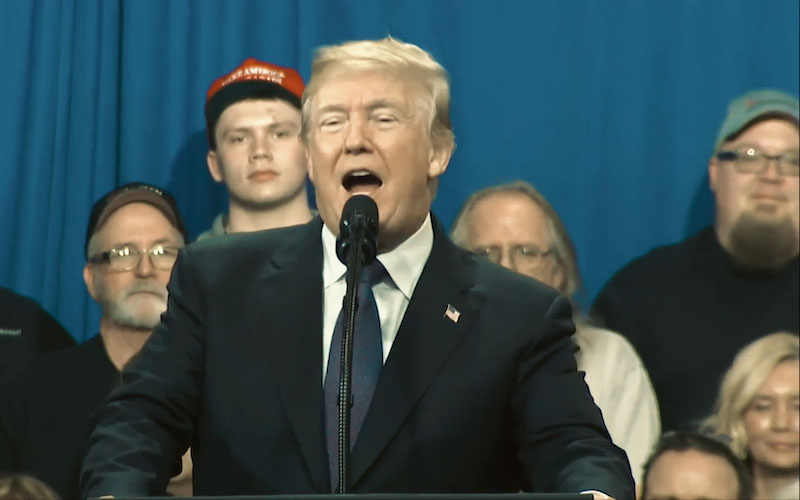
Warsh is about to take the helm of the Federal Reserve, which is deeply divided and has been hit hard by Trump.
2026-05-14 01:54:24
The U.S. Senate is expected to formally confirm Kevin Warsh as Chairman of the Federal Reserve on Wednesday. Currently, domestic inflationary pressures in the United States remain high, and the upward trend in prices has not been effectively curbed. However, the Trump administration continues to exert unprecedented political pressure on the century-old central bank, with its core demand being to force the Federal Reserve to begin the process of interest rate cuts as soon as possible to meet its political and economic demands.
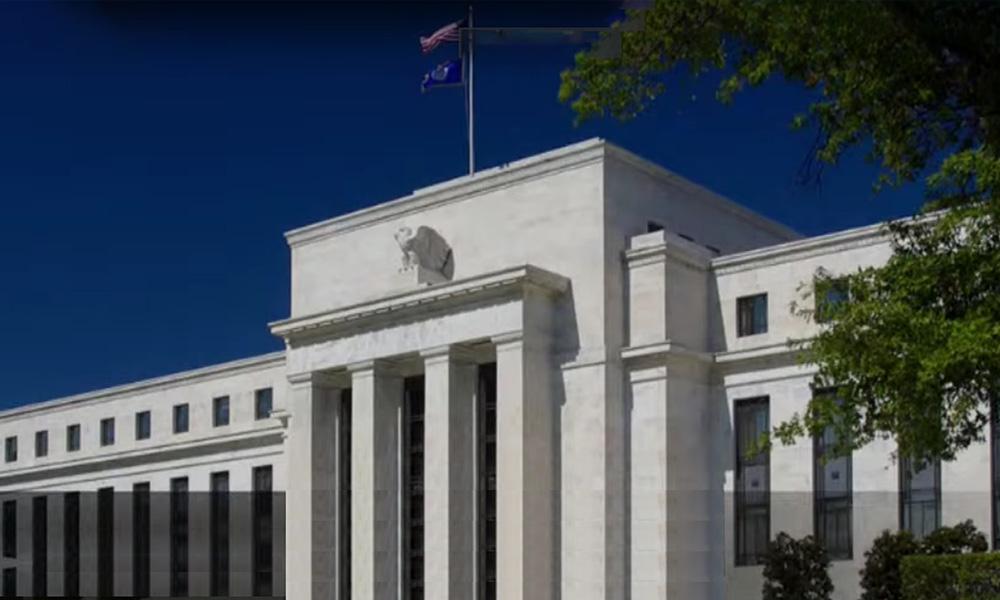
The specific voting arrangements have been finalized. The Senate will hold a formal vote at 2 p.m. local time (2 a.m. Thursday Beijing time) to confirm Warsh's nomination as Federal Reserve Chair. Although Trump's Republican Party holds only a slim majority in the Senate and does not have absolute control, based on current statements from all sides, Warsh's nomination is highly likely to be approved, allowing him to successfully succeed outgoing Federal Reserve Chair Jerome Powell and officially take the helm of the world's most influential central bank.
It is worth noting that Warsh's monetary policy stance has not been static. In his early years, he was known as a "hawk" with a strong monetary policy stance, consistently prioritizing inflation control and repeatedly expressing public support for tightening monetary policy and maintaining high interest rates. However, with the continued pressure from the Trump administration and his own need to run for Federal Reserve Chairman, Warsh's stance has clearly shifted. He has begun to actively align with Trump's core demand for interest rate cuts, gradually leaning towards a "dovish" position.
The incoming Federal Reserve Chairman made a clear commitment during his nomination hearing to implement comprehensive "systemic reforms" of the Fed after taking office. He publicly criticized the Fed's current operations for obvious flaws, arguing that it is too entangled in political maneuvering, severely eroding its independence, and that its overly transparent policy decision-making process restricts the flexibility of monetary policy. He advocated for a systemic restructuring of the Fed's communication mechanisms and decision-making framework.
However, Warsh's promise to cut interest rates faces significant practical obstacles. The current US inflation rate remains significantly higher than the Federal Reserve's long-term inflation target of 2%, and upward pressure on prices persists. Furthermore, the Trump administration's war in Iraq has further driven up global energy prices, directly leading to a renewed rise in domestic inflation in the US. This makes it difficult for Warsh to persuade members of the Federal Reserve's interest rate-setting committee to reach a consensus and immediately initiate interest rate cuts in the short term.
This dilemma could quickly draw Warsh into Trump's attacks—Trump has previously launched a sustained and fierce public attack on current Chairman Powell over interest rate decisions, repeatedly accusing him of "inaction" on social media and in public speeches, claiming that his insistence on high interest rates "stifled US economic growth," and even threatening to fire him.
In an interview, Brookings Institution senior fellow David Wessel bluntly stated, "Wash's biggest challenge is probably dealing with President Trump. The president's lack of respect for the Fed's independence and his single-minded focus on lowering interest rates will be the most difficult problem for Warsh to handle after taking office."
Impact on the independence of the Federal Reserve
The Trump administration's series of accusations and pressure against Powell have long been seen by the global financial and academic communities as an unprecedented challenge and attack on the Federal Reserve's independence. As a benchmark for global central banks, the Fed's independence has always been a core premise for its monetary policy formulation, and Trump's actions are constantly breaking this long-established convention.
In January of this year, Powell publicly disclosed that the U.S. Department of Justice had formally launched a criminal investigation against him for cost overruns in the renovation project of the Federal Reserve's Washington headquarters building. Powell explicitly stated that the true purpose of this investigation was not to hold project managers accountable, but to exert legal pressure on the Federal Reserve's monetary policy decisions, forcing the central bank to compromise and lower interest rates. It is understood that this investigation had previously been withdrawn by the Trump administration, its core purpose being to clear obstacles for Warsh's nomination and ensure his smooth passage through the Senate vote.
Prior to this, Trump had attempted to remove Federal Reserve Governor Lisa Cook from the Fed's board of directors, citing allegations of mortgage fraud, a move that was widely questioned within the Fed and by the legal community. Currently, the U.S. Supreme Court is making a final ruling on the legality of Trump's dismissal of Cook, a case considered a key precedent for balancing presidential power with the Fed's independence.
Katherine Judge, a Columbia University law professor specializing in banking research, commented that the Trump administration's actions of dropping the criminal investigation against Powell and attempting to fire Cook were "unprecedented" in the Federal Reserve's 113-year history and severely undermined the institutional foundation of the central bank's independence.
Although Warsh was personally nominated by Trump—just as Powell was nominated by Trump to become Federal Reserve Chairman nine years ago—Judge believes this will not alleviate the political pressure facing the Fed in the slightest. She further explained, "Fed officials have received a clear signal: this president is willing to use any means, including legal action and personnel changes, to force them to comply with his demands for interest rate cuts, and the Fed's independence is facing an unprecedented test."
Economic challenges
When Warsh took over the Federal Reserve, the United States, the world's largest economy, was under the combined effects of multiple economic shocks, and the foundation for economic recovery was very weak. This also brought severe economic challenges to the new Fed chairman.
The COVID-19 pandemic severely impacted the Federal Reserve's inflation target. In mid-2022, the U.S. Consumer Price Index (CPI) surged to a record high of 9.1%, the highest in decades. Although inflation subsequently declined, years of sustained, unexpected price increases have placed an unbearable burden on ordinary American families, leading to a continuous decline in consumer spending power, a decrease in household savings rates, and increasingly prominent pressures on people's livelihoods.
Entering 2026, inflationary pressures have intensified again. In April of this year, influenced by the US-led coalition against Iran, global oil prices surged, directly driving up costs in multiple sectors in the US, including energy, transportation, and agriculture, thus pushing up overall price levels. Data shows that the US inflation rate rose to 3.8% year-on-year in April, a new high in nearly three years, further compressing the Federal Reserve's room for interest rate cuts.
Besides curbing inflation, ensuring full employment is another core mission of the Federal Reserve. On the surface, the US unemployment rate is stable at around 4.3%, within a relatively reasonable range. However, behind this stable figure lie deep-seated fluctuations and concerns in the job market.
The overall job growth in the United States is currently weak, with the number of new jobs fluctuating in recent months, exhibiting a highly unstable growth trend. Furthermore, new job growth is mainly driven by a few sectors such as healthcare, while job growth in core areas such as manufacturing and services remains sluggish. The reason why the volatility in the job market is masked by seemingly stable data is partly due to the Trump administration's deportation policies and the accelerating aging of the US population, leading to a significant decrease in the labor force. This labor shortage has, to some extent, "beautified" the unemployment rate figures.
This situation of "high inflation and weak employment" has put Federal Reserve policymakers in a dilemma: if they choose to raise interest rates, although it can effectively curb persistently high inflation, it will further suppress economic growth and exacerbate the sluggish job market; if they choose to lower interest rates, although it can stimulate economic recovery and boost employment, it will lead to further inflationary pressures, making life even more difficult for ordinary families.
The internally divided Federal Reserve
Against the backdrop of escalating political pressure and a complex economic situation, Warsh also faces a third major challenge: the divisions within the Federal Reserve's interest rate-setting committee (FOMC) on the path of monetary policy have reached an unprecedented level, making policy formulation and implementation exceptionally difficult.
At the Federal Reserve’s most recent monetary policy meeting, a rare large-scale dissent emerged. Three committee members explicitly advocated that the Fed should immediately signal an interest rate hike to further curb inflation and prevent runaway price increases. Other members, however, preferred to maintain the current interest rate level or even support a moderate rate cut to alleviate economic growth pressures. The differences between the two positions were quite sharp.
David Wessel further added: "One of the major challenges Warsh faced was the existence of serious divisions within the Federal Reserve—sometimes even marked by partisan bias, a stark contrast to the relatively unified decision-making atmosphere within the Fed in the past. These divisions extended beyond interest rate policy to include institutional reforms and the Fed's functional positioning, posing significant obstacles to Warsh's leadership."
Furthermore, a unique circumstance complicates Warsh's path to governance: after stepping down as Chairman of the Federal Reserve, Powell will become the first former Chairman in over 70 years to remain on the Federal Reserve Board of Directors after leaving office. This rare situation has attracted widespread market attention. Some analysts believe that Powell's continued tenure may influence Warsh's decision-making to some extent, and may further exacerbate divisions within the Federal Reserve, bringing more uncertainty to Warsh's "systemic reform" plans.
The specific voting arrangements have been finalized. The Senate will hold a formal vote at 2 p.m. local time (2 a.m. Thursday Beijing time) to confirm Warsh's nomination as Federal Reserve Chair. Although Trump's Republican Party holds only a slim majority in the Senate and does not have absolute control, based on current statements from all sides, Warsh's nomination is highly likely to be approved, allowing him to successfully succeed outgoing Federal Reserve Chair Jerome Powell and officially take the helm of the world's most influential central bank.
It is worth noting that Warsh's monetary policy stance has not been static. In his early years, he was known as a "hawk" with a strong monetary policy stance, consistently prioritizing inflation control and repeatedly expressing public support for tightening monetary policy and maintaining high interest rates. However, with the continued pressure from the Trump administration and his own need to run for Federal Reserve Chairman, Warsh's stance has clearly shifted. He has begun to actively align with Trump's core demand for interest rate cuts, gradually leaning towards a "dovish" position.
The incoming Federal Reserve Chairman made a clear commitment during his nomination hearing to implement comprehensive "systemic reforms" of the Fed after taking office. He publicly criticized the Fed's current operations for obvious flaws, arguing that it is too entangled in political maneuvering, severely eroding its independence, and that its overly transparent policy decision-making process restricts the flexibility of monetary policy. He advocated for a systemic restructuring of the Fed's communication mechanisms and decision-making framework.
However, Warsh's promise to cut interest rates faces significant practical obstacles. The current US inflation rate remains significantly higher than the Federal Reserve's long-term inflation target of 2%, and upward pressure on prices persists. Furthermore, the Trump administration's war in Iraq has further driven up global energy prices, directly leading to a renewed rise in domestic inflation in the US. This makes it difficult for Warsh to persuade members of the Federal Reserve's interest rate-setting committee to reach a consensus and immediately initiate interest rate cuts in the short term.
This dilemma could quickly draw Warsh into Trump's attacks—Trump has previously launched a sustained and fierce public attack on current Chairman Powell over interest rate decisions, repeatedly accusing him of "inaction" on social media and in public speeches, claiming that his insistence on high interest rates "stifled US economic growth," and even threatening to fire him.
In an interview, Brookings Institution senior fellow David Wessel bluntly stated, "Wash's biggest challenge is probably dealing with President Trump. The president's lack of respect for the Fed's independence and his single-minded focus on lowering interest rates will be the most difficult problem for Warsh to handle after taking office."
Impact on the independence of the Federal Reserve
The Trump administration's series of accusations and pressure against Powell have long been seen by the global financial and academic communities as an unprecedented challenge and attack on the Federal Reserve's independence. As a benchmark for global central banks, the Fed's independence has always been a core premise for its monetary policy formulation, and Trump's actions are constantly breaking this long-established convention.
In January of this year, Powell publicly disclosed that the U.S. Department of Justice had formally launched a criminal investigation against him for cost overruns in the renovation project of the Federal Reserve's Washington headquarters building. Powell explicitly stated that the true purpose of this investigation was not to hold project managers accountable, but to exert legal pressure on the Federal Reserve's monetary policy decisions, forcing the central bank to compromise and lower interest rates. It is understood that this investigation had previously been withdrawn by the Trump administration, its core purpose being to clear obstacles for Warsh's nomination and ensure his smooth passage through the Senate vote.
Prior to this, Trump had attempted to remove Federal Reserve Governor Lisa Cook from the Fed's board of directors, citing allegations of mortgage fraud, a move that was widely questioned within the Fed and by the legal community. Currently, the U.S. Supreme Court is making a final ruling on the legality of Trump's dismissal of Cook, a case considered a key precedent for balancing presidential power with the Fed's independence.
Katherine Judge, a Columbia University law professor specializing in banking research, commented that the Trump administration's actions of dropping the criminal investigation against Powell and attempting to fire Cook were "unprecedented" in the Federal Reserve's 113-year history and severely undermined the institutional foundation of the central bank's independence.
Although Warsh was personally nominated by Trump—just as Powell was nominated by Trump to become Federal Reserve Chairman nine years ago—Judge believes this will not alleviate the political pressure facing the Fed in the slightest. She further explained, "Fed officials have received a clear signal: this president is willing to use any means, including legal action and personnel changes, to force them to comply with his demands for interest rate cuts, and the Fed's independence is facing an unprecedented test."
Economic challenges
When Warsh took over the Federal Reserve, the United States, the world's largest economy, was under the combined effects of multiple economic shocks, and the foundation for economic recovery was very weak. This also brought severe economic challenges to the new Fed chairman.
The COVID-19 pandemic severely impacted the Federal Reserve's inflation target. In mid-2022, the U.S. Consumer Price Index (CPI) surged to a record high of 9.1%, the highest in decades. Although inflation subsequently declined, years of sustained, unexpected price increases have placed an unbearable burden on ordinary American families, leading to a continuous decline in consumer spending power, a decrease in household savings rates, and increasingly prominent pressures on people's livelihoods.
Entering 2026, inflationary pressures have intensified again. In April of this year, influenced by the US-led coalition against Iran, global oil prices surged, directly driving up costs in multiple sectors in the US, including energy, transportation, and agriculture, thus pushing up overall price levels. Data shows that the US inflation rate rose to 3.8% year-on-year in April, a new high in nearly three years, further compressing the Federal Reserve's room for interest rate cuts.
Besides curbing inflation, ensuring full employment is another core mission of the Federal Reserve. On the surface, the US unemployment rate is stable at around 4.3%, within a relatively reasonable range. However, behind this stable figure lie deep-seated fluctuations and concerns in the job market.
The overall job growth in the United States is currently weak, with the number of new jobs fluctuating in recent months, exhibiting a highly unstable growth trend. Furthermore, new job growth is mainly driven by a few sectors such as healthcare, while job growth in core areas such as manufacturing and services remains sluggish. The reason why the volatility in the job market is masked by seemingly stable data is partly due to the Trump administration's deportation policies and the accelerating aging of the US population, leading to a significant decrease in the labor force. This labor shortage has, to some extent, "beautified" the unemployment rate figures.
This situation of "high inflation and weak employment" has put Federal Reserve policymakers in a dilemma: if they choose to raise interest rates, although it can effectively curb persistently high inflation, it will further suppress economic growth and exacerbate the sluggish job market; if they choose to lower interest rates, although it can stimulate economic recovery and boost employment, it will lead to further inflationary pressures, making life even more difficult for ordinary families.
The internally divided Federal Reserve
Against the backdrop of escalating political pressure and a complex economic situation, Warsh also faces a third major challenge: the divisions within the Federal Reserve's interest rate-setting committee (FOMC) on the path of monetary policy have reached an unprecedented level, making policy formulation and implementation exceptionally difficult.
At the Federal Reserve’s most recent monetary policy meeting, a rare large-scale dissent emerged. Three committee members explicitly advocated that the Fed should immediately signal an interest rate hike to further curb inflation and prevent runaway price increases. Other members, however, preferred to maintain the current interest rate level or even support a moderate rate cut to alleviate economic growth pressures. The differences between the two positions were quite sharp.
David Wessel further added: "One of the major challenges Warsh faced was the existence of serious divisions within the Federal Reserve—sometimes even marked by partisan bias, a stark contrast to the relatively unified decision-making atmosphere within the Fed in the past. These divisions extended beyond interest rate policy to include institutional reforms and the Fed's functional positioning, posing significant obstacles to Warsh's leadership."
Furthermore, a unique circumstance complicates Warsh's path to governance: after stepping down as Chairman of the Federal Reserve, Powell will become the first former Chairman in over 70 years to remain on the Federal Reserve Board of Directors after leaving office. This rare situation has attracted widespread market attention. Some analysts believe that Powell's continued tenure may influence Warsh's decision-making to some extent, and may further exacerbate divisions within the Federal Reserve, bringing more uncertainty to Warsh's "systemic reform" plans.
- Risk Warning and Disclaimer
- The market involves risk, and trading may not be suitable for all investors. This article is for reference only and does not constitute personal investment advice, nor does it take into account certain users’ specific investment objectives, financial situation, or other needs. Any investment decisions made based on this information are at your own risk.