Gold Trading Alert: The US-Iran war coincides with Trump's visit to China; bulls and bears battle fiercely at the $4700 level; is a Fed rate hike on the horizon?
2026-05-14 07:32:39
Gold prices fluctuated and fell slightly for the second consecutive trading day. Spot gold closed down slightly on Wednesday (May 13) at $4,688.71 per ounce, a drop of about 0.56%. The US producer price index (PPI) rose for the largest time since early 2022 in April, coupled with escalating consumer inflation, essentially shattering market expectations for a Federal Reserve rate cut this year, and even starting to price in a possible rate hike next year. India raised its gold import tariff from 6% to 15%, further dampening demand. A stronger dollar, rising US Treasury yields, and the capital-draining effect of the stock market all contributed to the pressure on gold. The market is also focused on the meeting between Trump and Xi Jinping in Beijing. In early Asian trading on Thursday (May 14), spot gold fluctuated narrowly, currently trading around $4,700 per ounce.
https://upload.fx678img.com/upload/ht/20240807/2024080711514519.jpg
The immediate driver behind the recent decline in gold prices was a series of alarming inflation data. The latest data released by the U.S. Department of Labor showed that the Producer Price Index (PPI) in April saw its largest increase since the beginning of 2022, far exceeding economists' general expectations. Just the day before, the Consumer Price Index (CPI) also delivered a scorching report, with the annual inflation rate hitting its highest level in nearly three years.
These figures are alarming enough in themselves, but more critically, they are situated in a unique context—the energy supply disruptions caused by the Iran-Iraq War are continuously driving up fuel costs and beginning to spread to other sectors of the economy. As Peter Grant, Vice President and Senior Metals Strategist at Zaner Metals, stated, the stubbornness of inflation is forcing the market to reassess the Federal Reserve's monetary policy path, and expectations of "keeping interest rates high for an extended period" are being repeatedly reinforced.
This constitutes a double blow for gold. While gold is textbooks defined as an inflation hedge, the reality is more complex—when interest rates rise, holding this non-interest-bearing metal means forgoing the returns offered by other assets. In other words, a high-interest-rate environment significantly increases the opportunity cost of holding gold. With market expectations for a Fed rate cut this year largely dashed, and even starting to factor in the possibility of a rate hike next year, gold naturally faces continued downward pressure.
Based on current market pricing, traders have largely ruled out the possibility of a Federal Reserve rate cut this year. More notably, according to CME Group's FedWatch data, market expectations for a rate hike of at least 25 basis points at the Fed's December meeting have climbed to 35%, compared to just 16.3% a week ago.
Public statements by Federal Reserve officials also support this shift in expectations. Boston Fed President Collins explicitly stated that if inflationary pressures persist, the Fed may need to consider raising interest rates. Minneapolis Fed President Kashkari also pointed out that the labor market has improved since earlier this year, and the war in Iran has further exacerbated already high inflation, all of which support his decision to retain policy space for raising interest rates.
Meanwhile, the U.S. Senate just approved Warsh as the new chairman of the Federal Reserve. The 56-year-old lawyer and financier will take the helm at a sensitive time of escalating inflationary pressures, and the market is closely watching his policy stance. Given the current economic data environment, analysts believe that Warsh is highly unlikely to advocate for interest rate cuts in the short term. As Ryan Swift, chief U.S. Treasury strategist at BCA Research, said, "It's really difficult to build an economic basis for advocating for rate cuts."
In addition to pressures from macroeconomic monetary policy, the gold market is also facing negative news from the demand side. India, the world's second-largest consumer of precious metals, suddenly announced a significant increase in import tariffs on gold and silver from 6% to 15%. The purpose of this move is very clear—to curb overseas purchases of precious metals and alleviate pressure on the country's foreign exchange reserves.
The impact of India's tariff increase on the gold market should not be underestimated. India has long been a major pillar of global gold demand, especially during wedding season and traditional holidays, when physical gold purchases often provide strong support for gold prices. The significant increase in import tariffs will inevitably curb India's gold imports, thereby weakening global physical demand. As analyst Peter Grant pointed out, this news has raised concerns about demand and could pose a long-term headwind.
With gold prices already under pressure due to shifting expectations of monetary policy changes, the news of India's tax increase is undoubtedly adding insult to injury. The demand-side narrative is shifting from "strong recovery" to "policy suppression," depriving gold bulls of another important support.
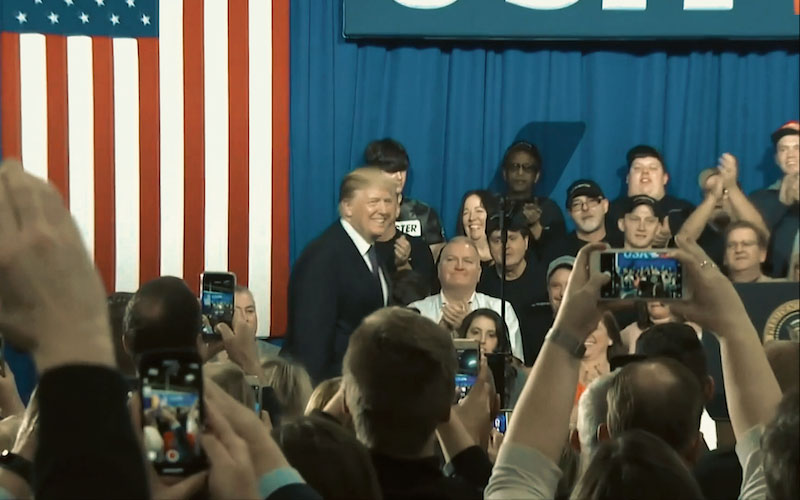
While inflation data and monetary policy are the focus of the market, a major event is also unfolding on the geopolitical stage. President Trump, accompanied by a large team including Nvidia's Jensen Huang and Elon Musk, arrived in Beijing for a high-profile meeting with Chinese President Xi Jinping.
On the surface, the summit's main agenda focused on issues such as trade and market access. Trump was eager to maintain the fragile trade truce with the world's second-largest economy while boosting his public approval ratings, which had been spurred by the Iran war, by reaching some agreements with China. However, markets were also closely watching the potentially broader geopolitical impact of the meeting.
It's worth noting that gold's traditional safe-haven function doesn't seem to be fully realized in the current market environment. Typically, escalating geopolitical tensions trigger safe-haven flows into the gold market, pushing up prices. However, this time, the ongoing Iran war and the fragility of the US-Iran ceasefire agreement have largely been priced in by the market. More importantly, the inflationary consequences of this war are negatively impacting gold through monetary policy channels, making it difficult for safe-haven demand to offset the pressure from shifting interest rate expectations.
From another perspective, if the meeting between Trump and Xi Jinping sends a positive signal of stabilizing the global economy and trade relations, market risk appetite may further rebound, which would put additional pressure on gold. Conversely, if the talks encounter setbacks and geopolitical uncertainty rises, gold may be able to gain some breathing room.
The performance of the US bond market is also confirming market assessments of the inflation and interest rate outlook. The 10-year Treasury yield has climbed to its highest level since the middle of last year, briefly touching the key 4.5% mark. The rise in long-term bond yields reflects the market's pricing in long-term inflation risks and a higher interest rate environment, which directly weakens the relative attractiveness of gold as a non-interest-bearing asset.
In the foreign exchange market, the US dollar index strengthened due to better-than-expected inflation data, briefly hitting a two-week high. The traditional negative correlation between the US dollar and gold remains valid—when the dollar appreciates, dollar-denominated gold becomes more expensive for investors holding other currencies, which to some extent dampens demand. The inflation data driving the dollar higher constitutes another headwind for gold.
In stark contrast to gold's weak performance, the US stock market demonstrated remarkable resilience. The S&P 500 and Nasdaq indices not only refrained from falling after the inflation data release but both reached record closing highs. Technology stocks, particularly those focused on artificial intelligence, performed exceptionally well, with six of the "Big Seven" AI-related stocks rising between 1.4% and 3.9%.
This phenomenon of "inflation data exceeding expectations while the stock market hits new highs" may seem contradictory on the surface, but it actually reflects a logical choice in the market. If inflation remains high for a longer period and the Federal Reserve is forced to maintain restrictive monetary policy, then the assets that can truly withstand inflation and absorb the pressure of high interest rates through strong profit growth are precisely those high-quality stocks with pricing power and growth potential, especially technology giants.
As Carson Group's chief market strategist stated, "Tech stocks remain resilient despite persistently high inflation data." This market structure means that some funds that might have flowed into gold as a safe haven or inflation hedge are being absorbed by the stock market, particularly tech stocks. Competition for capital flows is becoming another challenge for gold.
At this juncture, the gold market is at a critical crossroads. In the short term, persistently high inflation, the fading of expectations for interest rate cuts, and even the emergence of the possibility of interest rate hikes, a stronger dollar, Indian tax increases suppressing demand, and the significant capital-absorbing effect of the stock market all combine to create powerful forces suppressing gold prices.
However, it's equally important to acknowledge that long-term supporting factors for gold remain. The outlook for the Iran war remains uncertain, and geopolitical risks have not been eliminated. Numerous uncertainties facing global economic growth, including trade frictions, energy supply disruptions, and supply chain restructuring, could reignite safe-haven demand at some point in the future. More importantly, if high inflation persists for an extended period while economic growth begins to slow, the market will have to confront the risk of stagflation—in which case gold often demonstrates its unique asset allocation value.
In the coming days, market focus will be on the outcome of the Trump-Xi Jinping meeting, changes in more inflation-related data, and further statements from Federal Reserve officials. For gold investors, it may be necessary to prepare for two scenarios simultaneously: recognizing the pressure from a short-term shift in monetary policy, while maintaining confidence in gold's long-term safe-haven and inflation-hedging properties. In this era of uncertainty, the story of gold is far from over, but the road ahead is destined to be bumpy.
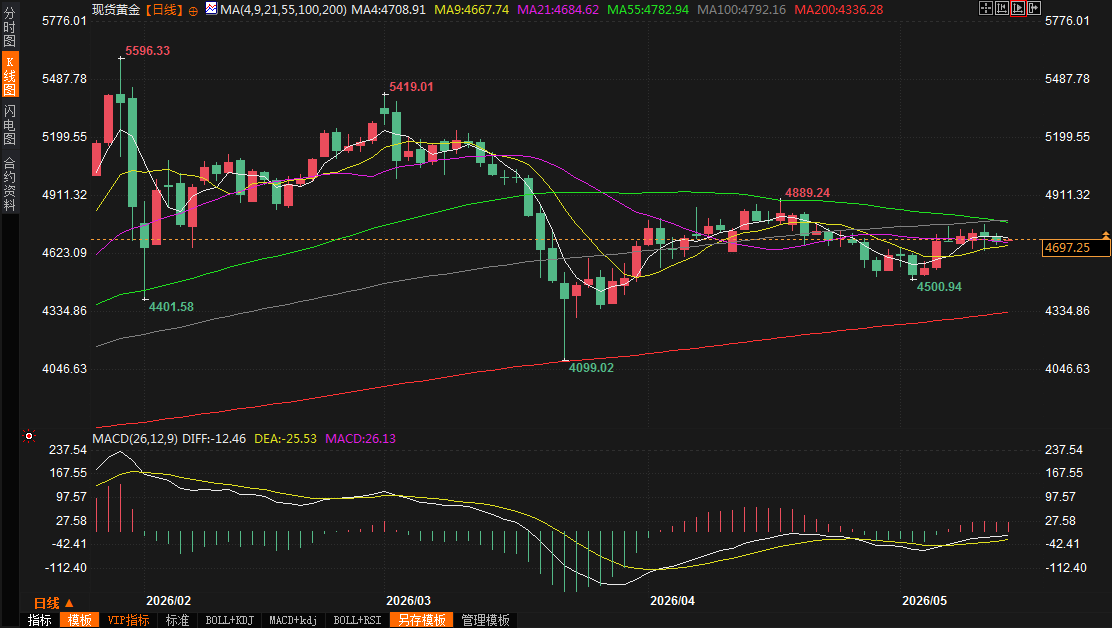
(Spot gold daily chart, source: FX678)
At 07:30 Beijing time, spot gold was trading at $4697.37 per ounce.
https://upload.fx678img.com/upload/ht/20240807/2024080711514519.jpg
Inflation remains stubbornly high, and expectations for interest rate cuts have completely cooled.
The immediate driver behind the recent decline in gold prices was a series of alarming inflation data. The latest data released by the U.S. Department of Labor showed that the Producer Price Index (PPI) in April saw its largest increase since the beginning of 2022, far exceeding economists' general expectations. Just the day before, the Consumer Price Index (CPI) also delivered a scorching report, with the annual inflation rate hitting its highest level in nearly three years.
These figures are alarming enough in themselves, but more critically, they are situated in a unique context—the energy supply disruptions caused by the Iran-Iraq War are continuously driving up fuel costs and beginning to spread to other sectors of the economy. As Peter Grant, Vice President and Senior Metals Strategist at Zaner Metals, stated, the stubbornness of inflation is forcing the market to reassess the Federal Reserve's monetary policy path, and expectations of "keeping interest rates high for an extended period" are being repeatedly reinforced.
This constitutes a double blow for gold. While gold is textbooks defined as an inflation hedge, the reality is more complex—when interest rates rise, holding this non-interest-bearing metal means forgoing the returns offered by other assets. In other words, a high-interest-rate environment significantly increases the opportunity cost of holding gold. With market expectations for a Fed rate cut this year largely dashed, and even starting to factor in the possibility of a rate hike next year, gold naturally faces continued downward pressure.
Has the Federal Reserve suddenly changed its stance, and is raising interest rates no longer a "boy who cried wolf" scenario?
Based on current market pricing, traders have largely ruled out the possibility of a Federal Reserve rate cut this year. More notably, according to CME Group's FedWatch data, market expectations for a rate hike of at least 25 basis points at the Fed's December meeting have climbed to 35%, compared to just 16.3% a week ago.
Public statements by Federal Reserve officials also support this shift in expectations. Boston Fed President Collins explicitly stated that if inflationary pressures persist, the Fed may need to consider raising interest rates. Minneapolis Fed President Kashkari also pointed out that the labor market has improved since earlier this year, and the war in Iran has further exacerbated already high inflation, all of which support his decision to retain policy space for raising interest rates.
Meanwhile, the U.S. Senate just approved Warsh as the new chairman of the Federal Reserve. The 56-year-old lawyer and financier will take the helm at a sensitive time of escalating inflationary pressures, and the market is closely watching his policy stance. Given the current economic data environment, analysts believe that Warsh is highly unlikely to advocate for interest rate cuts in the short term. As Ryan Swift, chief U.S. Treasury strategist at BCA Research, said, "It's really difficult to build an economic basis for advocating for rate cuts."
India's tariff increases are impacting demand, and the physical support for gold is faltering.
In addition to pressures from macroeconomic monetary policy, the gold market is also facing negative news from the demand side. India, the world's second-largest consumer of precious metals, suddenly announced a significant increase in import tariffs on gold and silver from 6% to 15%. The purpose of this move is very clear—to curb overseas purchases of precious metals and alleviate pressure on the country's foreign exchange reserves.
The impact of India's tariff increase on the gold market should not be underestimated. India has long been a major pillar of global gold demand, especially during wedding season and traditional holidays, when physical gold purchases often provide strong support for gold prices. The significant increase in import tariffs will inevitably curb India's gold imports, thereby weakening global physical demand. As analyst Peter Grant pointed out, this news has raised concerns about demand and could pose a long-term headwind.
With gold prices already under pressure due to shifting expectations of monetary policy changes, the news of India's tax increase is undoubtedly adding insult to injury. The demand-side narrative is shifting from "strong recovery" to "policy suppression," depriving gold bulls of another important support.
With the Trump-Xi meeting underway, can geopolitics save gold?
While inflation data and monetary policy are the focus of the market, a major event is also unfolding on the geopolitical stage. President Trump, accompanied by a large team including Nvidia's Jensen Huang and Elon Musk, arrived in Beijing for a high-profile meeting with Chinese President Xi Jinping.
On the surface, the summit's main agenda focused on issues such as trade and market access. Trump was eager to maintain the fragile trade truce with the world's second-largest economy while boosting his public approval ratings, which had been spurred by the Iran war, by reaching some agreements with China. However, markets were also closely watching the potentially broader geopolitical impact of the meeting.
It's worth noting that gold's traditional safe-haven function doesn't seem to be fully realized in the current market environment. Typically, escalating geopolitical tensions trigger safe-haven flows into the gold market, pushing up prices. However, this time, the ongoing Iran war and the fragility of the US-Iran ceasefire agreement have largely been priced in by the market. More importantly, the inflationary consequences of this war are negatively impacting gold through monetary policy channels, making it difficult for safe-haven demand to offset the pressure from shifting interest rate expectations.
From another perspective, if the meeting between Trump and Xi Jinping sends a positive signal of stabilizing the global economy and trade relations, market risk appetite may further rebound, which would put additional pressure on gold. Conversely, if the talks encounter setbacks and geopolitical uncertainty rises, gold may be able to gain some breathing room.
Signals from the bond and currency markets: A stronger dollar exacerbates pressure on gold.
The performance of the US bond market is also confirming market assessments of the inflation and interest rate outlook. The 10-year Treasury yield has climbed to its highest level since the middle of last year, briefly touching the key 4.5% mark. The rise in long-term bond yields reflects the market's pricing in long-term inflation risks and a higher interest rate environment, which directly weakens the relative attractiveness of gold as a non-interest-bearing asset.
In the foreign exchange market, the US dollar index strengthened due to better-than-expected inflation data, briefly hitting a two-week high. The traditional negative correlation between the US dollar and gold remains valid—when the dollar appreciates, dollar-denominated gold becomes more expensive for investors holding other currencies, which to some extent dampens demand. The inflation data driving the dollar higher constitutes another headwind for gold.
The "draining effect" of strong US stocks: Are funds abandoning gold and investing in stocks?
In stark contrast to gold's weak performance, the US stock market demonstrated remarkable resilience. The S&P 500 and Nasdaq indices not only refrained from falling after the inflation data release but both reached record closing highs. Technology stocks, particularly those focused on artificial intelligence, performed exceptionally well, with six of the "Big Seven" AI-related stocks rising between 1.4% and 3.9%.
This phenomenon of "inflation data exceeding expectations while the stock market hits new highs" may seem contradictory on the surface, but it actually reflects a logical choice in the market. If inflation remains high for a longer period and the Federal Reserve is forced to maintain restrictive monetary policy, then the assets that can truly withstand inflation and absorb the pressure of high interest rates through strong profit growth are precisely those high-quality stocks with pricing power and growth potential, especially technology giants.
As Carson Group's chief market strategist stated, "Tech stocks remain resilient despite persistently high inflation data." This market structure means that some funds that might have flowed into gold as a safe haven or inflation hedge are being absorbed by the stock market, particularly tech stocks. Competition for capital flows is becoming another challenge for gold.
Market Outlook: A Tug-of-War Between Short-Term Pressure and Long-Term Support
At this juncture, the gold market is at a critical crossroads. In the short term, persistently high inflation, the fading of expectations for interest rate cuts, and even the emergence of the possibility of interest rate hikes, a stronger dollar, Indian tax increases suppressing demand, and the significant capital-absorbing effect of the stock market all combine to create powerful forces suppressing gold prices.
However, it's equally important to acknowledge that long-term supporting factors for gold remain. The outlook for the Iran war remains uncertain, and geopolitical risks have not been eliminated. Numerous uncertainties facing global economic growth, including trade frictions, energy supply disruptions, and supply chain restructuring, could reignite safe-haven demand at some point in the future. More importantly, if high inflation persists for an extended period while economic growth begins to slow, the market will have to confront the risk of stagflation—in which case gold often demonstrates its unique asset allocation value.
In the coming days, market focus will be on the outcome of the Trump-Xi Jinping meeting, changes in more inflation-related data, and further statements from Federal Reserve officials. For gold investors, it may be necessary to prepare for two scenarios simultaneously: recognizing the pressure from a short-term shift in monetary policy, while maintaining confidence in gold's long-term safe-haven and inflation-hedging properties. In this era of uncertainty, the story of gold is far from over, but the road ahead is destined to be bumpy.
(Spot gold daily chart, source: FX678)
At 07:30 Beijing time, spot gold was trading at $4697.37 per ounce.
- Risk Warning and Disclaimer
- The market involves risk, and trading may not be suitable for all investors. This article is for reference only and does not constitute personal investment advice, nor does it take into account certain users’ specific investment objectives, financial situation, or other needs. Any investment decisions made based on this information are at your own risk.