The rebound in the US dollar index has driven the dollar to rise against the yen.
2026-05-14 11:18:54
The USD/JPY pair traded in a narrow range during Thursday's Asian trading session, hovering around 157.85. Market sentiment was cautious as investors awaited the outcome of the important meeting between US President Trump and Asian leaders in Beijing, while also focusing on the later release of US April retail sales data to determine the dollar's next direction.

US inflation data continues to exceed expectations, becoming a key reason for the sustained strength of the US dollar. Data released by the US Bureau of Labor Statistics shows that the US Producer Price Index (PPI) rose 6.0% year-on-year in April, higher than the previous value of 4.3% and significantly exceeding market expectations of 4.9%. On a monthly basis, the US PPI rose 1.4% in April, far exceeding market expectations of 0.5% and also higher than March's 0.7%. This is the strongest performance in US wholesale inflation since the end of 2022.
The market generally believes that the escalating tensions in the Middle East, driving up energy prices, is a significant reason for the resurgence of inflation in the United States. Against this backdrop, investors are beginning to readjust their expectations regarding the Federal Reserve's policy path. Typically, when US inflation remains high, the Fed may need to maintain high interest rates for an extended period to control price pressures. Higher interest rates will push up US Treasury yields, thereby enhancing the attractiveness of dollar-denominated assets and driving up the dollar's value.
For the Japanese yen, the widening interest rate differential between the US and Japan remains a significant factor contributing to its weakening. The Bank of Japan is currently maintaining a relatively loose monetary policy, while US interest rates remain high, causing a large amount of capital to continue flowing into dollar assets.
However, despite the overall strength of the US dollar, the upside potential of USD/JPY remains limited by expectations of intervention from Japanese authorities. Japanese Finance Minister Satsuki Katayama previously stated that Japan and the United States are maintaining close communication regarding recent exchange rate fluctuations, emphasizing that the two sides are coordinating well.
There is widespread concern in the market that if the USD/JPY exchange rate rapidly approaches the 160 level again, the Japanese government may re-intervene in the foreign exchange market. This expectation has limited some speculative funds from continuing to chase higher USD/JPY levels.
From the USD/JPY daily chart, the exchange rate maintains a clear upward trend overall. The price continues to trade above the 20-day and 50-day moving averages, indicating a strong medium- to long-term bullish structure. The 157.50 to 158.00 area has now become a key short-term trading range. The daily MACD indicator remains above the zero line, but the red bars are gradually shortening, indicating a weakening of upward momentum. The RSI indicator remains around 65, showing that the market is still relatively strong, but it is approaching the overbought zone. If it breaks through 158.50 effectively, it may further test the 159.20 or even the psychological level of 160.
Observing the 4-hour chart, USD/JPY has recently entered a high-level consolidation phase. Short-term moving averages are gradually flattening, indicating increased divergence between bulls and bears in the short term. The MACD indicator shows signs of a bearish crossover at a high level, suggesting some technical downward pressure on the exchange rate. However, the RSI indicator remains above 50, indicating that the overall structure has not yet turned bearish. If the exchange rate breaks below 157.20, it may further retrace to around 156.50; if it regains a foothold above 158.00, the market may retest the 159 level.
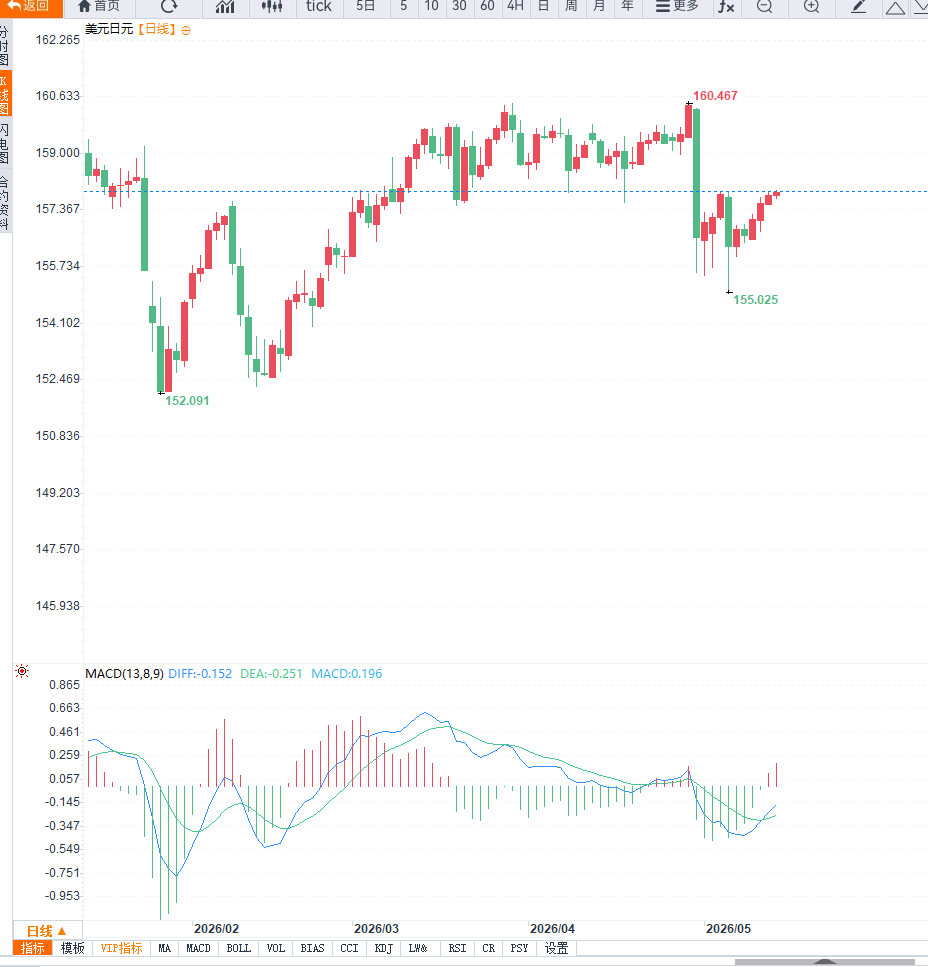
Overall, USD/JPY is currently supported by expectations of high US interest rates, but the risk of potential intervention by the Japanese government is limiting further upside potential. Going forward, market focus will be on US economic data, US Treasury yield trends, and subsequent policy statements from the Japanese authorities.
Editor's Summary : The current USD/JPY exchange rate is primarily influenced by both high US inflation and expectations of Japanese intervention. Better-than-expected US PPI data has further reinforced the market's view that the Federal Reserve will maintain high interest rates in the long term, thus supporting the dollar's strength. However, as USD/JPY continues to approach the key psychological level of 160, the Japanese government's vigilance regarding exchange rate fluctuations has clearly increased, and market concerns about further intervention by the Japanese authorities are rising. Going forward, the market will need to focus on US retail sales data, changes in US Treasury yields, and the latest statements from the Japanese government regarding the exchange rate.
US inflation data continues to exceed expectations, becoming a key reason for the sustained strength of the US dollar. Data released by the US Bureau of Labor Statistics shows that the US Producer Price Index (PPI) rose 6.0% year-on-year in April, higher than the previous value of 4.3% and significantly exceeding market expectations of 4.9%. On a monthly basis, the US PPI rose 1.4% in April, far exceeding market expectations of 0.5% and also higher than March's 0.7%. This is the strongest performance in US wholesale inflation since the end of 2022.
The market generally believes that the escalating tensions in the Middle East, driving up energy prices, is a significant reason for the resurgence of inflation in the United States. Against this backdrop, investors are beginning to readjust their expectations regarding the Federal Reserve's policy path. Typically, when US inflation remains high, the Fed may need to maintain high interest rates for an extended period to control price pressures. Higher interest rates will push up US Treasury yields, thereby enhancing the attractiveness of dollar-denominated assets and driving up the dollar's value.
For the Japanese yen, the widening interest rate differential between the US and Japan remains a significant factor contributing to its weakening. The Bank of Japan is currently maintaining a relatively loose monetary policy, while US interest rates remain high, causing a large amount of capital to continue flowing into dollar assets.
However, despite the overall strength of the US dollar, the upside potential of USD/JPY remains limited by expectations of intervention from Japanese authorities. Japanese Finance Minister Satsuki Katayama previously stated that Japan and the United States are maintaining close communication regarding recent exchange rate fluctuations, emphasizing that the two sides are coordinating well.
There is widespread concern in the market that if the USD/JPY exchange rate rapidly approaches the 160 level again, the Japanese government may re-intervene in the foreign exchange market. This expectation has limited some speculative funds from continuing to chase higher USD/JPY levels.
From the USD/JPY daily chart, the exchange rate maintains a clear upward trend overall. The price continues to trade above the 20-day and 50-day moving averages, indicating a strong medium- to long-term bullish structure. The 157.50 to 158.00 area has now become a key short-term trading range. The daily MACD indicator remains above the zero line, but the red bars are gradually shortening, indicating a weakening of upward momentum. The RSI indicator remains around 65, showing that the market is still relatively strong, but it is approaching the overbought zone. If it breaks through 158.50 effectively, it may further test the 159.20 or even the psychological level of 160.
Observing the 4-hour chart, USD/JPY has recently entered a high-level consolidation phase. Short-term moving averages are gradually flattening, indicating increased divergence between bulls and bears in the short term. The MACD indicator shows signs of a bearish crossover at a high level, suggesting some technical downward pressure on the exchange rate. However, the RSI indicator remains above 50, indicating that the overall structure has not yet turned bearish. If the exchange rate breaks below 157.20, it may further retrace to around 156.50; if it regains a foothold above 158.00, the market may retest the 159 level.
Overall, USD/JPY is currently supported by expectations of high US interest rates, but the risk of potential intervention by the Japanese government is limiting further upside potential. Going forward, market focus will be on US economic data, US Treasury yield trends, and subsequent policy statements from the Japanese authorities.
Editor's Summary : The current USD/JPY exchange rate is primarily influenced by both high US inflation and expectations of Japanese intervention. Better-than-expected US PPI data has further reinforced the market's view that the Federal Reserve will maintain high interest rates in the long term, thus supporting the dollar's strength. However, as USD/JPY continues to approach the key psychological level of 160, the Japanese government's vigilance regarding exchange rate fluctuations has clearly increased, and market concerns about further intervention by the Japanese authorities are rising. Going forward, the market will need to focus on US retail sales data, changes in US Treasury yields, and the latest statements from the Japanese government regarding the exchange rate.
- Risk Warning and Disclaimer
- The market involves risk, and trading may not be suitable for all investors. This article is for reference only and does not constitute personal investment advice, nor does it take into account certain users’ specific investment objectives, financial situation, or other needs. Any investment decisions made based on this information are at your own risk.