The pound sterling plunged 20 points! Starmer suffered a "backstab"—how long can its 1.3500 defense hold?
2026-05-14 20:19:17
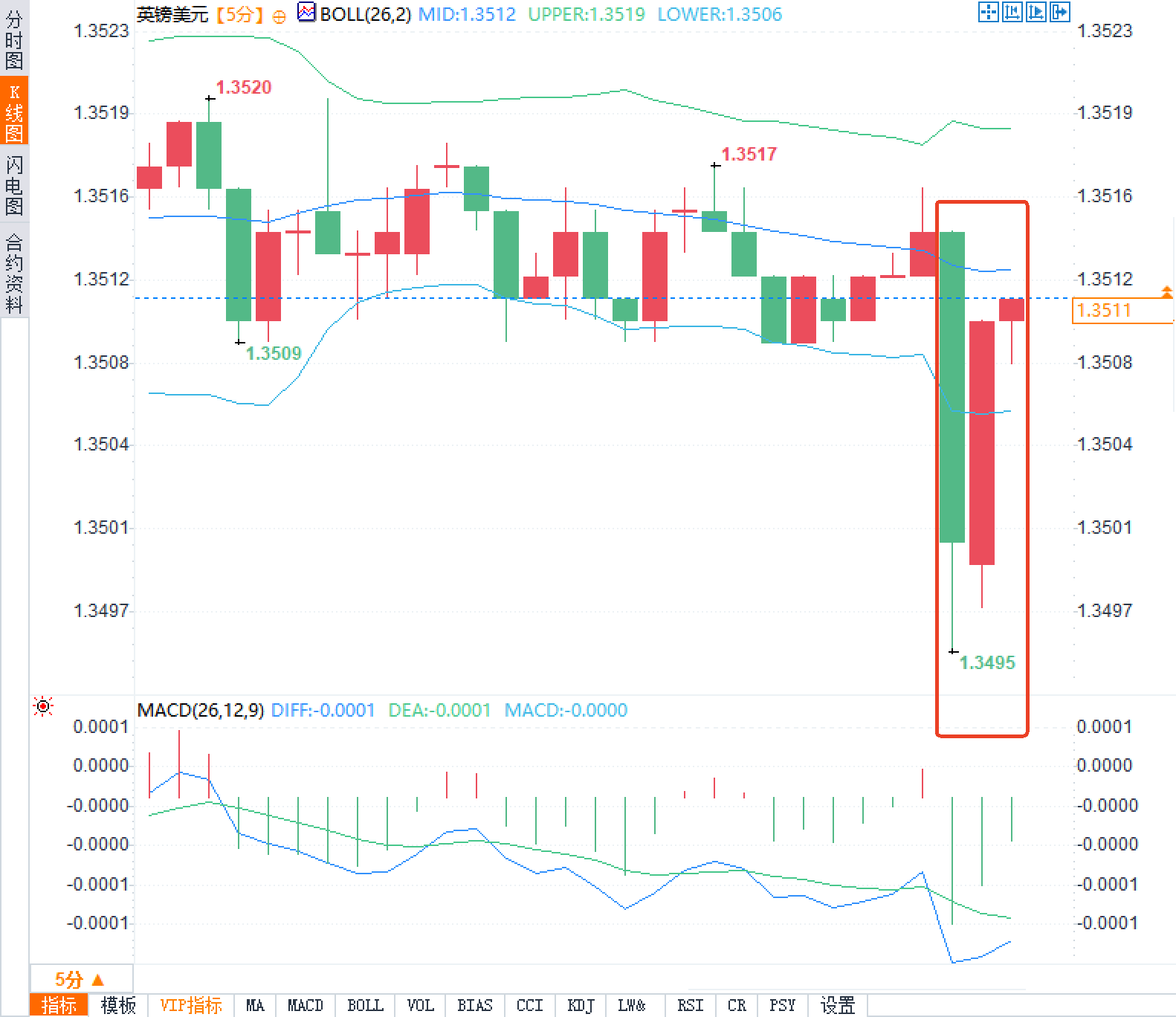
On Thursday, May 14th, in pre-market trading, the pound fell approximately 20 points against the dollar before hovering around 1.3500. The formal resignation of Health Secretary Wes Streatine and his public statement expressing a loss of confidence in Prime Minister Keir Starmer's leadership directly amplified the leadership crisis within the Labour Party. Coupled with the earlier setbacks in local elections, political uncertainty pushed up UK government bond yields, and market concerns about the continuity of fiscal policy and the economic growth outlook rapidly intensified.
In her resignation letter, Streatine explicitly stated that Starmer was incapable of leading the Labour Party to victory in the next general election and called for a leadership debate. This move was not an isolated incident, but rather a concentrated release of discontent within the party following the local elections. Former Deputy Prime Minister Angela Reyner, despite being cleared of allegations by the tax authorities, also publicly demanded that Starmer "rethink" his stance. Financial markets are always quick to react to such high-level personnel upheavals: the pound fell rapidly against the dollar after the news broke, as traders focused on the policy uncertainty that a potential leadership change might bring.
The yield on 10-year UK government bonds recently rose to the 5.05%-5.11% range, a significant increase from last week. Investors are concerned that if a left-wing candidate, who favors tax increases and expanded spending, comes to power, the risk of an expanding fiscal deficit will further push up borrowing costs. Amanda Blank, CEO of Aviva, recently stated that frequent changes in government strategy and leadership over the past six years have damaged the UK's international image as a major economy. This lack of continuity directly translates into a higher market risk premium.
As a high-beta currency, the British pound is susceptible to selling pressure when risk appetite declines. The current exchange rate level has moved away from previous highs, reflecting that traders are pricing in a potentially longer period of policy vacuum.
Despite significant political noise, the UK economy has shown considerable resilience. In February 2026, UK GDP grew by 0.5% month-on-month, exceeding market expectations, with contributions from the services, manufacturing, and construction sectors. Three-month rolling data also recorded 0.5% growth. Full-year economic growth for 2025 is estimated at around 1.3%, and most forecasting agencies predict growth in the 0.7%-1.4% range for 2026, depending on the external environment and the recovery of domestic demand.
The Bank of England is currently maintaining its policy rate at 3.75%. Inflation is hovering around 3%, above the 2% target, but base effects and energy price trends offer room for further declines. Chancellor Rachel Reeves has emphasized that avoiding political turmoil is crucial for public service investment and economic growth. However, leadership uncertainty has begun to disrupt business confidence and investment decisions.
The following is a comparison of recent key economic and market data:
Data shows that while the real economy is showing signs of recovery, financial conditions have tightened due to political factors, which has led to higher mortgage and corporate financing costs.
Potential candidates within the Labour Party currently include some left-wing representatives and other MPs. Polls indicate that left-wing candidates have a higher probability of winning if a leadership contest is triggered. Traders are primarily focused on the direction of subsequent fiscal and tax policies: more aggressive spending plans could push up the debt trajectory, thereby supporting a steeper yield curve, while a more moderate approach could alleviate some of the pressure.
Historical experience shows that changes in British prime ministers are often accompanied by periods of fluctuation in the pound sterling, especially against the backdrop of global uncertainty. Current external factors, including geopolitical tensions and policy divergences among major economies, further amplify the pound's sensitivity. Businesses are already beginning to feel the real impact of this lack of policy continuity, leading to more cautious long-term investment decisions.
The pound's valuation against the dollar has already factored in some of the risk, but if the crisis continues to escalate or further high-level changes occur, the exchange rate may test lower support levels. Conversely, if the leadership issues are resolved quickly, market risk appetite is expected to recover somewhat.
The rapid escalation of the political crisis has had a direct impact on the pound sterling.
In her resignation letter, Streatine explicitly stated that Starmer was incapable of leading the Labour Party to victory in the next general election and called for a leadership debate. This move was not an isolated incident, but rather a concentrated release of discontent within the party following the local elections. Former Deputy Prime Minister Angela Reyner, despite being cleared of allegations by the tax authorities, also publicly demanded that Starmer "rethink" his stance. Financial markets are always quick to react to such high-level personnel upheavals: the pound fell rapidly against the dollar after the news broke, as traders focused on the policy uncertainty that a potential leadership change might bring.
The yield on 10-year UK government bonds recently rose to the 5.05%-5.11% range, a significant increase from last week. Investors are concerned that if a left-wing candidate, who favors tax increases and expanded spending, comes to power, the risk of an expanding fiscal deficit will further push up borrowing costs. Amanda Blank, CEO of Aviva, recently stated that frequent changes in government strategy and leadership over the past six years have damaged the UK's international image as a major economy. This lack of continuity directly translates into a higher market risk premium.
As a high-beta currency, the British pound is susceptible to selling pressure when risk appetite declines. The current exchange rate level has moved away from previous highs, reflecting that traders are pricing in a potentially longer period of policy vacuum.
UK economic fundamentals and monetary policy transmission
Despite significant political noise, the UK economy has shown considerable resilience. In February 2026, UK GDP grew by 0.5% month-on-month, exceeding market expectations, with contributions from the services, manufacturing, and construction sectors. Three-month rolling data also recorded 0.5% growth. Full-year economic growth for 2025 is estimated at around 1.3%, and most forecasting agencies predict growth in the 0.7%-1.4% range for 2026, depending on the external environment and the recovery of domestic demand.
The Bank of England is currently maintaining its policy rate at 3.75%. Inflation is hovering around 3%, above the 2% target, but base effects and energy price trends offer room for further declines. Chancellor Rachel Reeves has emphasized that avoiding political turmoil is crucial for public service investment and economic growth. However, leadership uncertainty has begun to disrupt business confidence and investment decisions.
The following is a comparison of recent key economic and market data:
| index | Latest data | Preliminary reference | change |
|---|---|---|---|
| GBP to USD | Approximately 1.3510 | Recent high of 1.36+ | Downward pressure |
| UK GDP growth in February | +0.5% | +0.1% | Exceeding expectations |
| 10-year Treasury yield | 5.05%-5.11% | About 4.95% last week | Significant increase |
| Policy interest rate | 3.75% | maintain | Stablize |
Market Impact of Potential Leadership Change Scenario
Potential candidates within the Labour Party currently include some left-wing representatives and other MPs. Polls indicate that left-wing candidates have a higher probability of winning if a leadership contest is triggered. Traders are primarily focused on the direction of subsequent fiscal and tax policies: more aggressive spending plans could push up the debt trajectory, thereby supporting a steeper yield curve, while a more moderate approach could alleviate some of the pressure.
Historical experience shows that changes in British prime ministers are often accompanied by periods of fluctuation in the pound sterling, especially against the backdrop of global uncertainty. Current external factors, including geopolitical tensions and policy divergences among major economies, further amplify the pound's sensitivity. Businesses are already beginning to feel the real impact of this lack of policy continuity, leading to more cautious long-term investment decisions.
The pound's valuation against the dollar has already factored in some of the risk, but if the crisis continues to escalate or further high-level changes occur, the exchange rate may test lower support levels. Conversely, if the leadership issues are resolved quickly, market risk appetite is expected to recover somewhat.
Frequently Asked Questions
Question 1: What is the core logic behind the short- and medium-term impact of Streettin's resignation on the British pound against the US dollar?
A: In the short term, the event directly increased the political risk premium, causing the pound to fall by about 20 points. Traders are concerned that the leadership vacuum may delay decision-making and push up borrowing costs. In the medium term, if the new leaders adopt a more expansionary fiscal policy, it may further suppress the pound's performance; conversely, if policy continuity is maintained, volatility may gradually subside. The core issue lies in the market's repricing of fiscal discipline and economic growth expectations.
Question 2: Is the UK's economic fundamentals sufficient to support the pound, or is it dominated by political factors?
A: The fundamentals present mixed signals: February GDP growth of 0.5% month-on-month shows resilience, and gradually declining inflation provides the Bank of England with some flexibility. However, political uncertainty is disrupting the transmission of confidence, and rising business investment and borrowing costs have become a drag. Exchange rate movements are currently driven more by risk sentiment than by fundamental data alone.
- Risk Warning and Disclaimer
- The market involves risk, and trading may not be suitable for all investors. This article is for reference only and does not constitute personal investment advice, nor does it take into account certain users’ specific investment objectives, financial situation, or other needs. Any investment decisions made based on this information are at your own risk.