$9.14 trillion in short-term debt looms large! Is this a "fatal trap" behind the inverted US debt curve?
2026-05-14 21:59:59
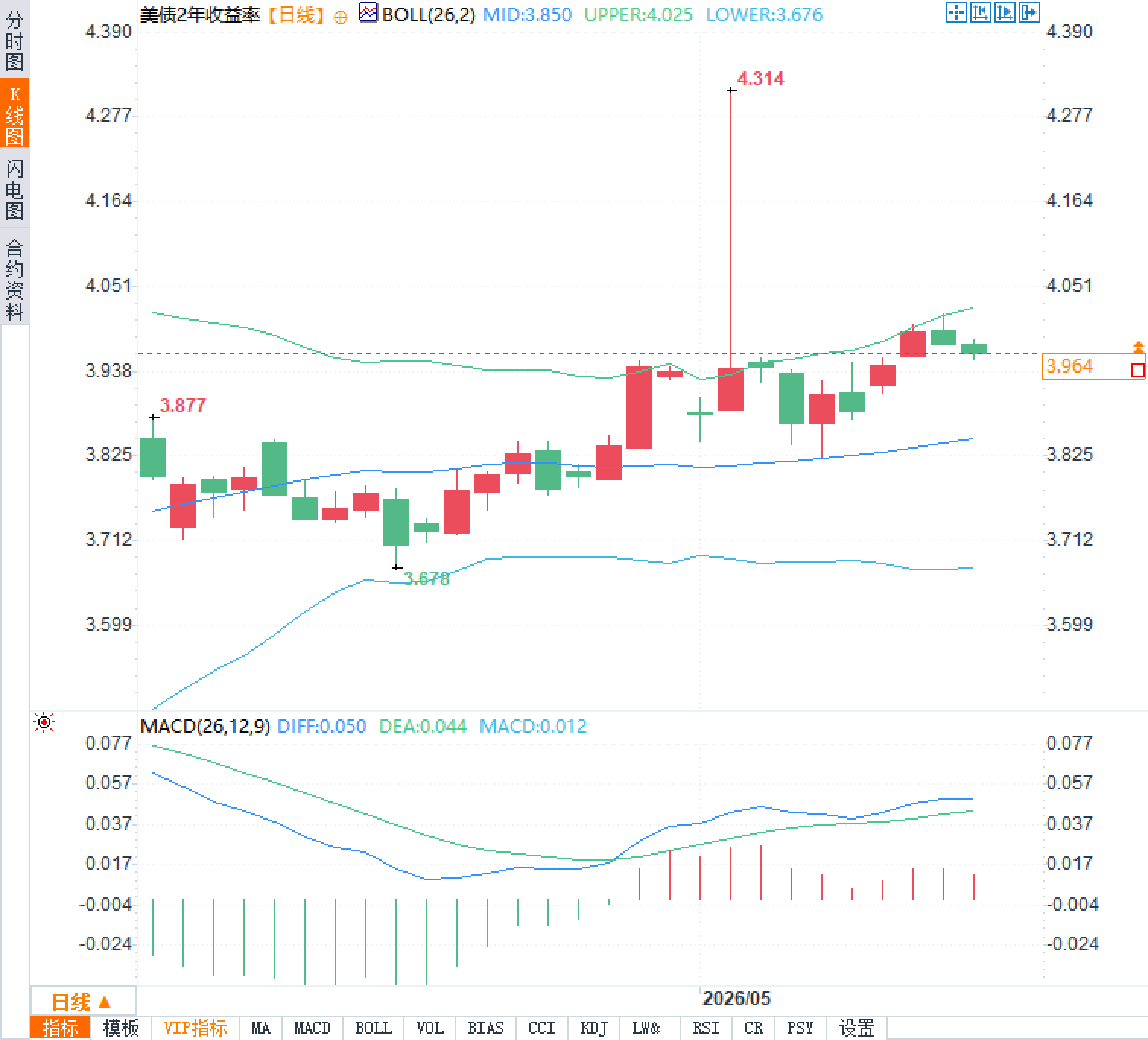
On May 14, long-term yields in the US Treasury market continued to be closely watched, with the 30-year Treasury yield breaking through 5% and approaching a 20-year high. At the same time, front-end yields also rose significantly, driven by energy shocks triggered by geopolitical factors pushing up inflation expectations and further delaying the prospect of a Federal Reserve rate cut. The 2-year Treasury yield, closely tracked by traders, has risen by approximately 50 basis points this year, far exceeding the 20-basis-point increase in the 30-year yield. This rapid rise in front-end financing costs is directly challenging the US Treasury's strategy of massively rolling over short-term debt.
Over the past decade, U.S. short-term debt issuance has more than tripled, now exceeding 100% of GDP. In the first four months of this year, Treasury bill issuance reached $9.14 trillion, accounting for 85% of total borrowing, the highest level since the global financial crisis. This strategy seems reasonable in a normally upward-sloping yield curve environment, as short-term interest rates are typically lower than long-term rates, reducing immediate financing costs.
However, when the Federal Reserve's policy leans towards maintaining or potentially raising interest rates, and the yield curve flattens, over-reliance on front-end issuance can significantly amplify refinancing risks. Traders should note that a high proportion of short-term debt means that any changes in inflation or policy expectations will quickly translate into overall interest payments. Currently, the average interest rate on tradable federal debt reached approximately 3.5% at the end of last year, a significant increase from levels five years ago, and is still on an upward trend.
The following is a brief comparison of recent yield changes (data as of mid-May 2026):
This asymmetric upward trend highlights the higher sensitivity of the front end, putting pressure on the fiscal structure that relies on rolling financing.
Recent volatility in the energy market has significantly increased inflation expectations, weakening market bets on substantial easing by the Federal Reserve this year. The Fed's meeting at the end of April maintained the target range for the federal funds rate at 3.5%-3.75%, with a highly divided vote indicating policymakers' strong concern about inflation risks. Current trading pricing suggests a significantly reduced probability of a rate cut in 2026, with some expectations even shifting to flat rates or potential tightening.
Against this backdrop, rising front-end yields not only reflect monetary policy expectations but also amplify the Treasury's borrowing costs. Economists point out that persistently high short-term interest rates could create a vicious cycle: higher debt servicing costs push up deficits, which could intensify inflationary pressures and further limit policy flexibility.
Last year, interest payments in the United States accounted for nearly half of disposable spending, and nonpartisan budget agencies predict that net interest payments will exceed $1 trillion in fiscal year 2026, surpassing the defense budget. If this trend continues, it will significantly compress fiscal policy space. Unless spending is cut or taxes are increased (a low probability under the current political climate), the government will need to continuously borrow to repay old debts, and costs will continue to rise.
In the long run, the debt-to-GDP ratio is already high, and the combination of persistent large-scale deficits and a high-interest-rate environment may lead to unsustainable debt dynamics. The nearly $8 trillion size of money market funds ensures strong demand for short-term Treasury bonds, and the Federal Reserve also purchases approximately $40 billion in Treasury bills monthly through liquidity management, but this has not eliminated the drag on the overall budget from rising financing costs.
Structural risks from the surge in short-term debt issuance
Over the past decade, U.S. short-term debt issuance has more than tripled, now exceeding 100% of GDP. In the first four months of this year, Treasury bill issuance reached $9.14 trillion, accounting for 85% of total borrowing, the highest level since the global financial crisis. This strategy seems reasonable in a normally upward-sloping yield curve environment, as short-term interest rates are typically lower than long-term rates, reducing immediate financing costs.
However, when the Federal Reserve's policy leans towards maintaining or potentially raising interest rates, and the yield curve flattens, over-reliance on front-end issuance can significantly amplify refinancing risks. Traders should note that a high proportion of short-term debt means that any changes in inflation or policy expectations will quickly translate into overall interest payments. Currently, the average interest rate on tradable federal debt reached approximately 3.5% at the end of last year, a significant increase from levels five years ago, and is still on an upward trend.
The following is a brief comparison of recent yield changes (data as of mid-May 2026):
| the term | Year-to-date growth (basis points) | Current yield level (approximately) |
|---|---|---|
| 2-year term | +50 | 3.9%-4.0% |
| 30-year term | +20 | 5.0% or more |
Energy shock, rising inflation and the Fed's policy path
Recent volatility in the energy market has significantly increased inflation expectations, weakening market bets on substantial easing by the Federal Reserve this year. The Fed's meeting at the end of April maintained the target range for the federal funds rate at 3.5%-3.75%, with a highly divided vote indicating policymakers' strong concern about inflation risks. Current trading pricing suggests a significantly reduced probability of a rate cut in 2026, with some expectations even shifting to flat rates or potential tightening.
Against this backdrop, rising front-end yields not only reflect monetary policy expectations but also amplify the Treasury's borrowing costs. Economists point out that persistently high short-term interest rates could create a vicious cycle: higher debt servicing costs push up deficits, which could intensify inflationary pressures and further limit policy flexibility.
The long-term squeeze on fiscal space caused by the expansion of interest expenses.
Last year, interest payments in the United States accounted for nearly half of disposable spending, and nonpartisan budget agencies predict that net interest payments will exceed $1 trillion in fiscal year 2026, surpassing the defense budget. If this trend continues, it will significantly compress fiscal policy space. Unless spending is cut or taxes are increased (a low probability under the current political climate), the government will need to continuously borrow to repay old debts, and costs will continue to rise.
In the long run, the debt-to-GDP ratio is already high, and the combination of persistent large-scale deficits and a high-interest-rate environment may lead to unsustainable debt dynamics. The nearly $8 trillion size of money market funds ensures strong demand for short-term Treasury bonds, and the Federal Reserve also purchases approximately $40 billion in Treasury bills monthly through liquidity management, but this has not eliminated the drag on the overall budget from rising financing costs.
Frequently Asked Questions
Question 1: Why is the proportion of short-term debt issuance in the United States so high, and what does this mean for traders?
A: The surge in short-term debt issuance was primarily driven by the desire to quickly finance and roll over maturing debt by taking advantage of previously low short-term interest rates. However, in the current environment, a sharp rise in front-end yields implies a rapid increase in refinancing costs, potentially pushing up overall interest expenses and impacting market pricing of fiscal sustainability. Traders need to pay attention to the correlation between front-end yields and Federal Reserve policy expectations, as this directly affects the shape and volatility of the US Treasury yield curve.
Question 2: How will the energy shock affect the front-end yield of US Treasury bonds and the Fed's path?
A: Rising energy prices directly pushed up inflation readings, delaying expectations of interest rate cuts and causing short-term interest rate pricing to shift upwards. Front-end yields are more sensitive to policy expectations, therefore their increase exceeded that of long-term yields. The Federal Reserve's current maintenance of the interest rate range indicates a priority on controlling inflation, which limits the Treasury's room to lower financing costs.
Question 3: What impact will interest payments exceeding $1 trillion have on long-term U.S. finances?
A: Huge interest payments will squeeze other budgetary areas, increasing deficit pressure and creating a potential feedback loop: higher debt leads to higher interest rates, further expanding the deficit. Traders should pay attention to the comparison between debt dynamics and economic growth. If interest rates remain higher than the growth rate for an extended period, the debt ratio will rise more rapidly, affecting overall market risk appetite.
- Risk Warning and Disclaimer
- The market involves risk, and trading may not be suitable for all investors. This article is for reference only and does not constitute personal investment advice, nor does it take into account certain users’ specific investment objectives, financial situation, or other needs. Any investment decisions made based on this information are at your own risk.