Is the 5.15% yield no longer effective? The British pound is trapped in a "high-interest trap"! Three major hidden dangers exposed.
2026-05-18 20:57:39
On Monday, May 18th, the pound sterling fell to 1.3302 against the dollar before recovering to around 1.338, a daily gain of about 0.4%, but the price remains not far above its lows since early April. On the surface, the pound has seen a technical recovery, but deeper issues remain unresolved: domestic political uncertainty in the UK, inflation repricing due to rising energy prices, and a rapid increase in government bond yields are all collectively compressing the risk premium for pound assets.
The Bank of England's website shows that the current interest rate is 3.75%, and the latest inflation rate is 3.3%, still above the 2% target. Meanwhile, the yield on 10-year UK government bonds was around 5.13% to 5.15% on May 18, and the yield on 2-year bonds was around 4.53%, indicating that the bond market has already priced in the higher term premium.
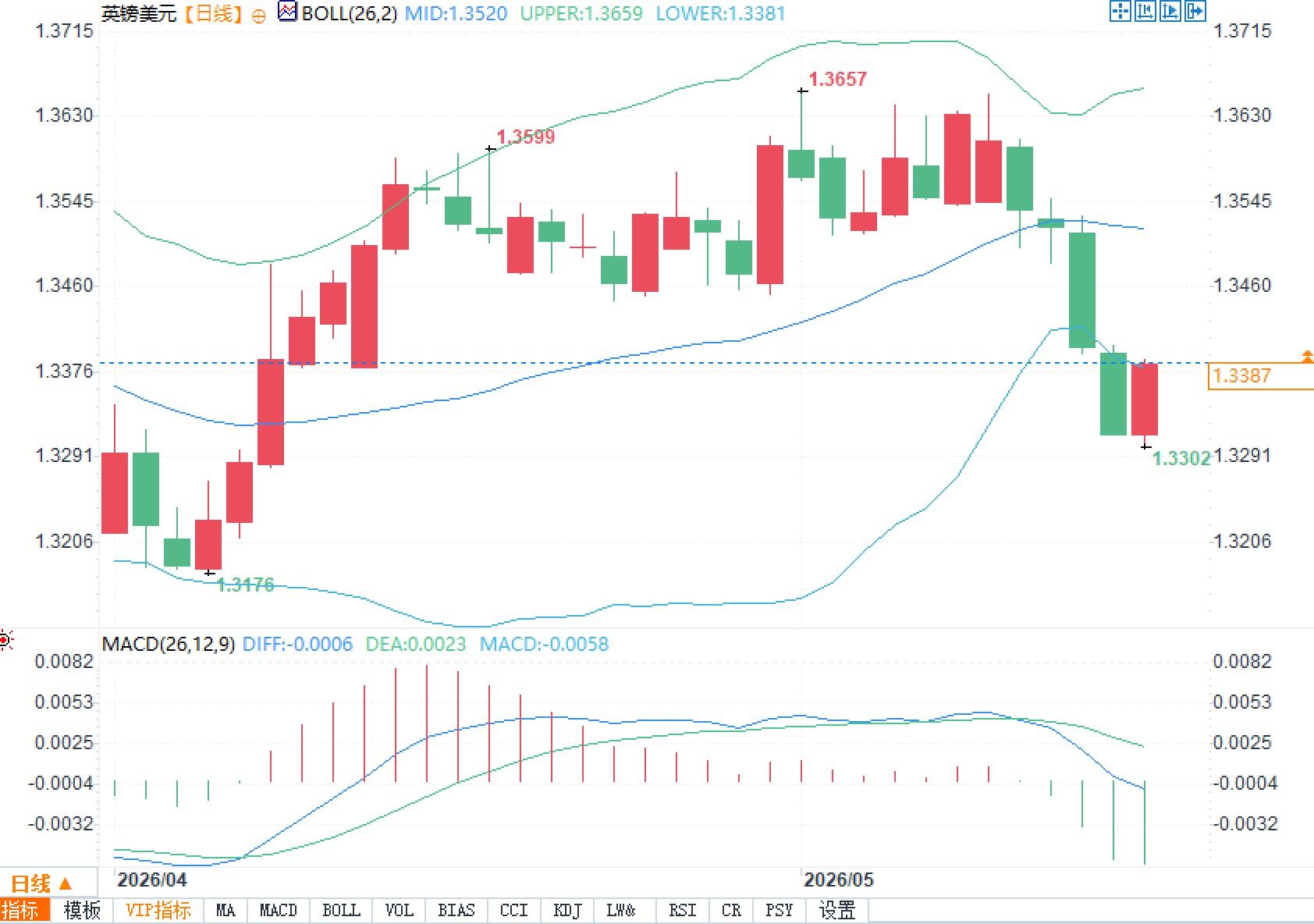
From a technical perspective, the recent decline in the British pound against the US dollar is not solely driven by the dollar. The daily chart shows that the exchange rate previously formed a high near 1.3657, then quickly broke below the Bollinger Middle Band. The latest price is near the lower Bollinger Band. The Bollinger Bands indicate the Middle Band is around 1.3520, the Upper Band around 1.3659, and the Lower Band around 1.3381. The low near 1.3302 suggests that the short-term rebound is merely a correction after breaking the consolidation zone, rather than a confirmation of the original upward structure. The MACD also points to a shift in momentum. The DIFF is approximately -0.0006, the DEA is approximately 0.0023, and the MACD is approximately -0.0058, with the histogram clearly weakening. This indicates that although the price has rebounded, the momentum structure has shifted from high-level consolidation to downward expansion.
Typically, rising yields on domestic government bonds increase their attractiveness to foreign investors, but the logic behind the current situation with the pound is more complex. The yield on 10-year UK government bonds has hit multi-year highs, and the 30-year yield also rose to near its highest level since 1998. This reflects not simply improved growth expectations, but a simultaneous reassessment by investors of fiscal expansion, inflation stickiness, and term risk compensation. In other words, rising yields do not necessarily equate to a stronger currency; when rising yields stem from an expansion of risk premiums, the exchange rate may actually come under pressure. This is precisely the core contradiction facing the pound. If higher yields come from economic resilience and central bank credibility, funds may be willing to absorb pound assets; if higher yields come from fiscal concerns, energy shocks, and political uncertainty, funds will demand higher compensation and may even reduce their exposure to the pound.
Market sources indicate that British Prime Minister Keir Starmer is facing pressure from within his party after a poor performance in local elections, with about a quarter of his party's MPs calling for his resignation, and potential successors beginning to emerge. Starmer recently stated that he is focused on fulfilling his duties as prime minister. This statement has helped stabilize short-term expectations, but it has not eliminated the market's repricing of policy continuity.
Energy prices are the most easily underestimated variable in the current pricing of the pound. On May 18, Brent crude oil was trading around $110 per barrel, up more than 14% over the past month. As a net energy importer, rising energy prices in the UK will be transmitted to macroeconomic data through household bills, business costs, and inflation expectations. If inflation surges again, the Bank of England will find it difficult to easily signal easing, even in the face of weak growth.
Interest rate expectations have shifted. Previously, the market had priced in a possible rate cut by the Bank of England this year, but following the energy shock and rising inflation risks, the money market now anticipates at least two rate hikes this year. This change will increase the nominal interest rate differential for the pound in the short term, but it also implies higher financing costs, weaker credit expansion, and a tighter fiscal environment. For the exchange rate, rising interest rates will only provide support if growth expectations are not undermined; if rising interest rates are interpreted as a forced fight against inflation, the pound's interest rate advantage will be offset by a risk discount.
The Bank of England is currently facing a policy dilemma constrained by inflation: on the one hand, the CPI is at 3.3%, still far from the 2% target; on the other hand, political uncertainty and rising bond yields are tightening financial conditions. If energy prices continue to remain high, market repricing of the Bank of England's policies could continue to disrupt the pound sterling curve, and intraday fluctuations in the pound against the dollar could be amplified by the bond market.
The current pressure on the pound is not primarily focused on the foreign exchange market itself, but rather on changes in the UK's asset pricing framework. Political pressure following local elections has led to discussions about whether the future fiscal path will shift. If investors worry that the new policy mix means higher public spending, higher borrowing needs, and more difficult-to-control inflation, the term premium on government bonds will continue to rise. At this point, the pound no longer simply reflects interest rate differentials, but rather a balance between fiscal credibility, the central bank's reaction function, and external energy prices.
From a technical chart perspective, the area around 1.3380 is not just a typical price level, but also close to the lower Bollinger Band, which represents the boundary of the trading range. The price action around this level suggests the market is confirming a new equilibrium after the previous break below the middle Bollinger Band. If the price fails to return above the middle Bollinger Band around 1.3520, the daily chart will likely maintain a weak structure. If government bond yields continue to rise but the pound fails to strengthen in tandem, it further indicates that funds view rising UK yields as risk compensation rather than increased attractiveness.
This is also the most noteworthy detail regarding the current GBP/USD exchange rate: high yields have not automatically led to a strong currency; instead, they have exposed the market's sensitivity to fiscal policy, inflation, and policy stability. In the near future, exchange rate fluctuations are likely to be driven more by domestic UK news, the energy curve, and communication from the Bank of England, rather than solely by changes in the US dollar.
The Bank of England's website shows that the current interest rate is 3.75%, and the latest inflation rate is 3.3%, still above the 2% target. Meanwhile, the yield on 10-year UK government bonds was around 5.13% to 5.15% on May 18, and the yield on 2-year bonds was around 4.53%, indicating that the bond market has already priced in the higher term premium.
The pound's rebound is not a trend correction, but rather a rebalancing within a period of low-level fluctuations.
From a technical perspective, the recent decline in the British pound against the US dollar is not solely driven by the dollar. The daily chart shows that the exchange rate previously formed a high near 1.3657, then quickly broke below the Bollinger Middle Band. The latest price is near the lower Bollinger Band. The Bollinger Bands indicate the Middle Band is around 1.3520, the Upper Band around 1.3659, and the Lower Band around 1.3381. The low near 1.3302 suggests that the short-term rebound is merely a correction after breaking the consolidation zone, rather than a confirmation of the original upward structure. The MACD also points to a shift in momentum. The DIFF is approximately -0.0006, the DEA is approximately 0.0023, and the MACD is approximately -0.0058, with the histogram clearly weakening. This indicates that although the price has rebounded, the momentum structure has shifted from high-level consolidation to downward expansion.
Why did high yields fail to provide effective support for the British pound?
Typically, rising yields on domestic government bonds increase their attractiveness to foreign investors, but the logic behind the current situation with the pound is more complex. The yield on 10-year UK government bonds has hit multi-year highs, and the 30-year yield also rose to near its highest level since 1998. This reflects not simply improved growth expectations, but a simultaneous reassessment by investors of fiscal expansion, inflation stickiness, and term risk compensation. In other words, rising yields do not necessarily equate to a stronger currency; when rising yields stem from an expansion of risk premiums, the exchange rate may actually come under pressure. This is precisely the core contradiction facing the pound. If higher yields come from economic resilience and central bank credibility, funds may be willing to absorb pound assets; if higher yields come from fiscal concerns, energy shocks, and political uncertainty, funds will demand higher compensation and may even reduce their exposure to the pound.
Market sources indicate that British Prime Minister Keir Starmer is facing pressure from within his party after a poor performance in local elections, with about a quarter of his party's MPs calling for his resignation, and potential successors beginning to emerge. Starmer recently stated that he is focused on fulfilling his duties as prime minister. This statement has helped stabilize short-term expectations, but it has not eliminated the market's repricing of policy continuity.
Energy shocks alter the Bank of England's path, making sterling carry trades more vulnerable.
Energy prices are the most easily underestimated variable in the current pricing of the pound. On May 18, Brent crude oil was trading around $110 per barrel, up more than 14% over the past month. As a net energy importer, rising energy prices in the UK will be transmitted to macroeconomic data through household bills, business costs, and inflation expectations. If inflation surges again, the Bank of England will find it difficult to easily signal easing, even in the face of weak growth.
Interest rate expectations have shifted. Previously, the market had priced in a possible rate cut by the Bank of England this year, but following the energy shock and rising inflation risks, the money market now anticipates at least two rate hikes this year. This change will increase the nominal interest rate differential for the pound in the short term, but it also implies higher financing costs, weaker credit expansion, and a tighter fiscal environment. For the exchange rate, rising interest rates will only provide support if growth expectations are not undermined; if rising interest rates are interpreted as a forced fight against inflation, the pound's interest rate advantage will be offset by a risk discount.
The Bank of England is currently facing a policy dilemma constrained by inflation: on the one hand, the CPI is at 3.3%, still far from the 2% target; on the other hand, political uncertainty and rising bond yields are tightening financial conditions. If energy prices continue to remain high, market repricing of the Bank of England's policies could continue to disrupt the pound sterling curve, and intraday fluctuations in the pound against the dollar could be amplified by the bond market.
The main trading theme for the pound against the dollar has shifted to fiscal credibility.
The current pressure on the pound is not primarily focused on the foreign exchange market itself, but rather on changes in the UK's asset pricing framework. Political pressure following local elections has led to discussions about whether the future fiscal path will shift. If investors worry that the new policy mix means higher public spending, higher borrowing needs, and more difficult-to-control inflation, the term premium on government bonds will continue to rise. At this point, the pound no longer simply reflects interest rate differentials, but rather a balance between fiscal credibility, the central bank's reaction function, and external energy prices.
From a technical chart perspective, the area around 1.3380 is not just a typical price level, but also close to the lower Bollinger Band, which represents the boundary of the trading range. The price action around this level suggests the market is confirming a new equilibrium after the previous break below the middle Bollinger Band. If the price fails to return above the middle Bollinger Band around 1.3520, the daily chart will likely maintain a weak structure. If government bond yields continue to rise but the pound fails to strengthen in tandem, it further indicates that funds view rising UK yields as risk compensation rather than increased attractiveness.
This is also the most noteworthy detail regarding the current GBP/USD exchange rate: high yields have not automatically led to a strong currency; instead, they have exposed the market's sensitivity to fiscal policy, inflation, and policy stability. In the near future, exchange rate fluctuations are likely to be driven more by domestic UK news, the energy curve, and communication from the Bank of England, rather than solely by changes in the US dollar.
- Risk Warning and Disclaimer
- The market involves risk, and trading may not be suitable for all investors. This article is for reference only and does not constitute personal investment advice, nor does it take into account certain users’ specific investment objectives, financial situation, or other needs. Any investment decisions made based on this information are at your own risk.