Despite de-escalation of military tensions and easing of diplomatic ties between the US and Iran, gold prices failed to rise.
2026-05-19 17:17:13
On Tuesday (May 19), during the Asian and European sessions, spot gold failed to rise despite positive news and fell slightly by 0.5%.
US President Trump announced a temporary halt to the planned military strike against Iran, primarily due to joint pressure from Gulf allies Qatar, Saudi Arabia, and the United Arab Emirates. Meanwhile, the quietly progressing diplomatic negotiations have injected a glimmer of hope for easing tensions.
Trump publicly stated that Middle Eastern allies reported "very constructive progress" in negotiations, and that the two sides were close to reaching an agreement to ensure the denuclearization of Iran. This statement was interpreted by the outside world as a key signal that Washington was temporarily shelving military means.
However, Tehran has maintained a tough stance.
Iranian President Masoud Pezeshkyan explicitly refuted the claim of "compromise and retreat," emphasizing that "dialogue is by no means surrender" and that Iran is participating in the negotiations "to safeguard national dignity, sovereignty, and core interests."
A series of actions by Iran's Islamic Revolutionary Guard Corps (IRGC) further highlight its determination to confront the US: it precisely targeted US- and Israeli-backed armed groups in the western Kurdistan province and thwarted a large-scale arms smuggling attempt.
At the same time, it was announced that control over the Strait of Hormuz would be strengthened, with plans to include fiber optic cables passing through this strategic waterway in the licensing system. The Strait of Hormuz carries about one-fifth of the world's oil shipments, and the upgrade of its control directly affects the nerves of the international energy market.
In addition, senior Iranian military officials have issued a series of warnings, stating that the combat capabilities and readiness of the troops have been significantly improved, and any new acts of aggression will be met with a counterattack that is "several times stronger." Mohsen Rezaei, a member of Iran's Expediency Council, even mocked Trump's decision to cancel the military strike, saying that Iran's "iron fist" will force the United States to "back down and make concessions."
On the diplomatic front, Pakistan is playing a key coordinating role. Iran has submitted a formal response to the latest proposal to the United States through the Islamabad channel, and the Prime Minister of Qatar has also publicly supported Pakistan's mediation efforts. These multi-party efforts are building bridges of communication to resolve the crisis.
However, the negotiations still face structural obstacles. Matt Duss, executive vice president of the Center for International Policy, pointed out that Trump's hardline stance of insisting that Iran accept "zero uranium enrichment" is essentially a "destructive clause" pushed by Israeli Prime Minister Netanyahu and "warmongers" in Washington. This demand has become the biggest obstacle to reaching an agreement. Only if Trump adjusts his position can the negotiations hope to achieve a real breakthrough.
For the Trump administration, the escalating conflict has gradually become a domestic political Achilles' heel.
As Americans face rising conflict-related living costs and increasing economic pressures, growing voter discontent could have a key impact on the November midterm elections, weakening the Republican Party's electoral advantage.
Former US Ambassador to Algeria, Henry Nscher, further analyzed that the pressure on Trump not to launch further attacks also stemmed from the "lack of viable military options"—a large-scale strike could not change Iran's behavior pattern and instead trigger a strong public backlash.
Against this backdrop, the U.S. Treasury Department announced a 30-day extension of sanctions waivers for Russian oil shipments en route, attempting to alleviate inflationary pressures from soaring global energy prices. This move reflects the undeniable impact of the conflict on the global economy.
It is worth noting that the temporary easing of the core conflict between the US and Iran has not quelled the turmoil across the Middle East.
Despite the US-mediated extension of the ceasefire agreement, Israel's military strikes against Lebanon have not ceased, and the death toll since March 2 has surpassed 3,000, including 211 teenagers and 116 medical personnel.
Hezbollah retaliated with drone attacks on Israeli troops, and the spillover effects of the Israeli-Palestinian conflict continue to escalate.
Meanwhile, the escalation of military operations in western Iraq and the seizure of aid ships from Gaza by Israel have further exacerbated the uncertainty in the region.
Although gold prices have recently experienced a short-term correction, this is essentially due to a wave of asset sell-offs triggered by tightening liquidity, a situation that also occurred during the 2008 financial crisis.
In the medium to long term, geopolitical risks from the conflicts between the US and Iran, and Russia and Ukraine, the energy crisis triggered by the escalation of controls over the Strait of Hormuz, the trend of global central banks continuously increasing their gold holdings, and expectations of interest rate cuts by the Federal Reserve, along with the narrative of a weak dollar, are all important variables affecting gold price fluctuations.
Data from the World Gold Council shows that global central banks have been net buyers of gold for several consecutive years, and gold's monetary attributes and anti-inflationary function are receiving increasing attention.
As a traditional safe-haven asset, gold will continue to be a core choice for investors to hedge against geopolitical risks and protect against the devaluation of fiat currencies.
From a technical perspective, 4500 remains a key support level, and it also provides support from the lower edge of the recent upward channel. If both of these levels are breached, the next support level for gold prices will be around 4100, which is also the 0.618 Fibonacci retracement level of this upward cycle. The resistance level remains around 4743.
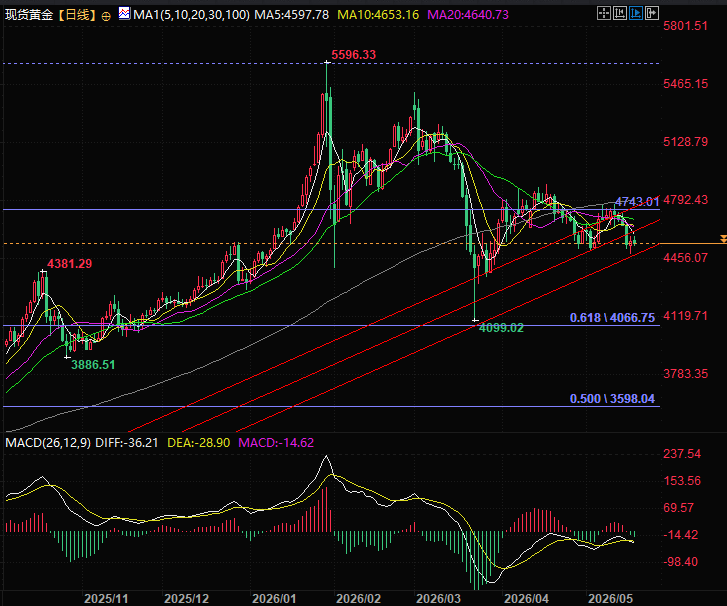
(Spot gold daily chart, source: EasyForex subsidiary)
At 17:15 Beijing time, spot gold was trading at $4,538 per ounce.
US President Trump announced a temporary halt to the planned military strike against Iran, primarily due to joint pressure from Gulf allies Qatar, Saudi Arabia, and the United Arab Emirates. Meanwhile, the quietly progressing diplomatic negotiations have injected a glimmer of hope for easing tensions.
Trump publicly stated that Middle Eastern allies reported "very constructive progress" in negotiations, and that the two sides were close to reaching an agreement to ensure the denuclearization of Iran. This statement was interpreted by the outside world as a key signal that Washington was temporarily shelving military means.
Iran responds strongly: no concessions on sovereignty + escalation of military actions
However, Tehran has maintained a tough stance.
Iranian President Masoud Pezeshkyan explicitly refuted the claim of "compromise and retreat," emphasizing that "dialogue is by no means surrender" and that Iran is participating in the negotiations "to safeguard national dignity, sovereignty, and core interests."
A series of actions by Iran's Islamic Revolutionary Guard Corps (IRGC) further highlight its determination to confront the US: it precisely targeted US- and Israeli-backed armed groups in the western Kurdistan province and thwarted a large-scale arms smuggling attempt.
At the same time, it was announced that control over the Strait of Hormuz would be strengthened, with plans to include fiber optic cables passing through this strategic waterway in the licensing system. The Strait of Hormuz carries about one-fifth of the world's oil shipments, and the upgrade of its control directly affects the nerves of the international energy market.
In addition, senior Iranian military officials have issued a series of warnings, stating that the combat capabilities and readiness of the troops have been significantly improved, and any new acts of aggression will be met with a counterattack that is "several times stronger." Mohsen Rezaei, a member of Iran's Expediency Council, even mocked Trump's decision to cancel the military strike, saying that Iran's "iron fist" will force the United States to "back down and make concessions."
Diplomatic mediation progresses: Pakistan mediates, but major obstacles remain in negotiations.
On the diplomatic front, Pakistan is playing a key coordinating role. Iran has submitted a formal response to the latest proposal to the United States through the Islamabad channel, and the Prime Minister of Qatar has also publicly supported Pakistan's mediation efforts. These multi-party efforts are building bridges of communication to resolve the crisis.
However, the negotiations still face structural obstacles. Matt Duss, executive vice president of the Center for International Policy, pointed out that Trump's hardline stance of insisting that Iran accept "zero uranium enrichment" is essentially a "destructive clause" pushed by Israeli Prime Minister Netanyahu and "warmongers" in Washington. This demand has become the biggest obstacle to reaching an agreement. Only if Trump adjusts his position can the negotiations hope to achieve a real breakthrough.
Internal and external pressures on the United States: Political vulnerabilities exposed + limited military options
For the Trump administration, the escalating conflict has gradually become a domestic political Achilles' heel.
As Americans face rising conflict-related living costs and increasing economic pressures, growing voter discontent could have a key impact on the November midterm elections, weakening the Republican Party's electoral advantage.
Former US Ambassador to Algeria, Henry Nscher, further analyzed that the pressure on Trump not to launch further attacks also stemmed from the "lack of viable military options"—a large-scale strike could not change Iran's behavior pattern and instead trigger a strong public backlash.
Against this backdrop, the U.S. Treasury Department announced a 30-day extension of sanctions waivers for Russian oil shipments en route, attempting to alleviate inflationary pressures from soaring global energy prices. This move reflects the undeniable impact of the conflict on the global economy.
Turmoil Across the Middle East: US-Iran De-escalation Fails to Mask Escalating Regional Conflicts
It is worth noting that the temporary easing of the core conflict between the US and Iran has not quelled the turmoil across the Middle East.
Despite the US-mediated extension of the ceasefire agreement, Israel's military strikes against Lebanon have not ceased, and the death toll since March 2 has surpassed 3,000, including 211 teenagers and 116 medical personnel.
Hezbollah retaliated with drone attacks on Israeli troops, and the spillover effects of the Israeli-Palestinian conflict continue to escalate.
Meanwhile, the escalation of military operations in western Iraq and the seizure of aid ships from Gaza by Israel have further exacerbated the uncertainty in the region.
Summary and Technical Analysis:
Although gold prices have recently experienced a short-term correction, this is essentially due to a wave of asset sell-offs triggered by tightening liquidity, a situation that also occurred during the 2008 financial crisis.
In the medium to long term, geopolitical risks from the conflicts between the US and Iran, and Russia and Ukraine, the energy crisis triggered by the escalation of controls over the Strait of Hormuz, the trend of global central banks continuously increasing their gold holdings, and expectations of interest rate cuts by the Federal Reserve, along with the narrative of a weak dollar, are all important variables affecting gold price fluctuations.
Data from the World Gold Council shows that global central banks have been net buyers of gold for several consecutive years, and gold's monetary attributes and anti-inflationary function are receiving increasing attention.
As a traditional safe-haven asset, gold will continue to be a core choice for investors to hedge against geopolitical risks and protect against the devaluation of fiat currencies.
From a technical perspective, 4500 remains a key support level, and it also provides support from the lower edge of the recent upward channel. If both of these levels are breached, the next support level for gold prices will be around 4100, which is also the 0.618 Fibonacci retracement level of this upward cycle. The resistance level remains around 4743.
(Spot gold daily chart, source: EasyForex subsidiary)
At 17:15 Beijing time, spot gold was trading at $4,538 per ounce.
- Risk Warning and Disclaimer
- The market involves risk, and trading may not be suitable for all investors. This article is for reference only and does not constitute personal investment advice, nor does it take into account certain users’ specific investment objectives, financial situation, or other needs. Any investment decisions made based on this information are at your own risk.