Closely watching the turning point in the bond market, a gold price rally is quietly brewing.
2026-05-20 17:46:31
On Wednesday (May 20), spot gold showed signs of a slight rebound during the Asian and European sessions, with the search for a turning point in global government bond yields becoming a key focus for gold trading recently.
Trump and Vice President Vance released positive signals regarding the Iran deal, coupled with a significant rebound in traffic in the Strait of Hormuz, which marginally eased tensions in the global energy supply chain. This change was directly transmitted to the Treasury bond market and gold pricing through inflation expectations, becoming a key clue for tracking the inflection point of yields.
International oil prices fell slightly after the White House statement, but experts warned that even if the US and Iran reach an agreement, oil prices will remain high, directly determining the downside potential of Treasury yields and the safe-haven value of gold.
Two Chinese supertankers that had been stranded for more than two months successfully sailed away. According to data from LSEG and Kpler, the "Yuan Guiyang" and "Ocean Lily" carried a total of 4 million barrels of crude oil and departed.
Meanwhile, a South Korean crude oil tanker also passed through the strait. It is reported that the "Yuan Guiyang" loaded 2 million barrels of Iraqi Basra crude oil on February 27 (the day after the US-Israel war against Iraq began), and the "Ocean Lily" loaded 1 million barrels each of Qatari Al Shaheen and Iraqi Basra crude oil in batches from the end of February to the beginning of March.
More importantly, data from Lloyd's Ship Daily shows that 54 ships transited the Strait of Hormuz between May 11 and 17, more than double the 25 ships of the previous week; Wenward Maritime Analysis reports that 19 ships passed through on May 18 alone, including one oil tanker and five Iranian cargo ships.
Despite the continued US blockade of Iranian ports and the fact that some ships have disabled their Automatic Identification System (AIS) for passage, the rebound in traffic volume has signaled a easing of supply chain tensions.
In the ongoing US-Iran negotiations, Trump said the war against Iran would "come to a swift end," while Vance said the negotiations were "progressing well and making substantial breakthroughs." However, Trump had previously threatened military action and set a two- to three-day timeframe for an agreement.
This tug-of-war between "negotiation and deterrence" has led to continuous fluctuations in geopolitical risk pricing, directly affecting the term premium of government bonds and the strength of safe-haven buying of gold.
Typically, when the market is not paying much attention to oil prices, rising oil prices lead the yield on 30-year US Treasury bonds by 3-6 months. However, now that global traders are closely watching oil prices, the trend of oil prices will quickly be transmitted to Treasury yields, especially the yield on 30-year Treasury bonds, because their longer duration makes them more sensitive to inflation.
International oil prices both adjusted downwards today, but LSEG analyst Emriel Jamil pointed out that even if an agreement is signed, oil supply will be difficult to immediately return to pre-war levels, and oil prices still have upward potential.
The spillover effects of the previous Hormuz blockade have swept the globe, with Brent crude oil hitting its highest level since June 2022 last month, pushing inflation stickiness up – the Eurozone’s inflation rate was 3.0% in April, energy prices rose 10.9% year-on-year, and Germany’s inflation rate reached 2.9%.
High inflation has directly pushed up global government bond yields: the yield on 10-year UK government bonds rose to 5.14% (a new high since 2008), and the yield on 10-year German government bonds reached 3.12% (a new high since 2011).
Meanwhile, the yen strengthened in stages, and Japanese bond yields continued to rise, becoming an important external driver for pushing up US Treasury yields. Previously, Bessant had repeatedly urged the Bank of Japan not to let Japanese intervention cause US Treasury yields to rise too quickly.
The yield on government bonds and the price of gold are significantly negatively correlated (correlation coefficient -0.83 since 2003). The core of gold valuation depends on the opportunity cost represented by the yield. Gold is a zero-interest asset. In an environment where global long-term yields have collectively surged, the opportunity cost of holding gold in the market has continued to rise. Conservative investment funds have continued to flow into high-yield sovereign bonds, directly suppressing the upside potential of gold prices and causing short-term gold price movements to be under pressure and trending weakly.
To capture the turning point in government bond yields and opportunities for gold allocation , three key clues need to be closely monitored: First, the daily traffic volume in the Strait of Hormuz remains stable at more than 15 vessels, continuously easing supply chain pressures; second, the US and Iran have reached a substantive agreement, reducing geopolitical risk premiums; and third, the Federal Reserve's policy expectations have shifted from "maintaining a hawkish stance" to "restarting expectations of interest rate cuts."
The appearance of any one of these three signals marks a yield inflection point, while the appearance of two signals confirms the inflection point and presents a good window for gold allocation. Or, to put it more simply, gold can also be considered when the equity market is strong, as the equity market is also a long-term interest rate sensitive asset and often reacts faster than gold.
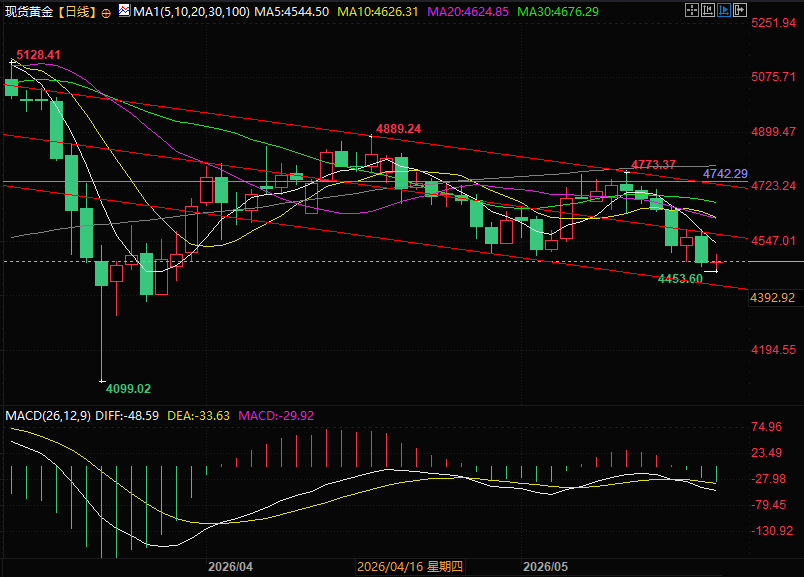
(Spot gold daily chart, source: EasyForex subsidiary)
Trump and Vice President Vance released positive signals regarding the Iran deal, coupled with a significant rebound in traffic in the Strait of Hormuz, which marginally eased tensions in the global energy supply chain. This change was directly transmitted to the Treasury bond market and gold pricing through inflation expectations, becoming a key clue for tracking the inflection point of yields.
Navigation Update: Oil tanker departs smoothly, strait traffic volume doubles
International oil prices fell slightly after the White House statement, but experts warned that even if the US and Iran reach an agreement, oil prices will remain high, directly determining the downside potential of Treasury yields and the safe-haven value of gold.
Two Chinese supertankers that had been stranded for more than two months successfully sailed away. According to data from LSEG and Kpler, the "Yuan Guiyang" and "Ocean Lily" carried a total of 4 million barrels of crude oil and departed.
Meanwhile, a South Korean crude oil tanker also passed through the strait. It is reported that the "Yuan Guiyang" loaded 2 million barrels of Iraqi Basra crude oil on February 27 (the day after the US-Israel war against Iraq began), and the "Ocean Lily" loaded 1 million barrels each of Qatari Al Shaheen and Iraqi Basra crude oil in batches from the end of February to the beginning of March.
More importantly, data from Lloyd's Ship Daily shows that 54 ships transited the Strait of Hormuz between May 11 and 17, more than double the 25 ships of the previous week; Wenward Maritime Analysis reports that 19 ships passed through on May 18 alone, including one oil tanker and five Iranian cargo ships.
Despite the continued US blockade of Iranian ports and the fact that some ships have disabled their Automatic Identification System (AIS) for passage, the rebound in traffic volume has signaled a easing of supply chain tensions.
Protracted Negotiations: A Blend of Deterrence and Consultation, Fluctuating Geopolitical Risk Pricing
In the ongoing US-Iran negotiations, Trump said the war against Iran would "come to a swift end," while Vance said the negotiations were "progressing well and making substantial breakthroughs." However, Trump had previously threatened military action and set a two- to three-day timeframe for an agreement.
This tug-of-war between "negotiation and deterrence" has led to continuous fluctuations in geopolitical risk pricing, directly affecting the term premium of government bonds and the strength of safe-haven buying of gold.
Oil Prices and Inflation: Key Factors to Watch for the Turning Point in Bond Yields
Typically, when the market is not paying much attention to oil prices, rising oil prices lead the yield on 30-year US Treasury bonds by 3-6 months. However, now that global traders are closely watching oil prices, the trend of oil prices will quickly be transmitted to Treasury yields, especially the yield on 30-year Treasury bonds, because their longer duration makes them more sensitive to inflation.
International oil prices both adjusted downwards today, but LSEG analyst Emriel Jamil pointed out that even if an agreement is signed, oil supply will be difficult to immediately return to pre-war levels, and oil prices still have upward potential.
The spillover effects of the previous Hormuz blockade have swept the globe, with Brent crude oil hitting its highest level since June 2022 last month, pushing inflation stickiness up – the Eurozone’s inflation rate was 3.0% in April, energy prices rose 10.9% year-on-year, and Germany’s inflation rate reached 2.9%.
Asset linkage: Treasury yields hit new highs, gold valuations are suppressed but its fundamental attributes are strengthened.
High inflation has directly pushed up global government bond yields: the yield on 10-year UK government bonds rose to 5.14% (a new high since 2008), and the yield on 10-year German government bonds reached 3.12% (a new high since 2011).
Meanwhile, the yen strengthened in stages, and Japanese bond yields continued to rise, becoming an important external driver for pushing up US Treasury yields. Previously, Bessant had repeatedly urged the Bank of Japan not to let Japanese intervention cause US Treasury yields to rise too quickly.
The yield on government bonds and the price of gold are significantly negatively correlated (correlation coefficient -0.83 since 2003). The core of gold valuation depends on the opportunity cost represented by the yield. Gold is a zero-interest asset. In an environment where global long-term yields have collectively surged, the opportunity cost of holding gold in the market has continued to rise. Conservative investment funds have continued to flow into high-yield sovereign bonds, directly suppressing the upside potential of gold prices and causing short-term gold price movements to be under pressure and trending weakly.
Turning Point Capture: Three Resonant Signals, Seizing the Golden Investment Window
To capture the turning point in government bond yields and opportunities for gold allocation , three key clues need to be closely monitored: First, the daily traffic volume in the Strait of Hormuz remains stable at more than 15 vessels, continuously easing supply chain pressures; second, the US and Iran have reached a substantive agreement, reducing geopolitical risk premiums; and third, the Federal Reserve's policy expectations have shifted from "maintaining a hawkish stance" to "restarting expectations of interest rate cuts."
The appearance of any one of these three signals marks a yield inflection point, while the appearance of two signals confirms the inflection point and presents a good window for gold allocation. Or, to put it more simply, gold can also be considered when the equity market is strong, as the equity market is also a long-term interest rate sensitive asset and often reacts faster than gold.
(Spot gold daily chart, source: EasyForex subsidiary)
- Risk Warning and Disclaimer
- The market involves risk, and trading may not be suitable for all investors. This article is for reference only and does not constitute personal investment advice, nor does it take into account certain users’ specific investment objectives, financial situation, or other needs. Any investment decisions made based on this information are at your own risk.