Japan's much larger-than-expected trade surplus has boosted the yen, and the USD/JPY pair may fall towards the 158 level.
2026-05-21 09:53:41
The USD/JPY pair remained weak for the second consecutive trading day in Asian trading on Thursday, hovering around 158.90. Newly released Japanese trade data significantly exceeded market expectations, providing buying support for the yen. Meanwhile, continued uncertainty in the Middle East strengthened safe-haven demand, further enhancing the yen's appeal as a safe-haven currency.

Data released by Japan's Ministry of Finance showed that Japan recorded a trade surplus of 301.9 billion yen in April, far exceeding the market's previous expectation of a deficit of 29.7 billion yen, and representing a significant improvement compared to the deficit of 149.5 billion yen in the same period last year. This is the latest positive sign after several consecutive months of recovery in Japan's trade situation, reflecting the continued resilience of external demand and export momentum.
Data shows that Japan's exports surged 14.8% year-on-year in April, reaching a near-record high of 10.5 trillion yen, significantly higher than March's 11.5% increase and marking the fastest growth rate in nearly three months. The export growth was mainly driven by a recovery in demand for automobiles, semiconductor-related equipment, and electronic components. Meanwhile, Japan's imports increased by 9.7% year-on-year, slightly lower than the previous month's 10.9%, but still higher than the market's expected 8.3%.
Market analysts believe that the continued improvement in Japanese exports indicates a gradual recovery in external demand, which in turn strengthens market confidence in Japan's economic recovery. With the widening trade surplus, market expectations for the Bank of Japan to gradually exit its ultra-loose monetary policy have risen again, becoming one of the key reasons for the recent rebound in the yen.
Furthermore, rising risk aversion in global markets is providing additional support for the yen. The negotiation situation between the US and Iran remains complex. US President Trump stated on Wednesday that US-Iran negotiations have entered the final stage, but also warned that the US may resume military action in the coming days if Iran rejects its conditions.
Iranian President Masoud Pezechyan responded that Tehran would not yield to external pressure and emphasized that any attempt to force Iran to "surrender" through coercion was wishful thinking. These statements from both sides have reignited market concerns about an escalation of tensions in the Middle East.
The market is currently paying particular attention to the shipping risks posed by the Strait of Hormuz. This strait handles approximately 20% of global seaborne crude oil transport , and any potential blockade or military conflict could drive international oil prices up rapidly, further exacerbating global inflationary pressures. As a result, global funds are beginning to flow back into safe-haven assets, and the Japanese yen, as a traditional safe-haven currency, is receiving significant support.
On the other hand, the US dollar index remained in a consolidation phase after falling in the previous trading day. Although the Fed meeting minutes were generally hawkish, with most officials still concerned about inflation risks and hinting that a rate hike might need to be reconsidered if inflation remains high, the market is currently more focused on the potential impact of Middle East risks on the global economy.
The minutes of the Federal Reserve's April meeting, released earlier, showed that most officials believed rising energy prices could further push up US inflation and reinforce the policy path of "maintaining high interest rates for a longer period." However, due to deteriorating market risk sentiment, US Treasury yields failed to rise significantly and sustained, leaving the dollar lacking further upward momentum in the short term.
From a technical perspective, the USD/JPY pair remains in a medium- to long-term uptrend on the daily chart, but recent upward momentum has clearly slowed. The pair has repeatedly attempted to break through the 160 level without success, indicating strong technical resistance above. Initial support is currently around 158.20 ; a break below this area could lead to a further test of the 157.50 level. Key resistance lies in the 159.80 to 160.00 area; a retest of 160 could strengthen the bullish trend.
The 4-hour chart shows that USD/JPY has recently entered a phase of correction, with short-term moving averages gradually declining and the MACD indicator remaining below the zero line, indicating that short-term bearish momentum is dominant. Meanwhile, the RSI indicator is below 50, suggesting weak market sentiment. However, due to the persistently high interest rate differential between USD and Japan, the overall downside potential for USD/JPY may be limited.
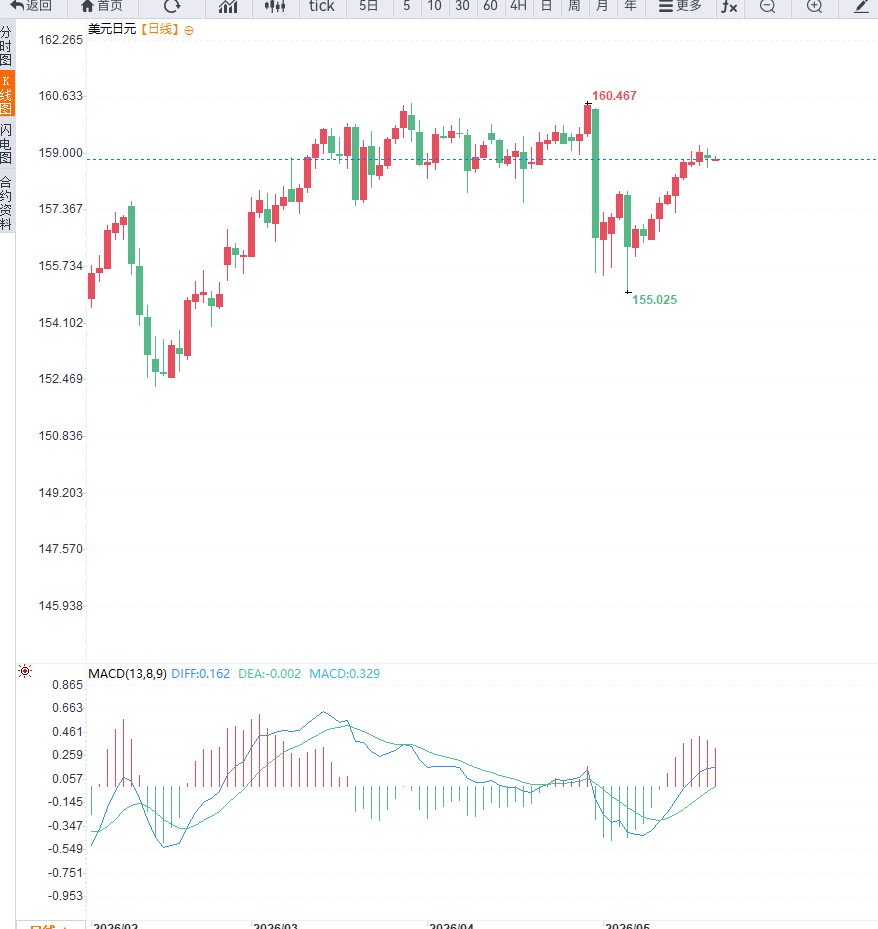
Overall, improved Japanese economic data, heightened risk aversion in the Middle East, and a short-term pullback in the US dollar have collectively driven the recent rebound in the yen. However, given the Federal Reserve's continued high-interest-rate stance and the Bank of Japan's relatively cautious pace of policy normalization, the USD/JPY exchange rate is likely to maintain a high-level consolidation pattern in the medium to long term.
Editor's Summary : The current USD/JPY exchange rate is influenced by a confluence of factors. On one hand, significantly improved Japanese export and trade data have strengthened market expectations for a Japanese economic recovery and policy adjustments by the Bank of Japan, providing temporary support for the yen. On the other hand, escalating tensions in the Middle East have further intensified safe-haven demand, also enhancing the yen's attractiveness. However, from a longer-term perspective, the Federal Reserve's continued high interest rate policy means that the USD/JPY interest rate differential will remain substantial, which will continue to limit the yen's potential for significant appreciation. Future market focus will be on US economic data, changes in Federal Reserve policy, and whether the Bank of Japan will further signal policy normalization. If global risk aversion continues to rise, USD/JPY may experience a further short-term pullback; however, if the US economy continues to show resilience, the dollar's medium- to long-term advantage may re-emerge.
Data released by Japan's Ministry of Finance showed that Japan recorded a trade surplus of 301.9 billion yen in April, far exceeding the market's previous expectation of a deficit of 29.7 billion yen, and representing a significant improvement compared to the deficit of 149.5 billion yen in the same period last year. This is the latest positive sign after several consecutive months of recovery in Japan's trade situation, reflecting the continued resilience of external demand and export momentum.
Data shows that Japan's exports surged 14.8% year-on-year in April, reaching a near-record high of 10.5 trillion yen, significantly higher than March's 11.5% increase and marking the fastest growth rate in nearly three months. The export growth was mainly driven by a recovery in demand for automobiles, semiconductor-related equipment, and electronic components. Meanwhile, Japan's imports increased by 9.7% year-on-year, slightly lower than the previous month's 10.9%, but still higher than the market's expected 8.3%.
Market analysts believe that the continued improvement in Japanese exports indicates a gradual recovery in external demand, which in turn strengthens market confidence in Japan's economic recovery. With the widening trade surplus, market expectations for the Bank of Japan to gradually exit its ultra-loose monetary policy have risen again, becoming one of the key reasons for the recent rebound in the yen.
Furthermore, rising risk aversion in global markets is providing additional support for the yen. The negotiation situation between the US and Iran remains complex. US President Trump stated on Wednesday that US-Iran negotiations have entered the final stage, but also warned that the US may resume military action in the coming days if Iran rejects its conditions.
Iranian President Masoud Pezechyan responded that Tehran would not yield to external pressure and emphasized that any attempt to force Iran to "surrender" through coercion was wishful thinking. These statements from both sides have reignited market concerns about an escalation of tensions in the Middle East.
The market is currently paying particular attention to the shipping risks posed by the Strait of Hormuz. This strait handles approximately 20% of global seaborne crude oil transport , and any potential blockade or military conflict could drive international oil prices up rapidly, further exacerbating global inflationary pressures. As a result, global funds are beginning to flow back into safe-haven assets, and the Japanese yen, as a traditional safe-haven currency, is receiving significant support.
On the other hand, the US dollar index remained in a consolidation phase after falling in the previous trading day. Although the Fed meeting minutes were generally hawkish, with most officials still concerned about inflation risks and hinting that a rate hike might need to be reconsidered if inflation remains high, the market is currently more focused on the potential impact of Middle East risks on the global economy.
The minutes of the Federal Reserve's April meeting, released earlier, showed that most officials believed rising energy prices could further push up US inflation and reinforce the policy path of "maintaining high interest rates for a longer period." However, due to deteriorating market risk sentiment, US Treasury yields failed to rise significantly and sustained, leaving the dollar lacking further upward momentum in the short term.
From a technical perspective, the USD/JPY pair remains in a medium- to long-term uptrend on the daily chart, but recent upward momentum has clearly slowed. The pair has repeatedly attempted to break through the 160 level without success, indicating strong technical resistance above. Initial support is currently around 158.20 ; a break below this area could lead to a further test of the 157.50 level. Key resistance lies in the 159.80 to 160.00 area; a retest of 160 could strengthen the bullish trend.
The 4-hour chart shows that USD/JPY has recently entered a phase of correction, with short-term moving averages gradually declining and the MACD indicator remaining below the zero line, indicating that short-term bearish momentum is dominant. Meanwhile, the RSI indicator is below 50, suggesting weak market sentiment. However, due to the persistently high interest rate differential between USD and Japan, the overall downside potential for USD/JPY may be limited.
Overall, improved Japanese economic data, heightened risk aversion in the Middle East, and a short-term pullback in the US dollar have collectively driven the recent rebound in the yen. However, given the Federal Reserve's continued high-interest-rate stance and the Bank of Japan's relatively cautious pace of policy normalization, the USD/JPY exchange rate is likely to maintain a high-level consolidation pattern in the medium to long term.
Editor's Summary : The current USD/JPY exchange rate is influenced by a confluence of factors. On one hand, significantly improved Japanese export and trade data have strengthened market expectations for a Japanese economic recovery and policy adjustments by the Bank of Japan, providing temporary support for the yen. On the other hand, escalating tensions in the Middle East have further intensified safe-haven demand, also enhancing the yen's attractiveness. However, from a longer-term perspective, the Federal Reserve's continued high interest rate policy means that the USD/JPY interest rate differential will remain substantial, which will continue to limit the yen's potential for significant appreciation. Future market focus will be on US economic data, changes in Federal Reserve policy, and whether the Bank of Japan will further signal policy normalization. If global risk aversion continues to rise, USD/JPY may experience a further short-term pullback; however, if the US economy continues to show resilience, the dollar's medium- to long-term advantage may re-emerge.
- Risk Warning and Disclaimer
- The market involves risk, and trading may not be suitable for all investors. This article is for reference only and does not constitute personal investment advice, nor does it take into account certain users’ specific investment objectives, financial situation, or other needs. Any investment decisions made based on this information are at your own risk.