Iran says agreement reached; Trump cabinet holds emergency closed-door meeting, accelerating US-Iran negotiations.
2026-05-27 16:51:49
At this crucial juncture of the midterm elections, US President Trump urgently convened a cabinet meeting with the core objective of finalizing a ceasefire agreement with Iran to bolster his political narrative. Meanwhile, Iran also began to officially announce that, according to the preliminary draft agreement reached between Iran and the United States, the US would commit to a 60-day comprehensive ceasefire on all fronts in the first phase, particularly in Lebanon.
A few days ago, Trump publicly declared that the US and Iran had "basically reached an agreement" on a solution. According to senior US officials, the two sides have reached an agreement in principle, which only needs final approval from the leaders. However, the actual negotiation process is fraught with undercurrents and uncertainties, and has now entered a high-risk and sensitive period.
Trump is trying to achieve two core objectives through this agreement: first, to restart navigation in the Strait of Hormuz; and second, to create a winning campaign narrative that "the Iranian nuclear threat has been significantly reduced," thereby ending this conflict in which he has low support among Republican voters.
This gradually forming agreement has sparked much controversy. Its decision to postpone negotiations on several key contentious issues has plunged Trump into a media storm and drawn fierce criticism from his own party supporters.
Republican allies such as Mississippi Senator Roger Wick and South Carolina Senator Lindsey Graham have stated that the existing terms are clearly biased towards Iran and are highly similar to the Obama-era Iran nuclear deal that Trump tore up during his first term. They are concerned that while the strength of Iranian hardliners may be weakened, their political arrogance may be further intensified.
With high inflation and soaring fuel prices already significantly lowering voter support, Republican concerns about the election outlook have further hampered the agreement negotiations.
It is worth noting that although the two sides are close to reaching a framework, they are still repeatedly at odds over the wording. The US's retreat on issues such as the mechanism for unfreezing Iranian assets and the scope of the ceasefire in Lebanon has also made Iran hesitant.
On Monday, the U.S. military launched strikes on missile sites and mine-laying boats in southern Iran under the pretext of "self-defense." The U.S. claimed that the operation had exercised "maximum restraint," while Iran strongly condemned the move as irrefutable evidence of "lack of sincerity and treachery," further complicating an already difficult negotiation.
U.S. Secretary of State Marco Rubio stated on Tuesday that negotiations on resuming navigation in the Strait and extending the ceasefire period still need several days to conclude, and emphasized clearly that "either a high-quality agreement is reached, or negotiations are abandoned."
Trump himself complained on social media that even if Iran makes a complete compromise, the media will still portray the end of the war as an Iranian victory.
On the core terms of the agreement, the differences between the US and Iran have not yet been bridged.
On the 27th local time, Iranian National Security Council member Boroujerdi brought the latest developments, stating that according to the preliminary draft agreement, the US will commit to a 60-day comprehensive ceasefire on all fronts in the first phase , especially in Lebanon—this directly responds to Iran's core demand to include Lebanon in the ceasefire.
However, an advisor to Iran's Supreme Leader emphasized that the Strait of Hormuz is the true guarantee for any agreement, stating, "Our bottom line is very clear: documents and signatures alone cannot guarantee the conclusion of any potential agreement," highlighting the extreme lack of mutual trust between the two sides.
According to anonymous officials, the core framework of the agreement also includes Iran handing over its stockpile of highly enriched uranium in exchange for the lifting of US sanctions.
Data from the International Atomic Energy Agency shows that Iran currently possesses 440.9 kilograms of 60% enriched uranium, just one step away from weapons-grade enrichment, and Iran has not yet publicly committed to abandoning this uranium.
Trump's latest statement indicates that his previous hardline stance that "the U.S. must take over the uranium" has softened, allowing for on-site destruction or third-party custody of the uranium. The specific method will be negotiated within a 60-day window. Iran, on the other hand, has made it clear that it will not discuss the details of the nuclear issue at this stage, and related issues will be left for further negotiations during the ceasefire period.
Furthermore, according to Iran's Tasnim News Agency on the 27th, Mohammad Akbarzadeh, an official of the Iranian Islamic Revolutionary Guard Corps Navy, stated that the possibility of a renewed war with the United States is "low," but the Iranian armed forces are "fully loaded with ammunition" and ready, demonstrating a posture of "being prepared for talks and unafraid of war."
In contrast, Israeli Prime Minister Netanyahu has announced an "expansion and deepening" of military operations in Lebanon, while the US has reserved room for Israel to "respond to immediate threats and exercise its right to self-defense" in the agreement. Whether this vague statement can bridge the differences among the parties and prevent a resurgence of conflict remains highly uncertain.
Trump also attempted to include the Abraham Accords as an addendum to the agreement to end the war in Iraq, demanding that Saudi Arabia, Qatar, and other countries join the agreement, which aimed to normalize relations between Arab countries and Israel.
However, this proposition is seriously out of touch with reality. Saudi Arabia and other countries insisted on a "clear path to Palestinian statehood" as a prerequisite. This condition was strongly opposed by Israel, and the proposal was met with a cold response during the call with allies, even resulting in a "dead silence".
Analysts point out that although the United States’ Middle Eastern allies are aware that Iran may use the funds released from sanctions to strengthen its military, given the strategic mistakes made at the beginning of the war, they have no choice but to support Trump’s push to end the war.
Currently, several countries, including Pakistan and Qatar, are actively mediating to try to expand the space for trust between the two sides and prevent the collapse of communication channels.
The news that the US and Iran reached a 60-day ceasefire framework eased the risk of geopolitical escalation, thereby reducing market expectations for real interest rates from the perspective of oil prices and inflation, resulting in a rebound in gold prices on the intraday chart.
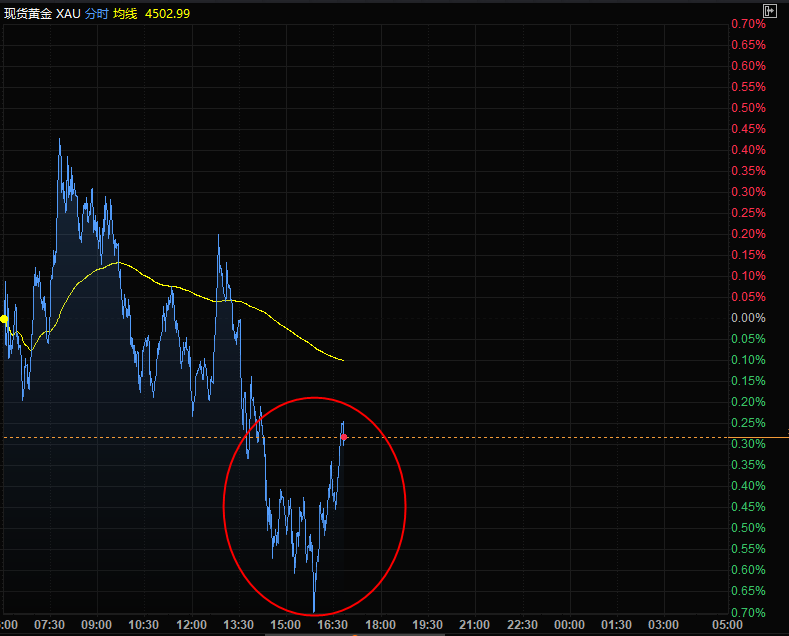
(Spot gold intraday chart, source: subsidiary EasyForex)
The key obstacle to the current gold price rebound and even global inflation remains the signing of the US-Iran peace agreement. The passage of the Strait of Hormuz is the fulcrum of the global market, and its marginal improvement can quickly restore gold prices and reduce the level of global real interest rates.
A few days ago, Trump publicly declared that the US and Iran had "basically reached an agreement" on a solution. According to senior US officials, the two sides have reached an agreement in principle, which only needs final approval from the leaders. However, the actual negotiation process is fraught with undercurrents and uncertainties, and has now entered a high-risk and sensitive period.
Trump is trying to achieve two core objectives through this agreement: first, to restart navigation in the Strait of Hormuz; and second, to create a winning campaign narrative that "the Iranian nuclear threat has been significantly reduced," thereby ending this conflict in which he has low support among Republican voters.
Controversy surrounding the agreement escalates: internal party criticism intertwined with election pressure.
This gradually forming agreement has sparked much controversy. Its decision to postpone negotiations on several key contentious issues has plunged Trump into a media storm and drawn fierce criticism from his own party supporters.
Republican allies such as Mississippi Senator Roger Wick and South Carolina Senator Lindsey Graham have stated that the existing terms are clearly biased towards Iran and are highly similar to the Obama-era Iran nuclear deal that Trump tore up during his first term. They are concerned that while the strength of Iranian hardliners may be weakened, their political arrogance may be further intensified.
With high inflation and soaring fuel prices already significantly lowering voter support, Republican concerns about the election outlook have further hampered the agreement negotiations.
It is worth noting that although the two sides are close to reaching a framework, they are still repeatedly at odds over the wording. The US's retreat on issues such as the mechanism for unfreezing Iranian assets and the scope of the ceasefire in Lebanon has also made Iran hesitant.
Military conflict adds to the turmoil: Negotiations stalled at one point
On Monday, the U.S. military launched strikes on missile sites and mine-laying boats in southern Iran under the pretext of "self-defense." The U.S. claimed that the operation had exercised "maximum restraint," while Iran strongly condemned the move as irrefutable evidence of "lack of sincerity and treachery," further complicating an already difficult negotiation.
U.S. Secretary of State Marco Rubio stated on Tuesday that negotiations on resuming navigation in the Strait and extending the ceasefire period still need several days to conclude, and emphasized clearly that "either a high-quality agreement is reached, or negotiations are abandoned."
Trump himself complained on social media that even if Iran makes a complete compromise, the media will still portray the end of the war as an Iranian victory.
Core disagreements remain: the scope of the ceasefire and the disposal of uranium materials are key issues.
On the core terms of the agreement, the differences between the US and Iran have not yet been bridged.
On the 27th local time, Iranian National Security Council member Boroujerdi brought the latest developments, stating that according to the preliminary draft agreement, the US will commit to a 60-day comprehensive ceasefire on all fronts in the first phase , especially in Lebanon—this directly responds to Iran's core demand to include Lebanon in the ceasefire.
However, an advisor to Iran's Supreme Leader emphasized that the Strait of Hormuz is the true guarantee for any agreement, stating, "Our bottom line is very clear: documents and signatures alone cannot guarantee the conclusion of any potential agreement," highlighting the extreme lack of mutual trust between the two sides.
According to anonymous officials, the core framework of the agreement also includes Iran handing over its stockpile of highly enriched uranium in exchange for the lifting of US sanctions.
Data from the International Atomic Energy Agency shows that Iran currently possesses 440.9 kilograms of 60% enriched uranium, just one step away from weapons-grade enrichment, and Iran has not yet publicly committed to abandoning this uranium.
Trump's latest statement indicates that his previous hardline stance that "the U.S. must take over the uranium" has softened, allowing for on-site destruction or third-party custody of the uranium. The specific method will be negotiated within a 60-day window. Iran, on the other hand, has made it clear that it will not discuss the details of the nuclear issue at this stage, and related issues will be left for further negotiations during the ceasefire period.
Furthermore, according to Iran's Tasnim News Agency on the 27th, Mohammad Akbarzadeh, an official of the Iranian Islamic Revolutionary Guard Corps Navy, stated that the possibility of a renewed war with the United States is "low," but the Iranian armed forces are "fully loaded with ammunition" and ready, demonstrating a posture of "being prepared for talks and unafraid of war."
In contrast, Israeli Prime Minister Netanyahu has announced an "expansion and deepening" of military operations in Lebanon, while the US has reserved room for Israel to "respond to immediate threats and exercise its right to self-defense" in the agreement. Whether this vague statement can bridge the differences among the parties and prevent a resurgence of conflict remains highly uncertain.
Additional clauses met with a lukewarm reception: the binding of the Abraham Accords sparked resistance from allies.
Trump also attempted to include the Abraham Accords as an addendum to the agreement to end the war in Iraq, demanding that Saudi Arabia, Qatar, and other countries join the agreement, which aimed to normalize relations between Arab countries and Israel.
However, this proposition is seriously out of touch with reality. Saudi Arabia and other countries insisted on a "clear path to Palestinian statehood" as a prerequisite. This condition was strongly opposed by Israel, and the proposal was met with a cold response during the call with allies, even resulting in a "dead silence".
Analysts point out that although the United States’ Middle Eastern allies are aware that Iran may use the funds released from sanctions to strengthen its military, given the strategic mistakes made at the beginning of the war, they have no choice but to support Trump’s push to end the war.
Currently, several countries, including Pakistan and Qatar, are actively mediating to try to expand the space for trust between the two sides and prevent the collapse of communication channels.
Market Interplay: Gold Caught in a Dual Game of Geopolitics and Interest Rates
The news that the US and Iran reached a 60-day ceasefire framework eased the risk of geopolitical escalation, thereby reducing market expectations for real interest rates from the perspective of oil prices and inflation, resulting in a rebound in gold prices on the intraday chart.
(Spot gold intraday chart, source: subsidiary EasyForex)
The key obstacle to the current gold price rebound and even global inflation remains the signing of the US-Iran peace agreement. The passage of the Strait of Hormuz is the fulcrum of the global market, and its marginal improvement can quickly restore gold prices and reduce the level of global real interest rates.
- Risk Warning and Disclaimer
- The market involves risk, and trading may not be suitable for all investors. This article is for reference only and does not constitute personal investment advice, nor does it take into account certain users’ specific investment objectives, financial situation, or other needs. Any investment decisions made based on this information are at your own risk.