The tug-of-war around 1.1610: The euro's technical outlook is bearish, awaiting a catalyst to break the deadlock.
2026-05-28 16:32:47
On Thursday (May 28) during Asian trading hours, the euro fell slightly against the US dollar, trading around 1.1610.
As the euro hovers around the 1.16 level against the dollar, Danske Bank analyzes the underlying driving logic from three dimensions: geopolitical risk, oil prices, and central bank policies.
A research team at Danske Bank noted that market risk sentiment deteriorated following the latest US strikes against Iran, with the euro/dollar exchange rate falling below 1.16. Rising oil prices and climbing US Treasury yields are putting pressure on broader risk assets.
Meanwhile, the European Central Bank will release the minutes of its April meeting, which are expected to reflect hawkish discussions within the Governing Council regarding further interest rate hikes; the Eurozone's May business confidence index will also be released, with the market paying particular attention to business sales price expectations – this indicator recorded its largest monthly increase in 25 years last month.
In the US, tonight's PCE data and preliminary Q2 GDP figures will also have a significant impact on the foreign exchange market.
From a timeline perspective, on Wednesday, Brent crude oil fell by more than 6% to below $92 due to rising expectations of US-Iran peace talks, while the euro rebounded to around 1.1660 against the dollar.
However, as the Iranian Revolutionary Guard claimed to have attacked a US military base and the US confirmed a new round of strikes, market sentiment reversed 180 degrees in just a few hours.
The euro has fallen to around 1.1610 against the dollar, a 0.1% drop in a single day; Brent crude oil has rebounded 2.6% from its low, approaching $95 per barrel. This pattern of "safe-haven funds flowing to the dollar and risk funds withdrawing from the euro" is highly consistent with the market reaction during the previous escalation of conflicts in the Middle East.
This trend indicates that geopolitical risks remain the core driver of the current foreign exchange market, and any escalation of conflict could lead to a flow of funds from the euro to safe-haven assets such as the US dollar.
"In the Eurozone, the European Central Bank will release the minutes of its April meeting today. Given recent comments from Governing Council members, the minutes may reflect a growing hawkish discussion surrounding further policy rate hikes."
The market will be closely watching the minutes for any clues regarding the pace and end of interest rate hikes. If the minutes show that policymakers are increasingly concerned about inflation, the euro may receive some support in the short term, but downward pressure from geopolitical risks could be more significant.
"Also in the Eurozone, the May business confidence index will be released, with the market paying particular attention to companies' expectations for sales prices—the index recorded its largest monthly increase in 25 years of the survey last month. We are watching to see if this upward expectation continues."
If sales price expectations continue to rise, it would mean that inflationary pressures in the eurozone may be more persistent than the European Central Bank anticipates, further reinforcing the necessity of a June rate hike, but it could also exacerbate market concerns about a slowdown in economic growth.
"The figure rose 3.2% year-on-year in March, well above the Fed's 2% target, and the market expects April's data to continue to face price pressures. In addition, the US will also release the preliminary value of its second-quarter GDP."
These two sets of data will provide the Federal Reserve with an updated assessment of inflation and economic conditions. If the PCE data exceeds expectations, coupled with strong GDP performance, it will reinforce the necessity for the Fed to raise interest rates, further strengthening the dollar and potentially putting greater downward pressure on the euro/dollar exchange rate.
Danske Bank believes that amid the backdrop of a new round of US military strikes against Iran, market risk sentiment has deteriorated, with the euro hovering around 1.16 against the US dollar. The rebound in oil prices to around $95 per barrel and the rise in US Treasury yields are putting pressure on risk assets.
This week's two major focuses in the Eurozone—the ECB's April meeting minutes (with expectations of heightened hawkish discussions) and May business confidence data (focusing on whether sales price expectations continue to rise)—will provide the market with important clues about the ECB's policy path.
Meanwhile, tonight's US PCE data and preliminary Q2 GDP figures will also have a significant impact on the foreign exchange market. Against the backdrop of ongoing US-Iran conflict and high oil prices, the euro may continue to face downward pressure against the dollar in the short term.
The euro/dollar exchange rate is showing a generally weak and volatile trend with a pullback from its highs on the daily chart. Short-term bullish and bearish momentum is balanced, and the direction remains unclear.
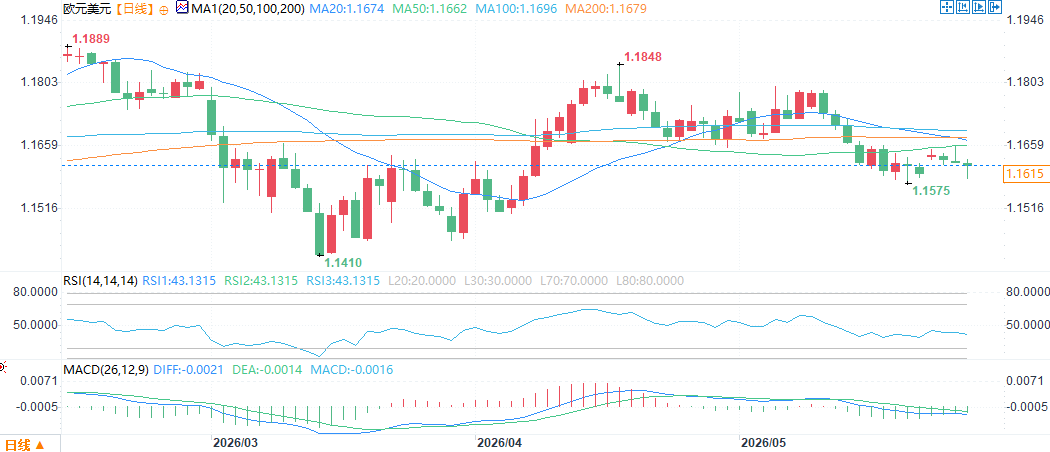
(Euro/USD daily chart, source: FX678)
The current price is around 1.1610, having broken below the 20-day and 50-day moving averages. Short-term moving averages are turning downwards, forming resistance and weakening the medium-term uptrend. Key support lies around the previous low of 1.1575. The RSI is 43.13, below the 50 neutral line, indicating weak bullish momentum. The MACD indicator's DIFF line is slightly below the DEA line, suggesting weak bearish momentum and no clear directional trend yet. Overall, the exchange rate is in a consolidation phase after a pullback, with a short-term bearish bias but weak momentum. A break below the 1.1575 support level would open up further downside potential, while a recovery above the 20-day moving average could alleviate the decline.
At 16:15 Beijing time on May 28, the euro was trading at 1.1610/11 against the US dollar.
As the euro hovers around the 1.16 level against the dollar, Danske Bank analyzes the underlying driving logic from three dimensions: geopolitical risk, oil prices, and central bank policies.
A research team at Danske Bank noted that market risk sentiment deteriorated following the latest US strikes against Iran, with the euro/dollar exchange rate falling below 1.16. Rising oil prices and climbing US Treasury yields are putting pressure on broader risk assets.
Meanwhile, the European Central Bank will release the minutes of its April meeting, which are expected to reflect hawkish discussions within the Governing Council regarding further interest rate hikes; the Eurozone's May business confidence index will also be released, with the market paying particular attention to business sales price expectations – this indicator recorded its largest monthly increase in 25 years last month.
In the US, tonight's PCE data and preliminary Q2 GDP figures will also have a significant impact on the foreign exchange market.
Risk sentiment pressures euro
From a timeline perspective, on Wednesday, Brent crude oil fell by more than 6% to below $92 due to rising expectations of US-Iran peace talks, while the euro rebounded to around 1.1660 against the dollar.
However, as the Iranian Revolutionary Guard claimed to have attacked a US military base and the US confirmed a new round of strikes, market sentiment reversed 180 degrees in just a few hours.
The euro has fallen to around 1.1610 against the dollar, a 0.1% drop in a single day; Brent crude oil has rebounded 2.6% from its low, approaching $95 per barrel. This pattern of "safe-haven funds flowing to the dollar and risk funds withdrawing from the euro" is highly consistent with the market reaction during the previous escalation of conflicts in the Middle East.
This trend indicates that geopolitical risks remain the core driver of the current foreign exchange market, and any escalation of conflict could lead to a flow of funds from the euro to safe-haven assets such as the US dollar.
ECB meeting minutes: Hawkish discussions expected to intensify.
"In the Eurozone, the European Central Bank will release the minutes of its April meeting today. Given recent comments from Governing Council members, the minutes may reflect a growing hawkish discussion surrounding further policy rate hikes."
The market will be closely watching the minutes for any clues regarding the pace and end of interest rate hikes. If the minutes show that policymakers are increasingly concerned about inflation, the euro may receive some support in the short term, but downward pressure from geopolitical risks could be more significant.
Business confidence data: Focus on sales price expectations
"Also in the Eurozone, the May business confidence index will be released, with the market paying particular attention to companies' expectations for sales prices—the index recorded its largest monthly increase in 25 years of the survey last month. We are watching to see if this upward expectation continues."
If sales price expectations continue to rise, it would mean that inflationary pressures in the eurozone may be more persistent than the European Central Bank anticipates, further reinforcing the necessity of a June rate hike, but it could also exacerbate market concerns about a slowdown in economic growth.
US Data: PCE and GDP
"The figure rose 3.2% year-on-year in March, well above the Fed's 2% target, and the market expects April's data to continue to face price pressures. In addition, the US will also release the preliminary value of its second-quarter GDP."
These two sets of data will provide the Federal Reserve with an updated assessment of inflation and economic conditions. If the PCE data exceeds expectations, coupled with strong GDP performance, it will reinforce the necessity for the Fed to raise interest rates, further strengthening the dollar and potentially putting greater downward pressure on the euro/dollar exchange rate.
Danske Bank believes that amid the backdrop of a new round of US military strikes against Iran, market risk sentiment has deteriorated, with the euro hovering around 1.16 against the US dollar. The rebound in oil prices to around $95 per barrel and the rise in US Treasury yields are putting pressure on risk assets.
This week's two major focuses in the Eurozone—the ECB's April meeting minutes (with expectations of heightened hawkish discussions) and May business confidence data (focusing on whether sales price expectations continue to rise)—will provide the market with important clues about the ECB's policy path.
Meanwhile, tonight's US PCE data and preliminary Q2 GDP figures will also have a significant impact on the foreign exchange market. Against the backdrop of ongoing US-Iran conflict and high oil prices, the euro may continue to face downward pressure against the dollar in the short term.
EUR/USD Daily Technical Analysis
The euro/dollar exchange rate is showing a generally weak and volatile trend with a pullback from its highs on the daily chart. Short-term bullish and bearish momentum is balanced, and the direction remains unclear.
(Euro/USD daily chart, source: FX678)
The current price is around 1.1610, having broken below the 20-day and 50-day moving averages. Short-term moving averages are turning downwards, forming resistance and weakening the medium-term uptrend. Key support lies around the previous low of 1.1575. The RSI is 43.13, below the 50 neutral line, indicating weak bullish momentum. The MACD indicator's DIFF line is slightly below the DEA line, suggesting weak bearish momentum and no clear directional trend yet. Overall, the exchange rate is in a consolidation phase after a pullback, with a short-term bearish bias but weak momentum. A break below the 1.1575 support level would open up further downside potential, while a recovery above the 20-day moving average could alleviate the decline.
At 16:15 Beijing time on May 28, the euro was trading at 1.1610/11 against the US dollar.
- Risk Warning and Disclaimer
- The market involves risk, and trading may not be suitable for all investors. This article is for reference only and does not constitute personal investment advice, nor does it take into account certain users’ specific investment objectives, financial situation, or other needs. Any investment decisions made based on this information are at your own risk.