May 29th Financial Breakfast: US and Iran may reach a memorandum of understanding pending Trump's approval; gold prices rebound from a two-month low; US oil may test the $85 mark.
2026-05-29 07:39:53
On Friday (May 29, Beijing time) in early Asian trading, spot gold was trading around $4492 per ounce. Gold prices touched a two-month low of $4366.52 per ounce on Thursday. Amidst ongoing developments in the Iranian situation, gold prices recovered to around $4500 per ounce by the close of trading on Thursday, due to reports that the US and Iran had reached a framework agreement to extend the ceasefire for 60 days, pending approval from US President Trump. US crude oil fell below the $90 per barrel mark and is currently trading around $88.44 per barrel, potentially testing the $85 per barrel level during the day.

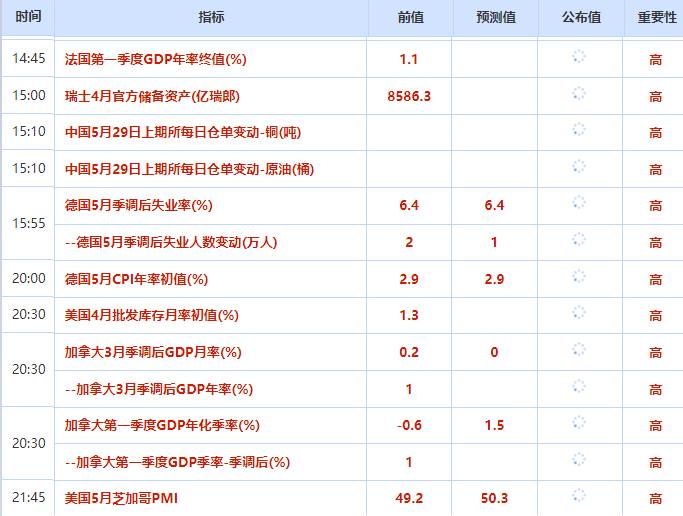
U.S. stocks closed higher on Friday, with the S&P 500 and Nasdaq both hitting record closing highs, after reports that the U.S. and Iran had agreed to extend the ceasefire for 60 days and begin negotiations on Iran's nuclear program, although the agreement still requires President Trump's approval.
The S&P 500 rose 0.58% to close at 7563.71; the Nasdaq Composite rose 0.91% to close at 26917.47; and the Dow Jones Industrial Average rose 0.04% to close at 50666.29.
Investors also digested key economic data: U.S. inflation rose in April, the largest increase in three years, driven by rising energy prices, while first-quarter GDP was revised down to an annualized growth of 1.6%.
In terms of individual stocks, Eli Lilly's stock price rose after CVS resumed reimbursement for the weight loss drug Zepbound; Microsoft's stock rose on news of an upcoming release of a new programming model; Snowflake's stock price soared after it raised its annual revenue forecast and announced a $6 billion AI deal with Amazon AWS, which also boosted Datadog and MongoDB.
In addition, Dollar Tree and Best Buy rose on positive earnings expectations, while drone-related stocks also climbed on reports that the Trump administration planned to fund drone companies. Despite lingering geopolitical risks and inflationary pressures, market confidence in AI and strong corporate earnings continued to support the rally.
Gold prices rebounded more than 1% on Thursday, recovering from a two-month low hit earlier in the session, with spot gold rising 1.1% to $4,504.07 an ounce, buoyed by news that the U.S. and Iran had reached an agreement to extend the framework of the ceasefire.
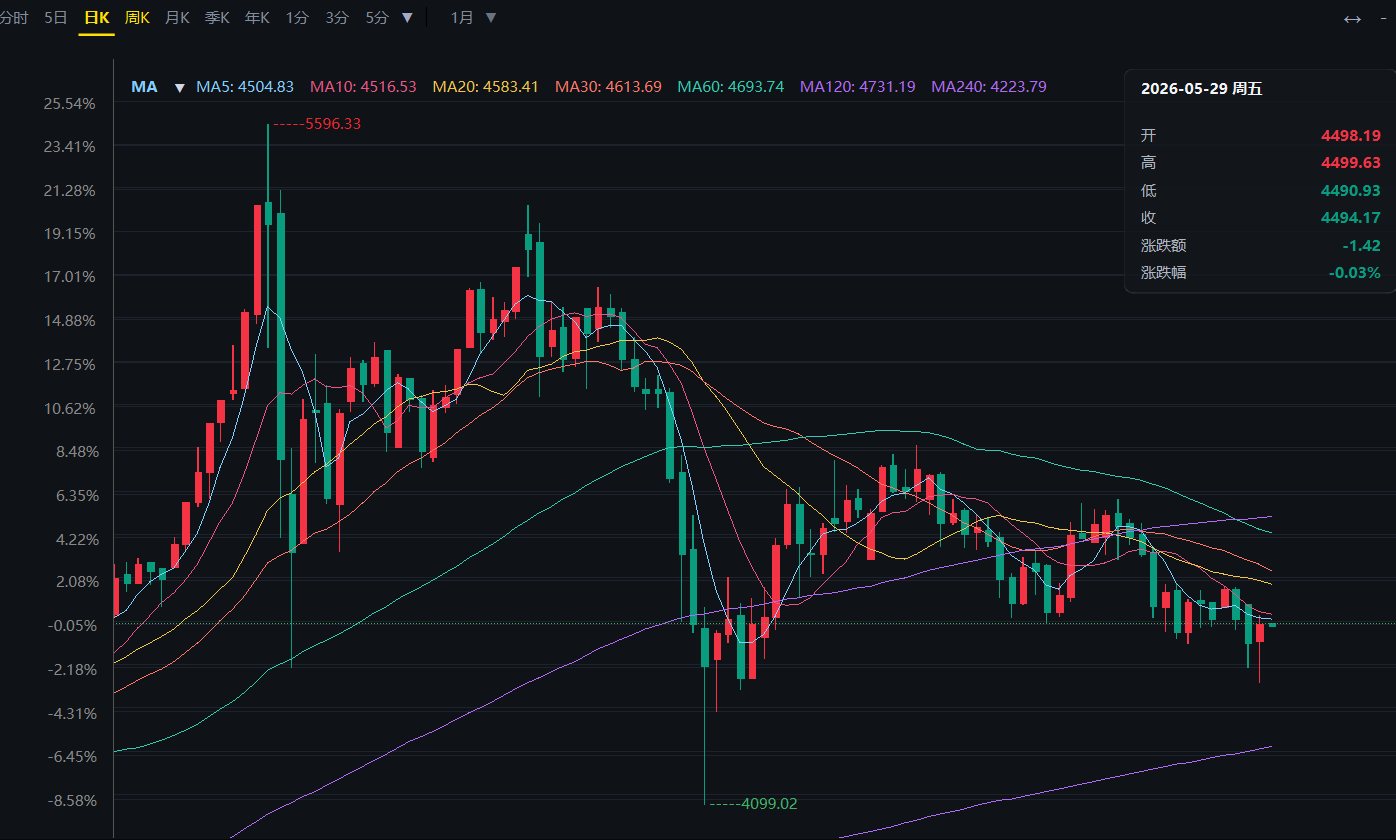
According to sources, the United States and Iran have reached a memorandum of understanding to extend the ceasefire for 60 days, pending approval by US President Trump. This news caused the dollar index to fall by 0.2%, thus providing support for gold prices.
Meanwhile, the US PCE price index rose 0.4% month-on-month and 3.8% year-on-year in April, in line with expectations. Despite gold's safe-haven appeal, its price has been under pressure since the outbreak of the conflict between the US and Israel over Iran at the end of February, influenced by inflation concerns and expectations of rising interest rates.
In other precious metals, spot silver rose 1.3%, platinum remained stable, and palladium fell 1.4%.
Oil prices fell on Thursday, with Brent crude down 0.42% to $92.49 a barrel. WTI crude fell nearly 1% to $88.53 a barrel. Four sources familiar with the matter said the two sides had reached an agreement to extend the contract for 60 days, but Iran's Tasnim News Agency said the text of the memorandum of understanding had not yet been finalized. Meanwhile, the Iranian Revolutionary Guard stated that it had attacked a U.S. air base, causing oil prices to rise more than 2% in early trading.
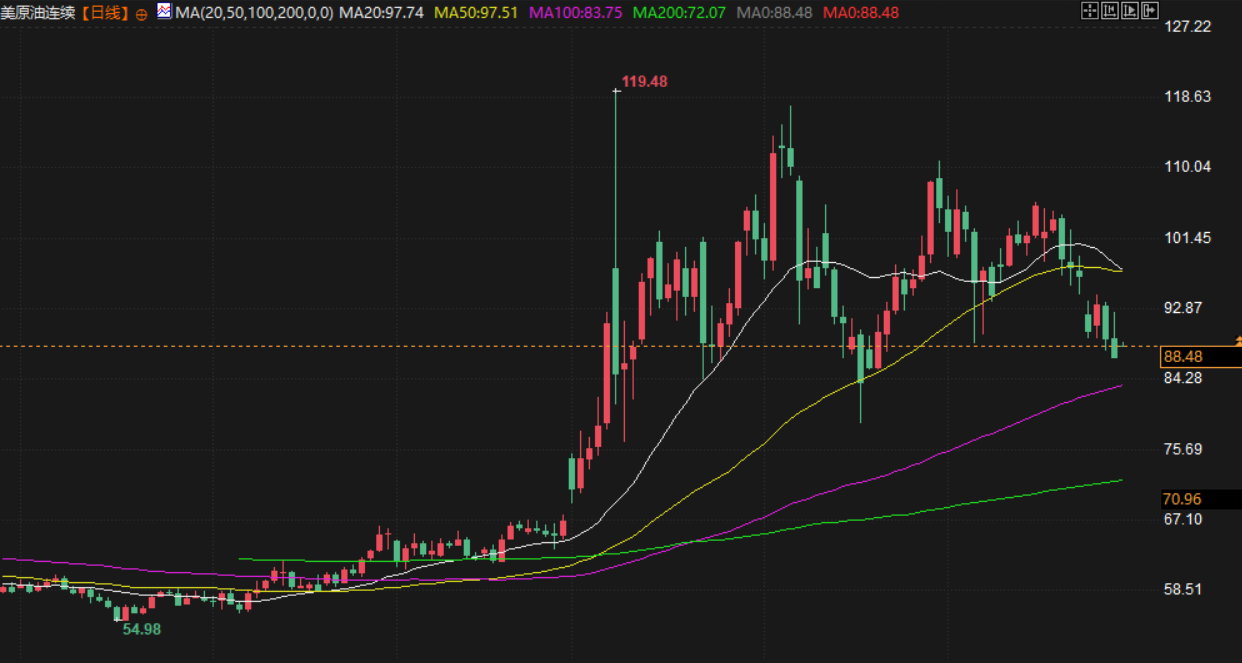
In addition, although U.S. crude oil inventories declined for the sixth consecutive week last week, the decline was less than expected (a decrease of 3.3 million barrels compared to an expected decrease of 4.1 million barrels), putting downward pressure on oil prices.
"Oil prices are barely rising, driven by positive news from Iran, but they will plummet at the slightest sign of the Strait of Hormuz reopening," said Ritterbusch and Associates, an oil trading consultancy.
The dollar index fell 0.23% to 99.01 on Thursday, ending a two-day winning streak, influenced by news that the US and Iran had reached an agreement to extend the ceasefire.
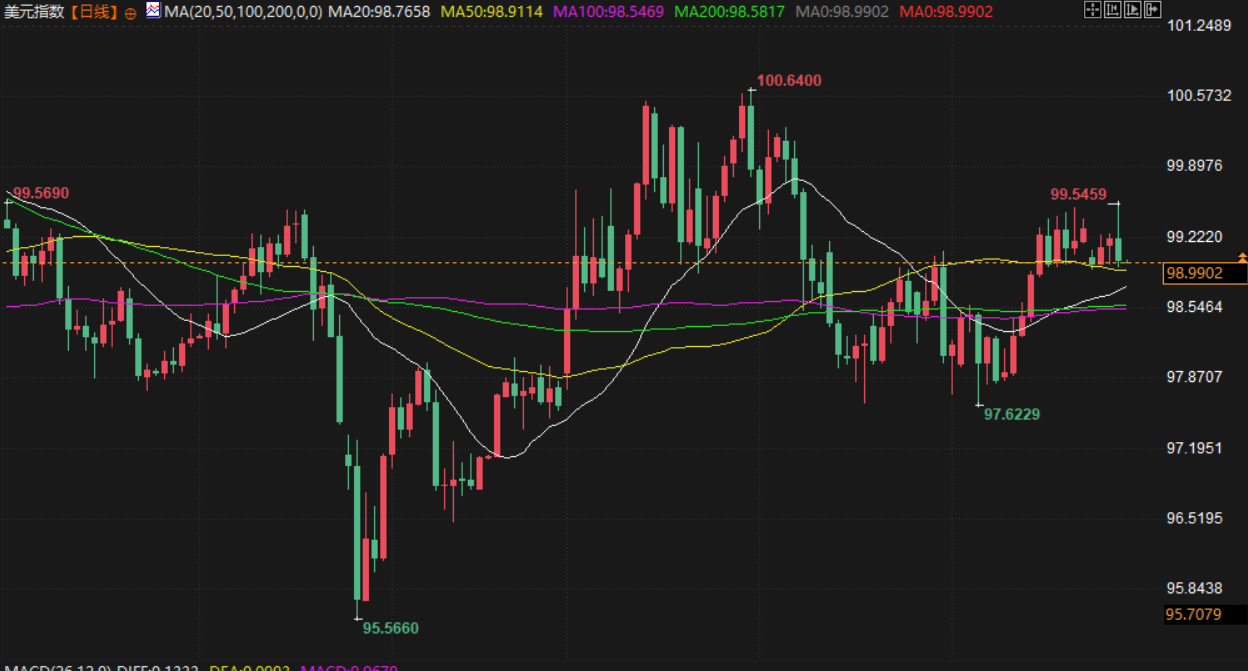
According to four sources familiar with the matter, Washington and Tehran have agreed to extend the ceasefire for another 60 days and allow ships to pass through strategic waterways, while also working to resolve thorny issues such as Iran's nuclear program.
The US dollar has fluctuated recently as expectations for the Middle East conflict have changed: signs of easing tensions have weakened the dollar, while escalating conflict has boosted it.
The euro rose 0.20% to $1.1649, while the dollar fell 0.37% against the Swiss franc to 0.784. On the economic data front, the US April PCE price index rose 0.4% month-on-month, but core PCE rose only 0.2%, and first-quarter GDP was revised downwards. This led the market to believe that the Federal Reserve may not need to insist on "keeping interest rates at a higher level for a longer period," supporting risk appetite.
Meanwhile, the yen hovered near the psychological level of 160 yen to the dollar, with investors closely watching for any further intervention from Japanese officials; the yen edged up 0.19% to 159.22 yen to the dollar. Risk currencies, the Australian and New Zealand dollars, strengthened, rising 0.32% and 0.51% respectively.
US Treasury Secretary: Whether a US-Iran agreement can be reached depends on "what the president wants to do".
U.S. Treasury Secretary Matt Bessenter stated at a White House press conference on the 28th that whether the U.S. and Iran can reach a potential agreement depends on whether President Trump supports it. Earlier that day, U.S. media, citing U.S. officials, reported that U.S. and Iranian negotiators had reached a basic agreement on the terms of the memorandum of understanding, pending Trump's final approval. Bessenter did not directly answer several related questions at the press conference, instead stating that "both teams have been in constant communication and consultation," and emphasizing that "everything depends on what the president wants to do." Bessenter said Trump has several clear "red lines": Iran must hand over its highly enriched uranium, Iran cannot develop nuclear weapons, and the Strait of Hormuz must remain open. (Xinhua)
Iranian media: The text of the Iran-US "memorandum of understanding" has not yet been finalized.
Iranian media reported on the 28th that a source close to the Iranian negotiating team denied claims by some Western media outlets that the text of the "memorandum of understanding" between Iran and the United States had been finalized. The source told Tasnim News Agency that claims that the text had been finalized and was "just awaiting formal announcement by both sides" were "not true," and that the relevant documents were "not yet finalized." The source stated that Iran had not yet formally confirmed to the Pakistani mediators that the text had been finalized. The source emphasized that if the agreement text is finalized, Iran will formally notify Pakistan and release it to the public. Until then, any claims from Western sources that the agreement has been finalized are "unreliable." (Xinhua)
Bessenter: Relief from sanctions depends on the extent of Iran's concessions on the nuclear issue.
When asked whether the US would lift some sanctions or unfreeze assets in Iran, Bessant stated that this would depend on whether Iran met the core conditions set by the Trump administration. He said the US-Iran negotiations were a "multi-layered agreement," and "nothing will really be on the table" until Iran makes clear commitments. Bessant indicated that any easing of sanctions would correspond to the extent of Iran's concessions on the nuclear issue, including the transfer of highly enriched uranium. However, he did not directly address whether the US would unfreeze funds or provide cash support to Iran. Bessant also stated that the Trump administration is continuing to strengthen restrictions on Iran's aviation system. He emphasized that Iranian airlines "have become illegal entities," and the US will not allow them to continue operating normally. (CCTV News)
Sources say Iran has not yet agreed to any memorandum of understanding.
On May 28 local time, Saeed Agallou, a member of the Iranian negotiating delegation's media team, stated that Iran has not yet agreed to any memorandum of understanding, nor has it confirmed to the Pakistani mediator that it has approved the memorandum. Furthermore, he explicitly stated that Iran has not made any commitments regarding the nuclear issue during negotiations with the United States. (CCTV News)
US Treasury Secretary: The US will impose multiple restrictions on Iranian airlines.
U.S. Treasury Secretary Bessenter said on social media on the 28th that, as part of economic pressure on Iran, the U.S. will cut off Iranian airlines' access to landing sites, refueling facilities, and ticket sales. Bessenter did not provide further details, and the U.S. Treasury Department website has not yet released an official statement. The U.S. Treasury Department's Office of Foreign Assets Control announced that day that it was adding the Persian Gulf Straits Authority to its "Specially Designated Nationals List," further intensifying sanctions and pressure on Iran. (Xinhua)
The US Treasury Secretary warned Oman against assisting in the collection of tolls in the Strait of Hormuz.
U.S. Treasury Secretary Bessenter warned Oman on social media on the 28th against assisting in the collection of tolls in the Strait of Hormuz, or face sanctions. Bessenter stated that the U.S. government would not tolerate any attempt to forcibly collect tolls in the Strait of Hormuz. "Oman, in particular, should know that the U.S. Treasury Department will severely crack down on any entity that assists in collecting tolls in the strait, whether directly or indirectly; any such collaborators will be sanctioned." According to Iranian media reports on the 27th, Ali Bagheri, Deputy Secretary of Iran's Supreme National Security Council, stated that Iran and Oman are currently consulting on a new mechanism for ships passing through the Strait of Hormuz. U.S. President Trump said on the 27th that the Strait of Hormuz is not under anyone's jurisdiction and warned Oman that if it "doesn't play by the rules," it will be "bombed." (Xinhua)
The European Union plans to introduce incentives to encourage governments to purchase chips manufactured by domestic startups.
A document reveals that the European Commission plans to encourage member states to purchase chips manufactured by domestic startups, thereby reducing Europe's dependence on chip products from the United States and other countries. This proposal, titled "Chip Act 2.0," supplements the original "Chip Act," which came into effect three years ago. The original act aimed to attract advanced chip production capacity and double the EU's global chip market share to 20% by 2030, but these goals have not yet been achieved. The document points out that the original "Chip Act" focused on supply-side measures, while Chip Act 2.0 will target the demand side. The document states: "The new act will introduce a demand-promoting mechanism, connecting supply and demand through offtake agreements and demand matching platforms, thereby increasing the application scale of EU-developed and domestically produced chips."
Space computing power is booming; the space economy market size may exceed one trillion US dollars.
The concept of space computing power has garnered increasing attention this year. Recently, the Ministry of Industry and Information Technology stated its support for forward-looking research into space computing technology and the orderly development of the space computing power industry. Space computing power refers to deploying computing hardware such as chips and servers directly onto satellites in space, allowing the satellites to process data in orbit. Its advantages lie primarily in "real-time performance" and "coverage." Industry institutions predict that the global space economy market will exceed one trillion US dollars by 2030. Space computing power is a crucial infrastructure component. It is understood that the domestic industry is currently building a larger computing constellation and tackling core technologies. In April of this year, the Space Computing Power Innovation Center, involving multiple stakeholders from industry, academia, and research, was launched in the Beijing Economic-Technological Development Area. Simultaneously, a "List of Key Common Technologies for Space Computing Power" was released, focusing on core links in the industrial chain such as reusable rockets, space photovoltaics, laser communication, and radiation-resistant chips. Future funding for individual projects could reach up to 10 million yuan. (CCTV Finance)
Key Focus Today
stock market
U.S. stocks closed higher on Friday, with the S&P 500 and Nasdaq both hitting record closing highs, after reports that the U.S. and Iran had agreed to extend the ceasefire for 60 days and begin negotiations on Iran's nuclear program, although the agreement still requires President Trump's approval.
The S&P 500 rose 0.58% to close at 7563.71; the Nasdaq Composite rose 0.91% to close at 26917.47; and the Dow Jones Industrial Average rose 0.04% to close at 50666.29.
Investors also digested key economic data: U.S. inflation rose in April, the largest increase in three years, driven by rising energy prices, while first-quarter GDP was revised down to an annualized growth of 1.6%.
In terms of individual stocks, Eli Lilly's stock price rose after CVS resumed reimbursement for the weight loss drug Zepbound; Microsoft's stock rose on news of an upcoming release of a new programming model; Snowflake's stock price soared after it raised its annual revenue forecast and announced a $6 billion AI deal with Amazon AWS, which also boosted Datadog and MongoDB.
In addition, Dollar Tree and Best Buy rose on positive earnings expectations, while drone-related stocks also climbed on reports that the Trump administration planned to fund drone companies. Despite lingering geopolitical risks and inflationary pressures, market confidence in AI and strong corporate earnings continued to support the rally.
Gold Market
Gold prices rebounded more than 1% on Thursday, recovering from a two-month low hit earlier in the session, with spot gold rising 1.1% to $4,504.07 an ounce, buoyed by news that the U.S. and Iran had reached an agreement to extend the framework of the ceasefire.
According to sources, the United States and Iran have reached a memorandum of understanding to extend the ceasefire for 60 days, pending approval by US President Trump. This news caused the dollar index to fall by 0.2%, thus providing support for gold prices.
Meanwhile, the US PCE price index rose 0.4% month-on-month and 3.8% year-on-year in April, in line with expectations. Despite gold's safe-haven appeal, its price has been under pressure since the outbreak of the conflict between the US and Israel over Iran at the end of February, influenced by inflation concerns and expectations of rising interest rates.
In other precious metals, spot silver rose 1.3%, platinum remained stable, and palladium fell 1.4%.
oil market
Oil prices fell on Thursday, with Brent crude down 0.42% to $92.49 a barrel. WTI crude fell nearly 1% to $88.53 a barrel. Four sources familiar with the matter said the two sides had reached an agreement to extend the contract for 60 days, but Iran's Tasnim News Agency said the text of the memorandum of understanding had not yet been finalized. Meanwhile, the Iranian Revolutionary Guard stated that it had attacked a U.S. air base, causing oil prices to rise more than 2% in early trading.
In addition, although U.S. crude oil inventories declined for the sixth consecutive week last week, the decline was less than expected (a decrease of 3.3 million barrels compared to an expected decrease of 4.1 million barrels), putting downward pressure on oil prices.
"Oil prices are barely rising, driven by positive news from Iran, but they will plummet at the slightest sign of the Strait of Hormuz reopening," said Ritterbusch and Associates, an oil trading consultancy.
Foreign exchange market
The dollar index fell 0.23% to 99.01 on Thursday, ending a two-day winning streak, influenced by news that the US and Iran had reached an agreement to extend the ceasefire.
According to four sources familiar with the matter, Washington and Tehran have agreed to extend the ceasefire for another 60 days and allow ships to pass through strategic waterways, while also working to resolve thorny issues such as Iran's nuclear program.
The US dollar has fluctuated recently as expectations for the Middle East conflict have changed: signs of easing tensions have weakened the dollar, while escalating conflict has boosted it.
The euro rose 0.20% to $1.1649, while the dollar fell 0.37% against the Swiss franc to 0.784. On the economic data front, the US April PCE price index rose 0.4% month-on-month, but core PCE rose only 0.2%, and first-quarter GDP was revised downwards. This led the market to believe that the Federal Reserve may not need to insist on "keeping interest rates at a higher level for a longer period," supporting risk appetite.
Meanwhile, the yen hovered near the psychological level of 160 yen to the dollar, with investors closely watching for any further intervention from Japanese officials; the yen edged up 0.19% to 159.22 yen to the dollar. Risk currencies, the Australian and New Zealand dollars, strengthened, rising 0.32% and 0.51% respectively.
International News
US Treasury Secretary: Whether a US-Iran agreement can be reached depends on "what the president wants to do".
U.S. Treasury Secretary Matt Bessenter stated at a White House press conference on the 28th that whether the U.S. and Iran can reach a potential agreement depends on whether President Trump supports it. Earlier that day, U.S. media, citing U.S. officials, reported that U.S. and Iranian negotiators had reached a basic agreement on the terms of the memorandum of understanding, pending Trump's final approval. Bessenter did not directly answer several related questions at the press conference, instead stating that "both teams have been in constant communication and consultation," and emphasizing that "everything depends on what the president wants to do." Bessenter said Trump has several clear "red lines": Iran must hand over its highly enriched uranium, Iran cannot develop nuclear weapons, and the Strait of Hormuz must remain open. (Xinhua)
Iranian media: The text of the Iran-US "memorandum of understanding" has not yet been finalized.
Iranian media reported on the 28th that a source close to the Iranian negotiating team denied claims by some Western media outlets that the text of the "memorandum of understanding" between Iran and the United States had been finalized. The source told Tasnim News Agency that claims that the text had been finalized and was "just awaiting formal announcement by both sides" were "not true," and that the relevant documents were "not yet finalized." The source stated that Iran had not yet formally confirmed to the Pakistani mediators that the text had been finalized. The source emphasized that if the agreement text is finalized, Iran will formally notify Pakistan and release it to the public. Until then, any claims from Western sources that the agreement has been finalized are "unreliable." (Xinhua)
Bessenter: Relief from sanctions depends on the extent of Iran's concessions on the nuclear issue.
When asked whether the US would lift some sanctions or unfreeze assets in Iran, Bessant stated that this would depend on whether Iran met the core conditions set by the Trump administration. He said the US-Iran negotiations were a "multi-layered agreement," and "nothing will really be on the table" until Iran makes clear commitments. Bessant indicated that any easing of sanctions would correspond to the extent of Iran's concessions on the nuclear issue, including the transfer of highly enriched uranium. However, he did not directly address whether the US would unfreeze funds or provide cash support to Iran. Bessant also stated that the Trump administration is continuing to strengthen restrictions on Iran's aviation system. He emphasized that Iranian airlines "have become illegal entities," and the US will not allow them to continue operating normally. (CCTV News)
Sources say Iran has not yet agreed to any memorandum of understanding.
On May 28 local time, Saeed Agallou, a member of the Iranian negotiating delegation's media team, stated that Iran has not yet agreed to any memorandum of understanding, nor has it confirmed to the Pakistani mediator that it has approved the memorandum. Furthermore, he explicitly stated that Iran has not made any commitments regarding the nuclear issue during negotiations with the United States. (CCTV News)
US Treasury Secretary: The US will impose multiple restrictions on Iranian airlines.
U.S. Treasury Secretary Bessenter said on social media on the 28th that, as part of economic pressure on Iran, the U.S. will cut off Iranian airlines' access to landing sites, refueling facilities, and ticket sales. Bessenter did not provide further details, and the U.S. Treasury Department website has not yet released an official statement. The U.S. Treasury Department's Office of Foreign Assets Control announced that day that it was adding the Persian Gulf Straits Authority to its "Specially Designated Nationals List," further intensifying sanctions and pressure on Iran. (Xinhua)
The US Treasury Secretary warned Oman against assisting in the collection of tolls in the Strait of Hormuz.
U.S. Treasury Secretary Bessenter warned Oman on social media on the 28th against assisting in the collection of tolls in the Strait of Hormuz, or face sanctions. Bessenter stated that the U.S. government would not tolerate any attempt to forcibly collect tolls in the Strait of Hormuz. "Oman, in particular, should know that the U.S. Treasury Department will severely crack down on any entity that assists in collecting tolls in the strait, whether directly or indirectly; any such collaborators will be sanctioned." According to Iranian media reports on the 27th, Ali Bagheri, Deputy Secretary of Iran's Supreme National Security Council, stated that Iran and Oman are currently consulting on a new mechanism for ships passing through the Strait of Hormuz. U.S. President Trump said on the 27th that the Strait of Hormuz is not under anyone's jurisdiction and warned Oman that if it "doesn't play by the rules," it will be "bombed." (Xinhua)
The European Union plans to introduce incentives to encourage governments to purchase chips manufactured by domestic startups.
A document reveals that the European Commission plans to encourage member states to purchase chips manufactured by domestic startups, thereby reducing Europe's dependence on chip products from the United States and other countries. This proposal, titled "Chip Act 2.0," supplements the original "Chip Act," which came into effect three years ago. The original act aimed to attract advanced chip production capacity and double the EU's global chip market share to 20% by 2030, but these goals have not yet been achieved. The document points out that the original "Chip Act" focused on supply-side measures, while Chip Act 2.0 will target the demand side. The document states: "The new act will introduce a demand-promoting mechanism, connecting supply and demand through offtake agreements and demand matching platforms, thereby increasing the application scale of EU-developed and domestically produced chips."
Domestic News
Space computing power is booming; the space economy market size may exceed one trillion US dollars.
The concept of space computing power has garnered increasing attention this year. Recently, the Ministry of Industry and Information Technology stated its support for forward-looking research into space computing technology and the orderly development of the space computing power industry. Space computing power refers to deploying computing hardware such as chips and servers directly onto satellites in space, allowing the satellites to process data in orbit. Its advantages lie primarily in "real-time performance" and "coverage." Industry institutions predict that the global space economy market will exceed one trillion US dollars by 2030. Space computing power is a crucial infrastructure component. It is understood that the domestic industry is currently building a larger computing constellation and tackling core technologies. In April of this year, the Space Computing Power Innovation Center, involving multiple stakeholders from industry, academia, and research, was launched in the Beijing Economic-Technological Development Area. Simultaneously, a "List of Key Common Technologies for Space Computing Power" was released, focusing on core links in the industrial chain such as reusable rockets, space photovoltaics, laser communication, and radiation-resistant chips. Future funding for individual projects could reach up to 10 million yuan. (CCTV Finance)
- Risk Warning and Disclaimer
- The market involves risk, and trading may not be suitable for all investors. This article is for reference only and does not constitute personal investment advice, nor does it take into account certain users’ specific investment objectives, financial situation, or other needs. Any investment decisions made based on this information are at your own risk.