The expectation of a US-Iran ceasefire weakened demand for the US dollar as a safe haven, causing the pound to rebound after hitting a low against the dollar.
2026-05-29 13:35:05
The pound rose slightly against the dollar in Asian trading on Friday, hovering around 1.3450. As positive signals emerged from the US-Iran ceasefire extension negotiations, market risk aversion eased, reducing demand for the dollar and propelling the pound to its second consecutive day of gains.
The United States and Iran have reached a preliminary agreement to extend the ceasefire for 60 days. If the agreement is ultimately implemented, shipping in the Strait of Hormuz is expected to return to stability. According to the agreement, Iran will clear mines from the waterway within 30 days, thereby reducing risks to global energy transport.
However, the market remains cautious about the agreement. US President Trump has not yet formally approved its terms, and Vice President Vance stated that while the two sides have "not yet reached a final agreement," overall negotiations are nearing completion. Meanwhile, the US continues to emphasize that it will maintain a tough stance on Iran's nuclear program if necessary.
Nevertheless, the market generally believes that the easing of tensions in the Middle East helps reduce global market concerns about energy supply disruptions. With international oil prices continuing to decline recently, global inflationary pressures have also shown signs of cooling. WTI crude oil has fallen by nearly 15% this month, and the energy risk premium previously driven by the Middle East situation is rapidly receding.
The US dollar had already faced some downward pressure before the geopolitical news was released, due to the fact that the latest US PCE inflation data was generally weaker than the market's most pessimistic expectations. Data showed that the US PCE price index rose 0.4% month-on-month in April, while core PCE rose 0.2% month-on-month. Although the annual inflation level remains above the Fed's target, the market had been concerned that the energy shock could further push up core inflation, but the actual results did not significantly exceed expectations.
Analysts believe that the moderate core PCE data has eased market concerns about the Federal Reserve maintaining high interest rates for an extended period. Some investors are beginning to bet again that the Fed's future policy stance may not be as aggressive as previously feared, which provides some support for risk assets overall.
Joel Krueger, market strategist at LMAX Group, said that slowing core inflation and a gradual cooling of economic growth in the United States mean that the Federal Reserve may reduce its policy of "maintaining high interest rates for a long time," a change that usually benefits risk currencies.
The pound sterling received some support amid a weaker dollar. However, recent signs of a cooling economy in the UK have limited further upside potential. The UK job market has been weak recently, inflation has slowed, and economic activity has shown signs of deceleration, leading to a significant decline in market expectations for further interest rate hikes by the Bank of England.
At the same time, the decline in international oil prices has further alleviated imported inflationary pressures in the UK. Since the UK is highly dependent on energy imports, lower oil prices typically help mitigate inflation risks, but this also means that the Bank of England has less need to maintain high interest rates.
The market is currently adjusting its expectations regarding the Bank of England's policy path. Some investors believe that if future UK economic data continues to weaken, the Bank of England may signal an interest rate cut sooner than previously anticipated. Cooling expectations for UK interest rates are one of the key factors currently limiting the pound's rise.
From the perspective of the global foreign exchange market, current exchange rate fluctuations still revolve around the core issues of "high US dollar interest rates" and "recovery of global risk sentiment." Although the US dollar has experienced a short-term pullback due to the impact of PCE data and the easing of tensions in the Middle East, the US economy as a whole remains resilient, and US Treasury yields remain high. This means that the overall medium- to long-term support for the US dollar has not completely disappeared.
From a technical perspective, the GBP/USD daily chart currently maintains a slightly bullish trend. After the exchange rate climbed back above 1.3400, bullish sentiment has recovered somewhat. The daily MACD indicator is gradually recovering upwards, and the RSI has risen to around 55, indicating improved short-term momentum. If it breaks through the 1.3480 area effectively, it may further test the resistance levels of 1.3520 and 1.3550.
From a 4-hour chart perspective, the short-term moving average system for GBP/USD is gradually turning bullish, indicating a potential for further rebound. However, strong psychological resistance remains around 1.3500. If the US dollar strengthens again, the exchange rate may fall back to test the support areas of 1.3400 and 1.3360.
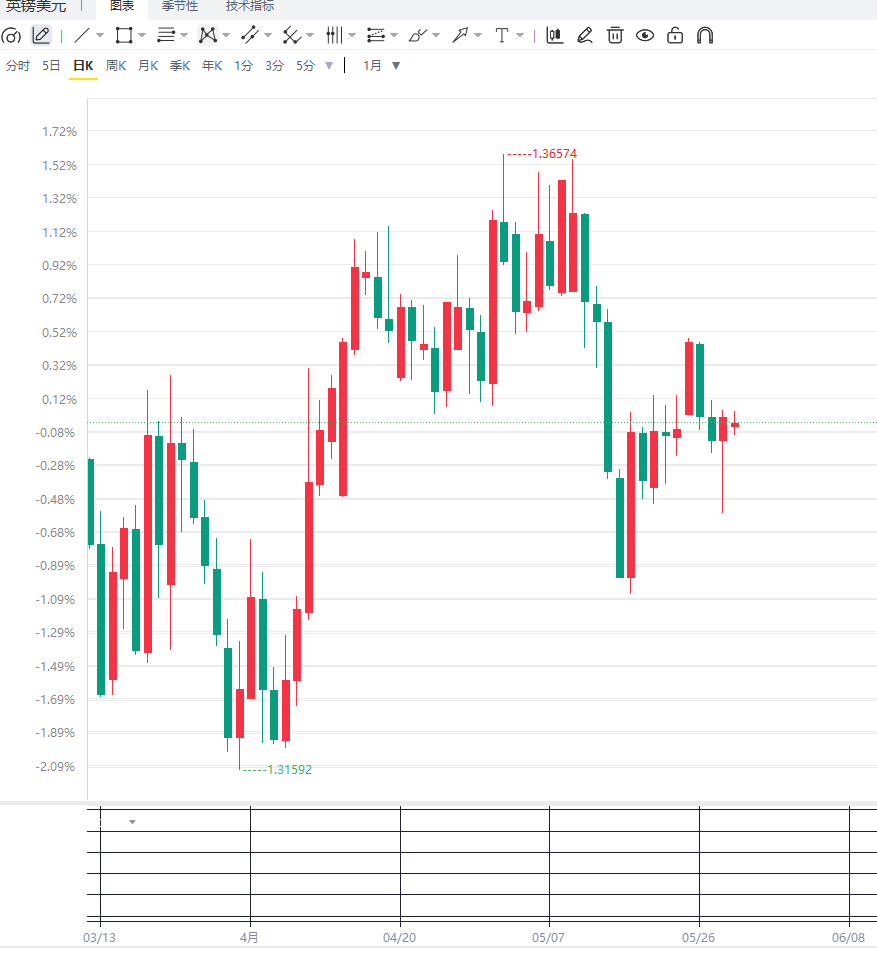
Overall, the current movement of the pound against the dollar is mainly driven by the dollar's recent pullback, but the cooling of the UK economy and weakening expectations for the Bank of England's policy are limiting the pound's upside potential in the medium to long term. Going forward, the market will focus on US economic data, the Federal Reserve's policy path, and changes in UK inflation and employment data.
Editor's Summary : The recent rebound in the pound against the dollar was mainly driven by a short-term dollar correction, progress in the US-Iran ceasefire negotiations, and weaker-than-expected US PCE data, which eased market risk aversion and high inflationary pressures. However, the UK's own economic fundamentals are also cooling, and expectations for further tightening by the Bank of England have significantly decreased, limiting the pound's overall upside potential. The core market logic is gradually shifting from "geopolitical risk trading" to "trading on the policy paths of major global central banks." The future trajectory of the pound will depend on whether the UK economy continues to slow, whether the Federal Reserve maintains high interest rates for a longer period, and whether global risk sentiment can continue to improve.
The United States and Iran have reached a preliminary agreement to extend the ceasefire for 60 days. If the agreement is ultimately implemented, shipping in the Strait of Hormuz is expected to return to stability. According to the agreement, Iran will clear mines from the waterway within 30 days, thereby reducing risks to global energy transport.
However, the market remains cautious about the agreement. US President Trump has not yet formally approved its terms, and Vice President Vance stated that while the two sides have "not yet reached a final agreement," overall negotiations are nearing completion. Meanwhile, the US continues to emphasize that it will maintain a tough stance on Iran's nuclear program if necessary.
Nevertheless, the market generally believes that the easing of tensions in the Middle East helps reduce global market concerns about energy supply disruptions. With international oil prices continuing to decline recently, global inflationary pressures have also shown signs of cooling. WTI crude oil has fallen by nearly 15% this month, and the energy risk premium previously driven by the Middle East situation is rapidly receding.
The US dollar had already faced some downward pressure before the geopolitical news was released, due to the fact that the latest US PCE inflation data was generally weaker than the market's most pessimistic expectations. Data showed that the US PCE price index rose 0.4% month-on-month in April, while core PCE rose 0.2% month-on-month. Although the annual inflation level remains above the Fed's target, the market had been concerned that the energy shock could further push up core inflation, but the actual results did not significantly exceed expectations.
Analysts believe that the moderate core PCE data has eased market concerns about the Federal Reserve maintaining high interest rates for an extended period. Some investors are beginning to bet again that the Fed's future policy stance may not be as aggressive as previously feared, which provides some support for risk assets overall.
Joel Krueger, market strategist at LMAX Group, said that slowing core inflation and a gradual cooling of economic growth in the United States mean that the Federal Reserve may reduce its policy of "maintaining high interest rates for a long time," a change that usually benefits risk currencies.
The pound sterling received some support amid a weaker dollar. However, recent signs of a cooling economy in the UK have limited further upside potential. The UK job market has been weak recently, inflation has slowed, and economic activity has shown signs of deceleration, leading to a significant decline in market expectations for further interest rate hikes by the Bank of England.
At the same time, the decline in international oil prices has further alleviated imported inflationary pressures in the UK. Since the UK is highly dependent on energy imports, lower oil prices typically help mitigate inflation risks, but this also means that the Bank of England has less need to maintain high interest rates.
The market is currently adjusting its expectations regarding the Bank of England's policy path. Some investors believe that if future UK economic data continues to weaken, the Bank of England may signal an interest rate cut sooner than previously anticipated. Cooling expectations for UK interest rates are one of the key factors currently limiting the pound's rise.
From the perspective of the global foreign exchange market, current exchange rate fluctuations still revolve around the core issues of "high US dollar interest rates" and "recovery of global risk sentiment." Although the US dollar has experienced a short-term pullback due to the impact of PCE data and the easing of tensions in the Middle East, the US economy as a whole remains resilient, and US Treasury yields remain high. This means that the overall medium- to long-term support for the US dollar has not completely disappeared.
From a technical perspective, the GBP/USD daily chart currently maintains a slightly bullish trend. After the exchange rate climbed back above 1.3400, bullish sentiment has recovered somewhat. The daily MACD indicator is gradually recovering upwards, and the RSI has risen to around 55, indicating improved short-term momentum. If it breaks through the 1.3480 area effectively, it may further test the resistance levels of 1.3520 and 1.3550.
From a 4-hour chart perspective, the short-term moving average system for GBP/USD is gradually turning bullish, indicating a potential for further rebound. However, strong psychological resistance remains around 1.3500. If the US dollar strengthens again, the exchange rate may fall back to test the support areas of 1.3400 and 1.3360.
Overall, the current movement of the pound against the dollar is mainly driven by the dollar's recent pullback, but the cooling of the UK economy and weakening expectations for the Bank of England's policy are limiting the pound's upside potential in the medium to long term. Going forward, the market will focus on US economic data, the Federal Reserve's policy path, and changes in UK inflation and employment data.
Editor's Summary : The recent rebound in the pound against the dollar was mainly driven by a short-term dollar correction, progress in the US-Iran ceasefire negotiations, and weaker-than-expected US PCE data, which eased market risk aversion and high inflationary pressures. However, the UK's own economic fundamentals are also cooling, and expectations for further tightening by the Bank of England have significantly decreased, limiting the pound's overall upside potential. The core market logic is gradually shifting from "geopolitical risk trading" to "trading on the policy paths of major global central banks." The future trajectory of the pound will depend on whether the UK economy continues to slow, whether the Federal Reserve maintains high interest rates for a longer period, and whether global risk sentiment can continue to improve.
- Risk Warning and Disclaimer
- The market involves risk, and trading may not be suitable for all investors. This article is for reference only and does not constitute personal investment advice, nor does it take into account certain users’ specific investment objectives, financial situation, or other needs. Any investment decisions made based on this information are at your own risk.