June 1st Financial Breakfast: Trump tightens terms of the Iran nuclear deal, Iran hardlines "will not approve any agreement," gold prices hold above $4540, US oil touches the $90 mark.
2026-06-01 07:23:23
On Monday (June 1st, Beijing time) in early Asian trading, spot gold was trading around $4542 per ounce. The probability of a Fed rate hike this year has slightly decreased to approximately 48.2%, supporting gold prices. Meanwhile, Trump tightened the terms of the Iran nuclear deal, and it is reported that Iran will revise the draft Iran-US agreement according to its own position. The Iranian parliament speaker stated that no agreement will be approved until the rights of the Iranian people are guaranteed. Affected by this, oil prices rebounded, with US crude oil opening nearly 3% higher, touching above $90 per barrel, and currently trading around $89.51 per barrel.

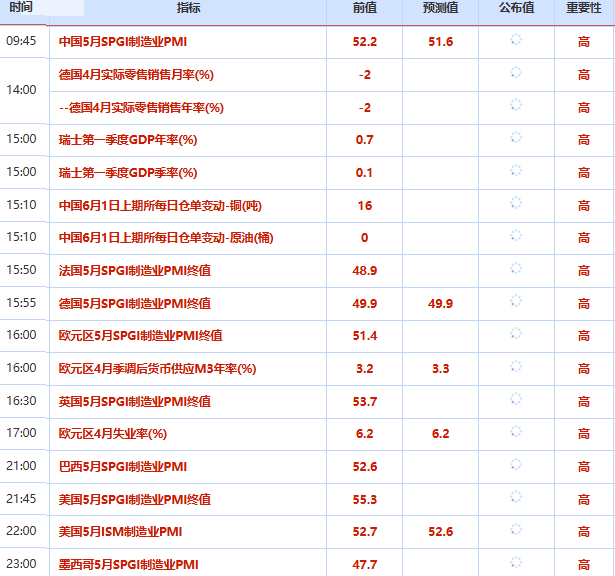
U.S. stocks closed at record highs on Friday, with all three major indexes posting weekly and monthly gains. Boosted by strong technology stocks and the prospect of a Middle East agreement, the S&P 500 rose 0.21% to 7579.74, the Nasdaq Composite rose 0.20% to 26971.21, and the Dow Jones Industrial Average rose 0.72% to 51032.45.
Dell's stock price surged after it raised its full-year earnings forecast, boosting the technology sector. Market optimism about artificial intelligence and strong earnings reports continued to drive stock indices higher; meanwhile, investors awaited details of a potential US-Iran agreement.
Communication services and consumer staples sectors performed poorly, with Gap's stock price plunging after it lowered its annual sales forecast.
On the economic data front, the US inflation rate rose at its fastest pace in three years in April, and the first-quarter GDP was revised down to an annual growth rate of 1.6%. Federal Reserve officials warned that the energy shock may not be a temporary phenomenon, and the market expects interest rates to remain unchanged for the rest of the year, but a 25 basis point rate hike is possible in December.
Gold prices rose more than 1% on Friday, with spot gold closing at $4,539.78 per ounce. Gold prices had hit a two-month low of $4,366.52 last week, driven by optimism that the US and Iran might agree to extend the ceasefire agreement.
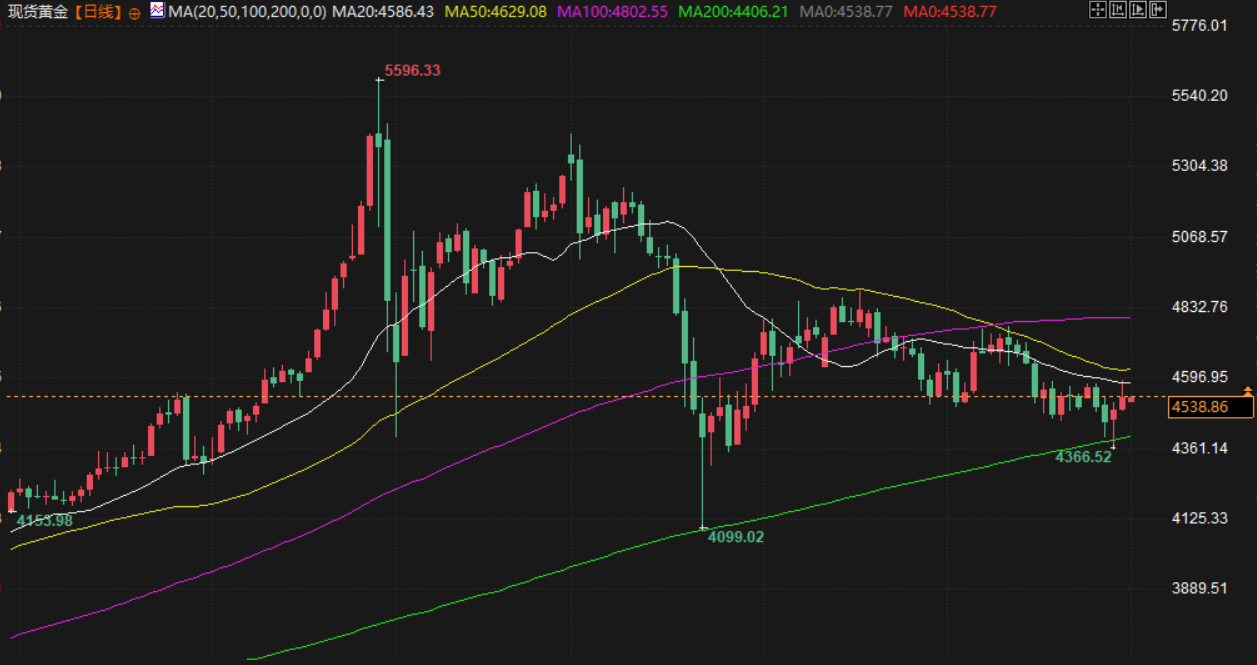
Gold prices fell more than 1% on the month, dragged down by inflation concerns and expectations of interest rate hikes. US President Trump stated he would make a decision on extending the ceasefire agreement, which must include opening the Strait of Hormuz and eliminating Iran's nuclear capabilities. Analysts pointed out that the ceasefire expectation pressured the dollar and oil prices lower, providing support for gold. However, disruptions to energy supplies and damage to infrastructure could keep oil prices high, prompting the Federal Reserve to remain cautious. The theme of "prolonged high interest rates" remains unchanged.
Data shows that the US inflation rate hit a three-year high in April due to the impact of the war with Iran on energy prices, reinforcing market expectations that the Federal Reserve will keep interest rates unchanged until next fall. The rise in interest rates increases the opportunity cost of holding non-yielding gold.
In other precious metals, spot silver remained unchanged at $75.62, marking a monthly increase; platinum fell 0.3% to $1,917.65; and palladium fell 1.1% to $1,352.24, with a decline of over 11% in May.
Oil prices fell more than 9.5% last week, marking the biggest weekly drop since early April. U.S. crude oil closed at $87.76 a barrel on Friday, influenced by market expectations that the United States, Israel and Iran would reach a ceasefire agreement and lift shipping restrictions in the Strait of Hormuz.
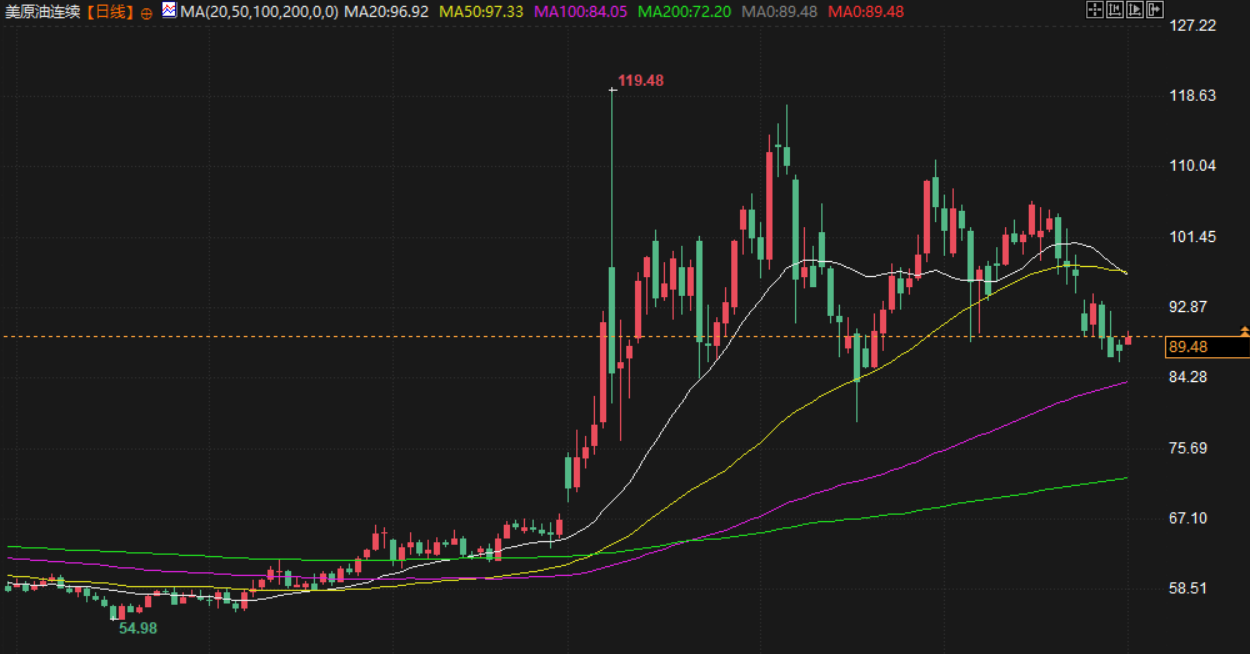
Analysts say the market considers a ceasefire a "sure thing," although there are still differences in how the US and Iran describe the agreement. Iran's Fars News Agency says the agreement requires Iran to open the Strait of Hormuz without restrictions, but Iran will reopen it according to a "pre-determined arrangement" and collect transit fees, and Iran has not yet decided whether to approve it; US President Trump, on the other hand, has called for the immediate reopening of the Strait.
UBS analysts pointed out that despite continued restrictions on oil transportation and declining inventories, market focus remains on the possibility of an agreement, and falling oil prices may force some market participants to close out long positions. Sources revealed that the US and Iran reached a preliminary agreement last Thursday to extend the ceasefire and lift shipping restrictions in the Strait of Hormuz.
The dollar index fell on Friday, marking its second consecutive weekly decline, and remained flat at 98.92, as progress in extending the ceasefire between the US and Iran and easing shipping restrictions in the Strait of Hormuz weakened safe-haven demand.
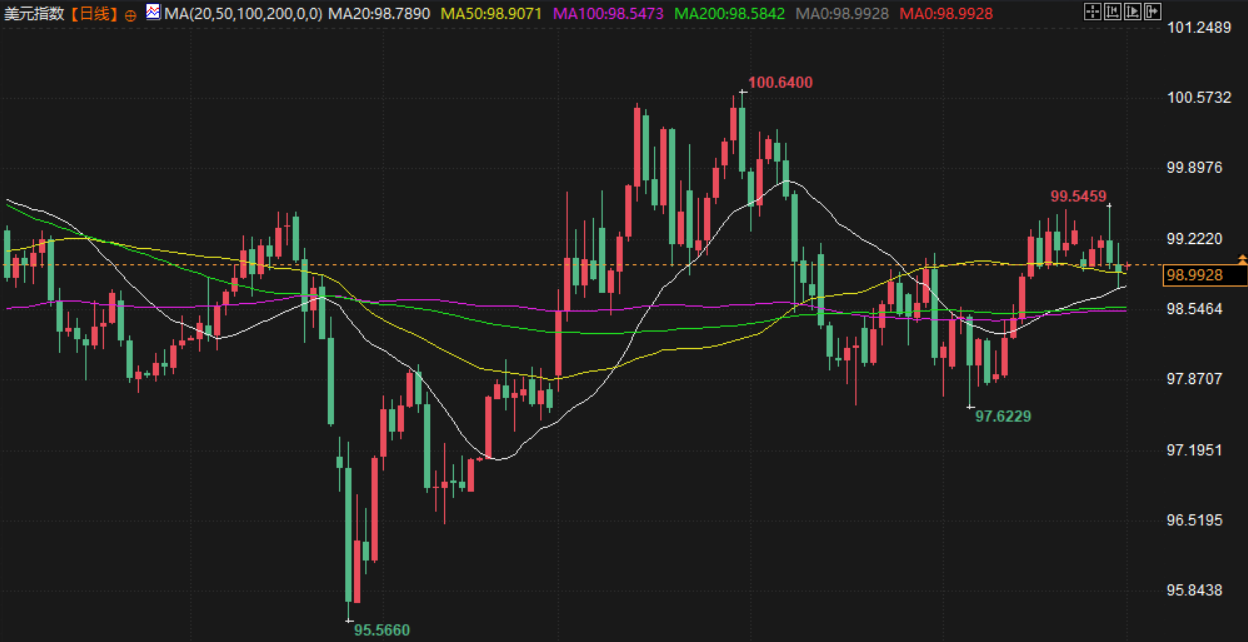
The euro rose 0.12% to $1.16620, and the pound rose 0.18% to $1.3466, both posting weekly gains. Four sources said that US President Trump will make a final decision on a plan to extend the ceasefire for 60 days and restore navigation through the Straits of Hormuz, after which negotiators will discuss contentious issues such as Iran's nuclear program.
Analysts point out that the overall trend of the US dollar has stagnated due to the lack of a complete narrative framework and the many unresolved issues. Although the US inflation rate rose to its highest level in three years in April, futures market pricing almost universally points to interest rate hikes, but the dollar interest rate has not risen.
The yen traded at 159.27 against the dollar, still hovering near the traditional intervention level of 160. Japan's Ministry of Finance confirmed that it had intervened in the foreign exchange market over the past month, injecting 11.7 trillion yen ($73.5 billion) to support the yen. The Australian dollar rose 0.31% to US$0.71840, while the New Zealand dollar gained nearly 0.85% to US$0.5985, hitting a more than three-month high during the session and extending its recent gains following the Reserve Bank of New Zealand's hints at an interest rate hike.
The probability of the Federal Reserve raising interest rates this year is approximately 48.2%.
According to CME's "FedWatch": The probability of the Federal Reserve keeping interest rates unchanged by June is 99.3%, and the probability of a cumulative rate hike of 25 basis points is 0.7%. The probability of the Federal Reserve keeping interest rates unchanged by July is 94%, and the probability of a cumulative rate hike of 25 basis points is 5.9%. The probability of the Federal Reserve keeping interest rates unchanged by December is 51.8%, and the probability of a rate hike of at least 25 basis points is 48.2%.
Iranian Parliament Speaker: No agreement will be approved until the rights of the Iranian people are guaranteed.
On May 31 local time, Iranian Parliament Speaker Mohammad Ghalibaf, in his opening remarks at the first session of the third year of the 12th Parliament, stated that the fighters in the diplomatic arena have absolutely no trust in the words and promises of their enemies. Iran's sole criterion is the attainment of objective, tangible results; only on this basis will Iran fulfill its corresponding commitments. Iran will never ratify any agreement until the legitimate rights and interests of the Iranian people are fully guaranteed. (CCTV News)
Sources: Iran will revise the draft Iran-US agreement according to its own position.
According to Iran's Tasnim News Agency on May 31, an informed source revealed that the exchange of texts between Iran and the United States regarding the draft agreement is ongoing, and no clauses have been finalized yet. Iran will propose amendments to the draft based on its own position. Regarding reports that "US President Trump has proposed new revisions to the existing text," the source responded that the two sides are still exchanging texts on the potential memorandum of understanding. Iran will also propose revisions according to its own position. For Iran, the criterion for judging the viability of the agreement is whether the final content meets its own requirements. The US proposing revisions does not mean that Iran will accept them. The source also pointed out that Iran is fully prepared for the possibility that a memorandum of understanding cannot be reached.
US officials revealed that Trump proposed tougher terms in an attempt to pressure Iran to accelerate the negotiation process.
On May 30th local time, multiple US officials revealed that US President Trump has significantly revised and tightened the terms of the memorandum of understanding (MOU) concerning ending the US-Iran conflict. The revised version has been submitted to Iran for review. US officials stated that the revised plan is more hardline and aims to pressure Iran to accelerate the negotiation process and accept the framework previously submitted to Iran's Supreme Leader Mojtaba Khamenei. Two US officials indicated that Trump has objections to the MOU's provisions regarding unfreezing Iranian overseas assets. Currently, neither the US nor Iranian officials have made a clear statement regarding the US revisions to the MOU. (CCTV News)
At a critical juncture in the US-Iran agreement, Trump leaves military options open to pressure the market . Trump stated on Saturday that an agreement with Iran is "very close," and the best diplomatic option is to sign the agreement because it would allow "immediate reopening of navigation" in the Strait of Hormuz. He also made a strong statement that if the final agreement is unfair to the United States, he will "again use military force," and his sole core guarantee is preventing Iran from acquiring nuclear weapons. Trump claimed that Iran has agreed not to develop or purchase nuclear weapons, a statement that injected potential easing expectations into the oil supply sector.
Sources say Trump tightens terms of Iran nuclear deal.
According to three officials familiar with the matter, Trump has tightened the terms of a tentative agreement aimed at de-escalating tensions with Iran and has submitted the revised proposal to Iran for review. It remains unclear what specific changes were made to the text. Two officials stated that Trump objected to the provisions in the agreement that proposed lifting the freeze on Iranian assets. One official said that Trump was also quite dissatisfied with Iran's slow response to his proposal.
Iranian lawmaker: Parliament is about to approve the bill on the management and sovereignty of the Strait of Hormuz.
Iranian lawmaker Alireza Salimi stated that the Iranian parliament is about to approve a bill formally establishing the Islamic Republic of Iran's administration and sovereignty over the Strait of Hormuz. He told the Iranian Students' News Agency (ISNA) that the bill concerning "exercising the Islamic Republic of Iran's administration and sovereignty over the Strait of Hormuz" is about to be passed and officially take effect. Salimi emphasized that the entire Strait of Hormuz lies within the territorial waters of Iran and Oman, and only these two countries have the right to decide how to manage the strait.
US company reportedly plans to test upgraded humanoid robots in Ukraine.
According to a May 30 report from the US, a San Francisco-based robotics startup plans to send upgraded humanoid robots to Ukraine this year for ongoing military testing. The company's head stated that the data from the tests in Ukraine will provide insights for future cooperation with the US military, and the company plans to use the humanoid robots for frontline testing within 18 months. Neither the Ukrainian nor the US Department of Defense has responded to the reports. The report states that earlier this year, with US government support, the company sent two humanoid robots to Ukraine for testing, primarily for logistical tasks in dangerous areas, such as retrieving supplies. The company has already secured $24 million in research contracts from the US military, covering feasibility tests for inspection, logistics, and weapons operation for the Army, Navy, and Air Force. The report points out that deploying humanoid robots on the battlefield raises numerous ethical concerns, particularly regarding the use of robots for autonomous decision-making in life-or-death combat. (CCTV News)
The EU is reportedly considering temporarily freezing the cap mechanism on Russian oil prices.
Sources familiar with the matter revealed that the European Union is considering temporarily freezing the price cap on Russian oil as the Middle East war has lasted for four months. Last year, the EU adopted a dynamic mechanism to ensure that the price cap for Russian Urals crude oil is automatically set at 15% below the market average every six months. The current price cap is $44.10 per barrel and will be assessed later this summer. Under this mechanism, European companies are prohibited from providing insurance, transportation, or other services for Russian oil sold at prices higher than this. Oil prices have risen sharply due to the war in Iran and the closure of the Strait of Hormuz. Sources indicated that under the current mechanism, the price cap might be raised to at least $65 per barrel during the next assessment in July, higher than the $60 per barrel threshold previously set by the G7. Other options under consideration include: suspending dynamic and automatic increases until the end of the year, given the special circumstances in the Middle East; or capping any increases at $60 per barrel to align with the G7 level. This move would be part of the EU's latest sanctions package and the 21st round of sanctions imposed by the EU since Russia's full-scale invasion of Ukraine in 2022. The EU plans to finalize and formally propose a package of new measures in June.
Global long-term funds are rapidly flowing into China, with foreign capital heavily investing in China's "hard technologies."
On the 29th, MSCI, a globally renowned index provider, officially implemented its latest quarterly index adjustment. As a core indicator guiding the allocation of trillions of dollars in global assets, this adjustment newly included several Chinese technology companies. Simultaneously, many international investment banks are accelerating their investment in high-quality Chinese assets, and foreign financial institutions' enthusiasm for investing in the Chinese market continues to rise. According to MSCI's announcement, 19 Chinese stocks were included in the MSCI China Index, signifying an accelerated influx of mainstream international capital into these Chinese companies. (CCTV News)
According to the National Bureau of Statistics, the manufacturing Purchasing Managers' Index (PMI) was 50.0% in May, down 0.3 percentage points from the previous month.
By enterprise size, the PMI for large enterprises was 51.1%, up 0.9 percentage points from the previous month, above the critical point; the PMIs for medium and small enterprises were 48.6% and 48.5% respectively, down 1.9 and 1.6 percentage points from the previous month, both below the critical point. Looking at the sub-indices, among the five sub-indices that constitute the manufacturing PMI, the production index was above the critical point, while the new orders index, raw material inventory index, employment index, and supplier delivery time index were all below the critical point. The production index was 51.2%, down 0.3 percentage points from the previous month, but still above the critical point, indicating that manufacturing production activity continued to expand. The new orders index was 49.9%, down 0.7 percentage points from the previous month, indicating a slight decline in market demand in the manufacturing sector. The raw material inventory index was 48.6%, down 0.7 percentage points from the previous month, indicating a decrease in the inventory of major raw materials in the manufacturing sector. The employment index was 48.6%, down 0.2 percentage points from the previous month, indicating a slight decline in employment in manufacturing enterprises. The supplier delivery time index was 49.2%, down 0.3 percentage points from the previous month, indicating that the delivery time of raw material suppliers in the manufacturing industry continued to lengthen compared to the previous month.
Key Focus Today
stock market
U.S. stocks closed at record highs on Friday, with all three major indexes posting weekly and monthly gains. Boosted by strong technology stocks and the prospect of a Middle East agreement, the S&P 500 rose 0.21% to 7579.74, the Nasdaq Composite rose 0.20% to 26971.21, and the Dow Jones Industrial Average rose 0.72% to 51032.45.
Dell's stock price surged after it raised its full-year earnings forecast, boosting the technology sector. Market optimism about artificial intelligence and strong earnings reports continued to drive stock indices higher; meanwhile, investors awaited details of a potential US-Iran agreement.
Communication services and consumer staples sectors performed poorly, with Gap's stock price plunging after it lowered its annual sales forecast.
On the economic data front, the US inflation rate rose at its fastest pace in three years in April, and the first-quarter GDP was revised down to an annual growth rate of 1.6%. Federal Reserve officials warned that the energy shock may not be a temporary phenomenon, and the market expects interest rates to remain unchanged for the rest of the year, but a 25 basis point rate hike is possible in December.
Gold Market
Gold prices rose more than 1% on Friday, with spot gold closing at $4,539.78 per ounce. Gold prices had hit a two-month low of $4,366.52 last week, driven by optimism that the US and Iran might agree to extend the ceasefire agreement.
Gold prices fell more than 1% on the month, dragged down by inflation concerns and expectations of interest rate hikes. US President Trump stated he would make a decision on extending the ceasefire agreement, which must include opening the Strait of Hormuz and eliminating Iran's nuclear capabilities. Analysts pointed out that the ceasefire expectation pressured the dollar and oil prices lower, providing support for gold. However, disruptions to energy supplies and damage to infrastructure could keep oil prices high, prompting the Federal Reserve to remain cautious. The theme of "prolonged high interest rates" remains unchanged.
Data shows that the US inflation rate hit a three-year high in April due to the impact of the war with Iran on energy prices, reinforcing market expectations that the Federal Reserve will keep interest rates unchanged until next fall. The rise in interest rates increases the opportunity cost of holding non-yielding gold.
In other precious metals, spot silver remained unchanged at $75.62, marking a monthly increase; platinum fell 0.3% to $1,917.65; and palladium fell 1.1% to $1,352.24, with a decline of over 11% in May.
oil market
Oil prices fell more than 9.5% last week, marking the biggest weekly drop since early April. U.S. crude oil closed at $87.76 a barrel on Friday, influenced by market expectations that the United States, Israel and Iran would reach a ceasefire agreement and lift shipping restrictions in the Strait of Hormuz.
Analysts say the market considers a ceasefire a "sure thing," although there are still differences in how the US and Iran describe the agreement. Iran's Fars News Agency says the agreement requires Iran to open the Strait of Hormuz without restrictions, but Iran will reopen it according to a "pre-determined arrangement" and collect transit fees, and Iran has not yet decided whether to approve it; US President Trump, on the other hand, has called for the immediate reopening of the Strait.
UBS analysts pointed out that despite continued restrictions on oil transportation and declining inventories, market focus remains on the possibility of an agreement, and falling oil prices may force some market participants to close out long positions. Sources revealed that the US and Iran reached a preliminary agreement last Thursday to extend the ceasefire and lift shipping restrictions in the Strait of Hormuz.
Foreign exchange market
The dollar index fell on Friday, marking its second consecutive weekly decline, and remained flat at 98.92, as progress in extending the ceasefire between the US and Iran and easing shipping restrictions in the Strait of Hormuz weakened safe-haven demand.
The euro rose 0.12% to $1.16620, and the pound rose 0.18% to $1.3466, both posting weekly gains. Four sources said that US President Trump will make a final decision on a plan to extend the ceasefire for 60 days and restore navigation through the Straits of Hormuz, after which negotiators will discuss contentious issues such as Iran's nuclear program.
Analysts point out that the overall trend of the US dollar has stagnated due to the lack of a complete narrative framework and the many unresolved issues. Although the US inflation rate rose to its highest level in three years in April, futures market pricing almost universally points to interest rate hikes, but the dollar interest rate has not risen.
The yen traded at 159.27 against the dollar, still hovering near the traditional intervention level of 160. Japan's Ministry of Finance confirmed that it had intervened in the foreign exchange market over the past month, injecting 11.7 trillion yen ($73.5 billion) to support the yen. The Australian dollar rose 0.31% to US$0.71840, while the New Zealand dollar gained nearly 0.85% to US$0.5985, hitting a more than three-month high during the session and extending its recent gains following the Reserve Bank of New Zealand's hints at an interest rate hike.
International News
The probability of the Federal Reserve raising interest rates this year is approximately 48.2%.
According to CME's "FedWatch": The probability of the Federal Reserve keeping interest rates unchanged by June is 99.3%, and the probability of a cumulative rate hike of 25 basis points is 0.7%. The probability of the Federal Reserve keeping interest rates unchanged by July is 94%, and the probability of a cumulative rate hike of 25 basis points is 5.9%. The probability of the Federal Reserve keeping interest rates unchanged by December is 51.8%, and the probability of a rate hike of at least 25 basis points is 48.2%.
Iranian Parliament Speaker: No agreement will be approved until the rights of the Iranian people are guaranteed.
On May 31 local time, Iranian Parliament Speaker Mohammad Ghalibaf, in his opening remarks at the first session of the third year of the 12th Parliament, stated that the fighters in the diplomatic arena have absolutely no trust in the words and promises of their enemies. Iran's sole criterion is the attainment of objective, tangible results; only on this basis will Iran fulfill its corresponding commitments. Iran will never ratify any agreement until the legitimate rights and interests of the Iranian people are fully guaranteed. (CCTV News)
Sources: Iran will revise the draft Iran-US agreement according to its own position.
According to Iran's Tasnim News Agency on May 31, an informed source revealed that the exchange of texts between Iran and the United States regarding the draft agreement is ongoing, and no clauses have been finalized yet. Iran will propose amendments to the draft based on its own position. Regarding reports that "US President Trump has proposed new revisions to the existing text," the source responded that the two sides are still exchanging texts on the potential memorandum of understanding. Iran will also propose revisions according to its own position. For Iran, the criterion for judging the viability of the agreement is whether the final content meets its own requirements. The US proposing revisions does not mean that Iran will accept them. The source also pointed out that Iran is fully prepared for the possibility that a memorandum of understanding cannot be reached.
US officials revealed that Trump proposed tougher terms in an attempt to pressure Iran to accelerate the negotiation process.
On May 30th local time, multiple US officials revealed that US President Trump has significantly revised and tightened the terms of the memorandum of understanding (MOU) concerning ending the US-Iran conflict. The revised version has been submitted to Iran for review. US officials stated that the revised plan is more hardline and aims to pressure Iran to accelerate the negotiation process and accept the framework previously submitted to Iran's Supreme Leader Mojtaba Khamenei. Two US officials indicated that Trump has objections to the MOU's provisions regarding unfreezing Iranian overseas assets. Currently, neither the US nor Iranian officials have made a clear statement regarding the US revisions to the MOU. (CCTV News)
At a critical juncture in the US-Iran agreement, Trump leaves military options open to pressure the market . Trump stated on Saturday that an agreement with Iran is "very close," and the best diplomatic option is to sign the agreement because it would allow "immediate reopening of navigation" in the Strait of Hormuz. He also made a strong statement that if the final agreement is unfair to the United States, he will "again use military force," and his sole core guarantee is preventing Iran from acquiring nuclear weapons. Trump claimed that Iran has agreed not to develop or purchase nuclear weapons, a statement that injected potential easing expectations into the oil supply sector.
Sources say Trump tightens terms of Iran nuclear deal.
According to three officials familiar with the matter, Trump has tightened the terms of a tentative agreement aimed at de-escalating tensions with Iran and has submitted the revised proposal to Iran for review. It remains unclear what specific changes were made to the text. Two officials stated that Trump objected to the provisions in the agreement that proposed lifting the freeze on Iranian assets. One official said that Trump was also quite dissatisfied with Iran's slow response to his proposal.
Iranian lawmaker: Parliament is about to approve the bill on the management and sovereignty of the Strait of Hormuz.
Iranian lawmaker Alireza Salimi stated that the Iranian parliament is about to approve a bill formally establishing the Islamic Republic of Iran's administration and sovereignty over the Strait of Hormuz. He told the Iranian Students' News Agency (ISNA) that the bill concerning "exercising the Islamic Republic of Iran's administration and sovereignty over the Strait of Hormuz" is about to be passed and officially take effect. Salimi emphasized that the entire Strait of Hormuz lies within the territorial waters of Iran and Oman, and only these two countries have the right to decide how to manage the strait.
US company reportedly plans to test upgraded humanoid robots in Ukraine.
According to a May 30 report from the US, a San Francisco-based robotics startup plans to send upgraded humanoid robots to Ukraine this year for ongoing military testing. The company's head stated that the data from the tests in Ukraine will provide insights for future cooperation with the US military, and the company plans to use the humanoid robots for frontline testing within 18 months. Neither the Ukrainian nor the US Department of Defense has responded to the reports. The report states that earlier this year, with US government support, the company sent two humanoid robots to Ukraine for testing, primarily for logistical tasks in dangerous areas, such as retrieving supplies. The company has already secured $24 million in research contracts from the US military, covering feasibility tests for inspection, logistics, and weapons operation for the Army, Navy, and Air Force. The report points out that deploying humanoid robots on the battlefield raises numerous ethical concerns, particularly regarding the use of robots for autonomous decision-making in life-or-death combat. (CCTV News)
The EU is reportedly considering temporarily freezing the cap mechanism on Russian oil prices.
Sources familiar with the matter revealed that the European Union is considering temporarily freezing the price cap on Russian oil as the Middle East war has lasted for four months. Last year, the EU adopted a dynamic mechanism to ensure that the price cap for Russian Urals crude oil is automatically set at 15% below the market average every six months. The current price cap is $44.10 per barrel and will be assessed later this summer. Under this mechanism, European companies are prohibited from providing insurance, transportation, or other services for Russian oil sold at prices higher than this. Oil prices have risen sharply due to the war in Iran and the closure of the Strait of Hormuz. Sources indicated that under the current mechanism, the price cap might be raised to at least $65 per barrel during the next assessment in July, higher than the $60 per barrel threshold previously set by the G7. Other options under consideration include: suspending dynamic and automatic increases until the end of the year, given the special circumstances in the Middle East; or capping any increases at $60 per barrel to align with the G7 level. This move would be part of the EU's latest sanctions package and the 21st round of sanctions imposed by the EU since Russia's full-scale invasion of Ukraine in 2022. The EU plans to finalize and formally propose a package of new measures in June.
Domestic News
Global long-term funds are rapidly flowing into China, with foreign capital heavily investing in China's "hard technologies."
On the 29th, MSCI, a globally renowned index provider, officially implemented its latest quarterly index adjustment. As a core indicator guiding the allocation of trillions of dollars in global assets, this adjustment newly included several Chinese technology companies. Simultaneously, many international investment banks are accelerating their investment in high-quality Chinese assets, and foreign financial institutions' enthusiasm for investing in the Chinese market continues to rise. According to MSCI's announcement, 19 Chinese stocks were included in the MSCI China Index, signifying an accelerated influx of mainstream international capital into these Chinese companies. (CCTV News)
According to the National Bureau of Statistics, the manufacturing Purchasing Managers' Index (PMI) was 50.0% in May, down 0.3 percentage points from the previous month.
By enterprise size, the PMI for large enterprises was 51.1%, up 0.9 percentage points from the previous month, above the critical point; the PMIs for medium and small enterprises were 48.6% and 48.5% respectively, down 1.9 and 1.6 percentage points from the previous month, both below the critical point. Looking at the sub-indices, among the five sub-indices that constitute the manufacturing PMI, the production index was above the critical point, while the new orders index, raw material inventory index, employment index, and supplier delivery time index were all below the critical point. The production index was 51.2%, down 0.3 percentage points from the previous month, but still above the critical point, indicating that manufacturing production activity continued to expand. The new orders index was 49.9%, down 0.7 percentage points from the previous month, indicating a slight decline in market demand in the manufacturing sector. The raw material inventory index was 48.6%, down 0.7 percentage points from the previous month, indicating a decrease in the inventory of major raw materials in the manufacturing sector. The employment index was 48.6%, down 0.2 percentage points from the previous month, indicating a slight decline in employment in manufacturing enterprises. The supplier delivery time index was 49.2%, down 0.3 percentage points from the previous month, indicating that the delivery time of raw material suppliers in the manufacturing industry continued to lengthen compared to the previous month.
- Risk Warning and Disclaimer
- The market involves risk, and trading may not be suitable for all investors. This article is for reference only and does not constitute personal investment advice, nor does it take into account certain users’ specific investment objectives, financial situation, or other needs. Any investment decisions made based on this information are at your own risk.