The Federal Reserve's Beige Book indicated that inflation has spread across the board, and the new chairman faces a challenging policy test.
2026-06-04 09:44:53
On June 3, Eastern Time, the Federal Reserve released its latest Beige Book, providing a comprehensive overview of the current state of the U.S. economy. The report shows that, impacted by energy price increases triggered by the Middle East conflict, inflationary pressures have spread across the United States, leading to a significant rise in business production costs, persistently weak consumer spending, and structural weakness in the job market. U.S. inflation has now been above the Fed's 2% policy target for more than five consecutive years, significantly increasing uncertainty surrounding economic growth.
This economic assessment report will set the core tone for the first policy meeting chaired by new Federal Reserve Chairman Kevin Warsh in two weeks, and market policy expectations have shifted from interest rate cuts this year to maintaining high interest rates or even raising them.
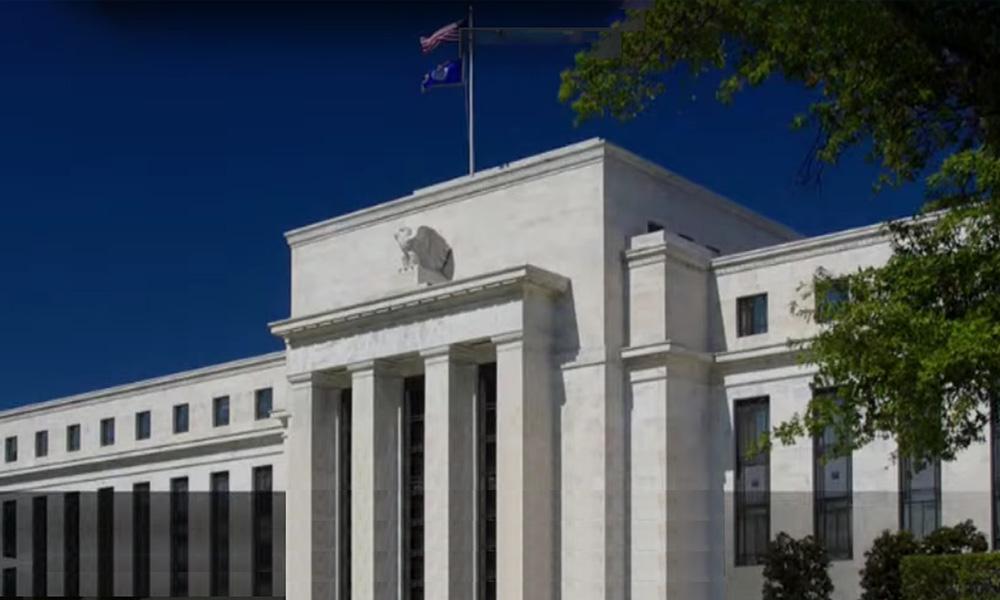
This week's Beige Book summarizes economic data from all twelve districts in the United States, clearly pointing out that the core driver of this round of inflation is the surge in energy prices caused by the Middle East conflict , and that the price increase effect has spread comprehensively, deeply penetrating all sectors of the real economy. Many industries, including shipping, packaging, supermarket retail, and fertilizer production, continue to face pressure, with production costs rising sharply, forcing companies to pass on operational pressures through price increases.
Rising prices are evident across the United States. Data from a Minneapolis Federal Reserve survey shows that over 30% of local businesses raised product prices in April, and non-labor input costs for most businesses have increased by more than 2% in the past two months, with a quarter of businesses seeing increases exceeding 5%. Soaring costs have also triggered a chain reaction in the real economy. Increased fertilizer prices have limited the supply of fruits and vegetables in New York State, while high oil prices are forcing a shift in consumer spending, leading to a continued rise in demand for hybrid vehicles.
Persistent high inflation has significantly suppressed household spending power, resulting in a marked divergence in the US consumer market. A survey conducted by the Kansas City Federal Reserve revealed that middle-income households are becoming more cautious in their spending, carefully managing their budgets and actively reducing non-essential expenditures, leading to a continued cooling of consumer activity. Overall, consumer spending across the US is weak, coupled with rising market uncertainty and declining business confidence, leading to a lackluster outlook for business growth over the next six months.
The job market is also showing structural pressures, particularly among young entry-level workers. Employment agencies in many regions report an oversupply of job seekers for entry-level positions, leading to fierce competition and significantly extended recruitment cycles for companies. Job seekers often need to go through multiple rounds of interviews over several months before being hired. The widespread adoption of artificial intelligence technology has further slowed companies' hiring demand for recent graduates, exacerbating employment pressures on young people.
With inflation continuing to rebound and economic data weakening, the Federal Reserve's internal policy judgment has undergone a fundamental shift.
Based on recent official statements and the minutes of the April 28-29 FOMC meeting, market expectations for a rate cut this year have completely faded, and the mainstream consensus has shifted to maintaining the current high interest rate range for the long term, even not ruling out the possibility of further rate hikes. Currently, the Federal Reserve's policy rate remains between 3.50% and 3.75%. The US core inflation indicator rose again in April, from 3.5% in March to 3.8%, further strengthening expectations of tightening policies.
It is worth noting that US President Trump had previously hoped that Kevin Warsh would push for interest rate cuts after taking office, but against the backdrop of soaring gasoline prices and continued worsening inflation, he has abandoned his demand for an immediate rate cut. Although the market hopes that the development of the artificial intelligence industry will suppress inflation in the long term, the short-term upward trend in prices is unlikely to reverse, providing support for the Federal Reserve to tighten its policy.
The Federal Reserve's latest Beige Book fully exposes the structural contradictions in the current US economy. The energy costs driven by the Middle East conflict have triggered a spillover of inflation across the board, leading to a significant increase in business production costs, continued contraction in consumer spending, and persistent pressure on the junior job market for young people. Against the backdrop of US inflation deviating significantly from the policy target and a substantial increase in economic uncertainty, market and Fed policy expectations have completely reversed. Expectations of an interest rate cut this year have completely failed to materialize, and maintaining high interest rates or even raising them has become the mainstream prediction.
Faced with a complex economic situation, Federal Reserve Chairman Kevin Warsh, who will be chairing his first policy meeting, will need to find the optimal policy balance between suppressing stubborn inflation, stabilizing the real economy, and balancing employment trends. The subsequent direction of monetary policy will also become a core factor affecting global capital markets.
This economic assessment report will set the core tone for the first policy meeting chaired by new Federal Reserve Chairman Kevin Warsh in two weeks, and market policy expectations have shifted from interest rate cuts this year to maintaining high interest rates or even raising them.
Energy inflation has spilled over across the board, significantly increasing cost pressures on the real economy.
This week's Beige Book summarizes economic data from all twelve districts in the United States, clearly pointing out that the core driver of this round of inflation is the surge in energy prices caused by the Middle East conflict , and that the price increase effect has spread comprehensively, deeply penetrating all sectors of the real economy. Many industries, including shipping, packaging, supermarket retail, and fertilizer production, continue to face pressure, with production costs rising sharply, forcing companies to pass on operational pressures through price increases.
Rising prices are evident across the United States. Data from a Minneapolis Federal Reserve survey shows that over 30% of local businesses raised product prices in April, and non-labor input costs for most businesses have increased by more than 2% in the past two months, with a quarter of businesses seeing increases exceeding 5%. Soaring costs have also triggered a chain reaction in the real economy. Increased fertilizer prices have limited the supply of fruits and vegetables in New York State, while high oil prices are forcing a shift in consumer spending, leading to a continued rise in demand for hybrid vehicles.
Both consumption and employment weakened, highlighting structural economic problems.
Persistent high inflation has significantly suppressed household spending power, resulting in a marked divergence in the US consumer market. A survey conducted by the Kansas City Federal Reserve revealed that middle-income households are becoming more cautious in their spending, carefully managing their budgets and actively reducing non-essential expenditures, leading to a continued cooling of consumer activity. Overall, consumer spending across the US is weak, coupled with rising market uncertainty and declining business confidence, leading to a lackluster outlook for business growth over the next six months.
The job market is also showing structural pressures, particularly among young entry-level workers. Employment agencies in many regions report an oversupply of job seekers for entry-level positions, leading to fierce competition and significantly extended recruitment cycles for companies. Job seekers often need to go through multiple rounds of interviews over several months before being hired. The widespread adoption of artificial intelligence technology has further slowed companies' hiring demand for recent graduates, exacerbating employment pressures on young people.
Policy expectations have completely reversed, and the possibility of an interest rate hike continues to rise.
With inflation continuing to rebound and economic data weakening, the Federal Reserve's internal policy judgment has undergone a fundamental shift.
Based on recent official statements and the minutes of the April 28-29 FOMC meeting, market expectations for a rate cut this year have completely faded, and the mainstream consensus has shifted to maintaining the current high interest rate range for the long term, even not ruling out the possibility of further rate hikes. Currently, the Federal Reserve's policy rate remains between 3.50% and 3.75%. The US core inflation indicator rose again in April, from 3.5% in March to 3.8%, further strengthening expectations of tightening policies.
It is worth noting that US President Trump had previously hoped that Kevin Warsh would push for interest rate cuts after taking office, but against the backdrop of soaring gasoline prices and continued worsening inflation, he has abandoned his demand for an immediate rate cut. Although the market hopes that the development of the artificial intelligence industry will suppress inflation in the long term, the short-term upward trend in prices is unlikely to reverse, providing support for the Federal Reserve to tighten its policy.
Summarize
The Federal Reserve's latest Beige Book fully exposes the structural contradictions in the current US economy. The energy costs driven by the Middle East conflict have triggered a spillover of inflation across the board, leading to a significant increase in business production costs, continued contraction in consumer spending, and persistent pressure on the junior job market for young people. Against the backdrop of US inflation deviating significantly from the policy target and a substantial increase in economic uncertainty, market and Fed policy expectations have completely reversed. Expectations of an interest rate cut this year have completely failed to materialize, and maintaining high interest rates or even raising them has become the mainstream prediction.
Faced with a complex economic situation, Federal Reserve Chairman Kevin Warsh, who will be chairing his first policy meeting, will need to find the optimal policy balance between suppressing stubborn inflation, stabilizing the real economy, and balancing employment trends. The subsequent direction of monetary policy will also become a core factor affecting global capital markets.
- Risk Warning and Disclaimer
- The market involves risk, and trading may not be suitable for all investors. This article is for reference only and does not constitute personal investment advice, nor does it take into account certain users’ specific investment objectives, financial situation, or other needs. Any investment decisions made based on this information are at your own risk.