$4,500 becomes a critical threshold: Gold has already staged a reversal before the non-farm payroll data is released.
2026-06-04 22:05:42
On Thursday, the pricing theme for spot gold shifted from simple safe-haven demand to a reordering of four forces: geopolitical de-escalation, a weakening dollar, falling oil prices, and interest rate constraints. During the North American session, spot gold rose to around $4,500 per ounce, while August gold futures rose to around $4,533 per ounce. The dollar index fell to around 99.25, the 10-year US Treasury yield was around 4.46%, and Brent crude oil fell to around $94.76 per barrel due to expectations of a ceasefire in Lebanon. This combination suggests a short-term recovery window for gold, but it does not mean that the trend constraints have been lifted.
The core impact of the ceasefire agreement in Lebanon lies not in directly increasing safe-haven buying of gold, but in reducing the tail risk of energy supply disruptions. Previously, the market worried that escalating regional conflict and high oil prices would reignite inflation expectations, forcing major central banks to extend high-interest-rate cycles. Now, with oil prices falling and concerns about renewed inflation easing, safe-haven buying of the US dollar has also eased, and gold has actually found support from the weakening dollar.
However, this is not a typical safe-haven rally. If geopolitical risks ease too quickly, gold's risk premium will be compressed; if negotiations progress slowly, oil prices and the dollar may regain support. Therefore, the current rise in gold is more like a "correction after marginal easing of interest rate pressures" rather than a one-way safe-haven trade. The US president stated that progress in related negotiations "may appear by the end of this week," but the implementation of the agreement still depends on the details of implementation by various parties, especially the ceasefire conditions, the arrangements for armed withdrawal, and the pace of restoring sea lanes.
Gold is highly sensitive to changes in the US dollar. A decline in the dollar index makes dollar-denominated gold more attractive to non-dollar funds, which is the most direct financial condition for this rebound. However, the real variables determining whether gold can break out of its range-bound trading pattern remain real interest rates and expectations regarding Federal Reserve policy.
The Federal Reserve's target range for the federal funds rate remains at 3.75%, while the 10-year Treasury yield is around 4.46%. For non-interest-bearing assets, this still represents a high opportunity cost. The latest US employment data did not provide a clear signal: May's ADP private sector employment increased by 122,000, while initial jobless claims rose to 225,000. The market expected non-farm payrolls to increase by approximately 85,000 in May, with the unemployment rate expected to remain at 4.3%. This data suggests that employment is slowing marginally but has not stalled significantly, and the Federal Reserve lacks sufficient reason to quickly shift to easing in the short term.
The underlying support for gold still comes from the reallocation of reserve assets. Latest statistics show that global central banks resumed net gold purchases in April, with a net increase of 17 tons in a single month, reversing the net selling trend of March; in the first quarter, central banks' net gold purchases were approximately 244 tons, higher than the recent average. This indicates that official sectors are still using gold to diversify their reserve structures, providing resilience to prices in the medium to long term.
However, central bank demand does not equate to a continuous push up spot prices. Official buying is more geared towards long-term allocation, with a relatively smooth pace; short-term fluctuations depend more on the US dollar, oil prices, yields, and fund positions. Current gold prices have already retreated significantly from their year-to-date highs; statistics show that since the escalation of the conflict related to Iran, gold has fallen by approximately 16%. This means the market is not unconditionally chasing safe-haven assets, but rather repeatedly switching between "rising inflation risks suppressing expectations of interest rate cuts" and "a weaker dollar repairing precious metal valuations."
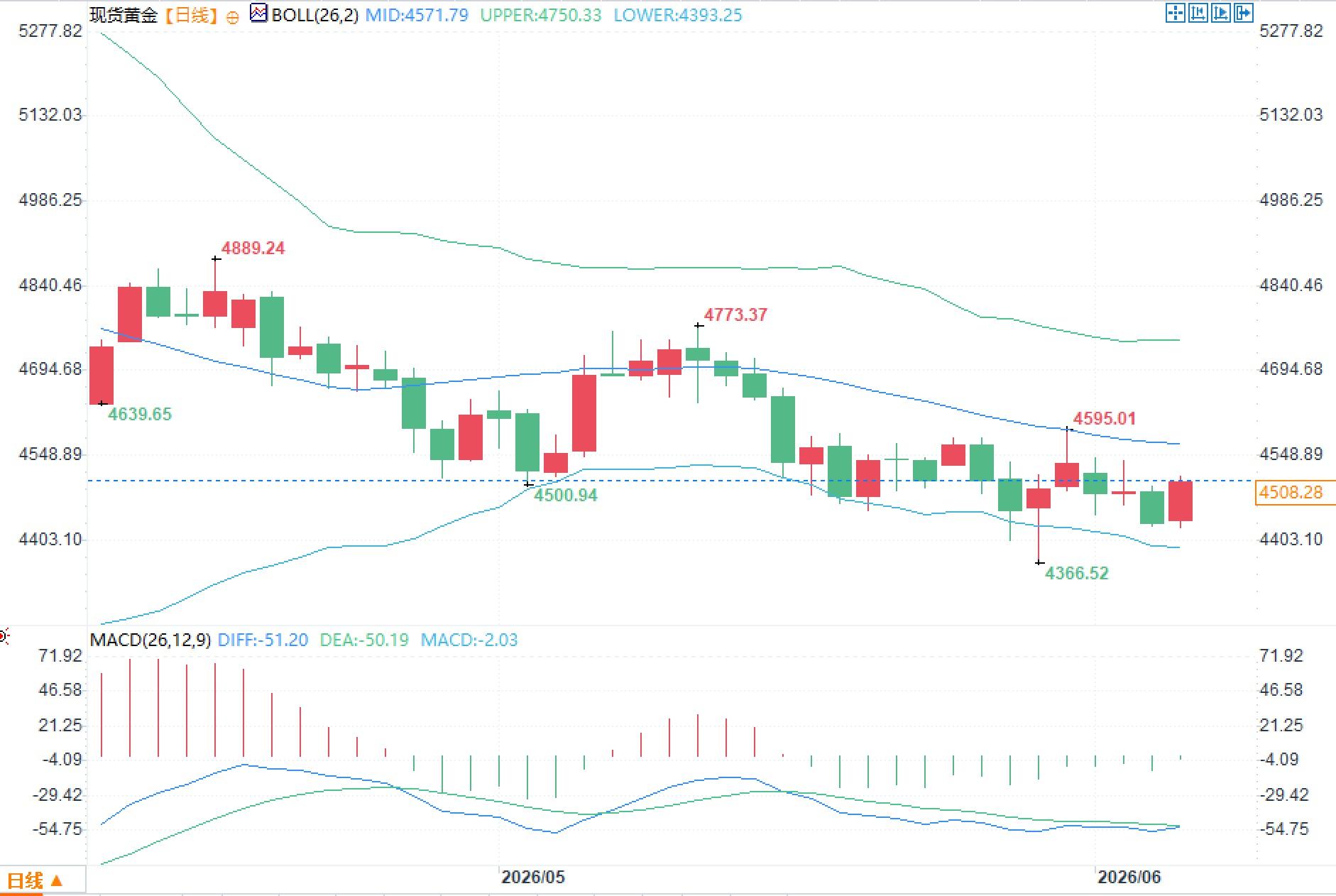
From a technical perspective, the $4,500 per ounce level is not only a psychologically significant number but also a watershed moment for the repricing of bullish and bearish expectations. If prices remain near this area for an extended period, it indicates that the market is still awaiting direction from non-farm payroll data, inflation figures, and negotiation outcomes. Conversely, if volatility increases again, it typically means that the dollar or crude oil market has already provided the answer.
Question 1: Why did gold prices rise after the ceasefire announcement?
A: The core reason for this price increase is not increased safe-haven demand, but rather the decline in oil prices reducing inflation concerns and a weakening dollar, which reduced external pressure on gold. Gold's gains are due to improved financial conditions, not simply geopolitical buying.
Question 2: Does $4,500 per ounce mean that gold is regaining strength?
A: This only indicates a recovery in short-term buying, and cannot directly determine that the trend has reversed. US Treasury yields remain high, and the Fed's interest rate constraints persist. Non-farm payroll data and inflation expectations will be the core factors for pricing in the next stage.
Question 3: Can the central bank's gold purchases offset the pressure of high interest rates?
A: Central bank gold purchases provide medium- to long-term resilience at the bottom, but the pace is slow and cannot fully offset the short-term impact of the US dollar and real interest rates. Spot gold will continue to fluctuate between structural demand and macro interest rates.
The ceasefire announcement changed the direction of the risk premium, but did not eliminate uncertainty.
The core impact of the ceasefire agreement in Lebanon lies not in directly increasing safe-haven buying of gold, but in reducing the tail risk of energy supply disruptions. Previously, the market worried that escalating regional conflict and high oil prices would reignite inflation expectations, forcing major central banks to extend high-interest-rate cycles. Now, with oil prices falling and concerns about renewed inflation easing, safe-haven buying of the US dollar has also eased, and gold has actually found support from the weakening dollar.
However, this is not a typical safe-haven rally. If geopolitical risks ease too quickly, gold's risk premium will be compressed; if negotiations progress slowly, oil prices and the dollar may regain support. Therefore, the current rise in gold is more like a "correction after marginal easing of interest rate pressures" rather than a one-way safe-haven trade. The US president stated that progress in related negotiations "may appear by the end of this week," but the implementation of the agreement still depends on the details of implementation by various parties, especially the ceasefire conditions, the arrangements for armed withdrawal, and the pace of restoring sea lanes.
The dollar's decline is a short-term driver, while high interest rates remain the medium-term ceiling.
Gold is highly sensitive to changes in the US dollar. A decline in the dollar index makes dollar-denominated gold more attractive to non-dollar funds, which is the most direct financial condition for this rebound. However, the real variables determining whether gold can break out of its range-bound trading pattern remain real interest rates and expectations regarding Federal Reserve policy.
The Federal Reserve's target range for the federal funds rate remains at 3.75%, while the 10-year Treasury yield is around 4.46%. For non-interest-bearing assets, this still represents a high opportunity cost. The latest US employment data did not provide a clear signal: May's ADP private sector employment increased by 122,000, while initial jobless claims rose to 225,000. The market expected non-farm payrolls to increase by approximately 85,000 in May, with the unemployment rate expected to remain at 4.3%. This data suggests that employment is slowing marginally but has not stalled significantly, and the Federal Reserve lacks sufficient reason to quickly shift to easing in the short term.
Central bank gold purchases provide structural support, while speculative funds determine market elasticity.
The underlying support for gold still comes from the reallocation of reserve assets. Latest statistics show that global central banks resumed net gold purchases in April, with a net increase of 17 tons in a single month, reversing the net selling trend of March; in the first quarter, central banks' net gold purchases were approximately 244 tons, higher than the recent average. This indicates that official sectors are still using gold to diversify their reserve structures, providing resilience to prices in the medium to long term.
However, central bank demand does not equate to a continuous push up spot prices. Official buying is more geared towards long-term allocation, with a relatively smooth pace; short-term fluctuations depend more on the US dollar, oil prices, yields, and fund positions. Current gold prices have already retreated significantly from their year-to-date highs; statistics show that since the escalation of the conflict related to Iran, gold has fallen by approximately 16%. This means the market is not unconditionally chasing safe-haven assets, but rather repeatedly switching between "rising inflation risks suppressing expectations of interest rate cuts" and "a weaker dollar repairing precious metal valuations."
From a technical perspective, the $4,500 per ounce level is not only a psychologically significant number but also a watershed moment for the repricing of bullish and bearish expectations. If prices remain near this area for an extended period, it indicates that the market is still awaiting direction from non-farm payroll data, inflation figures, and negotiation outcomes. Conversely, if volatility increases again, it typically means that the dollar or crude oil market has already provided the answer.
Frequently Asked Questions
Question 1: Why did gold prices rise after the ceasefire announcement?
A: The core reason for this price increase is not increased safe-haven demand, but rather the decline in oil prices reducing inflation concerns and a weakening dollar, which reduced external pressure on gold. Gold's gains are due to improved financial conditions, not simply geopolitical buying.
Question 2: Does $4,500 per ounce mean that gold is regaining strength?
A: This only indicates a recovery in short-term buying, and cannot directly determine that the trend has reversed. US Treasury yields remain high, and the Fed's interest rate constraints persist. Non-farm payroll data and inflation expectations will be the core factors for pricing in the next stage.
Question 3: Can the central bank's gold purchases offset the pressure of high interest rates?
A: Central bank gold purchases provide medium- to long-term resilience at the bottom, but the pace is slow and cannot fully offset the short-term impact of the US dollar and real interest rates. Spot gold will continue to fluctuate between structural demand and macro interest rates.
- Risk Warning and Disclaimer
- The market involves risk, and trading may not be suitable for all investors. This article is for reference only and does not constitute personal investment advice, nor does it take into account certain users’ specific investment objectives, financial situation, or other needs. Any investment decisions made based on this information are at your own risk.