The USD/CAD pair retreated to around 1.39, awaiting guidance from the non-farm payroll data.
2026-06-05 14:37:07
The US dollar (USD/CAD) pair fluctuated lower during Friday's Asian trading session, trading around 1.3900. The Canadian dollar received new support as international oil prices rebounded, ending a two-day winning streak for the USD/CAD pair. However, given robust US economic data and the Federal Reserve's expectation of maintaining high interest rates, the overall decline in the exchange rate was relatively limited.

As one of the world's major energy exporters, the Canadian currency's exchange rate is strongly correlated with international crude oil prices. Recently, the crude oil market has been again affected by supply risks in the Middle East, pushing oil prices to remain high overall. Market news indicates that loading operations at Mina Al-Fahhar Port, a key energy export facility in the Gulf of Oman, have been suspended due to an explosion near a single-point mooring facility.
This incident may be related to a drone attack. As the port plays a crucial role in crude oil exports, market concerns about regional energy supply security have rapidly intensified. Increased supply risks have driven up international crude oil prices and further enhanced the attractiveness of commodity currencies such as the Canadian dollar. Meanwhile, the situation in the Middle East remains highly uncertain. Iranian Foreign Minister Araqchi stated that the Strait of Hormuz is within the territorial waters of Iran and Oman and warned that US military bases in the region could still be targets of retaliation. Given the Strait of Hormuz's vital role in global energy transportation, any potential risks could trigger market concerns about disruptions to crude oil supplies.
However, the market still holds some hope for a de-escalation of tensions between the US and Iran. US President Trump stated that the two sides are close to reaching a framework agreement on peace and believes a breakthrough could occur around the weekend. If negotiations make positive progress, market concerns about supply risks may ease, thus limiting further upside potential for oil prices.
Besides geopolitical factors, the performance of the US economy also influences the dollar's trajectory. This week's ADP employment figures and JOLTS job openings data both exceeded market expectations, indicating that the US labor market remains resilient. These data reinforced market expectations that the Federal Reserve will maintain its high-interest-rate policy, providing support for the dollar.
Investors are currently turning their attention to the upcoming US May non-farm payrolls report. The market expects approximately 85,000 new non-farm jobs, while the unemployment rate is projected to remain unchanged at 4.3%. If the employment data continues to be strong, market expectations for the Federal Reserve to maintain high interest rates for an extended period could intensify, thereby providing new upward momentum for the US dollar.
Market pricing data suggests that investor expectations for further tightening by the Federal Reserve by the end of the year have increased. High interest rates not only enhance the attractiveness of dollar-denominated assets but also maintain the dollar's relative advantage among major currencies. Market sentiment is currently influenced by two forces: rising international oil prices are strengthening the Canadian dollar, while the resilience of the US economy and expectations of high interest rates are supporting the dollar's performance. This interplay between the two factors is keeping the exchange rate in a consolidation phase.
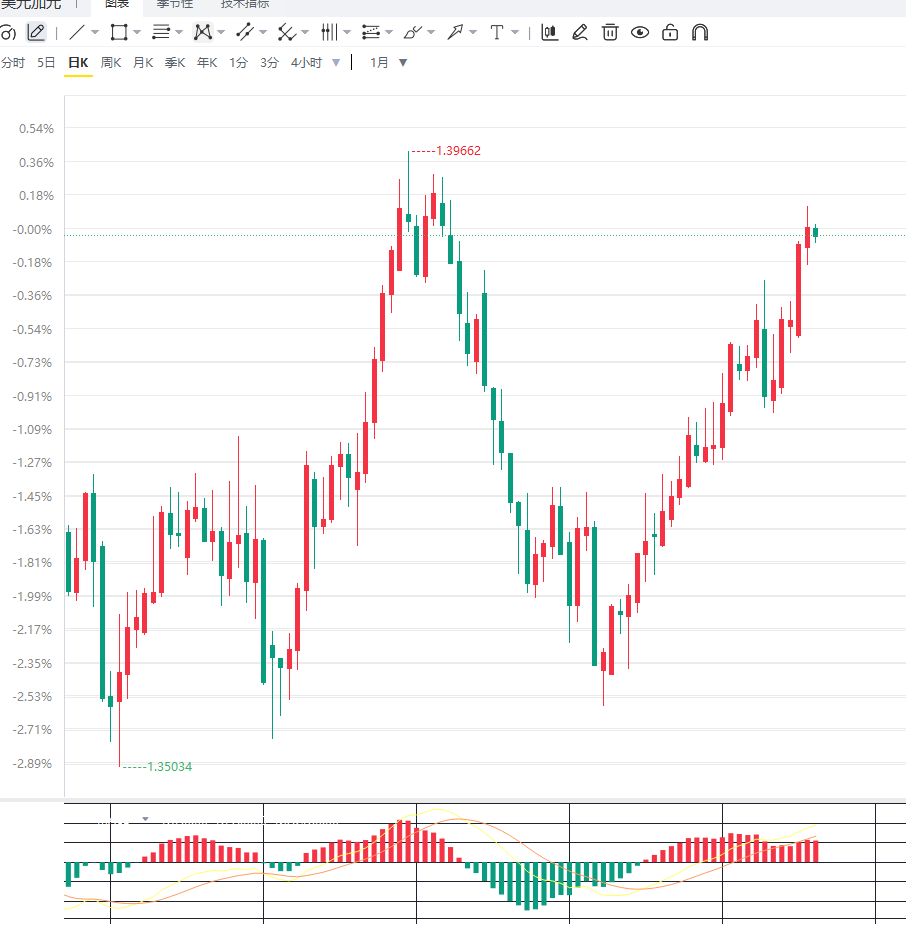
From a 4-hour chart perspective, the USD/CAD pair is maintaining a range-bound trading pattern. Short-term moving averages are gradually flattening, indicating the market is awaiting new fundamental catalysts. A break above the 1.3950 resistance level could lead to a retest of the 1.4000 area; a break below the 1.3850 support level could open up further downside potential. The short-term MACD is hovering around the zero line, reflecting that the short-term direction is not yet fully clear.
Editor's Summary : The current USD/CAD exchange rate is primarily influenced by the balance between rising oil prices and a strong US dollar. The international oil market has been supported by escalating supply risks in the Middle East, benefiting Canada as an energy exporter and resulting in a relatively strong Canadian dollar. However, consistently better-than-expected US economic data has strengthened market expectations that the Federal Reserve will maintain its high-interest-rate policy, thus limiting the downside potential of the USD/CAD exchange rate. In the short term, the US non-farm payroll report will be a crucial factor in determining the exchange rate's direction. If the employment data continues to show resilience, the US dollar is expected to regain upward momentum; conversely, a significant slowdown in employment growth could increase downward pressure on the dollar. From a medium-term perspective, international oil price trends, the Federal Reserve's policy path, and Canadian economic data will remain key variables influencing the direction of the USD/CAD exchange rate.
As one of the world's major energy exporters, the Canadian currency's exchange rate is strongly correlated with international crude oil prices. Recently, the crude oil market has been again affected by supply risks in the Middle East, pushing oil prices to remain high overall. Market news indicates that loading operations at Mina Al-Fahhar Port, a key energy export facility in the Gulf of Oman, have been suspended due to an explosion near a single-point mooring facility.
This incident may be related to a drone attack. As the port plays a crucial role in crude oil exports, market concerns about regional energy supply security have rapidly intensified. Increased supply risks have driven up international crude oil prices and further enhanced the attractiveness of commodity currencies such as the Canadian dollar. Meanwhile, the situation in the Middle East remains highly uncertain. Iranian Foreign Minister Araqchi stated that the Strait of Hormuz is within the territorial waters of Iran and Oman and warned that US military bases in the region could still be targets of retaliation. Given the Strait of Hormuz's vital role in global energy transportation, any potential risks could trigger market concerns about disruptions to crude oil supplies.
However, the market still holds some hope for a de-escalation of tensions between the US and Iran. US President Trump stated that the two sides are close to reaching a framework agreement on peace and believes a breakthrough could occur around the weekend. If negotiations make positive progress, market concerns about supply risks may ease, thus limiting further upside potential for oil prices.
Besides geopolitical factors, the performance of the US economy also influences the dollar's trajectory. This week's ADP employment figures and JOLTS job openings data both exceeded market expectations, indicating that the US labor market remains resilient. These data reinforced market expectations that the Federal Reserve will maintain its high-interest-rate policy, providing support for the dollar.
Investors are currently turning their attention to the upcoming US May non-farm payrolls report. The market expects approximately 85,000 new non-farm jobs, while the unemployment rate is projected to remain unchanged at 4.3%. If the employment data continues to be strong, market expectations for the Federal Reserve to maintain high interest rates for an extended period could intensify, thereby providing new upward momentum for the US dollar.
Market pricing data suggests that investor expectations for further tightening by the Federal Reserve by the end of the year have increased. High interest rates not only enhance the attractiveness of dollar-denominated assets but also maintain the dollar's relative advantage among major currencies. Market sentiment is currently influenced by two forces: rising international oil prices are strengthening the Canadian dollar, while the resilience of the US economy and expectations of high interest rates are supporting the dollar's performance. This interplay between the two factors is keeping the exchange rate in a consolidation phase.
From a 4-hour chart perspective, the USD/CAD pair is maintaining a range-bound trading pattern. Short-term moving averages are gradually flattening, indicating the market is awaiting new fundamental catalysts. A break above the 1.3950 resistance level could lead to a retest of the 1.4000 area; a break below the 1.3850 support level could open up further downside potential. The short-term MACD is hovering around the zero line, reflecting that the short-term direction is not yet fully clear.
Editor's Summary : The current USD/CAD exchange rate is primarily influenced by the balance between rising oil prices and a strong US dollar. The international oil market has been supported by escalating supply risks in the Middle East, benefiting Canada as an energy exporter and resulting in a relatively strong Canadian dollar. However, consistently better-than-expected US economic data has strengthened market expectations that the Federal Reserve will maintain its high-interest-rate policy, thus limiting the downside potential of the USD/CAD exchange rate. In the short term, the US non-farm payroll report will be a crucial factor in determining the exchange rate's direction. If the employment data continues to show resilience, the US dollar is expected to regain upward momentum; conversely, a significant slowdown in employment growth could increase downward pressure on the dollar. From a medium-term perspective, international oil price trends, the Federal Reserve's policy path, and Canadian economic data will remain key variables influencing the direction of the USD/CAD exchange rate.
- Risk Warning and Disclaimer
- The market involves risk, and trading may not be suitable for all investors. This article is for reference only and does not constitute personal investment advice, nor does it take into account certain users’ specific investment objectives, financial situation, or other needs. Any investment decisions made based on this information are at your own risk.