June 8th Financial Breakfast: Strong non-farm payrolls data "scare" gold, with prices testing the $4300 mark; Trump threatens surprise attack on Iran, and oil prices rebound by over 2%.
2026-06-08 07:21:51
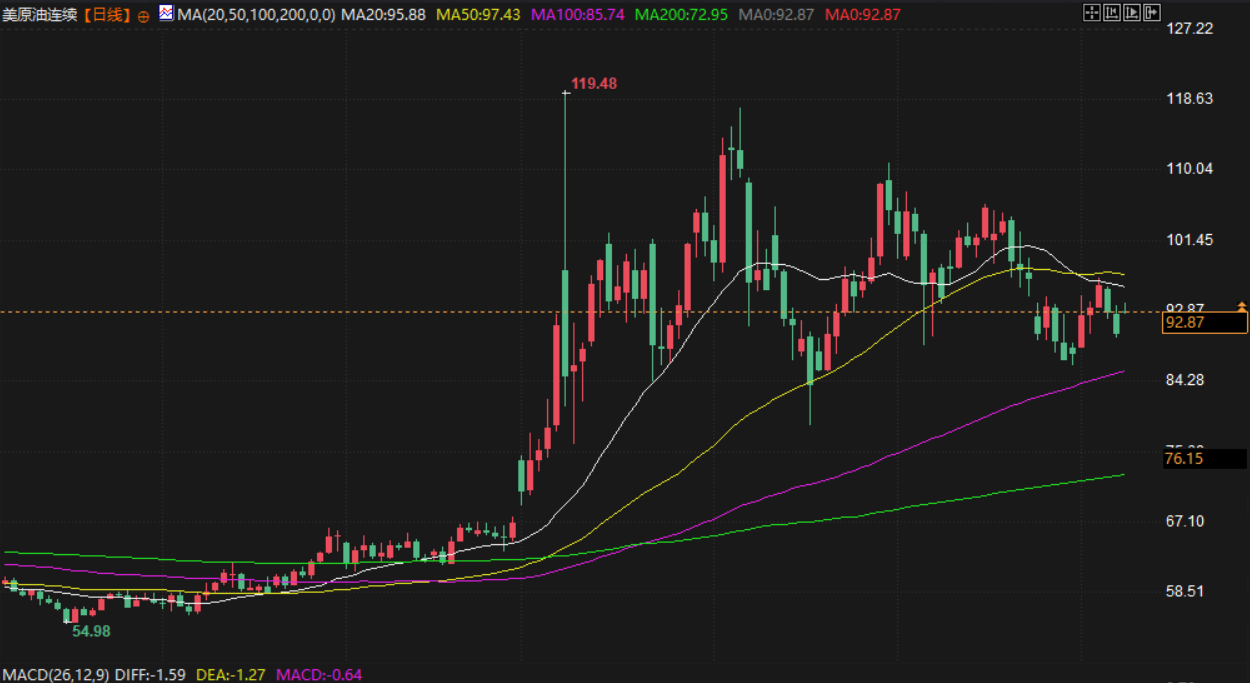
On Monday (June 8th, Beijing time) in early Asian trading, spot gold was trading around $4330 per ounce, having briefly touched a new low since March 24th at $4310.24 per ounce. It may test the $4300 per ounce level during the day, influenced by a stronger-than-expected US May jobs report, further fueling market expectations that the Federal Reserve will maintain higher interest rates amid inflationary concerns stemming from the Middle East war. US crude oil rose over 2%, trading around $92.80 per barrel. The situation between the US and Iran remains volatile, with Iran launching multiple missiles into Israel on Sunday, threatening the already fragile ceasefire agreement. Trump stated that if the agreement with Iran fails to meet its terms, he might consider a raiding strike against Iran.

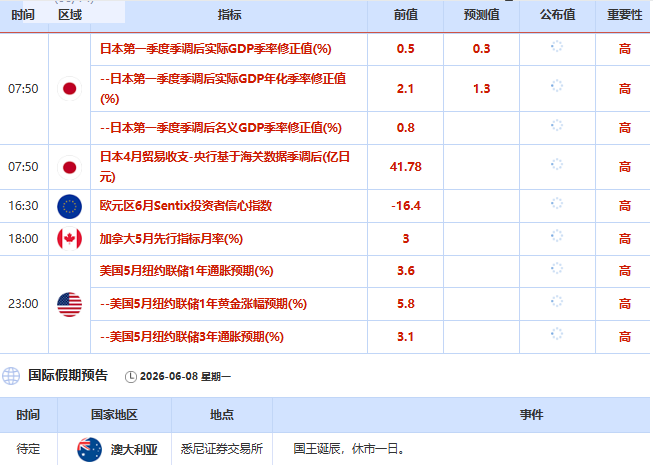
U.S. stocks closed sharply lower on Friday, ending a nine-week winning streak, as a strong May jobs report exacerbated concerns that the Federal Reserve might shift to a hawkish policy stance. Technology stocks suffered their biggest one-day drop since April 2025, with chip stocks leading the decline. The Philadelphia Stock Exchange Semiconductor Index recorded its biggest one-day percentage drop since March 2020, wiping out more than $1 trillion in market capitalization.
The Dow Jones Industrial Average fell 1.35% to 50,866.78; the S&P 500 fell 2.64% to 7,383.74; and the Nasdaq Composite fell 4.18% to 25,709.43. The S&P 500 technology sector plunged 5.8%, with Nvidia falling 6.2%, and Intel, Micron, AMD, and Broadcom falling between 7.9% and 13.3%.
Data from the U.S. Department of Labor showed that 172,000 jobs were added in May, far exceeding expectations, while the unemployment rate remained at 4.3%, essentially dashing market hopes for a near-term interest rate cut by the Federal Reserve. The CME Group's FedWatch tool showed that the market expects a 42.7% probability of a rate hike by the end of the December meeting. Furthermore, tensions in the Middle East have raised concerns about energy prices and systemic inflation.
Analysts believe the sell-off was driven more by position adjustments and overbought conditions than by fundamental factors, and expect tech stocks to continue rising. S&P Global stated it will not adjust its index inclusion criteria due to SpaceX's IPO, and chipmaker Marvell Technology is expected to be included in the index restructuring.
Gold prices fell more than 3% on Friday, with spot gold closing at $4,327.46 per ounce, hitting its lowest point since March 24 during the session. The cumulative decline for the week was about 4.68%. Influenced by a stronger-than-expected US jobs report in May, the market further anticipated that the Federal Reserve would maintain higher interest rates amid inflation concerns triggered by the Middle East war.
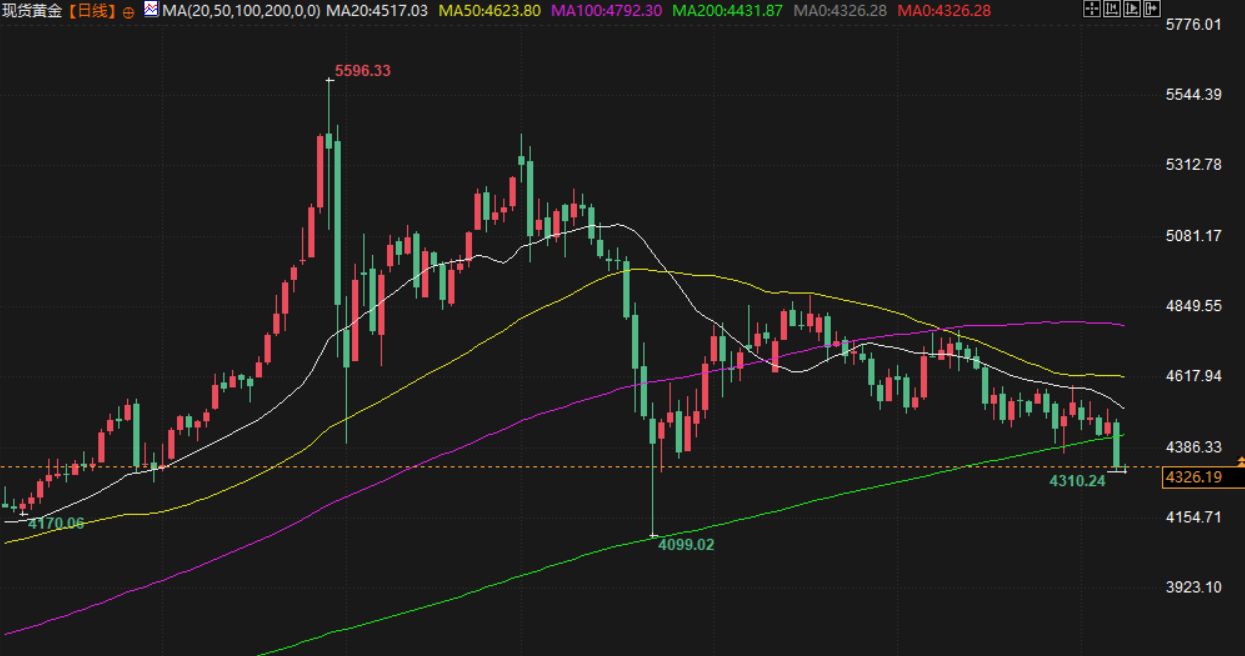
Data from the U.S. Bureau of Labor Statistics showed that non-farm payrolls increased by 172,000 in May, far exceeding the expected 85,000. After the data was released, U.S. Treasury yields soared, increasing the opportunity cost of holding non-yielding gold.
The head of commodities strategy at TD Securities stated that the much stronger-than-expected employment data, coupled with continued tensions in the Middle East, high energy prices, and significant inflationary pressures, makes it highly unlikely that the Federal Reserve will cut interest rates, leading to a substantial increase in the cost of holding gold. The market currently expects a 72% probability of a Fed rate hike in December, compared to approximately 50% before the data release.
Spot silver fell 8.11% to close at $67.87, platinum fell 5.9% to $1788.49, and palladium fell 5.9% to $1242.50, all three recording weekly declines.
Oil prices fell on Friday as traders became increasingly convinced that the likelihood of a renewed conflict between the US and Iran had decreased. Brent crude settled at $92.84 a barrel, down 2.39%, while WTI crude settled at $90.25 a barrel, down 2.86%.
A senior analyst at Price Futures Group said the market seems to believe the situation is easing. Oman Oil Development Company stated that operations at the Minafahar port were unaffected, after reports that crude oil loading had been suspended following an explosion near a berth. The terminal exports 800,000 to 900,000 barrels of crude oil daily.
The OPEC Secretary General maintained his forecast of 1.2 million barrels per day of oil demand growth this year. Shipping data shows that Iranian oil exports have fallen to their lowest level in six years, mainly due to the US naval blockade and weak demand from China.
The US dollar index rose on Friday, gaining about 1.3% over the past month, boosted by much stronger-than-expected US non-farm payroll data for May. The Labor Department reported that non-farm payrolls increased by 172,000 in May, far exceeding the expected 85,000, increasing market expectations for a Federal Reserve rate hike before the end of the year. The ongoing conflict in the Gulf region, with Iran reiterating its support for Hezbollah and US-Iran peace talks stalled, further supported the dollar due to safe-haven demand.
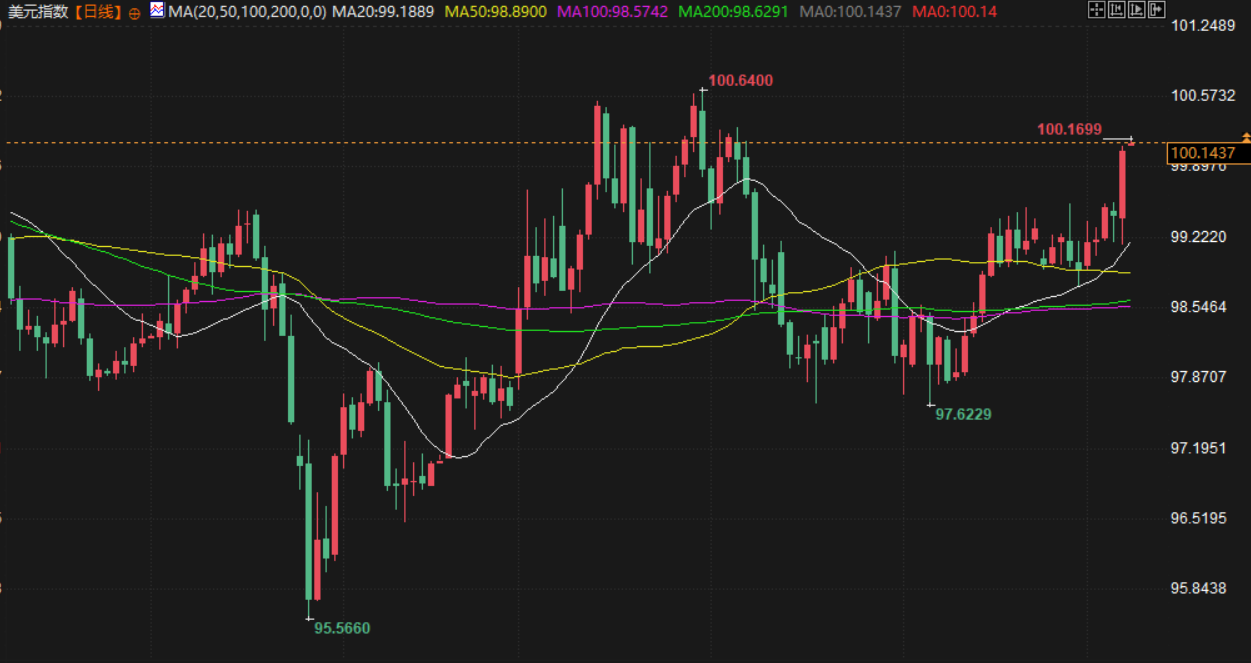
The dollar surged against the yen, falling below the 160 level, marking the yen's fourth consecutive week of decline and erasing gains accumulated from official intervention in late April and early May. The Finance Minister stated Japan was prepared to take "decisive action," while markets widely expect the Bank of Japan to raise interest rates this month.
The euro fell 0.75% to $1.152 and the pound fell 0.64% to $1.33, as high energy prices dragged down the eurozone economy.
Trump: If negotiations break down, I will consider launching a raid on Iran.
US President Trump stated that he might consider a raiding strike against Iran if the agreement with Iran fails to meet its terms. Trump further explained, "This means two possible scenarios: First, we might send troops to deal with those targets that haven't been dealt with before; or we might continue the blockade of Iran, because the deterrent effect of the blockade might be more effective than any previous strike against the country."
Iranian negotiator: The ceasefire is extremely fragile; the US is violating Iran's rights.
Iranian Foreign Ministry spokesman and spokesman Baghae recently stated that several disagreements remain in the current negotiations between the US and Iran, with the core issue being whether the US is willing to recognize Iran's rights, including its uranium enrichment rights. Baghae pointed out that since the ceasefire agreement took effect, the US has repeatedly attacked Iranian merchant ships in the Strait of Hormuz and international waters. He emphasized that the current regional situation and ceasefire are extremely fragile and dangerous, a situation caused by the irresponsible attitude of the US towards regional affairs and the ceasefire arrangement. The Iranian armed forces are prepared to respond fully to any form of attack.
British media reports that Iran has significantly reduced its toll fees for passage through the Straits of Hormuz.
According to a recent report in the British newspaper Lloyd's Ship Daily, some ships are now paying over $100,000 each for Iranian passage permits through the Strait of Hormuz, a significant decrease compared to the early stages of the conflict. The report, citing shipping security operators, stated that current fees for bulk carriers can reach up to $120,000 per passage, while tankers can reach up to $160,000. Specific rates vary depending on ship type, cargo, and shipowner's nationality, a significant drop compared to the $1 million to $2 million per ship charged at the beginning of the conflict. The report noted that after the collapse of the US's so-called "Freedom of Navigation" program last month, which aimed to facilitate ship passage through the Strait of Hormuz, US security commitments have become less reliable. Most shipowners still consider passing through the strait too dangerous and prefer to remain in the strait. However, with no credible peace agreement in sight, the industry expects the standoff to continue. (Xinhua)
Iran says it has drafted the "Order on Environmental Services Charges for the Strait of Hormuz".
According to Iranian sources on the 7th, Iranian Vice President and Director General of the Environment Agency, Hina Ansari, stated that Iran has initiated the drafting of the "Ordinance on Environmental Services Charges in the Strait of Hormuz." A preliminary draft has been completed recently, but the charging standards and specific collection mechanisms have not yet been finalized. (CCTV)
Russia claims the US is trying to withdraw from negotiations on the Ukraine issue.
Russian presidential advisor Sergei Kobyakov stated at a press conference following the closing of the St. Petersburg International Economic Forum on June 6 that the United States is attempting to withdraw from negotiations on the Ukraine crisis. Regarding the recent passage of a bill by the US House of Representatives imposing new sanctions on Russia, Kobyakov said that the US Congress's recommendation to strengthen sanctions stems from the awareness that the outcome of special military operations would be beneficial to Russia. (CCTV)
Pakistan's Interior Minister forwards a special letter to Iran's Supreme Leader
According to Iran's Tasnim News Agency, Pakistani Interior Minister Naqvi delivered a special letter addressed to Iran's Supreme Leader Mojtaba to Iranian Foreign Minister Araqchi during a meeting in Tehran on the 7th. (Xinhua)
Sources familiar with the matter: The US plans to use Iranian assets to pay for repair costs for its Gulf allies.
An unnamed source revealed that following Iran's attacks on Kuwait and Bahrain, the US is exploring the allocation of Iranian assets to assist its Gulf allies in dealing with potential future damage and in reconstruction and repair efforts. The source stated that US Treasury Secretary Scott Bessenter has instructed his team to "assess the situation in the Gulf allies and calculate the cost of repairing damage caused by Iran," while also considering using Iranian assets for compensation. The source added that the Treasury Department will utilize all available means to allow Gulf allies to use Iranian assets to support reconstruction efforts. The previous day, Mohsin Rezaei, an advisor to Iran's Supreme Leader, stated that a peace agreement between the US and Iran was contingent on the US unfreezing $24 billion in seized Iranian assets. However, the source did not specify the exact types of assets the Treasury Department is investigating, and the new policy statement is not limited to the scope of frozen assets.
Sources indicate that OPEC+ is poised to raise oil production quotas for the fourth time since the Strait of Hormuz ceased operations.
Three OPEC+ sources revealed that despite the ongoing US-Iran conflict preventing several member countries from increasing oil production, OPEC+ will reach a decision this Sunday to raise its oil production target for the fourth consecutive month. The organization's seven core members have cumulatively increased their production quotas by nearly 600,000 barrels per day between April and June. The sources indicated that these seven members are expected to finalize the plan this Sunday, raising the production target by approximately 188,000 barrels per day starting in July. This increase is the same as in June; the previous monthly increase in April and May was 206,000 barrels per day, which was subsequently reduced to the current level due to the UAE's withdrawal. All sources requested anonymity and stated that the final decision has not yet been formally finalized. In addition, a ministerial meeting of all OPEC+ member countries is also scheduled for the same day, but it is widely expected that no policy adjustments will be made at this meeting.
The situation in the Middle East may drag down Japan's economic growth.
Affected by the situation in the Middle East, Japan's energy security, which is highly dependent on imports, is facing challenges. With oil prices rising continuously, the average retail price of gasoline across Japan has continued to increase, significantly increasing costs across various industries. According to research institutions, for every $10 increase in international oil prices per barrel, Japan's annual energy expenditure will increase by approximately 1.3 trillion yen. Japan's crude oil reserves can only last for about 250 days. To date, the Japanese government has initiated two rounds of releasing national oil reserves, totaling approximately 116 million barrels, equivalent to 65 days of Japan's oil demand. However, these policies have not played a significant role in alleviating Japan's crude oil supply problems. With the continued blockade of the Strait of Hormuz, the constraints of energy supply on Japan's economy are becoming increasingly apparent, and have already seriously affected the lives of ordinary people. (CCTV News)
AI labs help companies save 6 million yuan a year
In China's first AI-powered "lights-out" laboratory focusing on acrylonitrile testing in the chemical industry, robotic arms move precisely and efficiently at 3 a.m. Compared to traditional laboratories, the AI laboratory condenses the testing processes that previously required several rooms and over a dozen manual steps into workstations of only a few square meters each. Under the command of an AI system, 87 precision instruments and 56 robots work collaboratively, with the entire system self-scheduled and self-managed, completing a full testing process in three and a half hours. The AI laboratory significantly improves testing efficiency and accuracy. Furthermore, the benefits of the AI laboratory's transformation are considerable. Staff explained, "Our calculations show that we save at least 50% of the workload annually, which is approximately 6 million yuan. This is just the direct economic benefit; the computational value of the data is immeasurable." (CCTV Finance)
my country's offshore wind power is accelerating its development towards deep-sea areas.
This year, my country has continuously improved the localization level of key offshore wind power equipment, accelerating the development of offshore wind power from nearshore to deep-sea areas. Recently, the world's largest offshore converter station, "Haifeng Zhixin" (Heart of the Sea Wind), was completed at sea. This newly installed station can collect the AC power generated by 163 wind turbines in the surrounding waters and convert it into high-voltage DC power for transmission, significantly reducing transmission losses. This marks a breakthrough in my country's ability to transmit high-power electricity in deep-sea areas. After commissioning, it can transmit approximately 6 billion kilowatt-hours of green electricity annually. As nearshore resource development gradually matures, deep-sea areas are becoming the main battleground for my country's offshore wind power development. This year, a series of technologies, from core equipment to installation capabilities, are accelerating breakthroughs in deep-sea areas. The recently installed floating offshore wind power platform, the world's largest single-unit capacity, is the first to utilize domestically produced special polyester fiber mooring cables, each capable of withstanding approximately 1,300 tons of tensile force. To date, my country has completed the installation of over 50 large offshore platforms, with a total weight exceeding 700,000 tons, achieving all-weather, full-series, and all-sea-area floating technology. Next, my country will continue to promote innovative development across the entire offshore wind power industry chain, including large-capacity wind turbines, ultra-long blades, and dynamic submarine cables, laying a solid foundation for achieving a grid-connected installed capacity of over 100 million kilowatts during the 15th Five-Year Plan period. (CCTV Finance)
The National Healthcare Security Administration has issued regulations for cross-provincial sharing of individual medical insurance accounts.
On May 5th, the National Healthcare Security Administration publicly released the "Trial Procedures for Cross-Provincial Sharing of Individual Accounts in Basic Medical Insurance for Employees," which clarifies the limits, use, and settlement of cross-provincial sharing of individual medical insurance accounts for employees. Cross-provincial sharing of individual medical insurance accounts for employees refers to establishing a personal medical insurance wallet based on the nationally unified medical insurance information platform, setting a sharing limit, and enabling employees to use their personal account funds to pay for the personal expenses incurred by close relatives at designated medical institutions for medical treatment and medication, as well as for insurance premiums. The procedures clarify that the scope of application for cross-provincial sharing is the close relatives of employees enrolled in basic medical insurance, and the person being shared must be an insured person under basic medical insurance. Close relatives include spouses, parents, children, siblings, grandparents, maternal grandparents, grandchildren, and maternal grandchildren. Enrollees can establish or terminate the sharing relationship through various channels such as the National Healthcare Security Service Platform App, provincial medical insurance service platforms, and the window of the medical insurance agency in their place of insurance. The sharing partner sets a sharing limit for the shared person through their medical insurance wallet, and the sharing partner can no longer use the personal account funds within that limit. The person receiving the assistance may not use the assistance quota to assist a third party. Assistance may be used to settle eligible expenses incurred by the person receiving the assistance. (Xinhua News Agency)
The People's Bank of China has increased its gold reserves for the 19th consecutive month.
The People's Bank of China reported that China's gold reserves stood at 74.96 million ounces (approximately 2,331.52 tons) at the end of May, an increase of 320,000 ounces (approximately 9.95 tons) month-on-month. At the end of April, reserves were 74.64 million ounces (approximately 2,321.56 tons), marking the 19th consecutive month of increases.
Key Focus Today
stock market
U.S. stocks closed sharply lower on Friday, ending a nine-week winning streak, as a strong May jobs report exacerbated concerns that the Federal Reserve might shift to a hawkish policy stance. Technology stocks suffered their biggest one-day drop since April 2025, with chip stocks leading the decline. The Philadelphia Stock Exchange Semiconductor Index recorded its biggest one-day percentage drop since March 2020, wiping out more than $1 trillion in market capitalization.
The Dow Jones Industrial Average fell 1.35% to 50,866.78; the S&P 500 fell 2.64% to 7,383.74; and the Nasdaq Composite fell 4.18% to 25,709.43. The S&P 500 technology sector plunged 5.8%, with Nvidia falling 6.2%, and Intel, Micron, AMD, and Broadcom falling between 7.9% and 13.3%.
Data from the U.S. Department of Labor showed that 172,000 jobs were added in May, far exceeding expectations, while the unemployment rate remained at 4.3%, essentially dashing market hopes for a near-term interest rate cut by the Federal Reserve. The CME Group's FedWatch tool showed that the market expects a 42.7% probability of a rate hike by the end of the December meeting. Furthermore, tensions in the Middle East have raised concerns about energy prices and systemic inflation.
Analysts believe the sell-off was driven more by position adjustments and overbought conditions than by fundamental factors, and expect tech stocks to continue rising. S&P Global stated it will not adjust its index inclusion criteria due to SpaceX's IPO, and chipmaker Marvell Technology is expected to be included in the index restructuring.
Gold Market
Gold prices fell more than 3% on Friday, with spot gold closing at $4,327.46 per ounce, hitting its lowest point since March 24 during the session. The cumulative decline for the week was about 4.68%. Influenced by a stronger-than-expected US jobs report in May, the market further anticipated that the Federal Reserve would maintain higher interest rates amid inflation concerns triggered by the Middle East war.
Data from the U.S. Bureau of Labor Statistics showed that non-farm payrolls increased by 172,000 in May, far exceeding the expected 85,000. After the data was released, U.S. Treasury yields soared, increasing the opportunity cost of holding non-yielding gold.
The head of commodities strategy at TD Securities stated that the much stronger-than-expected employment data, coupled with continued tensions in the Middle East, high energy prices, and significant inflationary pressures, makes it highly unlikely that the Federal Reserve will cut interest rates, leading to a substantial increase in the cost of holding gold. The market currently expects a 72% probability of a Fed rate hike in December, compared to approximately 50% before the data release.
Spot silver fell 8.11% to close at $67.87, platinum fell 5.9% to $1788.49, and palladium fell 5.9% to $1242.50, all three recording weekly declines.
oil market
Oil prices fell on Friday as traders became increasingly convinced that the likelihood of a renewed conflict between the US and Iran had decreased. Brent crude settled at $92.84 a barrel, down 2.39%, while WTI crude settled at $90.25 a barrel, down 2.86%.
A senior analyst at Price Futures Group said the market seems to believe the situation is easing. Oman Oil Development Company stated that operations at the Minafahar port were unaffected, after reports that crude oil loading had been suspended following an explosion near a berth. The terminal exports 800,000 to 900,000 barrels of crude oil daily.
The OPEC Secretary General maintained his forecast of 1.2 million barrels per day of oil demand growth this year. Shipping data shows that Iranian oil exports have fallen to their lowest level in six years, mainly due to the US naval blockade and weak demand from China.
Foreign exchange market
The US dollar index rose on Friday, gaining about 1.3% over the past month, boosted by much stronger-than-expected US non-farm payroll data for May. The Labor Department reported that non-farm payrolls increased by 172,000 in May, far exceeding the expected 85,000, increasing market expectations for a Federal Reserve rate hike before the end of the year. The ongoing conflict in the Gulf region, with Iran reiterating its support for Hezbollah and US-Iran peace talks stalled, further supported the dollar due to safe-haven demand.
The dollar surged against the yen, falling below the 160 level, marking the yen's fourth consecutive week of decline and erasing gains accumulated from official intervention in late April and early May. The Finance Minister stated Japan was prepared to take "decisive action," while markets widely expect the Bank of Japan to raise interest rates this month.
The euro fell 0.75% to $1.152 and the pound fell 0.64% to $1.33, as high energy prices dragged down the eurozone economy.
International News
Trump: If negotiations break down, I will consider launching a raid on Iran.
US President Trump stated that he might consider a raiding strike against Iran if the agreement with Iran fails to meet its terms. Trump further explained, "This means two possible scenarios: First, we might send troops to deal with those targets that haven't been dealt with before; or we might continue the blockade of Iran, because the deterrent effect of the blockade might be more effective than any previous strike against the country."
Iranian negotiator: The ceasefire is extremely fragile; the US is violating Iran's rights.
Iranian Foreign Ministry spokesman and spokesman Baghae recently stated that several disagreements remain in the current negotiations between the US and Iran, with the core issue being whether the US is willing to recognize Iran's rights, including its uranium enrichment rights. Baghae pointed out that since the ceasefire agreement took effect, the US has repeatedly attacked Iranian merchant ships in the Strait of Hormuz and international waters. He emphasized that the current regional situation and ceasefire are extremely fragile and dangerous, a situation caused by the irresponsible attitude of the US towards regional affairs and the ceasefire arrangement. The Iranian armed forces are prepared to respond fully to any form of attack.
British media reports that Iran has significantly reduced its toll fees for passage through the Straits of Hormuz.
According to a recent report in the British newspaper Lloyd's Ship Daily, some ships are now paying over $100,000 each for Iranian passage permits through the Strait of Hormuz, a significant decrease compared to the early stages of the conflict. The report, citing shipping security operators, stated that current fees for bulk carriers can reach up to $120,000 per passage, while tankers can reach up to $160,000. Specific rates vary depending on ship type, cargo, and shipowner's nationality, a significant drop compared to the $1 million to $2 million per ship charged at the beginning of the conflict. The report noted that after the collapse of the US's so-called "Freedom of Navigation" program last month, which aimed to facilitate ship passage through the Strait of Hormuz, US security commitments have become less reliable. Most shipowners still consider passing through the strait too dangerous and prefer to remain in the strait. However, with no credible peace agreement in sight, the industry expects the standoff to continue. (Xinhua)
Iran says it has drafted the "Order on Environmental Services Charges for the Strait of Hormuz".
According to Iranian sources on the 7th, Iranian Vice President and Director General of the Environment Agency, Hina Ansari, stated that Iran has initiated the drafting of the "Ordinance on Environmental Services Charges in the Strait of Hormuz." A preliminary draft has been completed recently, but the charging standards and specific collection mechanisms have not yet been finalized. (CCTV)
Russia claims the US is trying to withdraw from negotiations on the Ukraine issue.
Russian presidential advisor Sergei Kobyakov stated at a press conference following the closing of the St. Petersburg International Economic Forum on June 6 that the United States is attempting to withdraw from negotiations on the Ukraine crisis. Regarding the recent passage of a bill by the US House of Representatives imposing new sanctions on Russia, Kobyakov said that the US Congress's recommendation to strengthen sanctions stems from the awareness that the outcome of special military operations would be beneficial to Russia. (CCTV)
Pakistan's Interior Minister forwards a special letter to Iran's Supreme Leader
According to Iran's Tasnim News Agency, Pakistani Interior Minister Naqvi delivered a special letter addressed to Iran's Supreme Leader Mojtaba to Iranian Foreign Minister Araqchi during a meeting in Tehran on the 7th. (Xinhua)
Sources familiar with the matter: The US plans to use Iranian assets to pay for repair costs for its Gulf allies.
An unnamed source revealed that following Iran's attacks on Kuwait and Bahrain, the US is exploring the allocation of Iranian assets to assist its Gulf allies in dealing with potential future damage and in reconstruction and repair efforts. The source stated that US Treasury Secretary Scott Bessenter has instructed his team to "assess the situation in the Gulf allies and calculate the cost of repairing damage caused by Iran," while also considering using Iranian assets for compensation. The source added that the Treasury Department will utilize all available means to allow Gulf allies to use Iranian assets to support reconstruction efforts. The previous day, Mohsin Rezaei, an advisor to Iran's Supreme Leader, stated that a peace agreement between the US and Iran was contingent on the US unfreezing $24 billion in seized Iranian assets. However, the source did not specify the exact types of assets the Treasury Department is investigating, and the new policy statement is not limited to the scope of frozen assets.
Sources indicate that OPEC+ is poised to raise oil production quotas for the fourth time since the Strait of Hormuz ceased operations.
Three OPEC+ sources revealed that despite the ongoing US-Iran conflict preventing several member countries from increasing oil production, OPEC+ will reach a decision this Sunday to raise its oil production target for the fourth consecutive month. The organization's seven core members have cumulatively increased their production quotas by nearly 600,000 barrels per day between April and June. The sources indicated that these seven members are expected to finalize the plan this Sunday, raising the production target by approximately 188,000 barrels per day starting in July. This increase is the same as in June; the previous monthly increase in April and May was 206,000 barrels per day, which was subsequently reduced to the current level due to the UAE's withdrawal. All sources requested anonymity and stated that the final decision has not yet been formally finalized. In addition, a ministerial meeting of all OPEC+ member countries is also scheduled for the same day, but it is widely expected that no policy adjustments will be made at this meeting.
The situation in the Middle East may drag down Japan's economic growth.
Affected by the situation in the Middle East, Japan's energy security, which is highly dependent on imports, is facing challenges. With oil prices rising continuously, the average retail price of gasoline across Japan has continued to increase, significantly increasing costs across various industries. According to research institutions, for every $10 increase in international oil prices per barrel, Japan's annual energy expenditure will increase by approximately 1.3 trillion yen. Japan's crude oil reserves can only last for about 250 days. To date, the Japanese government has initiated two rounds of releasing national oil reserves, totaling approximately 116 million barrels, equivalent to 65 days of Japan's oil demand. However, these policies have not played a significant role in alleviating Japan's crude oil supply problems. With the continued blockade of the Strait of Hormuz, the constraints of energy supply on Japan's economy are becoming increasingly apparent, and have already seriously affected the lives of ordinary people. (CCTV News)
Domestic News
AI labs help companies save 6 million yuan a year
In China's first AI-powered "lights-out" laboratory focusing on acrylonitrile testing in the chemical industry, robotic arms move precisely and efficiently at 3 a.m. Compared to traditional laboratories, the AI laboratory condenses the testing processes that previously required several rooms and over a dozen manual steps into workstations of only a few square meters each. Under the command of an AI system, 87 precision instruments and 56 robots work collaboratively, with the entire system self-scheduled and self-managed, completing a full testing process in three and a half hours. The AI laboratory significantly improves testing efficiency and accuracy. Furthermore, the benefits of the AI laboratory's transformation are considerable. Staff explained, "Our calculations show that we save at least 50% of the workload annually, which is approximately 6 million yuan. This is just the direct economic benefit; the computational value of the data is immeasurable." (CCTV Finance)
my country's offshore wind power is accelerating its development towards deep-sea areas.
This year, my country has continuously improved the localization level of key offshore wind power equipment, accelerating the development of offshore wind power from nearshore to deep-sea areas. Recently, the world's largest offshore converter station, "Haifeng Zhixin" (Heart of the Sea Wind), was completed at sea. This newly installed station can collect the AC power generated by 163 wind turbines in the surrounding waters and convert it into high-voltage DC power for transmission, significantly reducing transmission losses. This marks a breakthrough in my country's ability to transmit high-power electricity in deep-sea areas. After commissioning, it can transmit approximately 6 billion kilowatt-hours of green electricity annually. As nearshore resource development gradually matures, deep-sea areas are becoming the main battleground for my country's offshore wind power development. This year, a series of technologies, from core equipment to installation capabilities, are accelerating breakthroughs in deep-sea areas. The recently installed floating offshore wind power platform, the world's largest single-unit capacity, is the first to utilize domestically produced special polyester fiber mooring cables, each capable of withstanding approximately 1,300 tons of tensile force. To date, my country has completed the installation of over 50 large offshore platforms, with a total weight exceeding 700,000 tons, achieving all-weather, full-series, and all-sea-area floating technology. Next, my country will continue to promote innovative development across the entire offshore wind power industry chain, including large-capacity wind turbines, ultra-long blades, and dynamic submarine cables, laying a solid foundation for achieving a grid-connected installed capacity of over 100 million kilowatts during the 15th Five-Year Plan period. (CCTV Finance)
The National Healthcare Security Administration has issued regulations for cross-provincial sharing of individual medical insurance accounts.
On May 5th, the National Healthcare Security Administration publicly released the "Trial Procedures for Cross-Provincial Sharing of Individual Accounts in Basic Medical Insurance for Employees," which clarifies the limits, use, and settlement of cross-provincial sharing of individual medical insurance accounts for employees. Cross-provincial sharing of individual medical insurance accounts for employees refers to establishing a personal medical insurance wallet based on the nationally unified medical insurance information platform, setting a sharing limit, and enabling employees to use their personal account funds to pay for the personal expenses incurred by close relatives at designated medical institutions for medical treatment and medication, as well as for insurance premiums. The procedures clarify that the scope of application for cross-provincial sharing is the close relatives of employees enrolled in basic medical insurance, and the person being shared must be an insured person under basic medical insurance. Close relatives include spouses, parents, children, siblings, grandparents, maternal grandparents, grandchildren, and maternal grandchildren. Enrollees can establish or terminate the sharing relationship through various channels such as the National Healthcare Security Service Platform App, provincial medical insurance service platforms, and the window of the medical insurance agency in their place of insurance. The sharing partner sets a sharing limit for the shared person through their medical insurance wallet, and the sharing partner can no longer use the personal account funds within that limit. The person receiving the assistance may not use the assistance quota to assist a third party. Assistance may be used to settle eligible expenses incurred by the person receiving the assistance. (Xinhua News Agency)
The People's Bank of China has increased its gold reserves for the 19th consecutive month.
The People's Bank of China reported that China's gold reserves stood at 74.96 million ounces (approximately 2,331.52 tons) at the end of May, an increase of 320,000 ounces (approximately 9.95 tons) month-on-month. At the end of April, reserves were 74.64 million ounces (approximately 2,321.56 tons), marking the 19th consecutive month of increases.
- Risk Warning and Disclaimer
- The market involves risk, and trading may not be suitable for all investors. This article is for reference only and does not constitute personal investment advice, nor does it take into account certain users’ specific investment objectives, financial situation, or other needs. Any investment decisions made based on this information are at your own risk.