Expectations of a Japanese interest rate hike are rising, and the USD/JPY exchange rate has stabilized above the 160 level.
2026-06-08 10:18:31
During Asian trading hours, the USD/JPY pair maintained a high level of consolidation, trading around 160.30. Despite a series of strong economic data released by Japan, market expectations of persistently high US interest rates and safe-haven flows into the US dollar significantly limited the yen's upside potential.
The market's primary focus remains on the policy risks posed by the USD/JPY exchange rate continuing to trade above the 160 level. Over the past year, Japan's Ministry of Finance has intervened in the foreign exchange market several times near similar levels, leading investors to remain highly vigilant about the possibility of further government intervention to stabilize the exchange rate.
According to the latest data, Japan's economic performance is significantly better than market expectations. Data shows that Japan's GDP grew by 0.5% quarter-on-quarter in the first quarter of 2026, higher than the market expectation of 0.3%, and further accelerated from the previous quarter's 0.2%, marking the strongest quarterly growth performance since the beginning of 2025.
Japan's GDP grew at an annualized rate of 1.8% in the first quarter. While slightly lower than the initial estimate of 2.1%, this was significantly higher than the market forecast of 1.3% and well above the revised previous figure of 0.7%. This is also the strongest annual growth rate in the past four quarters.
At the same time, the pace of credit expansion in Japan's banking sector also accelerated. Data shows that Japanese bank loans grew by 5.7% year-on-year in May, exceeding market expectations of 5.6% and marking the fastest growth rate since March 2021. The continued improvement in credit demand indicates that corporate investment and household consumption remain robust, further reflecting a gradual strengthening of the economic fundamentals.
As a result, the Japanese interest rate futures market has significantly increased its expectations for a rate hike at the Bank of Japan's June meeting. A growing number of investors believe that the Bank of Japan may further advance the normalization of monetary policy to address the continuously improving economic and inflationary environment. However, despite the significant improvement in Japan's fundamentals, the yen has failed to gain sustained support.
The main reason is that US interest rates remain high. Recent strong performance in the US job market has significantly cooled market expectations for a near-term rate cut by the Federal Reserve, and the US-Japan interest rate differential continues to remain at a high level. For international capital, dollar assets still offer a strong yield advantage, thus funds continue to flow into the dollar market.
Furthermore, renewed tensions in the Middle East also provided some support for the US dollar. Over the weekend, escalating tensions between Iran and Israel triggered a resurgence of risk aversion in global markets. While the Japanese yen, a traditional safe-haven asset, typically benefits from risk aversion, the current market is favoring the US dollar and US Treasuries, keeping the dollar index at high levels.
US President Trump stated that he is actively urging all parties to exercise restraint and is communicating with Israeli Prime Minister Netanyahu to avoid further escalation of the situation. Meanwhile, the US still hopes to make progress in negotiations with Iran. However, the market generally believes that Middle East risks will be difficult to completely eliminate in the short term. From a market structure perspective, the USD/JPY exchange rate is currently influenced by two forces. On the one hand, continued improvement in Japanese economic data is driving market expectations of a Bank of Japan interest rate hike; on the other hand, high US interest rates and safe-haven inflows into the dollar are supporting the exchange rate at high levels. Therefore, the exchange rate may maintain a high-level fluctuation pattern in the short term.
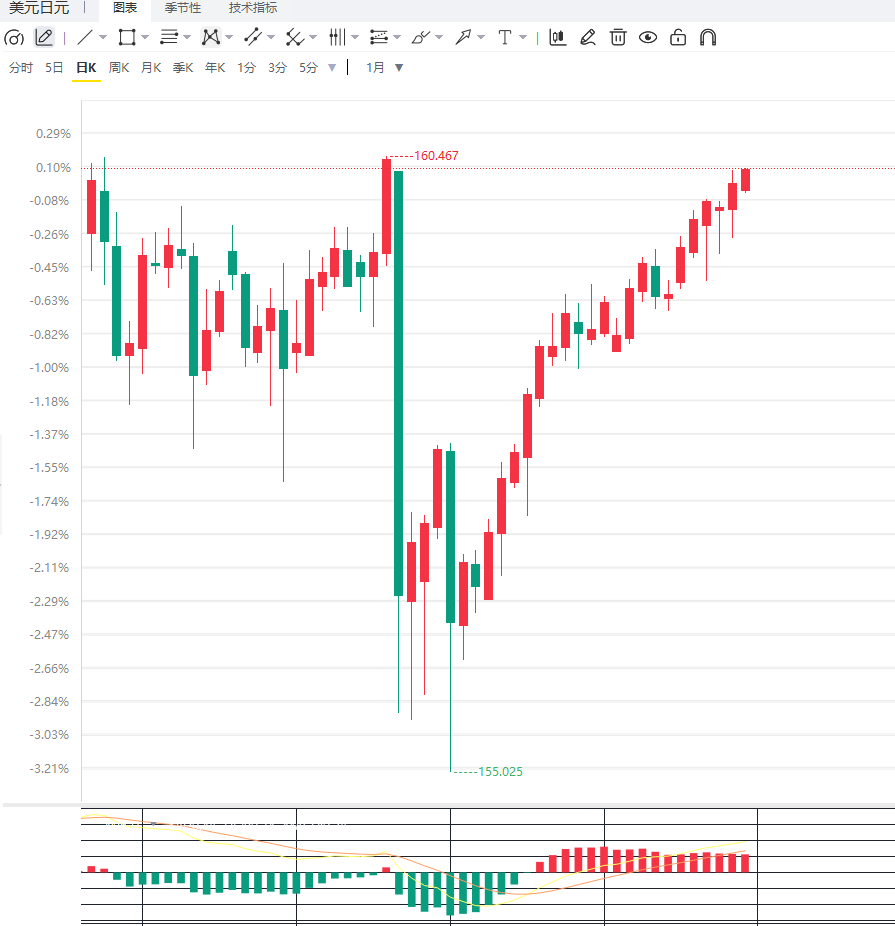
From a technical perspective, the USD/JPY daily chart maintains a clear upward trend. The price has consistently traded above major moving averages, indicating that the long-term bullish trend remains intact. The 5-day, 10-day, and 20-day moving averages remain upward-aligned, and the MACD indicator continues to trade above the zero line, suggesting that bullish momentum still dominates. The RSI indicator is near 70, indicating that the market has entered overbought territory, but no clear top reversal signal has yet appeared. Key support levels are at 158.80 and 157.50; if these levels hold, the medium-term upward trend is likely to continue. Key resistance levels to watch are 161.50 and 163.00.
From a 4-hour chart perspective, the exchange rate remains within an upward channel. Short-term moving averages continue to diverge upwards, indicating that buying power remains strong. The MACD indicator is running at a high level but showing some signs of divergence, suggesting a short-term technical correction is possible. If the exchange rate breaks through 161.50 effectively, it may further test the 163 level; conversely, if the Japanese authorities signal intervention, a rapid pullback and retest of the support area around 159 cannot be ruled out.
Editor's Summary : Japanese economic growth, bank credit expansion, and rising wages have collectively strengthened market expectations for a Bank of Japan interest rate hike, providing fundamental support for the yen. However, the resilience of the US economy, the Federal Reserve's maintenance of high interest rates, and safe-haven demand stemming from the Middle East situation continue to drive the US dollar's strength. Currently, the USD/JPY pair is trading above the 160 level, entering a region of high concern for the Japanese government. Going forward, the market will focus on the Bank of Japan's June policy meeting, Federal Reserve policy expectations, and whether the Japanese Ministry of Finance signals any intervention. If the Bank of Japan releases a clearer signal of an interest rate hike, the yen is expected to see a phase of rebound; conversely, a continued widening of the USD/JPY interest rate differential could push the exchange rate further towards 163.
The market's primary focus remains on the policy risks posed by the USD/JPY exchange rate continuing to trade above the 160 level. Over the past year, Japan's Ministry of Finance has intervened in the foreign exchange market several times near similar levels, leading investors to remain highly vigilant about the possibility of further government intervention to stabilize the exchange rate.
According to the latest data, Japan's economic performance is significantly better than market expectations. Data shows that Japan's GDP grew by 0.5% quarter-on-quarter in the first quarter of 2026, higher than the market expectation of 0.3%, and further accelerated from the previous quarter's 0.2%, marking the strongest quarterly growth performance since the beginning of 2025.
Japan's GDP grew at an annualized rate of 1.8% in the first quarter. While slightly lower than the initial estimate of 2.1%, this was significantly higher than the market forecast of 1.3% and well above the revised previous figure of 0.7%. This is also the strongest annual growth rate in the past four quarters.
At the same time, the pace of credit expansion in Japan's banking sector also accelerated. Data shows that Japanese bank loans grew by 5.7% year-on-year in May, exceeding market expectations of 5.6% and marking the fastest growth rate since March 2021. The continued improvement in credit demand indicates that corporate investment and household consumption remain robust, further reflecting a gradual strengthening of the economic fundamentals.
As a result, the Japanese interest rate futures market has significantly increased its expectations for a rate hike at the Bank of Japan's June meeting. A growing number of investors believe that the Bank of Japan may further advance the normalization of monetary policy to address the continuously improving economic and inflationary environment. However, despite the significant improvement in Japan's fundamentals, the yen has failed to gain sustained support.
The main reason is that US interest rates remain high. Recent strong performance in the US job market has significantly cooled market expectations for a near-term rate cut by the Federal Reserve, and the US-Japan interest rate differential continues to remain at a high level. For international capital, dollar assets still offer a strong yield advantage, thus funds continue to flow into the dollar market.
Furthermore, renewed tensions in the Middle East also provided some support for the US dollar. Over the weekend, escalating tensions between Iran and Israel triggered a resurgence of risk aversion in global markets. While the Japanese yen, a traditional safe-haven asset, typically benefits from risk aversion, the current market is favoring the US dollar and US Treasuries, keeping the dollar index at high levels.
US President Trump stated that he is actively urging all parties to exercise restraint and is communicating with Israeli Prime Minister Netanyahu to avoid further escalation of the situation. Meanwhile, the US still hopes to make progress in negotiations with Iran. However, the market generally believes that Middle East risks will be difficult to completely eliminate in the short term. From a market structure perspective, the USD/JPY exchange rate is currently influenced by two forces. On the one hand, continued improvement in Japanese economic data is driving market expectations of a Bank of Japan interest rate hike; on the other hand, high US interest rates and safe-haven inflows into the dollar are supporting the exchange rate at high levels. Therefore, the exchange rate may maintain a high-level fluctuation pattern in the short term.
From a technical perspective, the USD/JPY daily chart maintains a clear upward trend. The price has consistently traded above major moving averages, indicating that the long-term bullish trend remains intact. The 5-day, 10-day, and 20-day moving averages remain upward-aligned, and the MACD indicator continues to trade above the zero line, suggesting that bullish momentum still dominates. The RSI indicator is near 70, indicating that the market has entered overbought territory, but no clear top reversal signal has yet appeared. Key support levels are at 158.80 and 157.50; if these levels hold, the medium-term upward trend is likely to continue. Key resistance levels to watch are 161.50 and 163.00.
From a 4-hour chart perspective, the exchange rate remains within an upward channel. Short-term moving averages continue to diverge upwards, indicating that buying power remains strong. The MACD indicator is running at a high level but showing some signs of divergence, suggesting a short-term technical correction is possible. If the exchange rate breaks through 161.50 effectively, it may further test the 163 level; conversely, if the Japanese authorities signal intervention, a rapid pullback and retest of the support area around 159 cannot be ruled out.
Editor's Summary : Japanese economic growth, bank credit expansion, and rising wages have collectively strengthened market expectations for a Bank of Japan interest rate hike, providing fundamental support for the yen. However, the resilience of the US economy, the Federal Reserve's maintenance of high interest rates, and safe-haven demand stemming from the Middle East situation continue to drive the US dollar's strength. Currently, the USD/JPY pair is trading above the 160 level, entering a region of high concern for the Japanese government. Going forward, the market will focus on the Bank of Japan's June policy meeting, Federal Reserve policy expectations, and whether the Japanese Ministry of Finance signals any intervention. If the Bank of Japan releases a clearer signal of an interest rate hike, the yen is expected to see a phase of rebound; conversely, a continued widening of the USD/JPY interest rate differential could push the exchange rate further towards 163.
- Risk Warning and Disclaimer
- The market involves risk, and trading may not be suitable for all investors. This article is for reference only and does not constitute personal investment advice, nor does it take into account certain users’ specific investment objectives, financial situation, or other needs. Any investment decisions made based on this information are at your own risk.