Rising expectations of a US interest rate hike, coupled with political uncertainty in the UK, sent the pound to a three-week low against the dollar.
2026-06-08 13:47:53
During Monday's Asian trading session, the British pound rebounded somewhat against the US dollar after a period of correction, rising back to around 1.3350. However, considering the overall market environment, the US dollar still holds a relative advantage, and the pound's rebound is more of a technical correction.
Previously, the pound had fallen to its lowest level against the dollar in nearly three weeks. The main reasons for the currency's weakness were strong US economic data and a significant shift in market expectations regarding Federal Reserve policy. The latest US non-farm payroll report for May once again demonstrated the resilience of the US economy. Data showed that the US added 172,000 non-farm jobs in May, far exceeding market expectations of 85,000. Although slightly lower than the revised previous figure of 179,000, it still represents a relatively high level of growth.
Meanwhile, the US unemployment rate remained at 4.3%, in line with market expectations. Although the growth rate of average hourly wages slowed, the overall job market remained robust, indicating that the US economy has not yet shown any significant signs of cooling. The strong employment data quickly prompted the market to readjust its monetary policy expectations.
Investors are reducing their bets on future easing policies and increasing their expectations for further tightening by the Federal Reserve. The market now anticipates a greater than 70% probability of a future Fed rate hike, a significant increase from previous levels. Higher interest rate expectations are driving the dollar index higher, increasing the attractiveness of dollar-denominated assets and putting pressure on non-dollar currencies, including the British pound.
Meanwhile, escalating tensions in the Middle East have further strengthened the US dollar's safe-haven appeal. Recent tensions between Iran and Israel have continued to rise, raising market concerns that regional conflict could impact global energy supplies and economic growth prospects. This has led to a significant increase in international oil prices, and higher energy prices have exacerbated market concerns about future inflationary pressures.
The market generally believes that if energy prices remain high for an extended period, the pace of decline in US inflation may be affected, potentially forcing the Federal Reserve to maintain a prolonged tightening policy. This expectation continues to support the US dollar. US President Trump recently stated his hope that Israel would refrain from further military action to preserve the ongoing negotiations with Iran. However, due to significant differences between the two sides on several core issues, including sensitive topics such as energy transportation routes and the nuclear issue, the market remains cautious about a potential de-escalation.
Besides the strengthening US dollar, domestic political factors in the UK are also putting pressure on the pound. Recent increases in political uncertainty in the UK have fueled market concerns about the stability of the UK government's future policies. News of Prime Minister Starmer facing challenges within his own party has drawn investor attention, leading some funds to reduce their allocation to pound-denominated assets.
From a fundamental perspective, the British pound is currently influenced by both positive factors for the US dollar and negative factors for the pound. Strong US economic growth and safe-haven demand support the dollar, while political risks in the UK are diminishing the pound's appeal; therefore, the overall exchange rate is likely to remain weak.
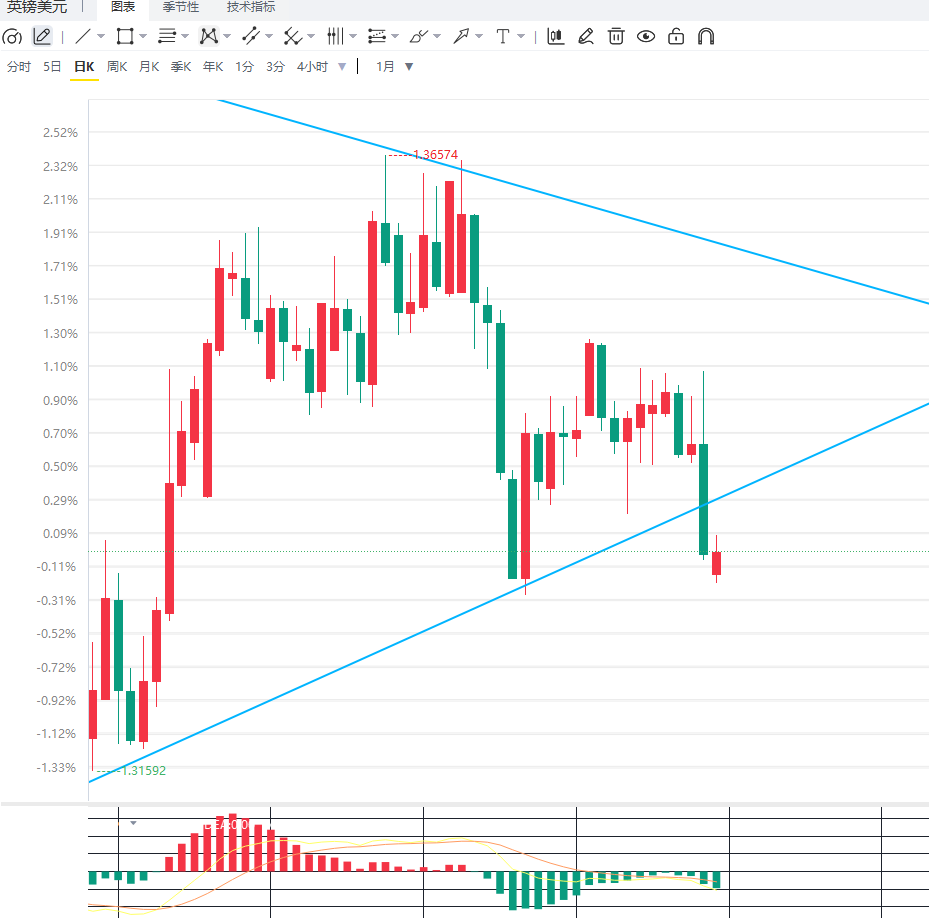
From a technical perspective, the GBP/USD daily chart has broken below some previous support levels, and the overall trend has gradually shifted from a slightly bullish to a slightly bearish bias. The price is currently trading below the 10-day moving average but remains near the medium- to long-term moving average system. The MACD indicator has shown a death cross signal, with the green bars gradually expanding, indicating that bearish momentum has strengthened. The RSI indicator has fallen back to around 45, suggesting that the market still has room for further correction in the short term. Key support levels to watch are 1.3300 and 1.3220; a break below these levels could lead to a further test of the 1.3150 area. Important resistance levels are located in the 1.3400 and 1.3480 area.
From a 4-hour chart perspective, the exchange rate has rebounded technically from its lows, but it remains within a downward channel. Short-term moving averages are flattening, indicating a near balance between bullish and bearish forces. The MACD indicator has formed a golden cross at low levels, reflecting a short-term need for correction. However, if it fails to break through the 1.3400 resistance area, the upside potential may be limited. If the US dollar continues to receive support from safe-haven flows, the exchange rate still risks retesting the 1.3300 support area.
Editor's Summary : The current GBP/USD exchange rate is influenced by a combination of factors, including strong US economic performance, rising market expectations of interest rate hikes, and safe-haven demand from the Middle East. The US dollar remains strong overall, while political uncertainty in the UK further weakens the pound's performance. In the short term, although the exchange rate has seen a technical rebound, the overall trend remains biased towards a weak and volatile movement. Going forward, the market will focus on US inflation data, changes in Federal Reserve policy expectations, and developments in the UK political situation. If the US economy continues to show resilience and safe-haven demand persists, the dollar's advantage may further expand; conversely, if UK political risks ease and the dollar corrects, GBP/USD is expected to retest the area above 1.34.
Previously, the pound had fallen to its lowest level against the dollar in nearly three weeks. The main reasons for the currency's weakness were strong US economic data and a significant shift in market expectations regarding Federal Reserve policy. The latest US non-farm payroll report for May once again demonstrated the resilience of the US economy. Data showed that the US added 172,000 non-farm jobs in May, far exceeding market expectations of 85,000. Although slightly lower than the revised previous figure of 179,000, it still represents a relatively high level of growth.
Meanwhile, the US unemployment rate remained at 4.3%, in line with market expectations. Although the growth rate of average hourly wages slowed, the overall job market remained robust, indicating that the US economy has not yet shown any significant signs of cooling. The strong employment data quickly prompted the market to readjust its monetary policy expectations.
Investors are reducing their bets on future easing policies and increasing their expectations for further tightening by the Federal Reserve. The market now anticipates a greater than 70% probability of a future Fed rate hike, a significant increase from previous levels. Higher interest rate expectations are driving the dollar index higher, increasing the attractiveness of dollar-denominated assets and putting pressure on non-dollar currencies, including the British pound.
Meanwhile, escalating tensions in the Middle East have further strengthened the US dollar's safe-haven appeal. Recent tensions between Iran and Israel have continued to rise, raising market concerns that regional conflict could impact global energy supplies and economic growth prospects. This has led to a significant increase in international oil prices, and higher energy prices have exacerbated market concerns about future inflationary pressures.
The market generally believes that if energy prices remain high for an extended period, the pace of decline in US inflation may be affected, potentially forcing the Federal Reserve to maintain a prolonged tightening policy. This expectation continues to support the US dollar. US President Trump recently stated his hope that Israel would refrain from further military action to preserve the ongoing negotiations with Iran. However, due to significant differences between the two sides on several core issues, including sensitive topics such as energy transportation routes and the nuclear issue, the market remains cautious about a potential de-escalation.
Besides the strengthening US dollar, domestic political factors in the UK are also putting pressure on the pound. Recent increases in political uncertainty in the UK have fueled market concerns about the stability of the UK government's future policies. News of Prime Minister Starmer facing challenges within his own party has drawn investor attention, leading some funds to reduce their allocation to pound-denominated assets.
From a fundamental perspective, the British pound is currently influenced by both positive factors for the US dollar and negative factors for the pound. Strong US economic growth and safe-haven demand support the dollar, while political risks in the UK are diminishing the pound's appeal; therefore, the overall exchange rate is likely to remain weak.
From a technical perspective, the GBP/USD daily chart has broken below some previous support levels, and the overall trend has gradually shifted from a slightly bullish to a slightly bearish bias. The price is currently trading below the 10-day moving average but remains near the medium- to long-term moving average system. The MACD indicator has shown a death cross signal, with the green bars gradually expanding, indicating that bearish momentum has strengthened. The RSI indicator has fallen back to around 45, suggesting that the market still has room for further correction in the short term. Key support levels to watch are 1.3300 and 1.3220; a break below these levels could lead to a further test of the 1.3150 area. Important resistance levels are located in the 1.3400 and 1.3480 area.
From a 4-hour chart perspective, the exchange rate has rebounded technically from its lows, but it remains within a downward channel. Short-term moving averages are flattening, indicating a near balance between bullish and bearish forces. The MACD indicator has formed a golden cross at low levels, reflecting a short-term need for correction. However, if it fails to break through the 1.3400 resistance area, the upside potential may be limited. If the US dollar continues to receive support from safe-haven flows, the exchange rate still risks retesting the 1.3300 support area.
Editor's Summary : The current GBP/USD exchange rate is influenced by a combination of factors, including strong US economic performance, rising market expectations of interest rate hikes, and safe-haven demand from the Middle East. The US dollar remains strong overall, while political uncertainty in the UK further weakens the pound's performance. In the short term, although the exchange rate has seen a technical rebound, the overall trend remains biased towards a weak and volatile movement. Going forward, the market will focus on US inflation data, changes in Federal Reserve policy expectations, and developments in the UK political situation. If the US economy continues to show resilience and safe-haven demand persists, the dollar's advantage may further expand; conversely, if UK political risks ease and the dollar corrects, GBP/USD is expected to retest the area above 1.34.
- Risk Warning and Disclaimer
- The market involves risk, and trading may not be suitable for all investors. This article is for reference only and does not constitute personal investment advice, nor does it take into account certain users’ specific investment objectives, financial situation, or other needs. Any investment decisions made based on this information are at your own risk.