Euro rebounds after hitting near two-month low; ECB rate hike on Thursday a certainty? Market focuses on CPI data guidance.
2026-06-08 16:27:32
On Monday (June 8), the euro fell to a near two-month low of 1.1506 against the US dollar before rebounding. The exchange rate has now recovered its losses and is trading around 1.1520.
Meanwhile, the energy shock continues to push up eurozone inflation to its fastest pace since 2023, reinforcing market expectations that the European Central Bank will raise interest rates this week.
To curb deeply entrenched inflation, the European Central Bank (ECB) is expected to raise interest rates by 25 basis points this Thursday, a move that would put the ECB at the forefront of this wave of global tightening.
At the same time, the Eurozone economy grew far worse than expected, with first-quarter GDP unexpectedly declining, and the European Central Bank faced a difficult trade-off between fighting inflation and stabilizing growth.
The U.S. CPI data for May, to be released this Wednesday, is expected to jump to 4.2%, further impacting global monetary policy expectations.
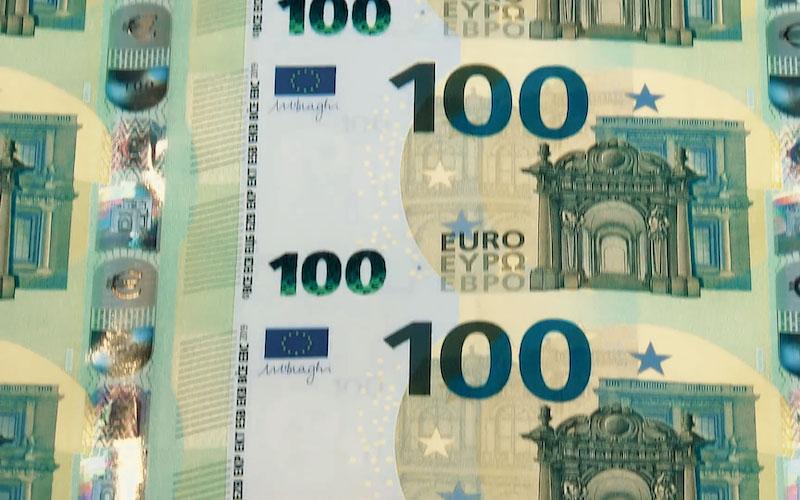
The 25-basis-point rate hike to be announced on Thursday is expected to be the most notable policy move to date, as similar rate hikes in other developed economies have only occurred in much smaller jurisdictions such as Australia and Norway. Unless ECB President Lagarde and her colleagues object to current investor bets on rate hikes, monetary policy will remain on a path of further tightening – the market has already priced in at least one more rate hike this year.
This austerity measure comes as eurozone economic growth has already fallen far short of previous expectations. Data released last Friday showed that eurozone GDP declined in the first quarter of this year, contrary to economists' growth forecasts, due to a significant downward revision of Irish data. The previous week, the OECD warned of "continued deterioration in sentiment," predicting that the eurozone would grow by only 0.8% this year.
While observers expect the Bank of Japan, with its much lower benchmark interest rate, to take a similar path of rate hikes at some point in the future, other major central banks in the G7 are currently far from willing to follow suit, and the divergence in global monetary policy is becoming increasingly apparent.
The Bank of Canada will announce its policy decision on Wednesday, a day before the European Central Bank's decision on Thursday. The market widely expects the Bank of Canada to maintain its benchmark interest rate, which has remained unchanged since last October. Despite unexpectedly strong recent Canadian labor force data, the country's economy has entered a technical recession, and its weak growth outlook makes the central bank hesitant to resume tightening. Analysts at BNY Mellon predict that the Bank of Canada will remain on the sidelines at this meeting, with the tone of the policy statement and discussions on recession risks being the focus of market attention.
Looking ahead to later this month, the Federal Reserve and the Bank of England are also likely to maintain their current policies while observing the ongoing impact of the conflict with Iran. On the Fed's side, newly appointed Chairman Kevin Warsh will chair his first Federal Open Market Committee (FOMC) meeting on June 16. Although the US May non-farm payroll data far exceeded expectations, and the market has fully priced in a 25 basis point rate hike before the end of the year, Fed officials have entered a quiet period and generally prefer to wait for more inflation data before making a decision. The May CPI data released this Wednesday will be a key indicator—if inflation rises more than expected, it could force the Fed to reassess its stance.
Regarding the Bank of England, despite persistently high inflationary pressures, policymakers are also inclined to remain patient given the unclear transmission effects of the Middle East conflict on the UK economy and signs of slowing domestic economic activity. Most economists expect the Bank of England to keep interest rates unchanged at its June meeting, awaiting clearer signals before deciding whether to follow suit with tightening.
Frankfurt officials' policy response to the energy shock has a core objective of ensuring that the eurozone's current inflation, at its highest level since 2023, does not become entrenched. Since the closure of the Strait of Hormuz at the end of February, energy prices have continued to soar, widely priced into various sectors through electricity, fuel, and transportation costs. In May, the eurozone's overall inflation rate rebounded from 3.0% to 3.2%, with services inflation jumping even more sharply from 3.0% to 3.5%, indicating that a second wave of effects is emerging.
European Central Bank policymakers are concerned that if they do not act in time, high inflation could solidify through the wage-price spiral mechanism, at which point governance costs will increase significantly.
However, raising interest rates will come at the cost of further contracting an already weak economy. Latest data shows that Eurozone GDP unexpectedly declined in the first quarter, and German factory orders plummeted 3.8% month-on-month in April, indicating a deep contraction in the manufacturing sector. Higher borrowing costs will dampen business investment and household consumption, exacerbating downside risks to the economy. If policymakers insist on continuing tightening in July or even September, the trade-off between combating inflation and stabilizing growth will become even more acute.
To help markets understand the future policy path, the European Central Bank will release its latest quarterly macroeconomic forecasts at this meeting, including analyses of different scenarios on how the energy shock might evolve. These scenarios will simulate the quantitative impact of varying durations of a Strait of Hormuz blockade (such as short-term disruption, medium-term stalemate, or long-term closure) on eurozone inflation and growth. President Lagarde will elaborate on these forecasts and answer questions from reporters at the press conference following the decision.
The market will be closely watching whether she hints at further rate hikes in July or September, and how the central bank views the evolving risks of recession. Any wording regarding "data dependence" or "meeting-by-meeting assessment" will provide key clues about the subsequent policy path.
After U.S. job growth far exceeded expectations in May, market focus has returned to inflation. Wednesday's May CPI is projected to jump 4.2% year-on-year, the highest level in more than three years. Core CPI, excluding energy and food, is expected to cool moderately month-on-month, potentially providing a welcome signal to Federal Reserve policymakers.
Thursday's PPI data will further reveal the impact of the Iranian conflict on supply chains. Economists are focusing on a component of the PPI report that reflects the Federal Reserve's preferred inflation gauge (PCE price index). Other upcoming data releases include May existing home sales on Tuesday and the preliminary June University of Michigan consumer sentiment index on Friday.
Federal Reserve officials have begun their quiet period in preparation for the first FOMC meeting chaired by new Chairman Kevin Warsh on June 16.
At 16:06 Beijing time on June 8, the euro was trading at 1.1519/20 against the US dollar.
Meanwhile, the energy shock continues to push up eurozone inflation to its fastest pace since 2023, reinforcing market expectations that the European Central Bank will raise interest rates this week.
To curb deeply entrenched inflation, the European Central Bank (ECB) is expected to raise interest rates by 25 basis points this Thursday, a move that would put the ECB at the forefront of this wave of global tightening.
At the same time, the Eurozone economy grew far worse than expected, with first-quarter GDP unexpectedly declining, and the European Central Bank faced a difficult trade-off between fighting inflation and stabilizing growth.
The U.S. CPI data for May, to be released this Wednesday, is expected to jump to 4.2%, further impacting global monetary policy expectations.
The European Central Bank raises interest rates, leading the global tightening trend.
The 25-basis-point rate hike to be announced on Thursday is expected to be the most notable policy move to date, as similar rate hikes in other developed economies have only occurred in much smaller jurisdictions such as Australia and Norway. Unless ECB President Lagarde and her colleagues object to current investor bets on rate hikes, monetary policy will remain on a path of further tightening – the market has already priced in at least one more rate hike this year.
This austerity measure comes as eurozone economic growth has already fallen far short of previous expectations. Data released last Friday showed that eurozone GDP declined in the first quarter of this year, contrary to economists' growth forecasts, due to a significant downward revision of Irish data. The previous week, the OECD warned of "continued deterioration in sentiment," predicting that the eurozone would grow by only 0.8% this year.
Divergence within the G7: ECB aggressive, other central banks take a wait-and-see approach.
While observers expect the Bank of Japan, with its much lower benchmark interest rate, to take a similar path of rate hikes at some point in the future, other major central banks in the G7 are currently far from willing to follow suit, and the divergence in global monetary policy is becoming increasingly apparent.
The Bank of Canada will announce its policy decision on Wednesday, a day before the European Central Bank's decision on Thursday. The market widely expects the Bank of Canada to maintain its benchmark interest rate, which has remained unchanged since last October. Despite unexpectedly strong recent Canadian labor force data, the country's economy has entered a technical recession, and its weak growth outlook makes the central bank hesitant to resume tightening. Analysts at BNY Mellon predict that the Bank of Canada will remain on the sidelines at this meeting, with the tone of the policy statement and discussions on recession risks being the focus of market attention.
Looking ahead to later this month, the Federal Reserve and the Bank of England are also likely to maintain their current policies while observing the ongoing impact of the conflict with Iran. On the Fed's side, newly appointed Chairman Kevin Warsh will chair his first Federal Open Market Committee (FOMC) meeting on June 16. Although the US May non-farm payroll data far exceeded expectations, and the market has fully priced in a 25 basis point rate hike before the end of the year, Fed officials have entered a quiet period and generally prefer to wait for more inflation data before making a decision. The May CPI data released this Wednesday will be a key indicator—if inflation rises more than expected, it could force the Fed to reassess its stance.
Regarding the Bank of England, despite persistently high inflationary pressures, policymakers are also inclined to remain patient given the unclear transmission effects of the Middle East conflict on the UK economy and signs of slowing domestic economic activity. Most economists expect the Bank of England to keep interest rates unchanged at its June meeting, awaiting clearer signals before deciding whether to follow suit with tightening.
The difficult trade-off between fighting inflation and stabilizing growth
Frankfurt officials' policy response to the energy shock has a core objective of ensuring that the eurozone's current inflation, at its highest level since 2023, does not become entrenched. Since the closure of the Strait of Hormuz at the end of February, energy prices have continued to soar, widely priced into various sectors through electricity, fuel, and transportation costs. In May, the eurozone's overall inflation rate rebounded from 3.0% to 3.2%, with services inflation jumping even more sharply from 3.0% to 3.5%, indicating that a second wave of effects is emerging.
European Central Bank policymakers are concerned that if they do not act in time, high inflation could solidify through the wage-price spiral mechanism, at which point governance costs will increase significantly.
However, raising interest rates will come at the cost of further contracting an already weak economy. Latest data shows that Eurozone GDP unexpectedly declined in the first quarter, and German factory orders plummeted 3.8% month-on-month in April, indicating a deep contraction in the manufacturing sector. Higher borrowing costs will dampen business investment and household consumption, exacerbating downside risks to the economy. If policymakers insist on continuing tightening in July or even September, the trade-off between combating inflation and stabilizing growth will become even more acute.
To help markets understand the future policy path, the European Central Bank will release its latest quarterly macroeconomic forecasts at this meeting, including analyses of different scenarios on how the energy shock might evolve. These scenarios will simulate the quantitative impact of varying durations of a Strait of Hormuz blockade (such as short-term disruption, medium-term stalemate, or long-term closure) on eurozone inflation and growth. President Lagarde will elaborate on these forecasts and answer questions from reporters at the press conference following the decision.
The market will be closely watching whether she hints at further rate hikes in July or September, and how the central bank views the evolving risks of recession. Any wording regarding "data dependence" or "meeting-by-meeting assessment" will provide key clues about the subsequent policy path.
US CPI data becomes the focus
After U.S. job growth far exceeded expectations in May, market focus has returned to inflation. Wednesday's May CPI is projected to jump 4.2% year-on-year, the highest level in more than three years. Core CPI, excluding energy and food, is expected to cool moderately month-on-month, potentially providing a welcome signal to Federal Reserve policymakers.
Thursday's PPI data will further reveal the impact of the Iranian conflict on supply chains. Economists are focusing on a component of the PPI report that reflects the Federal Reserve's preferred inflation gauge (PCE price index). Other upcoming data releases include May existing home sales on Tuesday and the preliminary June University of Michigan consumer sentiment index on Friday.
Federal Reserve officials have begun their quiet period in preparation for the first FOMC meeting chaired by new Chairman Kevin Warsh on June 16.
At 16:06 Beijing time on June 8, the euro was trading at 1.1519/20 against the US dollar.
- Risk Warning and Disclaimer
- The market involves risk, and trading may not be suitable for all investors. This article is for reference only and does not constitute personal investment advice, nor does it take into account certain users’ specific investment objectives, financial situation, or other needs. Any investment decisions made based on this information are at your own risk.